Blind cave tetra tank size
This species attains an adult length of 9.5 cm. House them over a tank base measuring at least 80 cm × 30 cm. Increased biological filtration cannot replace the swimming space provided by this recommended footprint.This species attains an adult length of 3.7 in. House them over a tank base measuring at least 31 in × 12 in. Increased biological filtration cannot replace the swimming space provided by this recommended footprint.[1]
The blind form is restricted in nature to underground cave systems in Mexico. By comparison, surface-dwelling fish occur across an expansive geographical distribution stretching from the southern United States through Mexico into Guatemala.The blind form is restricted in nature to underground cave systems in Mexico. By comparison, surface-dwelling fish occur across an expansive geographical distribution stretching from the southern United States through Mexico into Guatemala.[1]
Keepers do not need to provide specific shelter, and aquatic vegetation is entirely acceptable. Aquarists who desire a subterranean look can arrange slate or rocky structures against the sides and rear glass, illuminated by muted lamps over a dark floor.Keepers do not need to provide specific shelter, and aquatic vegetation is entirely acceptable. Aquarists who desire a subterranean look can arrange slate or rocky structures against the sides and rear glass, illuminated by muted lamps over a dark floor.[1]
Blind cave tetra water parameters
Aim for stable water conditions between 23–25 °C, with an acidity range of pH 6.5–7.5 and general hardness between 5–12 dGH. These targets provide a reliable baseline for keeping this species in home aquariums.Aim for stable water conditions between 73–77 °F, with an acidity range of pH 6.5–7.5 and general hardness between 5–12 dGH. These targets provide a reliable baseline for keeping this species in home aquariums.[1][2]
Check water parameters every week, ensuring ammonia and nitrite remain at zero. Refresh one quarter of the aquarium volume on a weekly basis, always treating new tap water for chlorine and chloramines before adding it to the tank.Check water parameters every week, ensuring ammonia and nitrite remain at zero. Refresh one quarter of the aquarium volume on a weekly basis, always treating new tap water for chlorine and chloramines before adding it to the tank.[2]
Complete biological cycling before stocking the tank, and introduce additional inhabitants gradually over time. When filter sponges clog, squeeze them gently in water drawn from the aquarium rather than unconditioned tap water.Complete biological cycling before stocking the tank, and introduce additional inhabitants gradually over time. When filter sponges clog, squeeze them gently in water drawn from the aquarium rather than unconditioned tap water.[2]
Feeding blind cave tetras
Offer quality manufactured flakes or granules balanced by small live and frozen fares like daphnia, bloodworm, and tubifex. Provide food once daily, limiting portions to what the school finishes in a few minutes, and siphon away leftover morsels promptly.Offer quality manufactured flakes or granules balanced by small live and frozen fares like daphnia, bloodworm, and tubifex. Provide food once daily, limiting portions to what the school finishes in a few minutes, and siphon away leftover morsels promptly.[1][2]
Lacking functional eyes, blind cave tetras detect local water pressure shifts through their lateral line system to discover food items. During their active searching behaviour, they can inadvertently nip tank mates.Lacking functional eyes, blind cave tetras detect local water pressure shifts through their lateral line system to discover food items. During their active searching behaviour, they can inadvertently nip tank mates.[1]
Blind cave tetra behaviour
Blind cave tetras are hardy, active community fish that require a group of at least six individuals. While fish seem to fare better when kept together in numbers, maintaining a group does not eliminate nipping entirely.Blind cave tetras are hardy, active community fish that require a group of at least six individuals. While fish seem to fare better when kept together in numbers, maintaining a group does not eliminate nipping entirely.[1]
Rather than relying on sight, these fish utilise lateral line pressure cues to map surroundings and avoid colliding with hardscape. When kept in a mature, established tank, they can survive for several years.Rather than relying on sight, these fish utilise lateral line pressure cues to map surroundings and avoid colliding with hardscape. When kept in a mature, established tank, they can survive for several years.[1][2]
Surface-dwelling and subterranean populations represent forms of the same species. When blind-form fry hatch, their eyes are initially visible, but these organs subsequently recede and become shielded by skin.Surface-dwelling and subterranean populations represent forms of the same species. When blind-form fry hatch, their eyes are initially visible, but these organs subsequently recede and become shielded by skin.[1]
Blind cave tetra tank mates
Sprightly schooling fish like short-finned Sprightly schooling fish like short-finned zebra danioszebra danios and short-finned and short-finned black skirt tetrasblack skirt tetras can share an aquarium if their water requirements overlap and both species have enough room for separate groups. Observe these combinations closely during feeding times to watch for wandering nips. can share an aquarium if their water requirements overlap and both species have enough room for separate groups. Observe these combinations closely during feeding times to watch for wandering nips.[1]
Sturdy tetras such as short-finned Sturdy tetras such as short-finned Buenos Aires tetrasBuenos Aires tetras and short-finned and short-finned X-ray tetrasX-ray tetras can also be evaluated under similar guidelines. Provide dedicated space for each group, and watch the aquarium closely whenever food is added. can also be evaluated under similar guidelines. Provide dedicated space for each group, and watch the aquarium closely whenever food is added.[1]
Do not house blind cave tetras alongside Do not house blind cave tetras alongside bettasbettas or or honey gouramishoney gouramis. Sluggish movement and flowing finnage expose these slow companions to feeding-time nipping from searching cave tetras.. Sluggish movement and flowing finnage expose these slow companions to feeding-time nipping from searching cave tetras.[1]
Avoid keeping secretive species such as Avoid keeping secretive species such as glass catfishglass catfish in the same display. Very shy companions fare poorly alongside vigorous blind tetras and can suffer accidental nips during feeding. in the same display. Very shy companions fare poorly alongside vigorous blind tetras and can suffer accidental nips during feeding.[1]
Usually fine together
- African butterfly cichlid
- Agassiz's cory
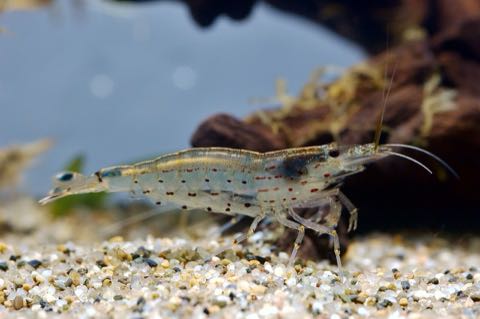 Amano shrimp
- American flagfish
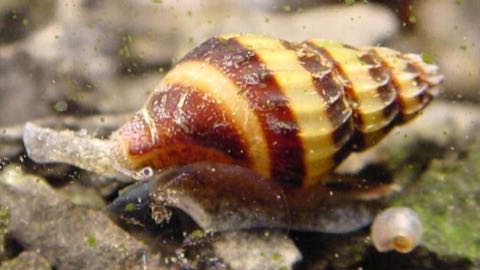 Assassin snail
- Banded gourami
- Bandit cory
- Banjo catfish
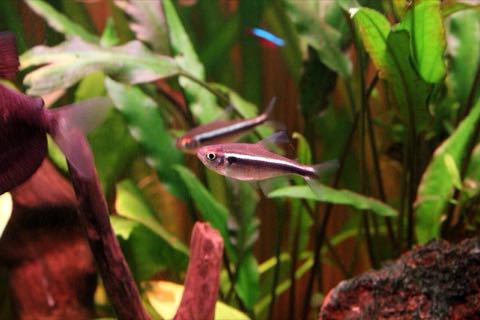 Black neon tetra
- Black phantom tetra
- Black ruby barb
- Blackline rasbora
Avoid with
- Acei cichlid
No shared pH rangeNo shared pH range
- Blue lyretail
Blind cave tetra may nip Blue lyretailBlind cave tetra may nip Blue lyretail
- Brevis shell dweller
No shared pH rangeNo shared pH range
- Caudopunctatus
No shared pH rangeNo shared pH range
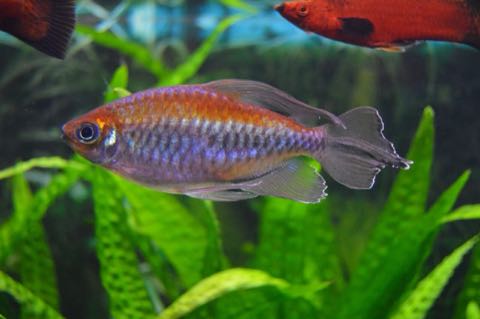 Congo tetra
Blind cave tetra may nip Congo tetraBlind cave tetra may nip Congo tetra
- Featherfin squeaker
Blind cave tetra may nip Featherfin squeakerBlind cave tetra may nip Featherfin squeaker
- Filament barb
Blind cave tetra may nip Filament barbBlind cave tetra may nip Filament barb
- Guppy
Blind cave tetra may nip GuppyBlind cave tetra may nip Guppy
- Multies
No shared pH rangeNo shared pH range
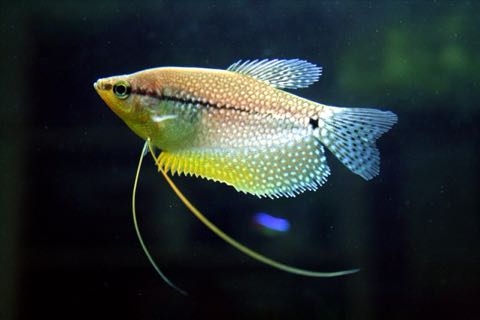 Pearl gourami
Blind cave tetra may nip Pearl gouramiBlind cave tetra may nip Pearl gourami
- Pindani
No shared pH rangeNo shared pH range
- Rusty cichlid
No shared pH rangeNo shared pH range
Breeding blind cave tetras
Prepare a separate breeding tank outfitted with an air-powered sponge filter and suspended mesh placed to shield falling eggs. Take adult breeders out of the enclosure after eggs are observed, because mature fish can eat their brood.Prepare a separate breeding tank outfitted with an air-powered sponge filter and suspended mesh placed to shield falling eggs. Take adult breeders out of the enclosure after eggs are observed, because mature fish can eat their brood.[1]
White eggs can initially look infertile, yet fertile ones hatch in approximately 24 hours. The emergent fry consume their yolk reserves before becoming free-swimming roughly 5–7 days afterward.White eggs can initially look infertile, yet fertile ones hatch in approximately 24 hours. The emergent fry consume their yolk reserves before becoming free-swimming roughly 5–7 days afterward.[1]
Provide free-swimming fry with microscopic fare like infusoria during their initial week of swimming. Once they grow larger, switch the young fish to newly hatched Artemia nauplii or finely graded dry foods.Provide free-swimming fry with microscopic fare like infusoria during their initial week of swimming. Once they grow larger, switch the young fish to newly hatched Artemia nauplii or finely graded dry foods.[1]
Blind cave tetra health problems
Ich is triggered by the parasite Ichthyophthirius multifiliis. Signs that can suggest infection include salt-like white spots, rubbing, reduced appetite, and rapid breathing, though spots alone cannot confirm a diagnosis. Reduce introduction risks by quarantining incoming fish for at least 30 days and using dedicated or disinfected equipment, seeking prompt fish-health advice if illness appears.Ich is triggered by the parasite Ichthyophthirius multifiliis. Signs that can suggest infection include salt-like white spots, rubbing, reduced appetite, and rapid breathing, though spots alone cannot confirm a diagnosis. Reduce introduction risks by quarantining incoming fish for at least 30 days and using dedicated or disinfected equipment, seeking prompt fish-health advice if illness appears.[3]
Fin rot is a bacterial issue linked to environmental degradation and physical stress. Noticeable signs include fraying margins, reddish streaks, and receding fin tissue. Verify water chemistry, manage tank mate harassment or mechanical trauma, and consult an aquatic health professional if symptoms worsen.Fin rot is a bacterial issue linked to environmental degradation and physical stress. Noticeable signs include fraying margins, reddish streaks, and receding fin tissue. Verify water chemistry, manage tank mate harassment or mechanical trauma, and consult an aquatic health professional if symptoms worsen.[4]
Fungal infection may look like grey-white cottony growth on injured tissue, which can occur when injury or poor conditions weaken protective mucus. Cotton-like growth alone is not a diagnosis. Use smooth furnishings, handle fish gently, maintain good water quality to reduce risk, and seek prompt health advice.Fungal infection may look like grey-white cottony growth on injured tissue, which can occur when injury or poor conditions weaken protective mucus. Cotton-like growth alone is not a diagnosis. Use smooth furnishings, handle fish gently, maintain good water quality to reduce risk, and seek prompt health advice.[4]
Male or female?
Female specimens tend to grow larger and develop rounder bodies, particularly when carrying mature eggs. You can also evaluate the anal fin: males present a gently curved anal-fin border, whereas the female margin is straight.Female specimens tend to grow larger and develop rounder bodies, particularly when carrying mature eggs. You can also evaluate the anal fin: males present a gently curved anal-fin border, whereas the female margin is straight.[1]
Questions
How big does a blind cave tetra grow?
Blind cave tetras reach an adult length of 9.5 cm. Provide a tank base measuring at least 80 cm × 30 cm to supply adequate swimming space for a group.Blind cave tetras reach an adult length of 3.7 in. Provide a tank base measuring at least 31 in × 12 in to supply adequate swimming space for a group.[1]
Can Blind Cave Tetras see?
Blind cave tetras do not have functional vision. They use their lateral line to sense water pressure changes, which allows them to navigate surroundings and locate food.Blind cave tetras do not have functional vision. They use their lateral line to sense water pressure changes, which allows them to navigate surroundings and locate food.[1]
What are good tank mates for Blind Cave Tetras?
Active, short-finned species like zebra danios or black skirt tetras can share an aquarium if social, spatial, and water targets match. Avoid sluggish or timid fish that could be nipped during feeding.Active, short-finned species like zebra danios or black skirt tetras can share an aquarium if social, spatial, and water targets match. Avoid sluggish or timid fish that could be nipped during feeding.[1]
How long do blind cave fish typically live?
Blind cave tetras can live for several years in a mature, established aquarium when provided with proper water maintenance and daily feeding.Blind cave tetras can live for several years in a mature, established aquarium when provided with proper water maintenance and daily feeding.[2]
Are Blind Cave Tetras hard to keep as pets?
They are hardy community fish that require specific conditions: an aquarium base of at least 80 cm × 30 cm, a group of at least six fish, water at 23–25 °C, and weekly water testing.They are hardy community fish that require specific conditions: an aquarium base of at least 31 in × 12 in, a group of at least six fish, water at 73–77 °F, and weekly water testing.[1][2]
Sources
- Astyanax mexicanus (Blind cave tetra) — Seriously Fish. Accessed 2026-10-05.
- How to look after tetras and pencilfish — OATA. Accessed 2026-10-05.
- Ichthyophthirius multifiliis (White Spot) Infections in Fish — UF/IFAS Extension. Accessed 2026-10-05.
- Frequently asked questions on treating sick fish — Practical Fishkeeping. Accessed 2026-10-05.
Written from the sources above. Not yet reviewed by an aquarist.
Data used by the planner
| Temperature | 23–28 | AqAdvisor (aqadvisor.com), retrieved 2026-10-04 · medium confidence |
|---|---|---|
| pH | 5.5–7.5 | AqAdvisor (aqadvisor.com), retrieved 2026-10-04 · medium confidence |
| Hardness (dGH) | 1–15 | AqAdvisor (aqadvisor.com), retrieved 2026-10-04 · medium confidence |
| Origin | Mexico and southern Texas | curated-v0 (needs expert review) · low confidence |
| Beginner friendly | Yes | curated-v0 (needs expert review) · medium confidence |
| Care level | easy | curated-v0 (needs expert review) · medium confidence |
| Activity | active | curated-v0 (needs expert review) · medium confidence |
| Swimming level | middle | curated-v0 (needs expert review) · medium confidence |
| Temperament | peaceful | curated-v0 (needs expert review) · medium confidence |
| Nips fins | Yes | curated-v0 (needs expert review) · medium confidence |
| Long fins | No | curated-v0 (needs expert review) · medium confidence |
| Territorial | No | curated-v0 (needs expert review) · medium confidence |
| Lives in groups | Yes | curated-v0 (needs expert review) · medium confidence |
| Minimum group | 6 | curated-v0 (needs expert review) · medium confidence |
| Diet | omnivore | curated-v0 (needs expert review) · medium confidence |
| Lifespan (years) | 5–10 | curated-v0 (needs expert review); agrees with FishBase (fishbase.se), retrieved 2026-10-04 · medium confidence |
| Months to adult size | 8 | curated-v0 (needs expert review) · low confidence |
| Safe with plants | Yes | curated-v0 (needs expert review) · medium confidence |