Amano shrimp tank size
Start with a tank length of at least 30 cm for Amano shrimp. Provide a mature layout containing live plants, driftwood, and rocks so the shrimp have surfaces to graze. More space is useful if you plan to keep a larger group of shrimp or introduce fish companions.Start with a tank length of at least 12 in for Amano shrimp. Provide a mature layout containing live plants, driftwood, and rocks so the shrimp have surfaces to graze. More space is useful if you plan to keep a larger group of shrimp or introduce fish companions.[1][2]
Protect the filter intake to keep shrimp safe, and include sheltered places where they can hide while moulting. A sponge filtration system offers a large grazing area and avoids an exposed intake, provided the setup also supplies adequate water circulation.Protect the filter intake to keep shrimp safe, and include sheltered places where they can hide while moulting. A sponge filtration system offers a large grazing area and avoids an exposed intake, provided the setup also supplies adequate water circulation.[1]
Amano shrimp water parameters
Maintain a stable temperature between 18–27 °C, a pH of 6.0–7.5, and a hardness level of 6–15 dGH. Check general hardness with a reliable test kit rather than judging water by clarity, because these dissolved minerals matter during the moulting process.Maintain a stable temperature between 64–81 °F, a pH of 6.0–7.5, and a hardness level of 6–15 dGH. Check general hardness with a reliable test kit rather than judging water by clarity, because these dissolved minerals matter during the moulting process.[1][2]
Keep ammonia and nitrite levels undetectable at all times. Test both parameters whenever you encounter filter trouble or unexpected shrimp deaths. In addition, avoid using household sprays near the aquarium, and choose live plants from a supplier that can explain any past pesticide treatment.Keep ammonia and nitrite levels undetectable at all times. Test both parameters whenever you encounter filter trouble or unexpected shrimp deaths. In addition, avoid using household sprays near the aquarium, and choose live plants from a supplier that can explain any past pesticide treatment.[1][8]
Feeding Amano shrimp
In a mature planted tank, offer a small portion of shrimp granules or a sinking wafer every other day, aiming for the food to disappear within two hours. Remove any remaining food after this period. Although Amano shrimp are usually peaceful, they can become assertive at feeding time. Distribute food in more than one place if your Amanos carry pieces away from smaller companions.In a mature planted tank, offer a small portion of shrimp granules or a sinking wafer every other day, aiming for the food to disappear within two hours. Remove any remaining food after this period. Although Amano shrimp are usually peaceful, they can become assertive at feeding time. Distribute food in more than one place if your Amanos carry pieces away from smaller companions.[1][4][2]
Amano shrimp behaviour
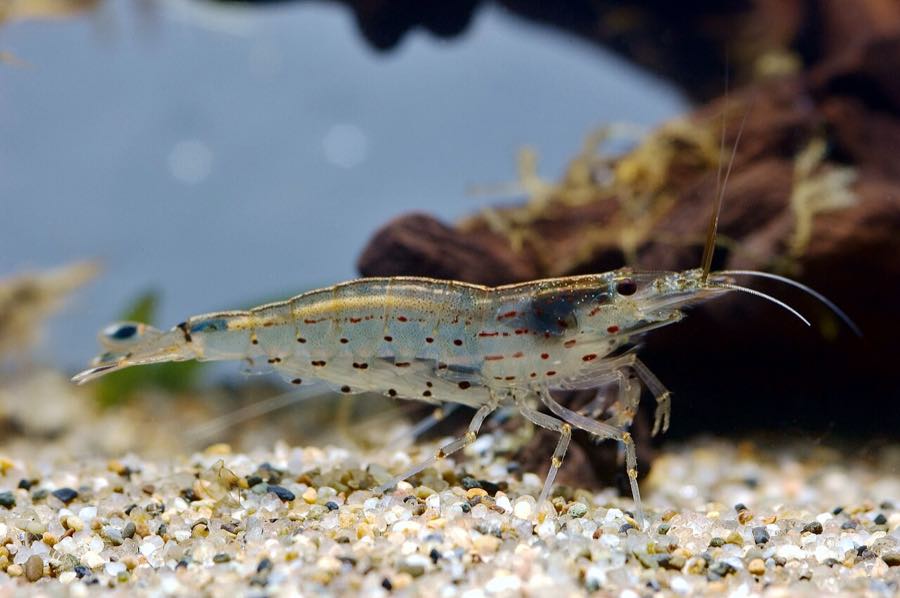
Amano shrimp reach a typical adult length of around 4 cm, with larger individuals growing to 5 cm. Their bodies are translucent with rows of brownish markings, distinguishing them from the solid coloration common in cherry shrimp. You can expect several years of care from them in an established aquarium.Amano shrimp reach a typical adult length of around 2 in, with larger individuals growing to 2 in. Their bodies are translucent with rows of brownish markings, distinguishing them from the solid coloration common in cherry shrimp. You can expect several years of care from them in an established aquarium.[1][2]
Treat Amanos as grazers that help with tank maintenance rather than creatures that make waste disappear. They convert food into shrimp waste that still needs removal, and their presence does not eliminate the need for water changes.Treat Amanos as grazers that help with tank maintenance rather than creatures that make waste disappear. They convert food into shrimp waste that still needs removal, and their presence does not eliminate the need for water changes.[1]
Amano shrimp tank mates
Cherry shrimpCherry shrimp can share suitable water conditions with Amanos, although the larger Amano shrimp may steal their food during feeding times. can share suitable water conditions with Amanos, although the larger Amano shrimp may steal their food during feeding times.[2][5]
Horned nerite snailsHorned nerite snails offer another compatible grazing option without the threat of fish predation. Similarly, offer another compatible grazing option without the threat of fish predation. Similarly, ramshorn snailsramshorn snails and and Malaysian trumpet snailsMalaysian trumpet snails can live alongside Amanos because they do not hunt healthy shrimp. Monitor total snail numbers and adjust your feeding routine rather than allowing an expanding snail population to justify extra leftover food. can live alongside Amanos because they do not hunt healthy shrimp. Monitor total snail numbers and adjust your feeding routine rather than allowing an expanding snail population to justify extra leftover food.[2][5]
Avoid housing Amanos with Avoid housing Amanos with oscarsoscars, as their predatory feeding habits leave smaller tank inhabitants vulnerable to being eaten., as their predatory feeding habits leave smaller tank inhabitants vulnerable to being eaten.[6][7][9]
Jack DempseysJack Dempseys bring territorial aggression alongside a substantial size difference that makes them unsuitable companions. You should also avoid bring territorial aggression alongside a substantial size difference that makes them unsuitable companions. You should also avoid pea pufferspea puffers, which act as nippy, unpredictable community partners around invertebrates., which act as nippy, unpredictable community partners around invertebrates.[6][7][9]
Usually fine together
- African butterfly cichlid
- African clawed frog
- Agassiz's cory
- American flagfish
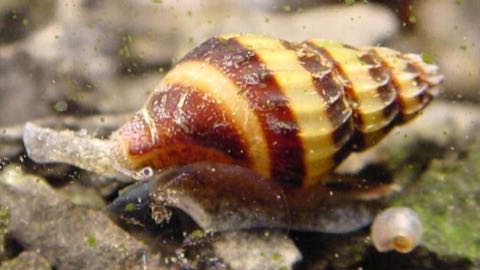 Assassin snail
- Banded gourami
- Bandit cory
- Banjo catfish
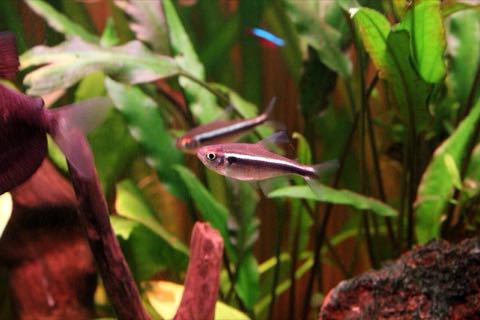 Black neon tetra
- Black phantom tetra
- Black ruby barb
- Blackline rasbora
Avoid with
- African knifefish
African knifefish may eat Amano shrimpAfrican knifefish may eat Amano shrimp
- African pike
African pike may eat Amano shrimpAfrican pike may eat Amano shrimp
- Alligator gar
Alligator gar may eat Amano shrimpAlligator gar may eat Amano shrimp
- Antenna ray
Antenna ray may eat Amano shrimpAntenna ray may eat Amano shrimp
- Arapaima
Arapaima may eat Amano shrimpArapaima may eat Amano shrimp
- Arrowhead puffer
Arrowhead puffer may eat Amano shrimpArrowhead puffer may eat Amano shrimp
- Asian arowana
Asian arowana may eat Amano shrimpAsian arowana may eat Amano shrimp
- Asian upside-down catfish
Asian upside down catfish may eat Amano shrimpAsian upside down catfish may eat Amano shrimp
- Australian pearl arowana
Australian pearl arowana may eat Amano shrimpAustralian pearl arowana may eat Amano shrimp
- Barred bichir
Barred bichir may eat Amano shrimpBarred bichir may eat Amano shrimp
- Black bullhead
Black bullhead may eat Amano shrimpBlack bullhead may eat Amano shrimp
- Black diamond cichlid
Black diamond cichlid may eat Amano shrimpBlack diamond cichlid may eat Amano shrimp
Breeding Amano shrimp
Seeing a female carrying eggs in a freshwater display does not lead to juvenile Amanos. While adult shrimp mate and females carry eggs in fresh water, the hatched larvae require a separate saline rearing stage and specialised feeding before they can return to fresh water as juveniles.Seeing a female carrying eggs in a freshwater display does not lead to juvenile Amanos. While adult shrimp mate and females carry eggs in fresh water, the hatched larvae require a separate saline rearing stage and specialised feeding before they can return to fresh water as juveniles.[1][3]
Prepare your larval food cultures well before attempting to raise a brood. Research on Caridina larvae indicates that feeding conditions directly influence survival and development, with rotifer cultures notably improving outcomes for Amano larvae during the saline phase.Prepare your larval food cultures well before attempting to raise a brood. Research on Caridina larvae indicates that feeding conditions directly influence survival and development, with rotifer cultures notably improving outcomes for Amano larvae during the saline phase.[3][5]
Amano shrimp health problems
Moulting complications can leave a shrimp trapped inside its old exoskeleton or cause death during shedding. Insufficient general hardness often interferes with this process. Check GH regularly, keep replacement water parameters consistent during maintenance, provide a varied diet, and ensure the tank has protected hiding places.Moulting complications can leave a shrimp trapped inside its old exoskeleton or cause death during shedding. Insufficient general hardness often interferes with this process. Check GH regularly, keep replacement water parameters consistent during maintenance, provide a varied diet, and ensure the tank has protected hiding places.[1]
Chemical or pesticide poisoning triggers sudden pink or white discolouration, accompanied by a loss of movement and collapse. Common causes include sprays used near the aquarium, contaminated plants, and unsuitable treatments. Prevent exposure by checking plants and product instructions before introduction, and keep aerosols away from the aquarium.Chemical or pesticide poisoning triggers sudden pink or white discolouration, accompanied by a loss of movement and collapse. Common causes include sprays used near the aquarium, contaminated plants, and unsuitable treatments. Prevent exposure by checking plants and product instructions before introduction, and keep aerosols away from the aquarium.[1]
Ammonia and nitrite poisoning are critical water-quality hazards to investigate if your shrimp stop grazing or begin dying. Clear water does not rule out the presence of either toxin. Keep the biological filter fully established, remove uneaten food promptly, and test parameters whenever equipment fails or waste accumulates.Ammonia and nitrite poisoning are critical water-quality hazards to investigate if your shrimp stop grazing or begin dying. Clear water does not rule out the presence of either toxin. Keep the biological filter fully established, remove uneaten food promptly, and test parameters whenever equipment fails or waste accumulates.[1][8]
Male or female?
Examine the lower row of markings along the side of the body to distinguish sex. Females usually display elongated dashes along their lower line, whereas males show separate round dots. Females also tend to reach a larger adult length and feature a deeper abdomen than males.Examine the lower row of markings along the side of the body to distinguish sex. Females usually display elongated dashes along their lower line, whereas males show separate round dots. Females also tend to reach a larger adult length and feature a deeper abdomen than males.[2]
Questions
How long do Amano shrimp live?
Expect several years of care when keeping Amano shrimp in suitable aquarium conditions.Expect several years of care when keeping Amano shrimp in suitable aquarium conditions.[1][2]
Will Amano shrimp eat all the algae in my tank?
No, treat Amanos as grazers that help with maintenance, not animals that make waste disappear. They convert food into shrimp waste that still needs removal, and they do not eliminate the need for water changes.No, treat Amanos as grazers that help with maintenance, not animals that make waste disappear. They convert food into shrimp waste that still needs removal, and they do not eliminate the need for water changes.[1]
Can Amano shrimp breed in freshwater?
Adults mate and females carry eggs in fresh water, but raising the larvae requires a separate saline stage. Larvae need saline conditions and specialised food before returning to freshwater as juveniles.Adults mate and females carry eggs in fresh water, but raising the larvae requires a separate saline stage. Larvae need saline conditions and specialised food before returning to freshwater as juveniles.[1][3]
How often should I feed Amano shrimp?
Offer a small portion of shrimp granules or a sinking wafer every other day in a mature planted tank. Aim for the portion to disappear within two hours, and remove any remaining food.Offer a small portion of shrimp granules or a sinking wafer every other day in a mature planted tank. Aim for the portion to disappear within two hours, and remove any remaining food.[1][4]
Why has my Amano shrimp turned white?
Sudden whitening or pink coloration, along with loss of movement and collapse, indicates pesticide or chemical poisoning. Possible sources include sprays near the aquarium, contaminated plants, and unsuitable treatments.Sudden whitening or pink coloration, along with loss of movement and collapse, indicates pesticide or chemical poisoning. Possible sources include sprays near the aquarium, contaminated plants, and unsuitable treatments.[1]
Sources
- Amano shrimp: Spineless heroes — Practical Fishkeeping. Accessed 2026-10-05.
- Amano Shrimp - Detailed Guide: Care, Diet and Breeding — Shrimp and Snail Breeder. Accessed 2026-10-05.
- Dietary effects of phytoplankton and zooplankton on larval survival, duration and growth of four Caridina species (Decapoda: Caridea: Atyidae) under laboratory conditions — Crustacean Research. Accessed 2026-10-05.
- Shrimp Feeding Guide: How Much, How Often, and When to Stop — Shrimp and Snail Breeder. Accessed 2026-10-05.
- Red Cherry Shrimp – Detailed Guide: Care, Diet and Breeding — Shrimp and Snail Breeder. Accessed 2026-10-05.
- Astronotus ocellatus (Oscar) — Seriously Fish. Accessed 2026-10-05.
- Rocio octofasciata (Jack Dempsey) — Seriously Fish. Accessed 2026-10-05.
- Ammonia in Aquatic Systems — UF/IFAS Extension. Accessed 2026-10-05.
- Carinotetraodon travancoricus (Dwarf Puffer) — Seriously Fish. Accessed 2026-10-05.
Written from the sources above. Not yet reviewed by an aquarist.
Data used by the planner
| Temperature | 15–27 | AqAdvisor (aqadvisor.com), retrieved 2026-10-04 · medium confidence |
|---|---|---|
| pH | 6–8 | AqAdvisor (aqadvisor.com), retrieved 2026-10-04 · medium confidence |
| Hardness (dGH) | 5–15 | AqAdvisor (aqadvisor.com), retrieved 2026-10-04 · medium confidence |
| Origin | Freshwater; exact natural range needs expert review | curated-v0 (needs expert review) · low confidence |
| Beginner friendly | Yes | curated-v0 (needs expert review) · medium confidence |
| Care level | moderate | curated-v0 (needs expert review) · medium confidence |
| Activity | sedentary | curated-v0 (needs expert review) · medium confidence |
| Swimming level | bottom | curated-v0 (needs expert review) · medium confidence |
| Temperament | peaceful | curated-v0 (needs expert review) · medium confidence |
| Nips fins | No | curated-v0 (needs expert review) · medium confidence |
| Long fins | No | curated-v0 (needs expert review) · medium confidence |
| Territorial | No | curated-v0 (needs expert review) · medium confidence |
| Lives in groups | No | curated-v0 (needs expert review) · medium confidence |
| Minimum group | 1 | curated-v0 (needs expert review) · medium confidence |
| Diet | omnivore | curated-v0 (needs expert review) · medium confidence |
| Lifespan (years) | 1–5 | curated-v0 (needs expert review) · medium confidence |
| Months to adult size | 6 | curated-v0 (needs expert review) · low confidence |
| Safe with plants | Yes | curated-v0 (needs expert review) · medium confidence |
| Minimum tank length | 30 | curated-v0 (needs expert review) · medium confidence |