Malaysian trumpet snail tank size
For small freshwater snails kept in groups, general guidance from OATA recommends a tank volume of at least 10 L, though any community containing fish requires more room. Adult length averages 2.0–2.7 cm in USGS records, while FishProfiles reports an adult length of 3 cm. Their shells are elongated and conical, commonly displaying a light brown colour with rust-coloured spots, up to 10–15 whorls, and a protective operculum.For small freshwater snails kept in groups, general guidance from OATA recommends a tank volume of at least 2.6 gal, though any community containing fish requires more room. Adult length averages 0.8–1.1 in in USGS records, while FishProfiles reports an adult length of 1 in. Their shells are elongated and conical, commonly displaying a light brown colour with rust-coloured spots, up to 10–15 whorls, and a protective operculum.[2][1][3]
Provide a moderately deep substrate in the aquarium so these snails can burrow and hide. Hardscape such as rocks and wood, along with plants, can provide shelter. The shell operculum can protect against desiccation, and snails may remain viable for days outside open water, though you must still keep them in an aquatic setup.Provide a moderately deep substrate in the aquarium so these snails can burrow and hide. Hardscape such as rocks and wood, along with plants, can provide shelter. The shell operculum can protect against desiccation, and snails may remain viable for days outside open water, though you must still keep them in an aquatic setup.[1][4]
Malaysian trumpet snail water parameters
Keep water within overlapping targets of 18–27 °C, pH 7.0–8.0, and 10–18 dGH derived from species data and OATA snail ranges. FishProfiles recommends moderately hard alkaline water to protect shells against erosion.Keep water within overlapping targets of 64–81 °F, pH 7.0–8.0, and 10–18 dGH derived from species data and OATA snail ranges. FishProfiles recommends moderately hard alkaline water to protect shells against erosion.[1][2][4]
Ammonia and nitrite should be zero, and you should test at least weekly to monitor these compounds. Change roughly one quarter of the water weekly with conditioned water. Rinse filter media gently in removed tank water instead of untreated tap water.Ammonia and nitrite should be zero, and you should test at least weekly to monitor these compounds. Change roughly one quarter of the water weekly with conditioned water. Rinse filter media gently in removed tank water instead of untreated tap water.[2]
Feeding Malaysian trumpet snails
Malaysian trumpet snails feed on microalgae and detritus from dead plants and animals. FishProfiles notes that established tanks often contain enough detritus and algae, but OATA advises supplementary feeding with sinking commercial invertebrate pellets, algae wafers, or vegetables.Malaysian trumpet snails feed on microalgae and detritus from dead plants and animals. FishProfiles notes that established tanks often contain enough detritus and algae, but OATA advises supplementary feeding with sinking commercial invertebrate pellets, algae wafers, or vegetables.[3][1][2]
OATA advises offering supplementary food two or three times per week. Leave sinking pellets or wafers for at least 30 minutes to allow the snails time to graze. Excess food decomposes into waste, and FishProfiles links excessive snail numbers to excessive food, so observe available natural food and avoid automatic heavy feeding.OATA advises offering supplementary food two or three times per week. Leave sinking pellets or wafers for at least 30 minutes to allow the snails time to graze. Excess food decomposes into waste, and FishProfiles links excessive snail numbers to excessive food, so observe available natural food and avoid automatic heavy feeding.[2][1]
Malaysian trumpet snail behaviour
This is a burrowing species, often hidden by day and more active at night. Because they spend daylight hours buried in the substrate, visible numbers can underrepresent the total population living in the aquarium.This is a burrowing species, often hidden by day and more active at night. Because they spend daylight hours buried in the substrate, visible numbers can underrepresent the total population living in the aquarium.[1][4]
You can keep them in groups, though OATA states snails are not social animals and have no required group size. FishProfiles reports that this species does not damage live plants or living fish, though it can scavenge fish eggs and dead fish. Because they are native to northern Africa and southern Asia and have been introduced widely, never release aquarium animals or contaminated material into natural waterways.You can keep them in groups, though OATA states snails are not social animals and have no required group size. FishProfiles reports that this species does not damage live plants or living fish, though it can scavenge fish eggs and dead fish. Because they are native to northern Africa and southern Asia and have been introduced widely, never release aquarium animals or contaminated material into natural waterways.[1][2][4]
Malaysian trumpet snail tank mates
Small livebearers such as Small livebearers such as guppiesguppies and and platiesplaties can work with these snails under general OATA community guidance. Match water parameters carefully between species, and plan the fish tank dimensions separately rather than relying on the 10 L minimum volume designed for snails alone. can work with these snails under general OATA community guidance. Match water parameters carefully between species, and plan the fish tank dimensions separately rather than relying on the 2.6 gal minimum volume designed for snails alone.[2]
Larger livebearers including Larger livebearers including swordtailsswordtails and and molliesmollies can also share a community setup. Match water conditions, ensure the enclosure provides sufficient space for adult fish, and observe interactions between the fish and snails. can also share a community setup. Match water conditions, ensure the enclosure provides sufficient space for adult fish, and observe interactions between the fish and snails.[2]
Avoid predatory fish known to target invertebrates. Both Avoid predatory fish known to target invertebrates. Both pea pufferspea puffers and and clown loachesclown loaches prey on snails. You should also avoid prey on snails. You should also avoid assassin snailsassassin snails, which OATA notes prey on other snails, if preserving your trumpet snails is the aim., which OATA notes prey on other snails, if preserving your trumpet snails is the aim.[1][2]
Usually fine together
- Acei cichlid
- African butterfly cichlid
- Agassiz's cory
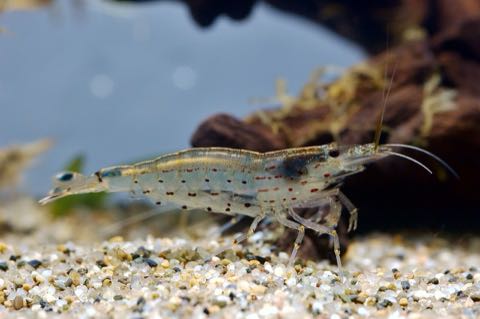 Amano shrimp
- American flagfish
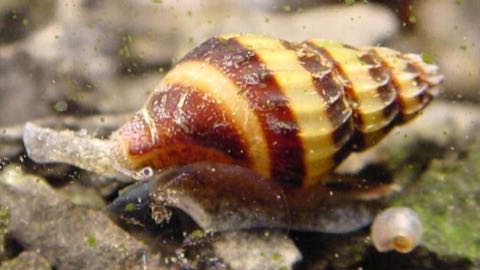 Assassin snail
- Banded gourami
- Bandit cory
- Banjo catfish
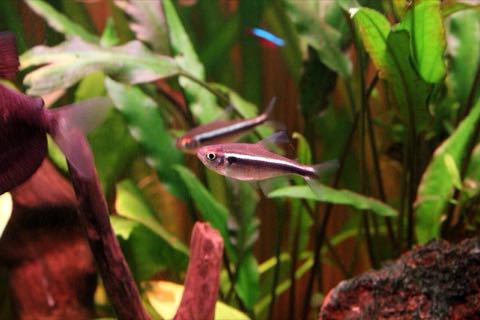 Black neon tetra
- Black phantom tetra
- Black ruby barb
Avoid with
- African clawed frog
African clawed frog may eat Malaysian trumpet snailAfrican clawed frog may eat Malaysian trumpet snail
- Brilliant rasbora
No shared pH rangeNo shared pH range
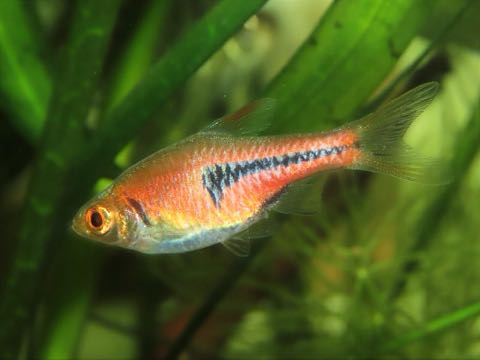 Lambchop rasbora
No shared pH rangeNo shared pH range
- Abei puffer
Abei puffer may eat Malaysian trumpet snailAbei puffer may eat Malaysian trumpet snail
- African butterflyfish
African butterflyfish may eat Malaysian trumpet snailAfrican butterflyfish may eat Malaysian trumpet snail
- African knifefish
African knifefish may eat Malaysian trumpet snailAfrican knifefish may eat Malaysian trumpet snail
- African pike
African pike may eat Malaysian trumpet snailAfrican pike may eat Malaysian trumpet snail
- Alligator gar
Alligator gar may eat Malaysian trumpet snailAlligator gar may eat Malaysian trumpet snail
- Altum angelfish
No shared water hardness rangeNo shared water hardness range
- Amazon leaffish
No shared water hardness rangeNo shared water hardness range
- Amazon toadfish
Amazon toadfish may eat Malaysian trumpet snailAmazon toadfish may eat Malaysian trumpet snail
- Antenna ray
Antenna ray may eat Malaysian trumpet snailAntenna ray may eat Malaysian trumpet snail
Breeding Malaysian trumpet snails
This species broods young internally and releases live offspring. Reproduction can occur sexually or through parthenogenesis, with some female lineages reproducing without a male. Recorded brood sizes vary by source: USGS describes broods of up to 64 young under favourable conditions, whereas toxicity research mentions broods with more than 70 embryos.This species broods young internally and releases live offspring. Reproduction can occur sexually or through parthenogenesis, with some female lineages reproducing without a male. Recorded brood sizes vary by source: USGS describes broods of up to 64 young under favourable conditions, whereas toxicity research mentions broods with more than 70 embryos.[3][4]
FishProfiles describes population expansion associated with excessive food and recommends feeding the tank appropriately. Controlling food amounts provides a practical method of managing numbers, but food management acts as control rather than complete eradication.FishProfiles describes population expansion associated with excessive food and recommends feeding the tank appropriately. Controlling food amounts provides a practical method of managing numbers, but food management acts as control rather than complete eradication.[1][2]
Malaysian trumpet snail health problems
Shell dissolution or erosion is associated with acidic water. FishProfiles recommends moderately hard alkaline water between pH 7.0–8.0 and 10–18 dGH to protect snail shells. If you notice shell damage, check your water pH and hardness, as no repair treatment is established.Shell dissolution or erosion is associated with acidic water. FishProfiles recommends moderately hard alkaline water between pH 7.0–8.0 and 10–18 dGH to protect snail shells. If you notice shell damage, check your water pH and hardness, as no repair treatment is established.[1][2][4]
Copper toxicity presents a lethal risk demonstrated in laboratory mortality studies of this species. To prevent fatal exposure, follow OATA guidance and avoid copper-containing aquarium treatments unless the product is specifically labelled as suitable for invertebrates.Copper toxicity presents a lethal risk demonstrated in laboratory mortality studies of this species. To prevent fatal exposure, follow OATA guidance and avoid copper-containing aquarium treatments unless the product is specifically labelled as suitable for invertebrates.[2][4]
Ammonia and nitrite exposure can cause stress, illness, or death according to OATA. Changed activity levels or reduced feeding serve as general warning signs rather than specific diagnoses. Test water weekly and keep both compounds at zero to reduce exposure risks.Ammonia and nitrite exposure can cause stress, illness, or death according to OATA. Changed activity levels or reduced feeding serve as general warning signs rather than specific diagnoses. Test water weekly and keep both compounds at zero to reduce exposure risks.[2]
Questions
Are Malaysian trumpet snails good or bad?
Their impact depends on tank goals. FishProfiles reports they do not damage live plants or living fish, and they scavenge microalgae and detritus. However, they can scavenge fish eggs, and excessive food leads to rapid population growth.Their impact depends on tank goals. FishProfiles reports they do not damage live plants or living fish, and they scavenge microalgae and detritus. However, they can scavenge fish eggs, and excessive food leads to rapid population growth.[3][1][2]
Do Malaysian trumpet snails multiply fast?
Yes, populations can expand quickly when food is plentiful. They brood young internally and produce live offspring. Some female lineages reproduce through parthenogenesis without needing a male, yielding litters that can exceed 60 or 70 young.Yes, populations can expand quickly when food is plentiful. They brood young internally and produce live offspring. Some female lineages reproduce through parthenogenesis without needing a male, yielding litters that can exceed 60 or 70 young.[1][2][3][4]
What should I do if I have a Malaysian trumpet snail infestation?
Control the amount of food entering the aquarium. FishProfiles links excessive snail numbers to excess food and recommends feeding the tank appropriately. Reducing food helps manage snail numbers, but feeding control alone may leave snails present.Control the amount of food entering the aquarium. FishProfiles links excessive snail numbers to excess food and recommends feeding the tank appropriately. Reducing food helps manage snail numbers, but feeding control alone may leave snails present.[1][2]
Do Malaysian trumpet snails eat plants?
FishProfiles reports that this species does not damage live plants. Their natural diet consists of microalgae and detritus from dead plants and animals, though they will also accept supplementary sinking pellets and vegetables.FishProfiles reports that this species does not damage live plants. Their natural diet consists of microalgae and detritus from dead plants and animals, though they will also accept supplementary sinking pellets and vegetables.[1][3][2]
What will eat Malaysian trumpet snails?
Pufferfish such as pea puffers and loaches such as clown loaches are known predators of snails. In addition, assassin snails prey directly on other freshwater snail species.Pufferfish such as pea puffers and loaches such as clown loaches are known predators of snails. In addition, assassin snails prey directly on other freshwater snail species.[1][2]
Sources
- Melanoides tuberculata — FishProfiles.com. Accessed 2026-10-05.
- How to look after freshwater shrimp and snails — Ornamental Aquatic Trade Association. Accessed 2026-10-05.
- red-rim melania (Melanoides tuberculata) - Species Profile — U.S. Geological Survey. Accessed 2026-10-05.
- Toxicity of Metals to a Freshwater Snail, Melanoides tuberculata — Journal of Toxicology. Accessed 2026-10-05.
Written from the sources above. Not yet reviewed by an aquarist.
Data used by the planner
| Temperature | 16–30 | AqAdvisor (aqadvisor.com), retrieved 2026-10-04 · medium confidence |
|---|---|---|
| pH | 7–9 | AqAdvisor (aqadvisor.com), retrieved 2026-10-04 · medium confidence |
| Hardness (dGH) | 10–30 | AqAdvisor (aqadvisor.com), retrieved 2026-10-04 · medium confidence |
| Origin | Freshwater; exact natural range needs expert review | curated-v0 (needs expert review) · low confidence |
| Beginner friendly | Yes | curated-v0 (needs expert review) · medium confidence |
| Care level | moderate | curated-v0 (needs expert review) · medium confidence |
| Activity | sedentary | curated-v0 (needs expert review) · medium confidence |
| Swimming level | bottom | curated-v0 (needs expert review) · medium confidence |
| Temperament | peaceful | curated-v0 (needs expert review) · medium confidence |
| Nips fins | No | curated-v0 (needs expert review) · medium confidence |
| Long fins | No | curated-v0 (needs expert review) · medium confidence |
| Territorial | No | curated-v0 (needs expert review) · medium confidence |
| Lives in groups | No | curated-v0 (needs expert review) · medium confidence |
| Minimum group | 1 | curated-v0 (needs expert review) · medium confidence |
| Diet | omnivore | curated-v0 (needs expert review) · medium confidence |
| Lifespan (years) | 1–5 | curated-v0 (needs expert review) · medium confidence |
| Months to adult size | 6 | curated-v0 (needs expert review) · low confidence |
| Safe with plants | Yes | curated-v0 (needs expert review) · medium confidence |
| Minimum tank length | 30 | curated-v0 (needs expert review) · medium confidence |