Platy tank size
Choose a tank at least 60 cm long. Platies are active swimmers that need an unobstructed central area across the aquarium alongside perimeter planting, rather than just a sparse arrangement of small ornaments.Choose a tank at least 24 in long. Platies are active swimmers that need an unobstructed central area across the aquarium alongside perimeter planting, rather than just a sparse arrangement of small ornaments.[1][8]
Platies reproduce readily in ordinary home aquariums. A comfortable starting group can quickly outgrow its quarters as offspring develop, so decide where future young will live before buying males and females together.Platies reproduce readily in ordinary home aquariums. A comfortable starting group can quickly outgrow its quarters as offspring develop, so decide where future young will live before buying males and females together.[1][8]
Platy water parameters
Aim for a steady water temperature between 20–25 °C. For water chemistry, provide a pH of 7.0–7.8 and general hardness around 10–15 dGH instead of soft, acidic conditions.Aim for a steady water temperature between 68–77 °F. For water chemistry, provide a pH of 7.0–7.8 and general hardness around 10–15 dGH instead of soft, acidic conditions.[1]
Keep ammonia and nitrite undetectable by cycling the filter completely before adding any fish and testing the water regularly afterward. A growing population combined with heavier feeding increases biological waste faster than casual inspection reveals.Keep ammonia and nitrite undetectable by cycling the filter completely before adding any fish and testing the water regularly afterward. A growing population combined with heavier feeding increases biological waste faster than casual inspection reveals.[3][4]
Feeding platies
Offer two small meals daily using a complete aquarium flake or small pellet food as your nutritional foundation. Provide only what the fish consume completely within about two minutes to prevent uneaten waste from decaying.Offer two small meals daily using a complete aquarium flake or small pellet food as your nutritional foundation. Provide only what the fish consume completely within about two minutes to prevent uneaten waste from decaying.[1][2][8]
Platies naturally accept both plant and animal foods. Vary their staple flakes with appropriately sized frozen or live offerings. Even when you observe them grazing around aquarium surfaces, maintain a dependable feeding routine.Platies naturally accept both plant and animal foods. Vary their staple flakes with appropriately sized frozen or live offerings. Even when you observe them grazing around aquarium surfaces, maintain a dependable feeding routine.[1][2][8]
Platy behaviour
Keep at least three platies as a practical starting group. When mixing sexes, keep more females than males and maintain dense plants to spread out persistent courtship attention.Keep at least three platies as a practical starting group. When mixing sexes, keep more females than males and maintain dense plants to spread out persistent courtship attention.[1][8]
Platies reach an adult length around 5 cm, with larger specimens reaching 5.1 cm. Stores stock numerous colour strains, including Mickey Mouse, wagtail, tuxedo, solid red, blue, and high-fin varieties.Platies reach an adult length around 2 in, with larger specimens reaching 2 in. Stores stock numerous colour strains, including Mickey Mouse, wagtail, tuxedo, solid red, blue, and high-fin varieties.[1][8]
WebMD notes that platies typically live for two to three years in home aquariums. Day-to-day care routines, water quality, and individual genetics directly influence their overall lifespan.WebMD notes that platies typically live for two to three years in home aquariums. Day-to-day care routines, water quality, and individual genetics directly influence their overall lifespan.[8]
Platy tank mates
GuppiesGuppies and and molliesmollies share similar preferences for mineral-rich water, making shared planning straightforward in a sufficiently spacious tank. However, housing these livebearers together means managing fast reproductive rates across multiple groups. share similar preferences for mineral-rich water, making shared planning straightforward in a sufficiently spacious tank. However, housing these livebearers together means managing fast reproductive rates across multiple groups.[1][8]
Bronze corydorasBronze corydoras and and bristlenose plecosbristlenose plecos settle well into the lower levels of a suitable aquarium without competing for middle swimming space. Ensure your chosen temperature and water hardness remain within limits tolerated by both bottom dwellers. settle well into the lower levels of a suitable aquarium without competing for middle swimming space. Ensure your chosen temperature and water hardness remain within limits tolerated by both bottom dwellers.[1][2][8]
Avoid predatory cichlids such as Avoid predatory cichlids such as oscarsoscars, which can swallow small platies whole. Similarly, exclude , which can swallow small platies whole. Similarly, exclude Jack DempseysJack Dempseys due to disruptive territorial aggression, and omit due to disruptive territorial aggression, and omit pea pufferspea puffers, which tend to nip fins and harass companions., which tend to nip fins and harass companions.[6][7][9]
Usually fine together
- African butterfly cichlid
- African clawed frog
- Agassiz's cory
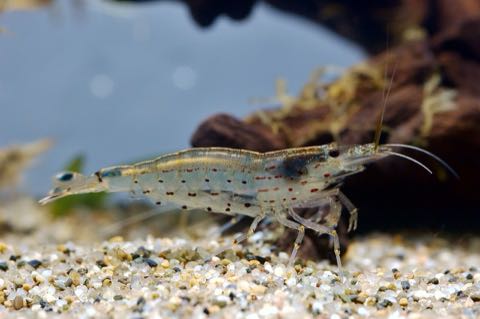 Amano shrimp
- American flagfish
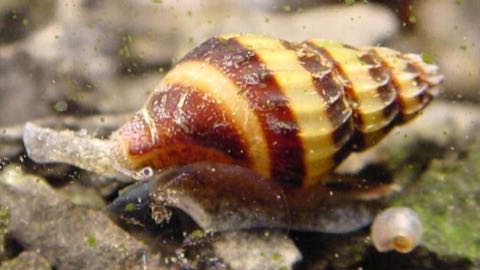 Assassin snail
- Banded gourami
- Bandit cory
- Banjo catfish
- Black phantom tetra
- Black ruby barb
- Blackline rasbora
Avoid with
- Irian Jaya rainbowfish
No shared temperature rangeNo shared temperature range
- Parkinson's rainbowfish
No shared temperature rangeNo shared temperature range
- Rusty cichlid
No shared temperature rangeNo shared temperature range
- African knifefish
African knifefish may eat PlatyAfrican knifefish may eat Platy
- African pike
African pike may eat PlatyAfrican pike may eat Platy
- Alligator gar
Alligator gar may eat PlatyAlligator gar may eat Platy
- Altum angelfish
No shared temperature rangeNo shared temperature range
- Antenna ray
Antenna ray may eat PlatyAntenna ray may eat Platy
- Arapaima
Arapaima may eat PlatyArapaima may eat Platy
- Asian arowana
Asian arowana may eat PlatyAsian arowana may eat Platy
- Asian upside-down catfish
Asian upside down catfish may eat PlatyAsian upside down catfish may eat Platy
- Australian pearl arowana
Australian pearl arowana may eat PlatyAustralian pearl arowana may eat Platy
Breeding platies
Female platies give birth to free-swimming young rather than laying eggs. A distinctly rounded abdomen signals pregnancy, and repeat deliveries occur regularly whenever males and females share an aquarium.Female platies give birth to free-swimming young rather than laying eggs. A distinctly rounded abdomen signals pregnancy, and repeat deliveries occur regularly whenever males and females share an aquarium.[1][8]
Offer newborn fry finely powdered flake food or newly hatched brine shrimp in small, observed meals. Maintain pristine water conditions through steady maintenance, and plan for additional tank volume as the brood develops.Offer newborn fry finely powdered flake food or newly hatched brine shrimp in small, observed meals. Maintain pristine water conditions through steady maintenance, and plan for additional tank volume as the brood develops.[1][8]
Platy health problems
Fin rot causes fin margins to fray, recede, and occasionally show red edges. Bacterial infection usually follows periods of physical stress, injury, or declining water quality. Maintain clean water, separate aggressive companions, and inspect damaged tissue regularly.Fin rot causes fin margins to fray, recede, and occasionally show red edges. Bacterial infection usually follows periods of physical stress, injury, or declining water quality. Maintain clean water, separate aggressive companions, and inspect damaged tissue regularly.[4][8]
Ich produces visible white spots across the body and fins, accompanied by rapid breathing or scratching against surfaces. The parasite spreads via infected fish or contaminated equipment, even when newcomers look clear. Quarantine arrivals for 30 days and dedicate separate nets to each tank.Ich produces visible white spots across the body and fins, accompanied by rapid breathing or scratching against surfaces. The parasite spreads via infected fish or contaminated equipment, even when newcomers look clear. Quarantine arrivals for 30 days and dedicate separate nets to each tank.[5][8]
Velvet presents as a fine yellowish or golden dust across the body and coincides with sluggishness or illness. This parasitic coat differs from naturally reflective scales. Quarantine new fish before mixing, and seek positive disease identification if the coating accompanies poor appetite or abnormal swimming.Velvet presents as a fine yellowish or golden dust across the body and coincides with sluggishness or illness. This parasitic coat differs from naturally reflective scales. Quarantine new fish before mixing, and seek positive disease identification if the coating accompanies poor appetite or abnormal swimming.[4][8]
Male or female?
Examine the anal fin on the underside of the body. Mature males possess a narrow, pointed gonopodium used for mating, whereas females show a broader, fan-shaped fin and typically grow to a noticeably larger body size.Examine the anal fin on the underside of the body. Mature males possess a narrow, pointed gonopodium used for mating, whereas females show a broader, fan-shaped fin and typically grow to a noticeably larger body size.[1][8]
Questions
How big of a tank do platies need?
Platies need a tank at least 60 cm long. This provides active adults with open horizontal swimming space while leaving plenty of border room for living plants.Platies need a tank at least 24 in long. This provides active adults with open horizontal swimming space while leaving plenty of border room for living plants.[1][8]
How long do platies live?
Platies typically live for two to three years in home aquariums according to WebMD. Attentive daily care, proper diet, and consistent water parameters help support their full lifespan.Platies typically live for two to three years in home aquariums according to WebMD. Attentive daily care, proper diet, and consistent water parameters help support their full lifespan.[8]
How often should I feed my platies?
Feed your platies two small meals daily. Offer complete flakes or small pellets in quantities they can finish completely in about two minutes, supplementing with suitable frozen or live foods.Feed your platies two small meals daily. Offer complete flakes or small pellets in quantities they can finish completely in about two minutes, supplementing with suitable frozen or live foods.[1][2][8]
Can I keep only male platies?
Yes, keeping an all-male group works well if you want to avoid unplanned breeding. A single-sex group prevents repeat pregnancies and the population explosions common in mixed livebearer aquariums.Yes, keeping an all-male group works well if you want to avoid unplanned breeding. A single-sex group prevents repeat pregnancies and the population explosions common in mixed livebearer aquariums.[1][8]
Why is my platy hiding?
Platies hide when stressed by poor water conditions, territorial harassment, or persistent mating pursuit. Provide planted refuges to diffuse male attention, test for ammonia and nitrite, and check that tank mates are non-aggressive.Platies hide when stressed by poor water conditions, territorial harassment, or persistent mating pursuit. Provide planted refuges to diffuse male attention, test for ammonia and nitrite, and check that tank mates are non-aggressive.[3][4][1][8][6][7][9]
Sources
- Xiphophorus maculatus (Platy) — Seriously Fish. Accessed 2026-10-05.
- What to feed your fish — RSPCA. Accessed 2026-10-05.
- Ammonia in Aquatic Systems — UF/IFAS Extension. Accessed 2026-10-05.
- Frequently asked questions on treating sick fish — Practical Fishkeeping. Accessed 2026-10-05.
- Ichthyophthirius multifiliis (White Spot) Infections in Fish — UF/IFAS Extension. Accessed 2026-10-05.
- Astronotus ocellatus (Oscar) — Seriously Fish. Accessed 2026-10-05.
- Rocio octofasciata (Jack Dempsey) — Seriously Fish. Accessed 2026-10-05.
- Platies as Pets: Care, Diet, Tank Setup & Breeding Tips — WebMD. Accessed 2026-10-05.
- Carinotetraodon travancoricus (Dwarf Puffer) — Seriously Fish. Accessed 2026-10-05.
Written from the sources above. Not yet reviewed by an aquarist.
Data used by the planner
| Temperature | 18–25 | AqAdvisor (aqadvisor.com), retrieved 2026-10-04; agrees with FishBase (fishbase.se), retrieved 2026-10-04 · medium confidence |
|---|---|---|
| pH | 5.5–7.8 | AqAdvisor (aqadvisor.com), retrieved 2026-10-04 · low confidence |
| Hardness (dGH) | 1–15 | AqAdvisor (aqadvisor.com), retrieved 2026-10-04 · low confidence |
| Origin | Central and northern South America | curated-v0 (needs expert review) · low confidence |
| Beginner friendly | Yes | curated-v0 (needs expert review) · medium confidence |
| Care level | easy | curated-v0 (needs expert review) · medium confidence |
| Activity | moderate | curated-v0 (needs expert review) · medium confidence |
| Swimming level | middle | curated-v0 (needs expert review) · medium confidence |
| Temperament | peaceful | curated-v0 (needs expert review) · medium confidence |
| Nips fins | No | curated-v0 (needs expert review) · medium confidence |
| Long fins | No | curated-v0 (needs expert review) · medium confidence |
| Territorial | No | curated-v0 (needs expert review) · medium confidence |
| Lives in groups | No | curated-v0 (needs expert review) · medium confidence |
| Minimum group | 1 | curated-v0 (needs expert review) · medium confidence |
| Diet | omnivore | curated-v0 (needs expert review) · medium confidence |
| Lifespan (years) | 3–6 | curated-v0 (needs expert review) · low confidence |
| Months to adult size | 12 | curated-v0 (needs expert review) · low confidence |
| Safe with plants | Yes | curated-v0 (needs expert review) · medium confidence |
| Minimum tank length | 60 | curated-v0 (needs expert review) · medium confidence |