Agassiz cory tank size
Prioritise bottom surface area over tank height when planning space for the full group. These fish spend their time on the substrate, so ample floor room matters far more than vertical swimming volume. Never crowd the substrate under the assumption that these fish function as a clean-up crew.Prioritise bottom surface area over tank height when planning space for the full group. These fish spend their time on the substrate, so ample floor room matters far more than vertical swimming volume. Never crowd the substrate under the assumption that these fish function as a clean-up crew.[1]
Use fine sand or smooth rounded gravel that you keep clean. Provide shaded cover while keeping open feeding areas accessible across the substrate. Ensure an unobstructed path to the water surface because this species takes in atmospheric air through a modified intestine.Use fine sand or smooth rounded gravel that you keep clean. Provide shaded cover while keeping open feeding areas accessible across the substrate. Ensure an unobstructed path to the water surface because this species takes in atmospheric air through a modified intestine.[1]
Agassiz cory water parameters
Maintain water temperatures of 22–25 °C, a pH between 6.0–7.5, and general hardness from 2–12 dGH. Keep these chemical parameters steady within this shared range.Maintain water temperatures of 72–77 °F, a pH between 6.0–7.5, and general hardness from 2–12 dGH. Keep these chemical parameters steady within this shared range.[1]
Ammonia is toxic to fish and must remain undetectable at all times. Run an established biological filter to process waste, and avoid overfeeding since decaying surplus food and fish waste generate ammonia. Test your water immediately if you observe a decline in appetite or sudden behavioural shifts, rather than assuming clear water indicates good conditions.Ammonia is toxic to fish and must remain undetectable at all times. Run an established biological filter to process waste, and avoid overfeeding since decaying surplus food and fish waste generate ammonia. Test your water immediately if you observe a decline in appetite or sudden behavioural shifts, rather than assuming clear water indicates good conditions.[3]
Feeding Agassiz cories
Feed this foraging omnivore twice daily with small meals finished in about two minutes. Use sinking dry foods, sinking tablets, and small live or frozen items like bloodworm and Tubifex to provide a varied diet. Check that sinking rations reach the bottom rather than getting intercepted by faster fish swimming higher up. Never expect them to survive on scraps or clean tank waste, and adjust portions based on observed group intake.Feed this foraging omnivore twice daily with small meals finished in about two minutes. Use sinking dry foods, sinking tablets, and small live or frozen items like bloodworm and Tubifex to provide a varied diet. Check that sinking rations reach the bottom rather than getting intercepted by faster fish swimming higher up. Never expect them to survive on scraps or clean tank waste, and adjust portions based on observed group intake.[1][2]
Agassiz cory behaviour
Agassiz cory is a peaceful, social fish that reaches an adult length of 7 cm standard length. Always keep at least six fish of the same species together to accommodate their social nature.Agassiz cory is a peaceful, social fish that reaches an adult length of 3 in standard length. Always keep at least six fish of the same species together to accommodate their social nature.[1]
Shops often misapply names, confusing Brochis agassizii with Brochis ambiacus, which is more common in trade channels. Confirm the fish's origin and characteristics rather than trusting a retailer label. Markings vary across individuals, though the original species description notes three black leading dorsal rays and spotted tail patterning.Shops often misapply names, confusing Brochis agassizii with Brochis ambiacus, which is more common in trade channels. Confirm the fish's origin and characteristics rather than trusting a retailer label. Markings vary across individuals, though the original species description notes three black leading dorsal rays and spotted tail patterning.[1]
Occasional quick trips to the water surface are normal because this species uses intestinal breathing. However, persistent distress is not normal; test the water and assess your aquarium rather than dismissing continuous distress. When netting or moving fish, handle them carefully without bare hands, as their sharp pectoral spines can pierce human skin and catch during handling.Occasional quick trips to the water surface are normal because this species uses intestinal breathing. However, persistent distress is not normal; test the water and assess your aquarium rather than dismissing continuous distress. When netting or moving fish, handle them carefully without bare hands, as their sharp pectoral spines can pierce human skin and catch during handling.[1][3]
Agassiz cory tank mates
Small peaceful schooling species like Small peaceful schooling species like Neon tetrasNeon tetras and and Harlequin rasborasHarlequin rasboras can work above the bottom zone. Maintain each companion species in its own shoal, and only combine them if your aquarium offers compatible water parameters and sufficient physical space. can work above the bottom zone. Maintain each companion species in its own shoal, and only combine them if your aquarium offers compatible water parameters and sufficient physical space.[1][9][10]
Zebra daniosZebra danios can also share an aquarium if their swimming room is accommodated and you verify sinking food actually reaches the cory group below. Similarly, peaceful can also share an aquarium if their swimming room is accommodated and you verify sinking food actually reaches the cory group below. Similarly, peaceful Honey gouramisHoney gouramis make suitable tank mates if you provide adequate cover, compatible water conditions, and enough space for both species. make suitable tank mates if you provide adequate cover, compatible water conditions, and enough space for both species.[1][11][12]
Avoid large or predatory cichlids. Adult Avoid large or predatory cichlids. Adult OscarsOscars can readily swallow smaller bottom dwellers. Keep can readily swallow smaller bottom dwellers. Keep Jack DempseysJack Dempseys out of the tank as well, because their mature aggression and predatory behaviour pose direct danger to a peaceful cory group. out of the tank as well, because their mature aggression and predatory behaviour pose direct danger to a peaceful cory group.[1][6][7]
Do not house Do not house Pea puffersPea puffers with this species. Pea puffers display difficult community behaviour and carry a known risk of fin-nipping that disrupts peaceful bottom fish. with this species. Pea puffers display difficult community behaviour and carry a known risk of fin-nipping that disrupts peaceful bottom fish.[1][8]
Usually fine together
- African butterfly cichlid
- African clawed frog
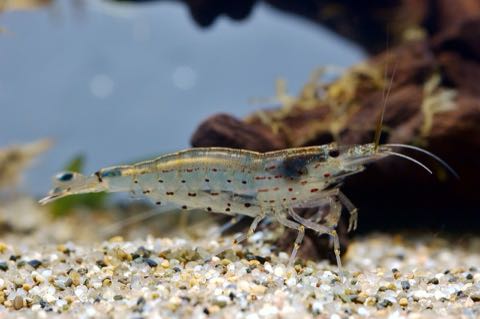 Amano shrimp
- American flagfish
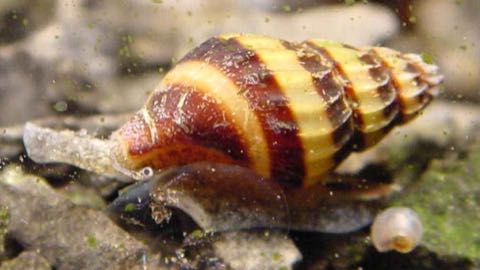 Assassin snail
- Banded gourami
- Bandit cory
- Banjo catfish
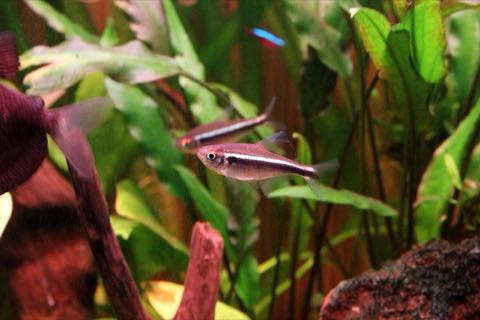 Black neon tetra
- Black phantom tetra
- Black ruby barb
- Blackline rasbora
Avoid with
- African knifefish
African knifefish may eat Agassiz's coryAfrican knifefish may eat Agassiz's cory
- African pike
African pike may eat Agassiz's coryAfrican pike may eat Agassiz's cory
- Alligator gar
Alligator gar may eat Agassiz's coryAlligator gar may eat Agassiz's cory
- Antenna ray
Antenna ray may eat Agassiz's coryAntenna ray may eat Agassiz's cory
- Arapaima
Arapaima may eat Agassiz's coryArapaima may eat Agassiz's cory
- Asian arowana
Asian arowana may eat Agassiz's coryAsian arowana may eat Agassiz's cory
- Asian upside-down catfish
Asian upside down catfish may eat Agassiz's coryAsian upside down catfish may eat Agassiz's cory
- Australian pearl arowana
Australian pearl arowana may eat Agassiz's coryAustralian pearl arowana may eat Agassiz's cory
- Barred bichir
Barred bichir may eat Agassiz's coryBarred bichir may eat Agassiz's cory
- Black bullhead
Black bullhead may eat Agassiz's coryBlack bullhead may eat Agassiz's cory
- Black diamond cichlid
Black diamond cichlid may eat Agassiz's coryBlack diamond cichlid may eat Agassiz's cory
- Brown bullhead
Brown bullhead may eat Agassiz's coryBrown bullhead may eat Agassiz's cory
Agassiz cory health problems
Ich can cause scattered white spots, rubbing, clamped fins, and laboured breathing. The parasite can also affect the gills without producing obvious white spots on the skin. Seek a prompt diagnosis rather than assuming every white mark is ich.Ich can cause scattered white spots, rubbing, clamped fins, and laboured breathing. The parasite can also affect the gills without producing obvious white spots on the skin. Seek a prompt diagnosis rather than assuming every white mark is ich.[5]
To reduce the risk of introducing ich into your aquarium, quarantine new fish for at least 30 days before adding them to the display. Never move wet, contaminated equipment between different tanks.To reduce the risk of introducing ich into your aquarium, quarantine new fish for at least 30 days before adding them to the display. Never move wet, contaminated equipment between different tanks.[5]
Bacterial fin rot can produce red or blood-streaked fins along with progressively frayed and receding edges. Poor aquarium conditions elevate this risk. Maintain water quality and eliminate sources of physical harassment or injury, keeping in mind that a single split fin is not a diagnosis.Bacterial fin rot can produce red or blood-streaked fins along with progressively frayed and receding edges. Poor aquarium conditions elevate this risk. Maintain water quality and eliminate sources of physical harassment or injury, keeping in mind that a single split fin is not a diagnosis.[4]
Fungal cotton-wool disease appears as fluffy pale growth on damaged tissues, commonly following environmental stress, rough handling, or physical cuts. Avoid sharp decorations, handle fish gently, keep water clean, and seek a proper diagnosis, as bacterial mouth rot can closely resemble fungus.Fungal cotton-wool disease appears as fluffy pale growth on damaged tissues, commonly following environmental stress, rough handling, or physical cuts. Avoid sharp decorations, handle fish gently, keep water clean, and seek a proper diagnosis, as bacterial mouth rot can closely resemble fungus.[4]
Male or female?
Adult female Agassiz cories usually grow larger than males and exhibit a noticeably broader, rounder body shape, especially when carrying eggs. Juveniles cannot be reliably sexed by appearance alone.Adult female Agassiz cories usually grow larger than males and exhibit a noticeably broader, rounder body shape, especially when carrying eggs. Juveniles cannot be reliably sexed by appearance alone.[1]
Questions
How many cory catfish should be kept together?
Keep at least six fish of the same species together. Agassiz's cory is a peaceful, social bottom dweller that requires a group setting rather than being housed alone.Keep at least six fish of the same species together. Agassiz's cory is a peaceful, social bottom dweller that requires a group setting rather than being housed alone.[1]
Can I keep only three corydoras?
No, you should not keep only three. The minimum group size for Agassiz's cory is six fish of the same species to satisfy their social needs.No, you should not keep only three. The minimum group size for Agassiz's cory is six fish of the same species to satisfy their social needs.[1]
What is the best fish to pair with cory catfish?
There is no single best companion, but peaceful schooling fish like There is no single best companion, but peaceful schooling fish like Neon tetrasNeon tetras, , Harlequin rasborasHarlequin rasboras, and , and Zebra daniosZebra danios can work. You must provide compatible water conditions, sufficient space, and maintain companions in their own shoals while making sure food reaches the bottom. can work. You must provide compatible water conditions, sufficient space, and maintain companions in their own shoals while making sure food reaches the bottom.[1][9][10][11]
Do Corydoras prefer sand or gravel?
Use clean fine sand or smooth rounded gravel for this species. Keep open feeding zones accessible and provide shaded shelter across the bottom.Use clean fine sand or smooth rounded gravel for this species. Keep open feeding zones accessible and provide shaded shelter across the bottom.[1]
What is Corydoras’ favorite food?
Provide a varied diet rather than relying on one food. Feed sinking dry foods, sinking tablets, and small live or frozen foods such as bloodworm and Tubifex.Provide a varied diet rather than relying on one food. Feed sinking dry foods, sinking tablets, and small live or frozen foods such as bloodworm and Tubifex.[1][2]
Sources
- Brochis agassizii (Spotted Cory) — Seriously Fish. Accessed 2026-10-05.
- What to feed your fish — RSPCA. Accessed 2026-10-05.
- Ammonia in Aquatic Systems — UF/IFAS Extension. Accessed 2026-10-05.
- Frequently asked questions on treating sick fish — Practical Fishkeeping. Accessed 2026-10-05.
- Ichthyophthirius multifiliis (White Spot) Infections in Fish — UF/IFAS Extension. Accessed 2026-10-05.
- Astronotus ocellatus (Oscar) — Seriously Fish. Accessed 2026-10-05.
- Rocio octofasciata (Jack Dempsey) — Seriously Fish. Accessed 2026-10-05.
- Carinotetraodon travancoricus (Dwarf Puffer) — Seriously Fish. Accessed 2026-10-05.
- Neon tetra species profile — Seriously Fish. Accessed 2026-10-05.
- Harlequin rasbora species profile — Seriously Fish. Accessed 2026-10-05.
- Zebra danio species profile — Seriously Fish. Accessed 2026-10-05.
- Honey gourami species profile — Seriously Fish. Accessed 2026-10-05.
Written from the sources above. Not yet reviewed by an aquarist.
Data used by the planner
| Temperature range | 22–27 | AqAdvisor (aqadvisor.com), retrieved 2026-10-04; agrees with FishBase (fishbase.se), retrieved 2026-10-04 · medium confidence |
|---|---|---|
| pH | 5.5–7.8 | AqAdvisor (aqadvisor.com), retrieved 2026-10-04; agrees with FishBase (fishbase.se), retrieved 2026-10-04 · medium confidence |
| Hardness (dGH) | 1–15 | AqAdvisor (aqadvisor.com), retrieved 2026-10-04 · low confidence |
| Origin | Upper Amazon, Peru and Brazil | curated-v0 (needs expert review) · low confidence |
| Beginner friendly | Yes | curated-v0 (needs expert review) · medium confidence |
| Care level | easy | curated-v0 (needs expert review) · medium confidence |
| Activity | moderate | curated-v0 (needs expert review) · medium confidence |
| Swimming level | bottom | curated-v0 (needs expert review) · medium confidence |
| Temperament | peaceful | curated-v0 (needs expert review) · medium confidence |
| Nips fins | No | curated-v0 (needs expert review) · medium confidence |
| Long fins | No | curated-v0 (needs expert review) · medium confidence |
| Territorial | No | curated-v0 (needs expert review) · medium confidence |
| Lives in groups | Yes | curated-v0 (needs expert review) · medium confidence |
| Minimum group | 6 | curated-v0 (needs expert review) · medium confidence |
| Diet | omnivore | curated-v0 (needs expert review) · medium confidence |
| Lifespan (years) | 5–10 | curated-v0 (needs expert review) · low confidence |
| Months to adult size | 12 | curated-v0 (needs expert review) · low confidence |
| Safe with plants | Yes | curated-v0 (needs expert review) · medium confidence |