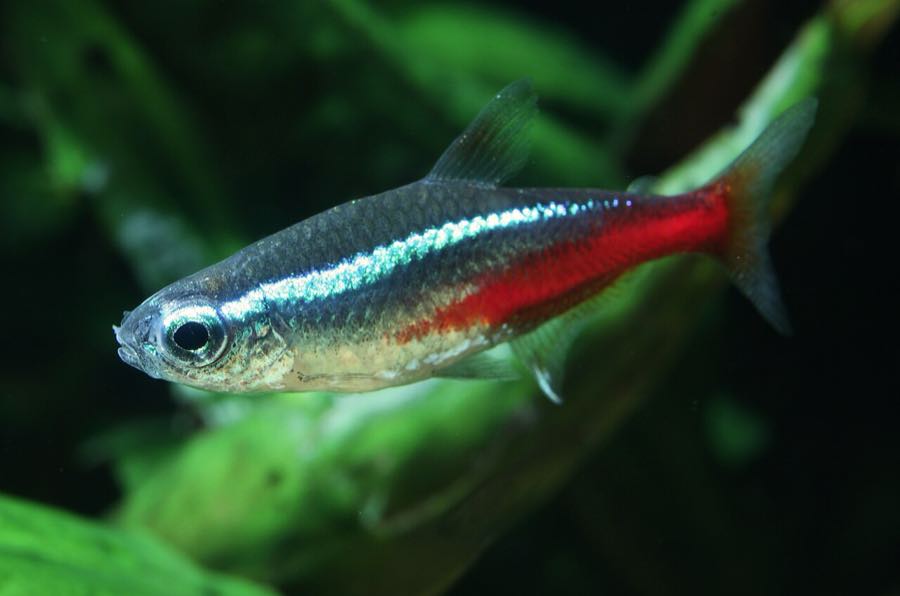
Neon tetra tank size
Give your neon shoal a tank at least 60 cm long. A rectangular 54 L aquarium serves as a practical starting size for one group of tetras. You will need extra room if you plan to keep additional species in the same aquarium.Give your neon shoal a tank at least 24 in long. A rectangular 14.3 gal aquarium serves as a practical starting size for one group of tetras. You will need extra room if you plan to keep additional species in the same aquarium.[1][2]
Position floating plant cover over part of the aquarium or run subdued lighting. Neon tetras originate from shaded natural waters and appear noticeably more settled when they have overhead cover and can swim out of intense light.Position floating plant cover over part of the aquarium or run subdued lighting. Neon tetras originate from shaded natural waters and appear noticeably more settled when they have overhead cover and can swim out of intense light.[1]
Neon tetra water parameters
Aim for a stable temperature between 21–25 °C for everyday care. Neon tetras can tolerate a broader range of 20–28 °C, but avoiding fluctuations supports long-term health. Maintain the pH between 5.5–7.5 and prevent sudden parameter shifts whenever you replace water.Aim for a stable temperature between 70–77 °F for everyday care. Neon tetras can tolerate a broader range of 68–82 °F, but avoiding fluctuations supports long-term health. Maintain the pH between 5.5–7.5 and prevent sudden parameter shifts whenever you replace water.[1][2]
Wait for a completed fishless cycle before introducing neon tetras to an aquarium. Test for ammonia and nitrite prior to stocking, and continue routine testing after the shoal arrives to confirm biological filtration remains steady.Wait for a completed fishless cycle before introducing neon tetras to an aquarium. Test for ammonia and nitrite prior to stocking, and continue routine testing after the shoal arrives to confirm biological filtration remains steady.[2][4]
Feeding neon tetras
Provide two small meals daily as your standard feeding frequency. Gauge each serving so the fish finish all the food in about two minutes. Crush tropical flakes between your fingers or select tiny prepared pellets that fit a neon's small mouth.Provide two small meals daily as your standard feeding frequency. Gauge each serving so the fish finish all the food in about two minutes. Crush tropical flakes between your fingers or select tiny prepared pellets that fit a neon's small mouth.[1][3]
Remove leftover food and cut back the next serving whenever extra particles settle onto the substrate. Adding extra food never assists a fish that another tank mate is actively chasing away from the feeding area.Remove leftover food and cut back the next serving whenever extra particles settle onto the substrate. Adding extra food never assists a fish that another tank mate is actively chasing away from the feeding area.[3][4]
Neon tetra behaviour
Keep a minimum group of six neon tetras. Sizing up to eight to ten fish works well whenever your aquarium has enough swimming space, and Seriously Fish specifically favours that larger shoal size.Keep a minimum group of six neon tetras. Sizing up to eight to ten fish works well whenever your aquarium has enough swimming space, and Seriously Fish specifically favours that larger shoal size.[1][5]
Expect an adult length of around 3.5 cm, with larger fish reaching up to 3.8 cm. A typical lifespan spans two to four years. The wild-type coloration displays a vivid blue horizontal stripe running above a red rear section, though gold, diamond, and long-finned varieties are also bred and sold.Expect an adult length of around 1.4 in, with larger fish reaching up to 1.5 in. A typical lifespan spans two to four years. The wild-type coloration displays a vivid blue horizontal stripe running above a red rear section, though gold, diamond, and long-finned varieties are also bred and sold.[1][10]
Neon tetra tank mates
Bottom-dwelling catfish make excellent companions if you provide adequate footprint. Select Bottom-dwelling catfish make excellent companions if you provide adequate footprint. Select panda corydoraspanda corydoras or or bronze corydorasbronze corydoras if your tank offers open bottom space for their own group. These peaceful bottom dwellers feed along the substrate rather than contesting the middle swimming levels where tetras feed. if your tank offers open bottom space for their own group. These peaceful bottom dwellers feed along the substrate rather than contesting the middle swimming levels where tetras feed.[1][3]
Other peaceful midwater schooling fish can share the display. Other peaceful midwater schooling fish can share the display. Glowlight tetrasGlowlight tetras and and harlequin rasborasharlequin rasboras are compatible options because both remain small and calm. Keep a complete group of whichever companion species you choose, and verify the tank has adequate volume and swimming room for both shoals. are compatible options because both remain small and calm. Keep a complete group of whichever companion species you choose, and verify the tank has adequate volume and swimming room for both shoals.[1][2]
Never house neons with large predatory cichlids. Avoid Never house neons with large predatory cichlids. Avoid angelfishangelfish, because their adult mouth size allows them to swallow small tetras. , because their adult mouth size allows them to swallow small tetras. OscarsOscars are much larger predators that eat small fish, while are much larger predators that eat small fish, while Jack DempseysJack Dempseys present both a serious physical size disparity and severe territorial aggression. present both a serious physical size disparity and severe territorial aggression.[1][8][9]
Usually fine together
- African butterfly cichlid
- African clawed frog
- Agassiz's cory
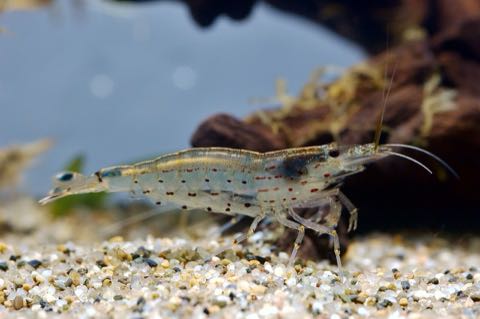 Amano shrimp
- American flagfish
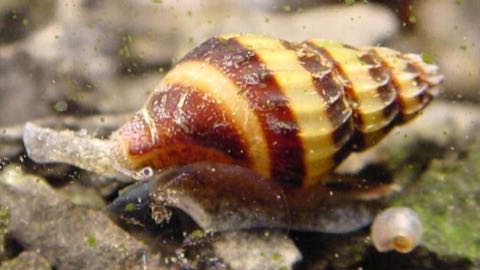 Assassin snail
- Banded gourami
- Bandit cory
- Banjo catfish
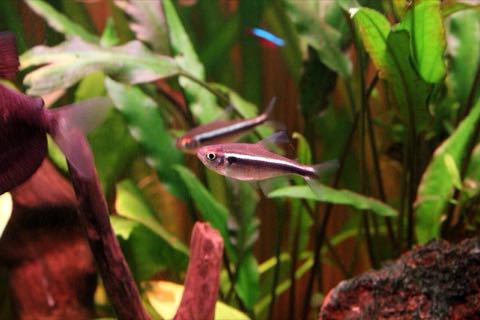 Black neon tetra
- Black phantom tetra
- Black ruby barb
Avoid with
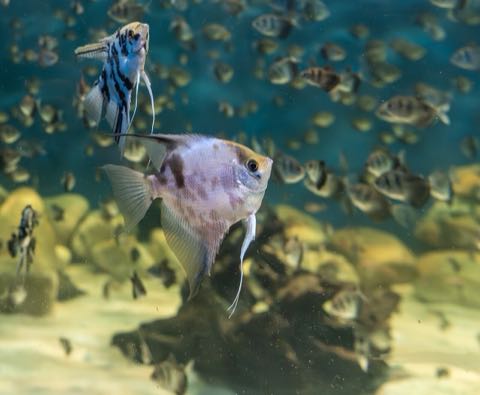 Angelfish
Angelfish may eat Neon tetra when small enough to swallowAngelfish may eat Neon tetra when small enough to swallow
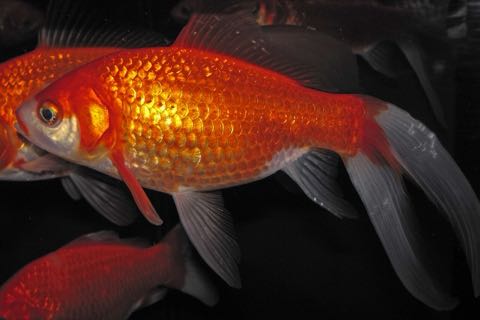 Common goldfish
Check Common goldfish with Neon tetraCheck Common goldfish with Neon tetra
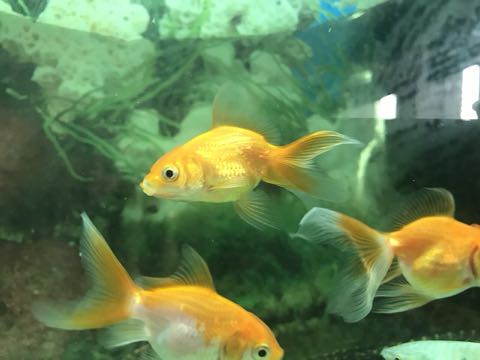 Fancy goldfish
Check Fancy goldfish with Neon tetraCheck Fancy goldfish with Neon tetra
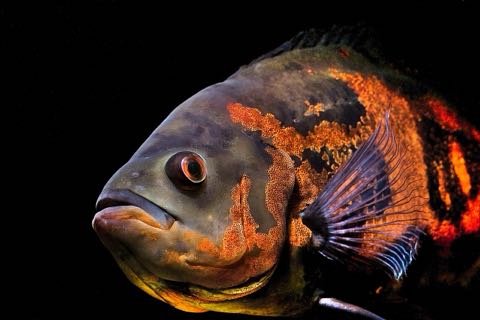 Oscar
OscarOscar may eat Neon tetra when small enough to swallowOscar may eat Neon tetra when small enough to swallow
- Pictus catfish
Pictus catfish may eat Neon tetra when small enough to swallowPictus catfish may eat Neon tetra when small enough to swallow
- Acei cichlid
No shared pH rangeNo shared pH range
- Brevis shell dweller
No shared pH rangeNo shared pH range
- Caudopunctatus
No shared pH rangeNo shared pH range
- Multies
No shared pH rangeNo shared pH range
- Pindani
No shared pH rangeNo shared pH range
- Rusty cichlid
No shared pH rangeNo shared pH range
- Saulosi cichlid
No shared pH rangeNo shared pH range
Breeding neon tetras
Set up a separate, dimly lit breeding tank if you plan to produce and raise neon tetra fry. Adults scatter their eggs indiscriminately among fine-leaf plants or artificial spawning mops.Set up a separate, dimly lit breeding tank if you plan to produce and raise neon tetra fry. Adults scatter their eggs indiscriminately among fine-leaf plants or artificial spawning mops.[1]
Adult tetras often consume their own eggs shortly after spawning. Protect the scattered eggs with protective mesh or plant cover, and remove the parent fish from the breeding tank immediately after spawning concludes.Adult tetras often consume their own eggs shortly after spawning. Protect the scattered eggs with protective mesh or plant cover, and remove the parent fish from the breeding tank immediately after spawning concludes.[1]
Neon tetra health problems
Neon tetra disease is caused by an internal microsporidian parasite. Early symptoms include colour loss, isolating away from the shoal, and pale muscle patches beneath the skin, later progressing to wasting and spinal curvature. Avoid purchasing fish from batches showing illness, quarantine all new arrivals, and isolate suspect fish immediately.Neon tetra disease is caused by an internal microsporidian parasite. Early symptoms include colour loss, isolating away from the shoal, and pale muscle patches beneath the skin, later progressing to wasting and spinal curvature. Avoid purchasing fish from batches showing illness, quarantine all new arrivals, and isolate suspect fish immediately.[1][6]
Columnaris, sometimes called false neon tetra disease, is a bacterial infection that can visually mimic the pale bodily patches of neon tetra disease. It frequently triggers mouth lesions, discoloured patches, and rapid fin deterioration. Keep water clean and avoid crowding; distinguishing between the two matters because bacterial infections may respond to intervention while advanced true microsporidian disease does not.Columnaris, sometimes called false neon tetra disease, is a bacterial infection that can visually mimic the pale bodily patches of neon tetra disease. It frequently triggers mouth lesions, discoloured patches, and rapid fin deterioration. Keep water clean and avoid crowding; distinguishing between the two matters because bacterial infections may respond to intervention while advanced true microsporidian disease does not.[1][6]
Ich produces visible, tiny white spots scattered across the body and fins, typically accompanied by fish rubbing against surfaces and breathing rapidly. The parasite often enters an aquarium on an apparently healthy new arrival. Quarantine new fish for 30 days and dedicate separate nets to individual tanks to reduce cross-contamination.Ich produces visible, tiny white spots scattered across the body and fins, typically accompanied by fish rubbing against surfaces and breathing rapidly. The parasite often enters an aquarium on an apparently healthy new arrival. Quarantine new fish for 30 days and dedicate separate nets to individual tanks to reduce cross-contamination.[7]
Male or female?
Sexing requires close visual comparison of fish that are similar in age and health. Mature female neon tetras display a noticeably deeper body shape and grow slightly larger than males, particularly when carrying eggs.Sexing requires close visual comparison of fish that are similar in age and health. Mature female neon tetras display a noticeably deeper body shape and grow slightly larger than males, particularly when carrying eggs.[1]
Inspect the fish from the side under calm conditions. A distended belly observed right after a meal does not reliably indicate sex, as feeding temporarily swells the abdomen of both males and females.Inspect the fish from the side under calm conditions. A distended belly observed right after a meal does not reliably indicate sex, as feeding temporarily swells the abdomen of both males and females.[1]
Questions
Are neon tetras hard to take care of?
No, neon tetras are straightforward to keep provided their fundamental needs are met. You must house them in a cycled tank at least 60 cm long, maintain stable water between 21–25 °C, keep an adequate group of six or more, and offer small twice-daily meals.No, neon tetras are straightforward to keep provided their fundamental needs are met. You must house them in a cycled tank at least 24 in long, maintain stable water between 70–77 °F, keep an adequate group of six or more, and offer small twice-daily meals.[1][2][4][3][5]
How to tell if neon tetras are happy?
Settled neon tetras display active schooling behaviour, swim freely throughout midwater zones, and explore shaded areas beneath floating plants. Stressed fish frequently lose their vibrant colour, break away from the shoal, or hide continuously when lighting is too intense.Settled neon tetras display active schooling behaviour, swim freely throughout midwater zones, and explore shaded areas beneath floating plants. Stressed fish frequently lose their vibrant colour, break away from the shoal, or hide continuously when lighting is too intense.[1][6]
How many tetras should you keep together?
Keep a minimum group of six neon tetras. If your tank offers sufficient swimming space, aim for eight to ten fish, which Seriously Fish favours as an ideal social shoal size.Keep a minimum group of six neon tetras. If your tank offers sufficient swimming space, aim for eight to ten fish, which Seriously Fish favours as an ideal social shoal size.[1][5]
Do tetras need to be fed every day?
Yes, neon tetras need to be fed twice a day as their standard routine. Feed small portions of crushed flakes or appropriately sized pellets that the fish can consume entirely within about two minutes.Yes, neon tetras need to be fed twice a day as their standard routine. Feed small portions of crushed flakes or appropriately sized pellets that the fish can consume entirely within about two minutes.[1][3]
How long can neon tetras go without feeding?
While healthy fish can endure brief fasts, routine care requires two meals every day. Overfeeding to compensate for absences pollutes the water; uneaten food must always be cleared from the substrate.While healthy fish can endure brief fasts, routine care requires two meals every day. Overfeeding to compensate for absences pollutes the water; uneaten food must always be cleared from the substrate.[1][3][4]
Sources
- Paracheirodon innesi (Neon Tetra) — Seriously Fish. Accessed 2026-10-05.
- Choosing an aquarium — RSPCA. Accessed 2026-10-05.
- What to feed your fish — RSPCA. Accessed 2026-10-05.
- Ammonia in Aquatic Systems — UF/IFAS Extension. Accessed 2026-10-05.
- Understanding pet fish behaviour — RSPCA. Accessed 2026-10-05.
- Frequently asked questions on treating sick fish — Practical Fishkeeping. Accessed 2026-10-05.
- Ichthyophthirius multifiliis (White Spot) Infections in Fish — UF/IFAS Extension. Accessed 2026-10-05.
- Astronotus ocellatus (Oscar) — Seriously Fish. Accessed 2026-10-05.
- Rocio octofasciata (Jack Dempsey) — Seriously Fish. Accessed 2026-10-05.
- How Long Should My Fish Live? — Practical Fishkeeping. Accessed 2026-10-05.
Written from the sources above. Not yet reviewed by an aquarist.
Data used by the planner
| Temperature | 20–28 | AqAdvisor (aqadvisor.com), retrieved 2026-10-04; agrees with FishBase (fishbase.se), retrieved 2026-10-04 · medium confidence |
|---|---|---|
| pH | 5.5–7.5 | AqAdvisor (aqadvisor.com), retrieved 2026-10-04; agrees with FishBase (fishbase.se), retrieved 2026-10-04 · medium confidence |
| Hardness (dGH) | 1–15 | AqAdvisor (aqadvisor.com), retrieved 2026-10-04 · low confidence |
| Origin | South America | curated-v0 (needs expert review) · low confidence |
| Beginner friendly | Yes | curated-v0 (needs expert review) · medium confidence |
| Care level | easy | curated-v0 (needs expert review) · medium confidence |
| Activity | moderate | curated-v0 (needs expert review) · medium confidence |
| Swimming level | middle | curated-v0 (needs expert review) · medium confidence |
| Temperament | peaceful | curated-v0 (needs expert review) · medium confidence |
| Nips fins | No | curated-v0 (needs expert review) · medium confidence |
| Long fins | No | curated-v0 (needs expert review) · medium confidence |
| Territorial | No | curated-v0 (needs expert review) · medium confidence |
| Lives in groups | Yes | curated-v0 (needs expert review) · medium confidence |
| Minimum group | 6 | curated-v0 (needs expert review) · medium confidence |
| Diet | omnivore | curated-v0 (needs expert review) · medium confidence |
| Lifespan (years) | 2–4 | curated-v0 (needs expert review) · low confidence |
| Months to adult size | 6 | curated-v0 (needs expert review) · low confidence |
| Safe with plants | Yes | curated-v0 (needs expert review) · medium confidence |
| Minimum tank length | 60 | curated-v0 (needs expert review) · medium confidence |