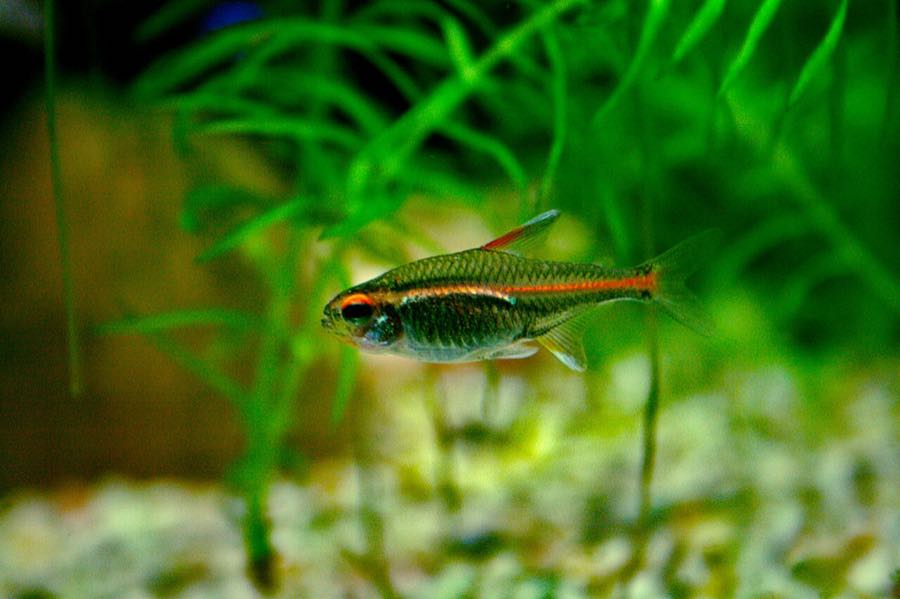
Glowlight tetra tank size
Provide a tank base at least 60 cm long and 38 cm wide for a small group. Seriously Fish reports an adult standard length of 4 cm for glowlight tetras. Dense planting suits the species, whereas sparsely decorated setups can leave the fish appearing washed out.Provide a tank base at least 24 in long and 15 in wide for a small group. Seriously Fish reports an adult standard length of 2 in for glowlight tetras. Dense planting suits the species, whereas sparsely decorated setups can leave the fish appearing washed out.[1]
A natural-looking layout can be formed with river sand, driftwood, twisted roots, and dried oak or beech leaves. Dim lighting suits this layout, reflecting their native Essequibo drainage habitat in Guyana where they inhabit forested tributaries with tannin-stained, acidic water. Replace old leaves every few weeks rather than allowing them to rot and foul the water.A natural-looking layout can be formed with river sand, driftwood, twisted roots, and dried oak or beech leaves. Dim lighting suits this layout, reflecting their native Essequibo drainage habitat in Guyana where they inhabit forested tributaries with tannin-stained, acidic water. Replace old leaves every few weeks rather than allowing them to rot and foul the water.[1]
Glowlight tetra water parameters
Maintain water parameters at 24–28 °C, pH 5.5–7.5, and 2–15 dGH. Test water at least weekly; ammonia and nitrite should be zero. Replace roughly one quarter of the water weekly with conditioned water.Maintain water parameters at 75–82 °F, pH 5.5–7.5, and 2–15 dGH. Test water at least weekly; ammonia and nitrite should be zero. Replace roughly one quarter of the water weekly with conditioned water.[1][2]
Rinse filter media gently in removed tank water during maintenance. Tap disinfectants may harm filter bacteria, making treated aquarium water the appropriate medium for washing dirty media.Rinse filter media gently in removed tank water during maintenance. Tap disinfectants may harm filter bacteria, making treated aquarium water the appropriate medium for washing dirty media.[2]
Feeding glowlight tetras
Feed once per day and only what the fish will eat within a few minutes, making sure to avoid uneaten food. The species accepts dried flakes and granules. You can supplement these staples with small live or frozen bloodworm, daphnia, and brine shrimp to support condition and colour.Feed once per day and only what the fish will eat within a few minutes, making sure to avoid uneaten food. The species accepts dried flakes and granules. You can supplement these staples with small live or frozen bloodworm, daphnia, and brine shrimp to support condition and colour.[2][1]
Glowlight tetra behaviour
Keep at least six glowlight tetras together, and preferably ten or more. They are shoaling fish that fare better and display natural behaviours in their own group.Keep at least six glowlight tetras together, and preferably ten or more. They are shoaling fish that fare better and display natural behaviours in their own group.[1]
Seriously Fish describes the species as lively, colourful, and peaceful in a general community. The glowlight tetra is also described as hardy and suitable for a newcomer. A selectively bred albino form is traded and has the same care needs as the standard form.Seriously Fish describes the species as lively, colourful, and peaceful in a general community. The glowlight tetra is also described as hardy and suitable for a newcomer. A selectively bred albino form is traded and has the same care needs as the standard form.[1]
Healthy-fish observations include steady breathing, intact fins, and no ulcers. These signs serve as health observations rather than definitive proof of welfare, and any visible changes warrant water tests and advice.Healthy-fish observations include steady breathing, intact fins, and no ulcers. These signs serve as health observations rather than definitive proof of welfare, and any visible changes warrant water tests and advice.[2]
Glowlight tetra tank mates
Other small characins can share an aquarium when properly planned. Other small characins can share an aquarium when properly planned. Neon tetrasNeon tetras and and X-ray tetrasX-ray tetras are source-recommended other tetras; match their water parameters, provide sufficient space, and maintain independent schools for each species. are source-recommended other tetras; match their water parameters, provide sufficient space, and maintain independent schools for each species.[1]
Bottom-dwelling companions require dedicated accommodations. Bottom-dwelling companions require dedicated accommodations. Bronze corydorasBronze corydoras can work as tank mates if you provide their own group, suitable bottom area, and sinking food. can work as tank mates if you provide their own group, suitable bottom area, and sinking food. Bristlenose plecosBristlenose plecos can also be kept alongside them; plan adult floor space and feed the plecos separately. can also be kept alongside them; plan adult floor space and feed the plecos separately.[1]
Avoid housing glowlights with large predatory species. Seriously Fish specifically warns that larger fish such as Avoid housing glowlights with large predatory species. Seriously Fish specifically warns that larger fish such as angelfishangelfish can see glowlights as food. In addition, avoid can see glowlights as food. In addition, avoid oscarsoscars, as much smaller fish may be eaten by this predatory cichlid., as much smaller fish may be eaten by this predatory cichlid.[1][5]
Keep Keep pea pufferspea puffers separate. The source discourages general community keeping for pea puffers because vigorous companions may outcompete them for food. separate. The source discourages general community keeping for pea puffers because vigorous companions may outcompete them for food.[6]
Usually fine together
- African butterfly cichlid
- Agassiz's cory
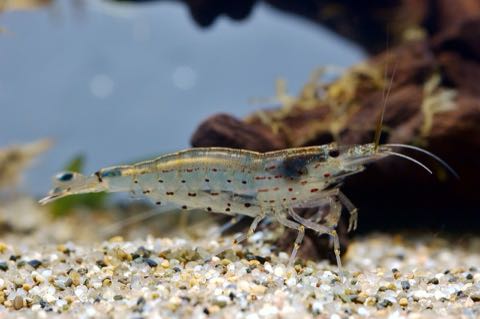 Amano shrimp
- American flagfish
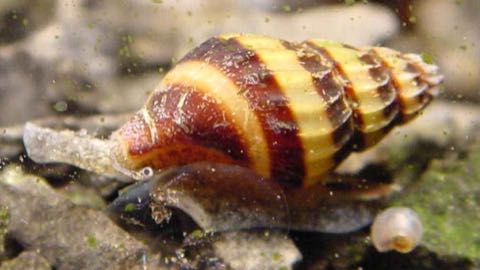 Assassin snail
- Banded gourami
- Bandit cory
- Banjo catfish
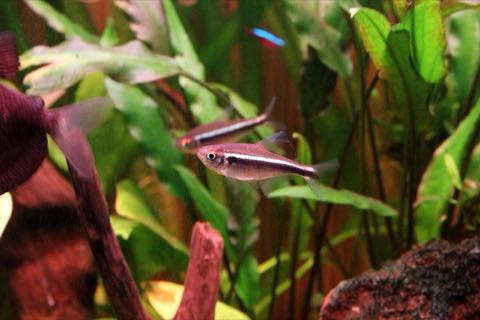 Black neon tetra
- Black phantom tetra
- Black ruby barb
- Bleeding heart tetra
Avoid with
- Acei cichlid
No shared pH rangeNo shared pH range
- African clawed frog
African clawed frog may eat Glowlight tetraAfrican clawed frog may eat Glowlight tetra
- Brevis shell dweller
No shared pH rangeNo shared pH range
- Caudopunctatus
No shared pH rangeNo shared pH range
- Multies
No shared pH rangeNo shared pH range
- Pindani
No shared pH rangeNo shared pH range
- Rusty cichlid
No shared pH rangeNo shared pH range
- Saulosi cichlid
No shared pH rangeNo shared pH range
- Similis shell dweller
No shared pH rangeNo shared pH range
- Abei puffer
Abei puffer may eat Glowlight tetraAbei puffer may eat Glowlight tetra
- Afra cichlid
No shared pH rangeNo shared pH range
- African butterflyfish
African butterflyfish may eat Glowlight tetraAfrican butterflyfish may eat Glowlight tetra
Breeding glowlight tetras
A separate dimly lit spawning tank with fine-leaved plants, spawning mops, or egg-protecting mesh is used for raising fry. Gentle air-driven sponge filtration is sufficient for this breeding setup.A separate dimly lit spawning tank with fine-leaved plants, spawning mops, or egg-protecting mesh is used for raising fry. Gentle air-driven sponge filtration is sufficient for this breeding setup.[1]
Adult glowlights can eat eggs and should be removed once eggs are noticed in the tank. Eggs hatch in 24–36 hours, and fry become free-swimming three to four days later.Adult glowlights can eat eggs and should be removed once eggs are noticed in the tank. Eggs hatch in 24–36 hours, and fry become free-swimming three to four days later.[1]
Eggs and early fry are light-sensitive. Begin feeding free-swimming fry infusoria-sized foods, and later introduce microworm or brine shrimp nauplii once the fry are large enough.Eggs and early fry are light-sensitive. Begin feeding free-swimming fry infusoria-sized foods, and later introduce microworm or brine shrimp nauplii once the fry are large enough.[1]
Glowlight tetra health problems
Ich is a protozoan infection with possible salt-like spots, rubbing, appetite loss, and gill irritation. Microscopy confirms diagnosis. Quarantine new fish for 30 days and separate or disinfect equipment to reduce introduction risk.Ich is a protozoan infection with possible salt-like spots, rubbing, appetite loss, and gill irritation. Microscopy confirms diagnosis. Quarantine new fish for 30 days and separate or disinfect equipment to reduce introduction risk.[3]
Fin rot can cause fraying, red streaks, and loss of fin tissue, with poor conditions and stress encouraging bacterial disease. Maintaining good water quality and addressing harassment reduce these risks; seek advice for worsening fins.Fin rot can cause fraying, red streaks, and loss of fin tissue, with poor conditions and stress encouraging bacterial disease. Maintaining good water quality and addressing harassment reduce these risks; seek advice for worsening fins.[4]
Fungal infection can resemble grey-white cotton on damaged skin because injury and environmental stress impair protective mucus. Smooth furnishings and careful handling reduce injury risk, while good water quality reduces environmental stress.Fungal infection can resemble grey-white cotton on damaged skin because injury and environmental stress impair protective mucus. Smooth furnishings and careful handling reduce injury risk, while good water quality reduces environmental stress.[4]
Male or female?
Distinguishing the sexes is done by examining physical proportions. Mature females are rounder in the belly and tend to grow slightly larger than males.Distinguishing the sexes is done by examining physical proportions. Mature females are rounder in the belly and tend to grow slightly larger than males.[1]
Questions
Are glowlight tetras easy to care for?
Glowlight tetras are described as hardy and suitable for a newcomer. Provide a tank base at least 60 cm long and 38 cm wide, water maintained at 24–28 °C, and weekly water replacement.Glowlight tetras are described as hardy and suitable for a newcomer. Provide a tank base at least 24 in long and 15 in wide, water maintained at 75–82 °F, and weekly water replacement.[1][2]
How many glowlight tetras should be kept together?
Keep at least six glowlight tetras, and preferably ten or more. They are shoaling fish that fare better and show their natural behaviours when housed in their own group.Keep at least six glowlight tetras, and preferably ten or more. They are shoaling fish that fare better and show their natural behaviours when housed in their own group.[1]
What is the lifespan of a glowlight tetra?
Seriously Fish does not report a lifespan figure for this species. Basic maintenance requires keeping water parameters at 24–28 °C, pH 5.5–7.5, and 2–15 dGH alongside regular weekly testing.Seriously Fish does not report a lifespan figure for this species. Basic maintenance requires keeping water parameters at 75–82 °F, pH 5.5–7.5, and 2–15 dGH alongside regular weekly testing.[1][2]
Are glowlight tetras aggressive?
Seriously Fish describes the species as peaceful in a general community.Seriously Fish describes the species as peaceful in a general community.[1]
How can you tell if tetras are happy?
Look for steady breathing, intact fins, and no ulcers. These are specific health observations rather than proof of happiness, and any changes warrant testing the water and seeking advice.Look for steady breathing, intact fins, and no ulcers. These are specific health observations rather than proof of happiness, and any changes warrant testing the water and seeking advice.[2]
Sources
- Hemigrammus erythrozonus (Glowlight Tetra) — Seriously Fish. Accessed 2026-10-05.
- How to look after tetras and pencilfish — Ornamental Aquatic Trade Association. Accessed 2026-10-05.
- Ichthyophthirius multifiliis (White Spot) Infections in Fish — UF/IFAS Extension. Accessed 2026-10-05.
- Frequently asked questions on treating sick fish — Practical Fishkeeping. Accessed 2026-10-05.
- Astronotus ocellatus (Oscar) — Seriously Fish. Accessed 2026-10-05.
- Carinotetraodon travancoricus (Dwarf Puffer) — Seriously Fish. Accessed 2026-10-05.
Written from the sources above. Not yet reviewed by an aquarist.
Data used by the planner
| Temperature range | 24–28 | AqAdvisor (aqadvisor.com), retrieved 2026-10-04; agrees with FishBase (fishbase.se), retrieved 2026-10-04 · medium confidence |
|---|---|---|
| pH | 5.5–7.5 | AqAdvisor (aqadvisor.com), retrieved 2026-10-04; agrees with FishBase (fishbase.se), retrieved 2026-10-04 · medium confidence |
| Hardness (dGH) | 1–15 | AqAdvisor (aqadvisor.com), retrieved 2026-10-04 · low confidence |
| Origin | South America | curated-v0 (needs expert review) · low confidence |
| Beginner friendly | Yes | curated-v0 (needs expert review) · medium confidence |
| Care level | easy | curated-v0 (needs expert review) · medium confidence |
| Activity | moderate | curated-v0 (needs expert review) · medium confidence |
| Swimming level | middle | curated-v0 (needs expert review) · medium confidence |
| Temperament | peaceful | curated-v0 (needs expert review) · medium confidence |
| Nips fins | No | curated-v0 (needs expert review) · medium confidence |
| Long fins | No | curated-v0 (needs expert review) · medium confidence |
| Territorial | No | curated-v0 (needs expert review) · medium confidence |
| Lives in groups | Yes | curated-v0 (needs expert review) · medium confidence |
| Minimum group | 6 | curated-v0 (needs expert review) · medium confidence |
| Diet | omnivore | curated-v0 (needs expert review) · medium confidence |
| Lifespan (years) | 2–4 | curated-v0 (needs expert review) · low confidence |
| Months to adult size | 6 | curated-v0 (needs expert review) · low confidence |
| Safe with plants | Yes | curated-v0 (needs expert review) · medium confidence |
| Minimum tank length | 60 | curated-v0 (needs expert review) · medium confidence |