American flagfish tank size
Provide a tank length of at least 60 cm for a single adult pair. Maintain a base width of 30 cm in the aquarium. Groups do better in larger quarters than a pair tank. Flagfish reach an adult standard length of 5.5 cm.Provide a tank length of at least 24 in for a single adult pair. Maintain a base width of 12 in in the aquarium. Groups do better in larger quarters than a pair tank. Flagfish reach an adult standard length of 2.2 in.[1]
Native waters are in peninsular Florida, where they inhabit shallow weedy backwaters, marshes, canals, and ditches. Provide many broken sightlines and cover using aquatic plants or wool spawning mops.Native waters are in peninsular Florida, where they inhabit shallow weedy backwaters, marshes, canals, and ditches. Provide many broken sightlines and cover using aquatic plants or wool spawning mops.[1]
Air-powered sponge filters are recommended when eggs or fry are present in the tank. Tank lighting is not critical for their care, though you should encourage filamentous algae if possible.Air-powered sponge filters are recommended when eggs or fry are present in the tank. Tank lighting is not critical for their care, though you should encourage filamentous algae if possible.[1]
American flagfish water parameters
Maintain water temperature between 18–26 °C. Keep acidity between pH 6.5–8.5 and general hardness within 6–20 dGH to match their natural requirements.Maintain water temperature between 64–79 °F. Keep acidity between pH 6.5–8.5 and general hardness within 6–20 dGH to match their natural requirements.[1]
Keep ammonia and nitrite levels at zero, testing the aquarium water at least weekly. Perform a weekly water change of roughly one quarter of the tank volume using conditioned water. Rinse filter media gently in removed tank water, as tap disinfectants may harm beneficial bacteria.Keep ammonia and nitrite levels at zero, testing the aquarium water at least weekly. Perform a weekly water change of roughly one quarter of the tank volume using conditioned water. Rinse filter media gently in removed tank water, as tap disinfectants may harm beneficial bacteria.[2]
Feeding American flagfish
Wild flagfish consume small aquatic crustaceans, worms, insect larvae, zooplankton, algae, and other plant matter. Most individuals accept dried food in the home aquarium. Supplement this staple with live or frozen Artemia, daphnia, and bloodworm.Wild flagfish consume small aquatic crustaceans, worms, insect larvae, zooplankton, algae, and other plant matter. Most individuals accept dried food in the home aquarium. Supplement this staple with live or frozen Artemia, daphnia, and bloodworm.[1]
If filamentous algae are absent from your aquarium, supply a good-quality dried food that contains vegetable or algal content. Feed once daily, offering only the portion your fish can consume in a few minutes, because uneaten food decomposes into waste.If filamentous algae are absent from your aquarium, supply a good-quality dried food that contains vegetable or algal content. Feed once daily, offering only the portion your fish can consume in a few minutes, because uneaten food decomposes into waste.[1][2]
American flagfish behaviour
A species-only setup is preferred, particularly if you plan on breeding. A well-researched community can be considered if you provide sufficient space. Two or more males can often be maintained together when given enough room for individual territories, though keeping multiple males does not remove the chance of chasing or nipping.A species-only setup is preferred, particularly if you plan on breeding. A well-researched community can be considered if you provide sufficient space. Two or more males can often be maintained together when given enough room for individual territories, though keeping multiple males does not remove the chance of chasing or nipping.[1]
American flagfish are commercially bred, and wild specimens remain rare in the hobby outside the United States. A line-bred balloon strain exists, which is described as highly deformed.American flagfish are commercially bred, and wild specimens remain rare in the hobby outside the United States. A line-bred balloon strain exists, which is described as highly deformed.[1]
American flagfish tank mates
Active schooling fish such as Active schooling fish such as zebra danioszebra danios and and white cloud mountain minnowswhite cloud mountain minnows can work in carefully researched setups. Both species require their own distinct groups and open swimming space. Match their shared cool water requirements and watch the flagfish territories to ensure companions are not harassed. can work in carefully researched setups. Both species require their own distinct groups and open swimming space. Match their shared cool water requirements and watch the flagfish territories to ensure companions are not harassed.[1][8]
Bottom-dwelling algae grazers like Bottom-dwelling algae grazers like bristlenose plecosbristlenose plecos and and otocinclusotocinclus are conditional tank mates. Bristlenose plecos need adequate floor space, wood, hiding spots, and dedicated food. Otocinclus need clean, oxygenated water alongside calm tank mates. Observe both species closely for territorial pressure from male flagfish and separate them if conflict occurs. are conditional tank mates. Bristlenose plecos need adequate floor space, wood, hiding spots, and dedicated food. Otocinclus need clean, oxygenated water alongside calm tank mates. Observe both species closely for territorial pressure from male flagfish and separate them if conflict occurs.[1][9]
Avoid housing flagfish with large predatory cichlids. Avoid housing flagfish with large predatory cichlids. OscarsOscars present a predation risk because much smaller fish may be eaten. Keep them away from present a predation risk because much smaller fish may be eaten. Keep them away from Jack DempseysJack Dempseys due to adult aggression and predation risks. due to adult aggression and predation risks.[5][6]
Do not mix flagfish with Do not mix flagfish with pea pufferspea puffers. Community housing is discouraged for pea puffers, and vigorous companions can outcompete them during feeding.. Community housing is discouraged for pea puffers, and vigorous companions can outcompete them during feeding.[7]
Usually fine together
- Acei cichlid
- African butterfly cichlid
- African clawed frog
- Agassiz's cory
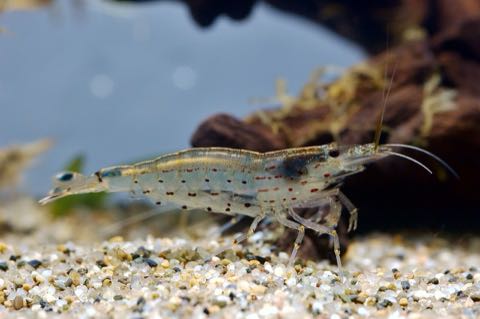 Amano shrimp
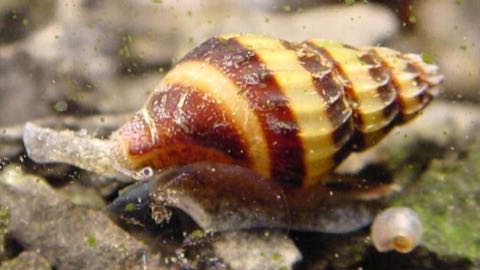 Assassin snail
- Banded gourami
- Bandit cory
- Banjo catfish
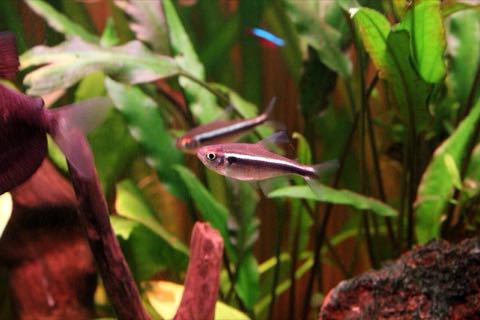 Black neon tetra
- Black phantom tetra
- Black ruby barb
Avoid with
- Blue lyretail
American flagfish may nip Blue lyretailAmerican flagfish may nip Blue lyretail
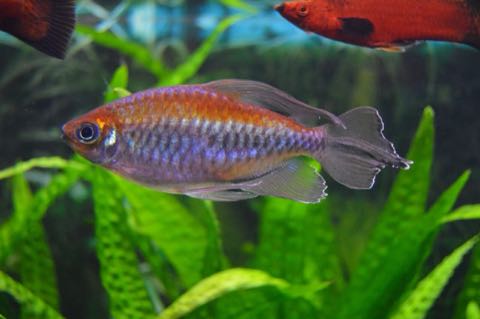 Congo tetra
American flagfish may nip Congo tetraAmerican flagfish may nip Congo tetra
- Featherfin squeaker
American flagfish may nip Featherfin squeakerAmerican flagfish may nip Featherfin squeaker
- Filament barb
American flagfish may nip Filament barbAmerican flagfish may nip Filament barb
- Guppy
American flagfish may nip GuppyAmerican flagfish may nip Guppy
- Irian Jaya rainbowfish
No shared temperature rangeNo shared temperature range
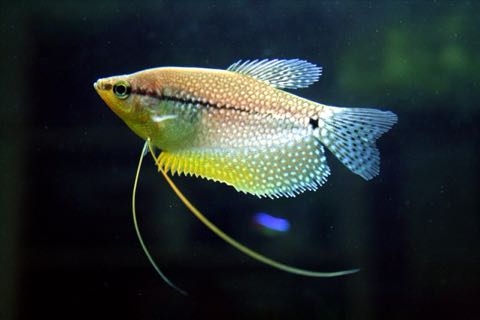 Pearl gourami
American flagfish may nip Pearl gouramiAmerican flagfish may nip Pearl gourami
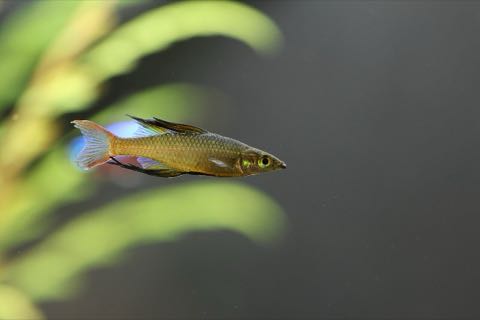 Threadfin rainbowfish
American flagfish may nip Threadfin rainbowfishAmerican flagfish may nip Threadfin rainbowfish
- African knifefish
African knifefish may eat American flagfishAfrican knifefish may eat American flagfish
- African pike
African pike may eat American flagfishAfrican pike may eat American flagfish
- Alligator gar
Alligator gar may eat American flagfishAlligator gar may eat American flagfish
- Altum angelfish
No shared water hardness rangeNo shared water hardness range
Breeding American flagfish
American flagfish do not dig pits or provide extended parental care. Males defend temporary territories against rivals while courting females. Females deposit eggs fractionally, which then attach to algae or other surfaces by small filaments. The eggs receive no parental care after deposition.American flagfish do not dig pits or provide extended parental care. Males defend temporary territories against rivals while courting females. Females deposit eggs fractionally, which then attach to algae or other surfaces by small filaments. The eggs receive no parental care after deposition.[1]
Adults may eat some eggs, though fry can appear alongside adults when plant cover is abundant. For a higher yield, move eggs to a separate aquarium with matching water chemistry and temperature.Adults may eat some eggs, though fry can appear alongside adults when plant cover is abundant. For a higher yield, move eggs to a separate aquarium with matching water chemistry and temperature.[1]
Incubation typically lasts 7–14 days depending on water temperature. Once free-swimming, the fry accept Artemia nauplii or microworms as their initial foods.Incubation typically lasts 7–14 days depending on water temperature. Once free-swimming, the fry accept Artemia nauplii or microworms as their initial foods.[1]
American flagfish health problems
Ich is a protozoan infection with possible salt-like spots, rubbing against surfaces, appetite loss, and gill irritation. Microscopic examination confirms a diagnosis. Quarantine all new fish for 30 days and disinfect or separate equipment to reduce the chance of introducing the infection.Ich is a protozoan infection with possible salt-like spots, rubbing against surfaces, appetite loss, and gill irritation. Microscopic examination confirms a diagnosis. Quarantine all new fish for 30 days and disinfect or separate equipment to reduce the chance of introducing the infection.[3]
Fin rot can cause fraying fins, red streaks, and tissue loss. Poor water conditions and stress encourage this bacterial infection. Maintain good water quality through regular maintenance and address tank mate harassment to reduce risk; seek advice if fins deteriorate.Fin rot can cause fraying fins, red streaks, and tissue loss. Poor water conditions and stress encourage this bacterial infection. Maintain good water quality through regular maintenance and address tank mate harassment to reduce risk; seek advice if fins deteriorate.[4]
Fungal infection can look like grey-white cotton on damaged skin. Physical injury and environmental stress impair the protective mucus layer of the fish. Smooth decor and gentle handling reduce injury risk, while good water quality reduces environmental stress.Fungal infection can look like grey-white cotton on damaged skin. Physical injury and environmental stress impair the protective mucus layer of the fish. Smooth decor and gentle handling reduce injury risk, while good water quality reduces environmental stress.[4]
Male or female?
Males display longer dorsal and anal fins and show brighter colouration, particularly when they enter spawning condition. Females typically have rounder bellies and possess a distinct dark mark near the rear edge of the dorsal fin that males lack.Males display longer dorsal and anal fins and show brighter colouration, particularly when they enter spawning condition. Females typically have rounder bellies and possess a distinct dark mark near the rear edge of the dorsal fin that males lack.[1]
Questions
How many flagfish should be kept together?
You can keep a single adult pair in an aquarium with a tank length of at least 60 cm. Groups do better in larger quarters. Multiple males can often live together if the tank provides enough room for each male to maintain his own territory.You can keep a single adult pair in an aquarium with a tank length of at least 24 in. Groups do better in larger quarters. Multiple males can often live together if the tank provides enough room for each male to maintain his own territory.[1]
How long do Florida flagfish typically live?
No specific lifespan estimate exists for this species in the profile, so avoid guessing an exact number of years. Maintain an aquarium temperature between 18–26 °C, keep acidity between pH 6.5–8.5, and provide hardness between 6–20 dGH to support the fish in captivity.No specific lifespan estimate exists for this species in the profile, so avoid guessing an exact number of years. Maintain an aquarium temperature between 64–79 °F, keep acidity between pH 6.5–8.5, and provide hardness between 6–20 dGH to support the fish in captivity.[1]
Will flagfish eat shrimp?
Small shrimp face a potential predation risk because small crustaceans form part of the natural wild diet of the American flagfish. This dietary tendency creates a potential risk for small crustaceans kept in the aquarium.Small shrimp face a potential predation risk because small crustaceans form part of the natural wild diet of the American flagfish. This dietary tendency creates a potential risk for small crustaceans kept in the aquarium.[1]
What tankmates are good for flagfish?
Potential companions include active, cool-water schooling species like Potential companions include active, cool-water schooling species like zebra danioszebra danios or or white cloud mountain minnowswhite cloud mountain minnows. Bottom-dwellers such as . Bottom-dwellers such as bristlenose plecosbristlenose plecos and and otocinclusotocinclus can also work if adequate floor space, cover, and water quality are provided. can also work if adequate floor space, cover, and water quality are provided.[1][8][9]
Are flagfish good community fish?
A species-only aquarium is preferred, especially for breeding purposes. However, flagfish can be considered for a carefully planned community tank if you provide sufficient space and avoid housing them with predatory cichlids or delicate feeders.A species-only aquarium is preferred, especially for breeding purposes. However, flagfish can be considered for a carefully planned community tank if you provide sufficient space and avoid housing them with predatory cichlids or delicate feeders.[1][5][7]
Sources
- Jordanella floridae (Florida Flagfish) — Seriously Fish. Accessed 2026-10-05.
- How to look after killifish — Ornamental Aquatic Trade Association. Accessed 2026-10-05.
- Ichthyophthirius multifiliis (White Spot) Infections in Fish — UF/IFAS Extension. Accessed 2026-10-05.
- Frequently asked questions on treating sick fish — Practical Fishkeeping. Accessed 2026-10-05.
- Astronotus ocellatus (Oscar) — Seriously Fish. Accessed 2026-10-05.
- Rocio octofasciata (Jack Dempsey) — Seriously Fish. Accessed 2026-10-05.
- Carinotetraodon travancoricus (Dwarf Puffer) — Seriously Fish. Accessed 2026-10-05.
- How to look after danios and white cloud mountain minnows — Ornamental Aquatic Trade Association. Accessed 2026-10-05.
- How to look after tropical algae eaters — Ornamental Aquatic Trade Association. Accessed 2026-10-05.
Written from the sources above. Not yet reviewed by an aquarist.
Data used by the planner
| Temperature | 16–26 | AqAdvisor (aqadvisor.com), retrieved 2026-10-04 · low confidence |
|---|---|---|
| pH | 6.5–8.5 | AqAdvisor (aqadvisor.com), retrieved 2026-10-04 · medium confidence |
| Hardness (dGH) | 6–20 | AqAdvisor (aqadvisor.com), retrieved 2026-10-04 · medium confidence |
| Origin | Florida, United States | curated-v0 (needs expert review) · low confidence |
| Beginner friendly | Yes | curated-v0 (needs expert review) · medium confidence |
| Care level | easy | curated-v0 (needs expert review) · medium confidence |
| Activity | moderate | curated-v0 (needs expert review) · medium confidence |
| Swimming level | middle | curated-v0 (needs expert review) · medium confidence |
| Temperament | semi aggressive | curated-v0 (needs expert review) · medium confidence |
| Nips fins | Yes | curated-v0 (needs expert review) · medium confidence |
| Long fins | No | curated-v0 (needs expert review) · medium confidence |
| Territorial | Yes | curated-v0 (needs expert review) · medium confidence |
| Lives in groups | No | curated-v0 (needs expert review) · medium confidence |
| Minimum group | 1 | curated-v0 (needs expert review) · medium confidence |
| Diet | herbivore | curated-v0 (needs expert review) · medium confidence |
| Lifespan (years) | 2–4 | curated-v0 (needs expert review) · low confidence |
| Months to adult size | 6 | curated-v0 (needs expert review) · low confidence |
| Safe with plants | No | curated-v0 (needs expert review) · low confidence |