Gardneri killifish tank size
Set up an aquarium measuring at least 60 cm tank length. Wild populations occur throughout the Benue and Cross River drainages in Nigeria and Cameroon, dwelling in pools, creeks, swamps, and streams. Add dense clusters of plants or synthetic wool mops for cover, and secure a tight lid because these killifish jump and squeeze past tiny gaps.Set up an aquarium measuring at least 24 in tank length. Wild populations occur throughout the Benue and Cross River drainages in Nigeria and Cameroon, dwelling in pools, creeks, swamps, and streams. Add dense clusters of plants or synthetic wool mops for cover, and secure a tight lid because these killifish jump and squeeze past tiny gaps.[14][1]
Size figures differ across records. FishBase records a 6.5 cm total length maximum, while standard length is documented at 5.5 cm, and hobbyists report individuals reaching 7.5 cm commonly or near 10 cm. In addition to geographically distinct wild populations with unique field codes, captive stocks include gold and albino colour strains that require separate maintenance to avoid crossing.Size figures differ across records. FishBase records a 2.6 in total length maximum, while standard length is documented at 2.2 in, and hobbyists report individuals reaching 3 in commonly or near 4 in. In addition to geographically distinct wild populations with unique field codes, captive stocks include gold and albino colour strains that require separate maintenance to avoid crossing.[1][14][13]
Gardneri killifish water parameters
Keep your water parameters between 22–25 °C, pH 6.5–7.5, and 6–10 dGH. Fully cycle your biological filter before adding any livestock. Visually transparent water can still carry invisible dissolved toxins, so confirm that ammonia reads zero and nitrite remains managed.Keep your water parameters between 72–77 °F, pH 6.5–7.5, and 6–10 dGH. Fully cycle your biological filter before adding any livestock. Visually transparent water can still carry invisible dissolved toxins, so confirm that ammonia reads zero and nitrite remains managed.[1][3]
Check ammonia levels weekly, repeating tests if feeding activity drops or swimming habits shift. Guard the bacterial colony in your filter and refrain from overfeeding to avoid hazardous spikes.Check ammonia levels weekly, repeating tests if feeding activity drops or swimming habits shift. Guard the bacterial colony in your filter and refrain from overfeeding to avoid hazardous spikes.[3]
Feeding gardneri killifish
Wild fish act as micropredators targeting small crustaceans, worms, zooplankton, and insect larvae, with incidental plant or algae intake. In captivity, adults take dried foods readily. Offer a carnivore flake once daily, alternating with small servings of live or frozen bloodworm, Daphnia, and Artemia.Wild fish act as micropredators targeting small crustaceans, worms, zooplankton, and insect larvae, with incidental plant or algae intake. In captivity, adults take dried foods readily. Offer a carnivore flake once daily, alternating with small servings of live or frozen bloodworm, Daphnia, and Artemia.[1][13]
Limit meals to what fish consume within roughly two minutes, adjusting portions to stock numbers and fish size.Limit meals to what fish consume within roughly two minutes, adjusting portions to stock numbers and fish size.[2]
Gardneri killifish behaviour
This species has a robust nature and can inhabit tanks alongside other fish, but it does not suit a general community display. Males can fight among themselves, so arrange physical barriers and sheltered refuges across the layout.This species has a robust nature and can inhabit tanks alongside other fish, but it does not suit a general community display. Males can fight among themselves, so arrange physical barriers and sheltered refuges across the layout.[1]
House two or three females alongside each male so male attention divides across several mates. This fish does not exhibit schooling behaviour, so assemble groups according to this harem ratio rather than schooling requirements.House two or three females alongside each male so male attention divides across several mates. This fish does not exhibit schooling behaviour, so assemble groups according to this harem ratio rather than schooling requirements.[1]
Gardneri killifish tank mates
A species tank remains the most reliable setup. If you attempt a mixed tank, A species tank remains the most reliable setup. If you attempt a mixed tank, Neon tetrasNeon tetras and and Glowlight tetrasGlowlight tetras can work if water parameters match, full schooling numbers are provided, and you maintain a separate backup tank on hand to separate fish if needed. can work if water parameters match, full schooling numbers are provided, and you maintain a separate backup tank on hand to separate fish if needed.[1][13][9][10]
Active Active Zebra daniosZebra danios and benthic and benthic Bronze corysBronze corys can work with careful monitoring. Provide proper group numbers for each, make sure food falls past midwater fish to sustain the corys, and observe danio feeding competition. Keep a spare tank ready for quick separation. can work with careful monitoring. Provide proper group numbers for each, make sure food falls past midwater fish to sustain the corys, and observe danio feeding competition. Keep a spare tank ready for quick separation.[1][13][11][12]
Do not house them with predatory Do not house them with predatory OscarsOscars, which should never live with much smaller species. Avoid , which should never live with much smaller species. Avoid Jack DempseysJack Dempseys, which need large tank mates they cannot swallow and turn aggressive as they grow. Exclude , which need large tank mates they cannot swallow and turn aggressive as they grow. Exclude Pea puffersPea puffers, which carry a known risk of biting long or trailing finnage. These exclusions manage safety risks rather than predicting certain attacks., which carry a known risk of biting long or trailing finnage. These exclusions manage safety risks rather than predicting certain attacks.[1][6][7][8]
Usually fine together
- African butterfly cichlid
- African clawed frog
- Agassiz's cory
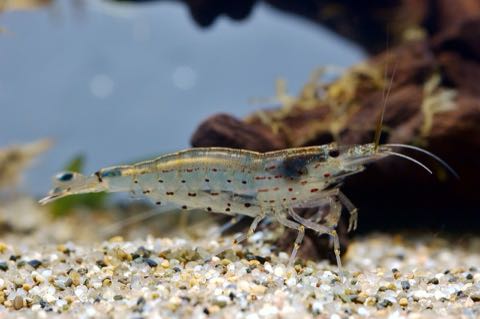 Amano shrimp
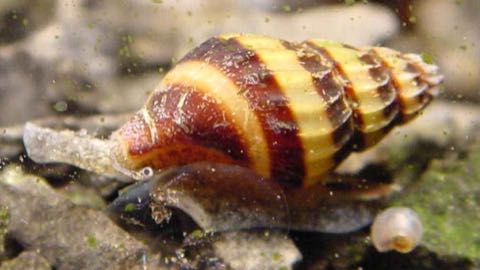 Assassin snail
- Banded gourami
- Bandit cory
- Banjo catfish
- Black phantom tetra
- Black ruby barb
- Blackline rasbora
- Bleeding heart tetra
Avoid with
- Acei cichlid
No shared pH rangeNo shared pH range
- American flagfish
American flagfish may nip Blue lyretailAmerican flagfish may nip Blue lyretail
- Blind cave tetra
Blind cave tetra may nip Blue lyretailBlind cave tetra may nip Blue lyretail
- Brevis shell dweller
No shared pH rangeNo shared pH range
- Buenos Aires tetra
Buenos Aires tetra may nip Blue lyretailBuenos Aires tetra may nip Blue lyretail
- Butterfly splitfin
Butterfly splitfin may nip Blue lyretailButterfly splitfin may nip Blue lyretail
- Caudopunctatus
No shared pH rangeNo shared pH range
- Chinese barb
Chinese barb may nip Blue lyretailChinese barb may nip Blue lyretail
- Colombian tetra
Colombian tetra may nip Blue lyretailColombian tetra may nip Blue lyretail
- Irian Jaya rainbowfish
No shared temperature rangeNo shared temperature range
- Multies
No shared pH rangeNo shared pH range
- Parkinson's rainbowfish
No shared temperature rangeNo shared temperature range
Breeding gardneri killifish
These killifish use a semi-annual or switch reproductive strategy. Their eggs survive a dry incubation phase, yet they also develop successfully while submerged continuously. Do not drain the display aquarium, and do not treat their natural lifespan as an annual countdown.These killifish use a semi-annual or switch reproductive strategy. Their eggs survive a dry incubation phase, yet they also develop successfully while submerged continuously. Do not drain the display aquarium, and do not treat their natural lifespan as an annual countdown.[1]
Spawning pairs deposit eggs on synthetic yarn mops, moss, or aquatic plants.Spawning pairs deposit eggs on synthetic yarn mops, moss, or aquatic plants.[1]
Submerged eggs hatch within 14–21 days depending on temperature. The resulting fry swim freely right away and take newly hatched Artemia nauplii or microworms as starting food.Submerged eggs hatch within 14–21 days depending on temperature. The resulting fry swim freely right away and take newly hatched Artemia nauplii or microworms as starting food.[1]
Gardneri killifish health problems
Ich is a contagious protozoan parasite in freshwater aquariums. Warning symptoms include white spots on fins or skin, rubbing against hardscape, excess skin mucus, and appetite loss, though symptoms alone do not confirm the illness. Quarantine all incoming stock for 30 days with dedicated equipment to reduce pathogen transfer, and consult a fish-health professional.Ich is a contagious protozoan parasite in freshwater aquariums. Warning symptoms include white spots on fins or skin, rubbing against hardscape, excess skin mucus, and appetite loss, though symptoms alone do not confirm the illness. Quarantine all incoming stock for 30 days with dedicated equipment to reduce pathogen transfer, and consult a fish-health professional.[5]
Bacterial fin rot can cause progressive fin erosion alongside red or bloody streaks. Poor water parameters and elevated stress heighten vulnerability. Lower this risk by maintaining clean water and preventing physical damage or bullying, and obtain an accurate diagnosis before assuming ragged fins stem from fin rot.Bacterial fin rot can cause progressive fin erosion alongside red or bloody streaks. Poor water parameters and elevated stress heighten vulnerability. Lower this risk by maintaining clean water and preventing physical damage or bullying, and obtain an accurate diagnosis before assuming ragged fins stem from fin rot.[4]
It stems from decaying fish waste, leftover food, and broken biological cycles. Prevent problems by cycling filters fully, controlling feed portions, and testing parameters whenever normal behaviour changes.It stems from decaying fish waste, leftover food, and broken biological cycles. Prevent problems by cycling filters fully, controlling feed portions, and testing parameters whenever normal behaviour changes.[3]
Male or female?
Male Gardneri killifish attain larger body lengths, display more vivid coloration, and show extended finnage. Females stay smaller, show muted coloration, and lack long flowing fin tips.Male Gardneri killifish attain larger body lengths, display more vivid coloration, and show extended finnage. Females stay smaller, show muted coloration, and lack long flowing fin tips.[1]
Questions
How many killifish should be kept together?
Provide two or three females for every male. This ratio prevents a single female from receiving continuous chasing. Because they do not school, you do not need schooling numbers.Provide two or three females for every male. This ratio prevents a single female from receiving continuous chasing. Because they do not school, you do not need schooling numbers.[1]
Is Gardneri killifish aggressive?
Although hardy enough for mixed housing, they do not belong in a general community, and you must supply ample hiding spots.Although hardy enough for mixed housing, they do not belong in a general community, and you must supply ample hiding spots.[1]
Can killifish be kept in a community tank?
No, they do not suit a general community setup. Species-only tanks work best, though some keepers house them with tetras, danios, or corys while maintaining a standby separation tank.No, they do not suit a general community setup. Species-only tanks work best, though some keepers house them with tetras, danios, or corys while maintaining a standby separation tank.[1][13]
Do Gardneri killifish jump?
Yes, this species jumps and can fit through narrow gaps. Cover the aquarium with a tight lid and add floating plants or yarn mops for protection.Yes, this species jumps and can fit through narrow gaps. Cover the aquarium with a tight lid and add floating plants or yarn mops for protection.[1]
What should you feed Gardneri killifish?
Feed a carnivore-oriented flake once daily, paired with live or frozen Artemia, bloodworm, and Daphnia. Offer only what they finish in two minutes and clear uneaten food.Feed a carnivore-oriented flake once daily, paired with live or frozen Artemia, bloodworm, and Daphnia. Offer only what they finish in two minutes and clear uneaten food.[1][13][2]
Sources
- Fundulopanchax gardneri (Steel-blue Killifish) — Seriously Fish. Accessed 2026-10-05.
- What to feed your fish — RSPCA. Accessed 2026-10-05.
- Ammonia in Aquatic Systems — UF/IFAS Extension. Accessed 2026-10-05.
- Frequently asked questions on treating sick fish — Practical Fishkeeping. Accessed 2026-10-05.
- Ichthyophthirius multifiliis (White Spot) Infections in Fish — UF/IFAS Extension. Accessed 2026-10-05.
- Astronotus ocellatus (Oscar) — Seriously Fish. Accessed 2026-10-05.
- Rocio octofasciata (Jack Dempsey) — Seriously Fish. Accessed 2026-10-05.
- Carinotetraodon travancoricus (Dwarf Puffer) — Seriously Fish. Accessed 2026-10-05.
- Neon tetras — Seriously Fish. Accessed 2026-10-05.
- Glowlight tetras — Seriously Fish. Accessed 2026-10-05.
- Bronze corys — Seriously Fish. Accessed 2026-10-05.
- Zebra danios — Seriously Fish. Accessed 2026-10-05.
- A Fish with Piscinality: Fundulopanchax gardneri — TFH Magazine. Accessed 2026-10-05.
- Fundulopanchax gardneri (Blue lyretail) field guide — FishBase. Accessed 2026-10-05.
Written from the sources above. Not yet reviewed by an aquarist.
Data used by the planner
| Temperature range | 22–25 | AqAdvisor (aqadvisor.com), retrieved 2026-10-04; agrees with FishBase (fishbase.se), retrieved 2026-10-04 · medium confidence |
|---|---|---|
| pH | 6.5–7.5 | AqAdvisor (aqadvisor.com), retrieved 2026-10-04; agrees with FishBase (fishbase.se), retrieved 2026-10-04 · medium confidence |
| Hardness (dGH) | 6–19 | AqAdvisor (aqadvisor.com), retrieved 2026-10-04 · low confidence |
| Origin | Nigeria and Cameroon, West Africa | curated-v0 (needs expert review) · low confidence |
| Beginner friendly | Yes | curated-v0 (needs expert review) · medium confidence |
| Care level | easy | curated-v0 (needs expert review) · medium confidence |
| Activity | moderate | curated-v0 (needs expert review) · medium confidence |
| Swimming level | middle | curated-v0 (needs expert review) · medium confidence |
| Temperament | semi aggressive | curated-v0 (needs expert review) · medium confidence |
| Nips fins | No | curated-v0 (needs expert review) · medium confidence |
| Long fins | Yes | curated-v0 (needs expert review) · medium confidence |
| Territorial | Yes | curated-v0 (needs expert review) · medium confidence |
| Lives in groups | No | curated-v0 (needs expert review) · medium confidence |
| Minimum group | 1 | curated-v0 (needs expert review) · medium confidence |
| Diet | carnivore | curated-v0 (needs expert review) · medium confidence |
| Lifespan (years) | 2–3 | curated-v0 (needs expert review) · low confidence |
| Months to adult size | 5 | curated-v0 (needs expert review) · low confidence |
| Safe with plants | Yes | curated-v0 (needs expert review) · medium confidence |