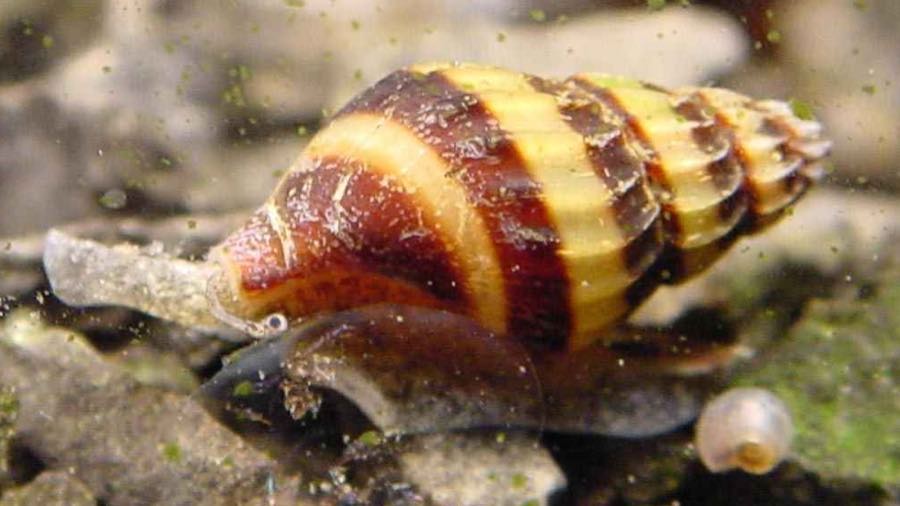
Assassin snail tank size
Plan for an aquarium with a tank length of at least 30 cm. A mature setup holding roughly 20 L or larger with soft substrate serves as the hobby starting point for housing this snail.Plan for an aquarium with a tank length of at least 12 in. A mature setup holding roughly 5.3 gal or larger with soft substrate serves as the hobby starting point for housing this snail.[1]
Sand or fine smooth substrate allows burying into the floor. In addition, include plants and hard surfaces within the layout to provide structure for exploration and firm surfaces for egg attachment.Sand or fine smooth substrate allows burying into the floor. In addition, include plants and hard surfaces within the layout to provide structure for exploration and firm surfaces for egg attachment.[1]
Keep the aquarium covered and guard obvious openings across the top. Using tank covers is a sensible precaution, even though assassin snails are not noted escape specialists in home aquariums.Keep the aquarium covered and guard obvious openings across the top. Using tank covers is a sensible precaution, even though assassin snails are not noted escape specialists in home aquariums.[1]
Assassin snail water parameters
Maintain water temperatures between 24–28 °C, a pH of 7.0–8.0, and general hardness between 10–20 dGH. These ranges represent the overlap of published care recommendations for captive setups.Maintain water temperatures between 75–82 °F, a pH of 7.0–8.0, and general hardness between 10–20 dGH. These ranges represent the overlap of published care recommendations for captive setups.[1]
Run mature filtration that maintains zero ammonia and nitrite at all times. Acclimate newly acquired snails gradually to their water, and perform weekly water tests to track your aquarium conditions.Run mature filtration that maintains zero ammonia and nitrite at all times. Acclimate newly acquired snails gradually to their water, and perform weekly water tests to track your aquarium conditions.[2]
Feeding assassin snails
Assassin snails consume animal foods, including other snails, worms, thawed bloodworms, and sinking carnivore foods. They are specialized predators and scavengers, not algae cleaners in home aquariums.Assassin snails consume animal foods, including other snails, worms, thawed bloodworms, and sinking carnivore foods. They are specialized predators and scavengers, not algae cleaners in home aquariums.[1][3]
When natural prey is scarce, offer small portions of prepared carnivore food twice a week. Allow at least 30 minutes for feeding, adjust portions according to observed consumption, and remove excess uneaten food from the tank.When natural prey is scarce, offer small portions of prepared carnivore food twice a week. Allow at least 30 minutes for feeding, adjust portions according to observed consumption, and remove excess uneaten food from the tank.[1][2]
There is no dependable universal snails-per-day consumption rate. Prey size, alternative foods, and overall prey numbers affect hunting, meaning nuisance snail infestations may reproduce faster than a few assassins can eat them.There is no dependable universal snails-per-day consumption rate. Prey size, alternative foods, and overall prey numbers affect hunting, meaning nuisance snail infestations may reproduce faster than a few assassins can eat them.[1][3]
Remove uneaten food and decaying plant material regularly from the tank. Taking out these waste items controls the food supply available to nuisance snails rather than relying solely on adding more predators.Remove uneaten food and decaying plant material regularly from the tank. Taking out these waste items controls the food supply available to nuisance snails rather than relying solely on adding more predators.[3]
Assassin snail behaviour
The assassin snail reaches an adult length of approximately 3–3 cm. Its tapered shell usually displays distinct yellow and dark bands across the whorls.The assassin snail reaches an adult length of approximately 1–1 in. Its tapered shell usually displays distinct yellow and dark bands across the whorls.[1][3]
A lone assassin snail does not require a social group to remain healthy. Keeping more animals together requires an adequate long-term food supply to sustain every snail in the tank.A lone assassin snail does not require a social group to remain healthy. Keeping more animals together requires an adequate long-term food supply to sustain every snail in the tank.[1]
Hiding in sand is normal ambush behaviour for this species. An individual snail may bury itself into the substrate during daytime hours as well as during the night.Hiding in sand is normal ambush behaviour for this species. An individual snail may bury itself into the substrate during daytime hours as well as during the night.[1]
Survival up to five years has been reported under suitable captive care. This figure reflects an upper hobby report rather than a measured average lifespan for the species.Survival up to five years has been reported under suitable captive care. This figure reflects an upper hobby report rather than a measured average lifespan for the species.[1]
Assassin snail tank mates
Neon tetrasNeon tetras work as a conditional small-tetra companion when you satisfy the water parameters and group size needs of both species. work as a conditional small-tetra companion when you satisfy the water parameters and group size needs of both species. Harlequin rasborasHarlequin rasboras are also a conditional peaceful midwater companion in a sufficiently large shared aquarium. are also a conditional peaceful midwater companion in a sufficiently large shared aquarium.[1]
Pygmy corydorasPygmy corydoras can coexist as a peaceful bottom group, provided you supply dedicated food and sufficient floor space. Similarly, can coexist as a peaceful bottom group, provided you supply dedicated food and sufficient floor space. Similarly, OtocinclusOtocinclus can share the tank conditionally if the mature setup provides their grazing diet alongside overlapping water parameters. can share the tank conditionally if the mature setup provides their grazing diet alongside overlapping water parameters.[1]
Avoid keeping Avoid keeping mystery snailsmystery snails when you wish to preserve them. Their larger shells do not ensure safety from assassin snail predation in a shared aquarium. when you wish to preserve them. Their larger shells do not ensure safety from assassin snail predation in a shared aquarium.[1]
Avoid housing assassin snails with Avoid housing assassin snails with cherry shrimpcherry shrimp in a breeding colony, because shrimplets and vulnerable molting shrimp can be eaten. In addition, avoid in a breeding colony, because shrimplets and vulnerable molting shrimp can be eaten. In addition, avoid pea pufferspea puffers, which feed on snails and make the assassin potential prey., which feed on snails and make the assassin potential prey.[1][3][2]
Usually fine together
- Acei cichlid
- African butterfly cichlid
- Agassiz's cory
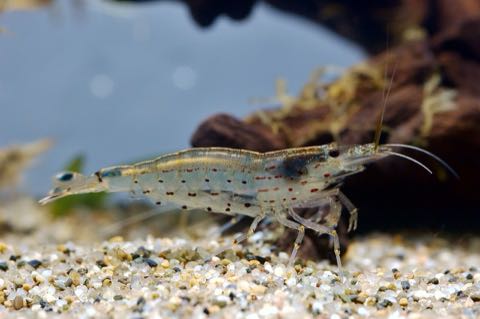 Amano shrimp
- American flagfish
- Banded gourami
- Bandit cory
- Banjo catfish
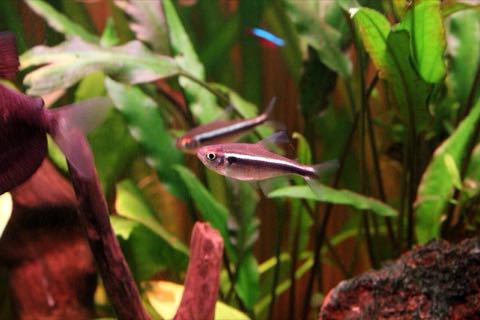 Black neon tetra
- Black phantom tetra
- Black ruby barb
- Bleeding heart tetra
Avoid with
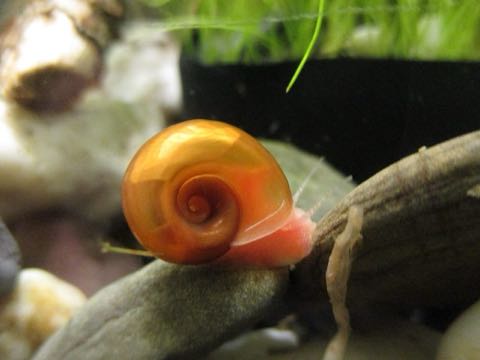 Ramshorn snail
Assassin snails prey on small ramshorn snailsAssassin snails prey on small ramshorn snails
- African clawed frog
African clawed frog may eat Assassin snailAfrican clawed frog may eat Assassin snail
- Brilliant rasbora
No shared pH rangeNo shared pH range
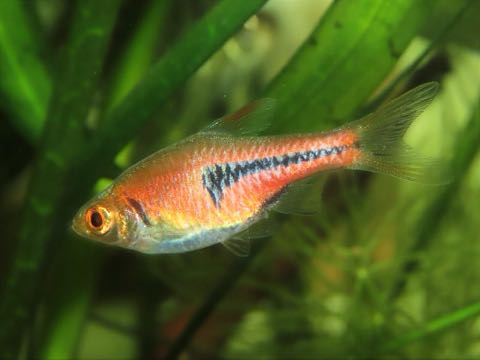 Lambchop rasbora
No shared pH rangeNo shared pH range
- Abei puffer
Abei puffer may eat Assassin snailAbei puffer may eat Assassin snail
- African butterflyfish
African butterflyfish may eat Assassin snailAfrican butterflyfish may eat Assassin snail
- African knifefish
African knifefish may eat Assassin snailAfrican knifefish may eat Assassin snail
- African pike
African pike may eat Assassin snailAfrican pike may eat Assassin snail
- Alligator gar
Alligator gar may eat Assassin snailAlligator gar may eat Assassin snail
- Altum angelfish
No shared water hardness rangeNo shared water hardness range
- Amazon leaffish
No shared water hardness rangeNo shared water hardness range
- Amazon toadfish
Amazon toadfish may eat Assassin snailAmazon toadfish may eat Assassin snail
Breeding assassin snails
Males and females are separate sexes in this species. The female places individual egg capsules on hard surfaces, and newly hatched juveniles spend their early life buried in the substrate.Males and females are separate sexes in this species. The female places individual egg capsules on hard surfaces, and newly hatched juveniles spend their early life buried in the substrate.[1]
Reproduction happens slower than in many nuisance snail species. Even so, an adequately fed colony can multiply over time and create a stocking problem within the aquarium.Reproduction happens slower than in many nuisance snail species. Even so, an adequately fed colony can multiply over time and create a stocking problem within the aquarium.[1][3]
Assassin snail health problems
Shell erosion appears as visible pitting or thinning of the shell surface. Acidic, mineral-poor water contributes to this damage, so check your pH and hardness values and feed an appropriate mineral-containing diet.Shell erosion appears as visible pitting or thinning of the shell surface. Acidic, mineral-poor water contributes to this damage, so check your pH and hardness values and feed an appropriate mineral-containing diet.[1]
New tank syndrome stems from ammonia or nitrite pollution caused by inadequate biological filtration. Inactivity or reduced appetite is nonspecific, so test your water rather than diagnosing by behaviour alone, and prevent issues using mature filtration and removing excess food.New tank syndrome stems from ammonia or nitrite pollution caused by inadequate biological filtration. Inactivity or reduced appetite is nonspecific, so test your water rather than diagnosing by behaviour alone, and prevent issues using mature filtration and removing excess food.[2]
Copper poisoning can harm snails following unsuitable aquarium treatments. Inactivity and appetite loss warrant water tests and product checks, but symptoms cannot identify toxins alone; avoid copper medications unless explicitly suitable for invertebrates.Copper poisoning can harm snails following unsuitable aquarium treatments. Inactivity and appetite loss warrant water tests and product checks, but symptoms cannot identify toxins alone; avoid copper medications unless explicitly suitable for invertebrates.[2]
Male or female?
Shell colour and shape do not reliably distinguish males from females. Purchasing multiple unsexed adult snails only increases, rather than ensures, the chance of obtaining a breeding pair.Shell colour and shape do not reliably distinguish males from females. Purchasing multiple unsexed adult snails only increases, rather than ensures, the chance of obtaining a breeding pair.[1]
Questions
What are the downsides of keeping assassin snails?
Assassin snails prey on valued ornamental species such as Assassin snails prey on valued ornamental species such as mystery snailsmystery snails and can eat shrimplets or molting and can eat shrimplets or molting cherry shrimpcherry shrimp. In addition, an adequately fed colony can multiply over time, potentially creating a secondary stocking problem in your tank.. In addition, an adequately fed colony can multiply over time, potentially creating a secondary stocking problem in your tank.[1][3]
How many snails will an assassin snail eat a day?
There is no dependable universal snails-per-day rate. Hunting varies with prey size, alternative foods, and prey numbers, and nuisance snail infestations may reproduce faster than a few assassins can eat them.There is no dependable universal snails-per-day rate. Hunting varies with prey size, alternative foods, and prey numbers, and nuisance snail infestations may reproduce faster than a few assassins can eat them.[1][3]
Will assassin snails clean a tank?
No, assassin snails are not algae cleaners. They consume animal foods including other snails, worms, thawed bloodworms, and sinking carnivore foods rather than grazing on aquarium plant growth or algae.No, assassin snails are not algae cleaners. They consume animal foods including other snails, worms, thawed bloodworms, and sinking carnivore foods rather than grazing on aquarium plant growth or algae.[1][3]
Do assassin snails multiply a lot?
Their reproduction is slower than many nuisance snails, but an adequately fed colony can still multiply and create a stocking problem. Females place individual egg capsules on hard surfaces, and juveniles start life buried.Their reproduction is slower than many nuisance snails, but an adequately fed colony can still multiply and create a stocking problem. Females place individual egg capsules on hard surfaces, and juveniles start life buried.[1][3]
Will assassin snails crawl out of a tank?
These snails are not noted escape specialists, but keeping the aquarium covered and guarding obvious openings remains a sensible precaution against wanderings outside the tank.These snails are not noted escape specialists, but keeping the aquarium covered and guarding obvious openings remains a sensible precaution against wanderings outside the tank.[1]
Sources
- Assassin Snail Care: Diet, Breeding & Shrimp Safety — Shrimp and Snail Breeder. Accessed 2026-10-05.
- How to look after freshwater shrimp and snails — Ornamental Aquatic Trade Association. Accessed 2026-10-05.
- How do I deal with aquarium snails? — Practical Fishkeeping. Accessed 2026-10-05.
Written from the sources above. Not yet reviewed by an aquarist.
Data used by the planner
| Temperature | 16–30 | AqAdvisor (aqadvisor.com), retrieved 2026-10-04 · medium confidence |
|---|---|---|
| pH | 7–9 | AqAdvisor (aqadvisor.com), retrieved 2026-10-04 · medium confidence |
| Hardness (dGH) | 10–30 | AqAdvisor (aqadvisor.com), retrieved 2026-10-04 · medium confidence |
| Origin | Freshwater; exact natural range needs expert review | curated-v0 (needs expert review) · low confidence |
| Beginner friendly | Yes | curated-v0 (needs expert review) · medium confidence |
| Care level | moderate | curated-v0 (needs expert review) · medium confidence |
| Activity | sedentary | curated-v0 (needs expert review) · medium confidence |
| Swimming level | bottom | curated-v0 (needs expert review) · medium confidence |
| Temperament | predatory | curated-v0 (needs expert review) · medium confidence |
| Nips fins | No | curated-v0 (needs expert review) · medium confidence |
| Long fins | No | curated-v0 (needs expert review) · medium confidence |
| Territorial | No | curated-v0 (needs expert review) · medium confidence |
| Lives in groups | No | curated-v0 (needs expert review) · medium confidence |
| Minimum group | 1 | curated-v0 (needs expert review) · medium confidence |
| Diet | carnivore | curated-v0 (needs expert review) · medium confidence |
| Lifespan (years) | 1–5 | curated-v0 (needs expert review) · medium confidence |
| Months to adult size | 6 | curated-v0 (needs expert review) · low confidence |
| Safe with plants | Yes | curated-v0 (needs expert review) · medium confidence |
| Minimum tank length | 30 | curated-v0 (needs expert review) · medium confidence |