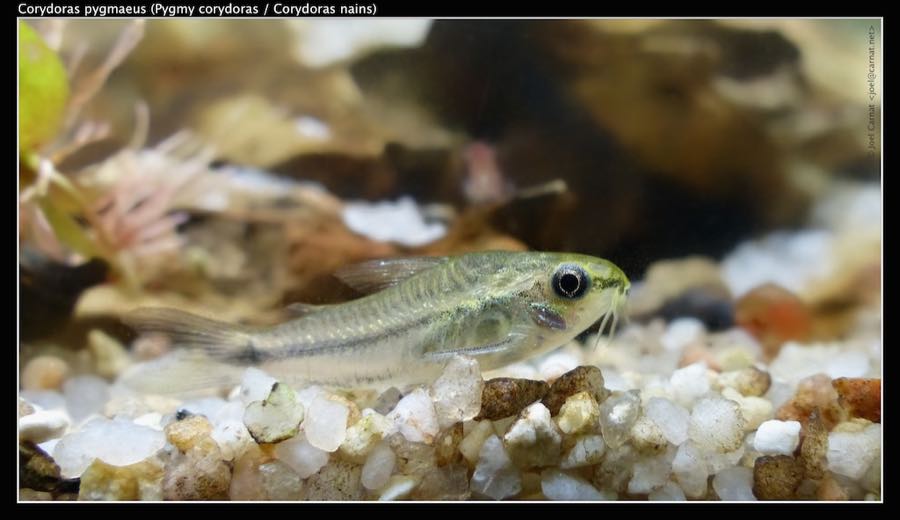
Pygmy corydoras tank size
Provide an aquarium with a minimum tank length of 45 cm and a width of 30 cm. Even though these fish remain small at an adult length of 2.5 cm to 3 cm, their need to live in social groups requires adequate floor space.Provide an aquarium with a minimum tank length of 18 in and a width of 12 in. Even though these fish remain small at an adult length of 1 in to 1 in, their need to live in social groups requires adequate floor space.[1]
Cover the base with fine river sand and keep the bottom clean. In nature, these fish live in tributaries, creeks, pools, and flooded forest within the Rio Madeira basin of Brazil. Dim light, aquatic plants, roots, and wood recreate these marginal habitats and offer shaded shelter.Cover the base with fine river sand and keep the bottom clean. In nature, these fish live in tributaries, creeks, pools, and flooded forest within the Rio Madeira basin of Brazil. Dim light, aquatic plants, roots, and wood recreate these marginal habitats and offer shaded shelter.[1]
Pygmy corydoras water parameters
Maintain stable water conditions with a temperature of 22–26 °C, a pH between 6.4 and 7.4, and a general hardness of 2–8 dGH. Do not aim for zero water hardness.Maintain stable water conditions with a temperature of 72–79 °F, a pH between 6.4 and 7.4, and a general hardness of 2–8 dGH. Do not aim for zero water hardness.[1]
Establish biological filtration completely before introducing your fish so that ammonia remains undetectable and nitrite stays controlled. Clear water does not confirm chemical safety. Test ammonia weekly and whenever your fish show changes in appetite or behaviour, taking care not to overfeed.Establish biological filtration completely before introducing your fish so that ammonia remains undetectable and nitrite stays controlled. Clear water does not confirm chemical safety. Test ammonia weekly and whenever your fish show changes in appetite or behaviour, taking care not to overfeed.[3]
Feeding pygmy corydoras
Offer tiny dried foods ground finely to fit their small mouths, along with small live or frozen Daphnia and Artemia nauplii for dietary variety. Pygmy corydoras may lose out on meals when kept alongside larger companions. Floor foraging does not mean they have eaten, and they cannot survive solely on leftovers.Offer tiny dried foods ground finely to fit their small mouths, along with small live or frozen Daphnia and Artemia nauplii for dietary variety. Pygmy corydoras may lose out on meals when kept alongside larger companions. Floor foraging does not mean they have eaten, and they cannot survive solely on leftovers.[1][3]
Feed two small meals daily, restricting each serving to what the fish consume in about two minutes. Remove uneaten food promptly to maintain water quality and adjust portion sizes directly to the fish.Feed two small meals daily, restricting each serving to what the fish consume in about two minutes. Remove uneaten food promptly to maintain water quality and adjust portion sizes directly to the fish.[2]
Pygmy corydoras behaviour
Keep at least eight pygmy corydoras together. Pygmy corydoras are peaceful, but larger companions can easily intimidate them. Unlike many larger cory species, they swim actively through the midwater levels in addition to using the bottom of the aquarium.Keep at least eight pygmy corydoras together. Pygmy corydoras are peaceful, but larger companions can easily intimidate them. Unlike many larger cory species, they swim actively through the midwater levels in addition to using the bottom of the aquarium.[1]
A dark lateral stripe distinguishes pygmy corydoras from Gastrodermus hastatus, which features a prominent tail-spot pattern. Corydoras occasionally dart to the surface to gulp air. Frequent changes in their surfacing behaviour indicate a problem and call for water testing rather than assuming the action is normal.A dark lateral stripe distinguishes pygmy corydoras from Gastrodermus hastatus, which features a prominent tail-spot pattern. Corydoras occasionally dart to the surface to gulp air. Frequent changes in their surfacing behaviour indicate a problem and call for water testing rather than assuming the action is normal.[1]
Pygmy corydoras tank mates
Tiny cyprinids like Tiny cyprinids like chili rasboraschili rasboras, , celestial pearl danioscelestial pearl danios, and , and neon green rasborasneon green rasboras can work with them under specific conditions. Check that your setup accommodates the shared temperature range, chemistry, and proper group sizes for each species, and watch closely to verify that the corys are not outcompeted for food. can work with them under specific conditions. Check that your setup accommodates the shared temperature range, chemistry, and proper group sizes for each species, and watch closely to verify that the corys are not outcompeted for food.[1]
Small characins like Small characins like ember tetrasember tetras can also work with them. Because pygmy corydoras are easily intimidated by larger fish, restrict companions to other miniature species. Confirm the full group sizes fit the tank and monitor the feeding area to ensure the bottom dwellers receive enough food. can also work with them. Because pygmy corydoras are easily intimidated by larger fish, restrict companions to other miniature species. Confirm the full group sizes fit the tank and monitor the feeding area to ensure the bottom dwellers receive enough food.[1]
Avoid predatory cichlids such as Avoid predatory cichlids such as oscarsoscars and and Jack DempseysJack Dempseys. Jack Dempseys become aggressive as they mature and require companions too large to swallow, while oscars readily consume fish that are significantly smaller than themselves.. Jack Dempseys become aggressive as they mature and require companions too large to swallow, while oscars readily consume fish that are significantly smaller than themselves.[1][6][7]
Avoid Avoid pea pufferspea puffers. Although sometimes kept in community tanks, pea puffers carry a documented risk of nipping slower tank mates, making them unsuitable for small, placid corydoras.. Although sometimes kept in community tanks, pea puffers carry a documented risk of nipping slower tank mates, making them unsuitable for small, placid corydoras.[1][8]
Usually fine together
- African butterfly cichlid
- Agassiz's cory
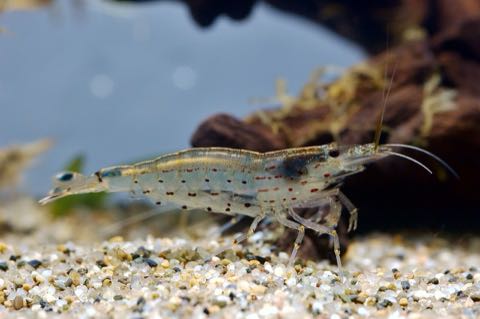 Amano shrimp
- American flagfish
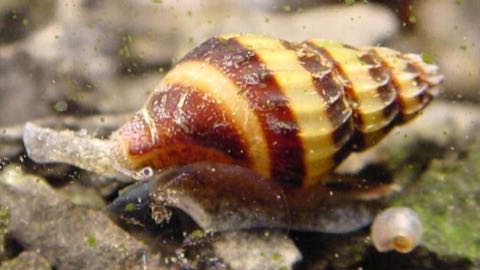 Assassin snail
- Banded gourami
- Bandit cory
- Banjo catfish
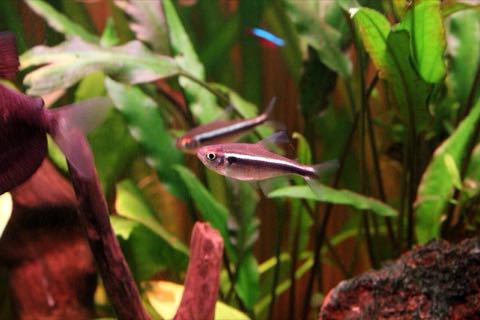 Black neon tetra
- Black phantom tetra
- Black ruby barb
- Blackline rasbora
Avoid with
- African clawed frog
African clawed frog may eat Pygmy coryAfrican clawed frog may eat Pygmy cory
- Abei puffer
Abei puffer may eat Pygmy coryAbei puffer may eat Pygmy cory
- African butterflyfish
African butterflyfish may eat Pygmy coryAfrican butterflyfish may eat Pygmy cory
- African knifefish
African knifefish may eat Pygmy coryAfrican knifefish may eat Pygmy cory
- African pike
African pike may eat Pygmy coryAfrican pike may eat Pygmy cory
- Alligator gar
Alligator gar may eat Pygmy coryAlligator gar may eat Pygmy cory
- Amazon leaffish
Amazon leaffish may eat Pygmy coryAmazon leaffish may eat Pygmy cory
- Amazon toadfish
Amazon toadfish may eat Pygmy coryAmazon toadfish may eat Pygmy cory
- Antenna ray
Antenna ray may eat Pygmy coryAntenna ray may eat Pygmy cory
- Arapaima
Arapaima may eat Pygmy coryArapaima may eat Pygmy cory
- Arrowhead puffer
Arrowhead puffer may eat Pygmy coryArrowhead puffer may eat Pygmy cory
- Asian arowana
Asian arowana may eat Pygmy coryAsian arowana may eat Pygmy cory
Breeding pygmy corydoras
A dedicated breeding aquarium should include gentle sponge filtration, aquatic moss, and conditioned adult fish that have received a varied diet. Pygmy corydoras deposit adhesive eggs directly onto the tank glass. Adult fish may eat their own eggs, so separating the adults or the eggs reduces predation.A dedicated breeding aquarium should include gentle sponge filtration, aquatic moss, and conditioned adult fish that have received a varied diet. Pygmy corydoras deposit adhesive eggs directly onto the tank glass. Adult fish may eat their own eggs, so separating the adults or the eggs reduces predation.[1]
Eggs hatch in three to five days. Once their yolk sacs are fully absorbed, the tiny fry require infusoria-grade foods before they grow large enough to consume microworms or Artemia nauplii.Eggs hatch in three to five days. Once their yolk sacs are fully absorbed, the tiny fry require infusoria-grade foods before they grow large enough to consume microworms or Artemia nauplii.[1]
Pygmy corydoras health problems
Ich is a contagious protozoan infection affecting freshwater fish. Warning signs include visible white grains on the fins or body, rubbing against surfaces, excess mucus, or a loss of appetite, though visual signs alone cannot confirm the illness. Quarantine all new arrivals for at least 30 days and use separate nets and siphons to reduce the risk of bringing the parasite into the tank. Seek a prompt diagnosis from a fish-health professional.Ich is a contagious protozoan infection affecting freshwater fish. Warning signs include visible white grains on the fins or body, rubbing against surfaces, excess mucus, or a loss of appetite, though visual signs alone cannot confirm the illness. Quarantine all new arrivals for at least 30 days and use separate nets and siphons to reduce the risk of bringing the parasite into the tank. Seek a prompt diagnosis from a fish-health professional.[5]
Bacterial fin rot can cause progressive fin-edge erosion, and redness or bloody streaks may appear on the fins. Poor environmental conditions and stress favour bacterial infection. Reduce avoidable risk with clean water and protection from injury or harassment, and seek an accurate diagnosis rather than assuming all damaged fins have fin rot.Bacterial fin rot can cause progressive fin-edge erosion, and redness or bloody streaks may appear on the fins. Poor environmental conditions and stress favour bacterial infection. Reduce avoidable risk with clean water and protection from injury or harassment, and seek an accurate diagnosis rather than assuming all damaged fins have fin rot.[4]
Ammonia poisoning damages delicate gill tissues, causes stress, and may cause reduced feeding. This toxic compound originates from fish metabolism and decaying food or biological waste. Cycle the biological filter completely before introducing fish, test water parameters regularly, and avoid overfeeding.Ammonia poisoning damages delicate gill tissues, causes stress, and may cause reduced feeding. This toxic compound originates from fish metabolism and decaying food or biological waste. Cycle the biological filter completely before introducing fish, test water parameters regularly, and avoid overfeeding.[3]
Male or female?
Mature females are noticeably larger, broader, and rounder in body shape than males, particularly when carrying eggs. You can identify these physical differences most clearly by observing the fish from above.Mature females are noticeably larger, broader, and rounder in body shape than males, particularly when carrying eggs. You can identify these physical differences most clearly by observing the fish from above.[1]
Questions
How many pygmy corys should be together?
Keep at least eight pygmy corydoras together. A group of this size accommodates their social shoaling behaviour in a home aquarium.Keep at least eight pygmy corydoras together. A group of this size accommodates their social shoaling behaviour in a home aquarium.[1]
Can I keep only three corydoras?
No, three corydoras is not enough. Pygmy corydoras require a minimum group of at least eight fish to meet their social needs.No, three corydoras is not enough. Pygmy corydoras require a minimum group of at least eight fish to meet their social needs.[1]
Will pygmy corydoras clean the tank?
No, pygmy corydoras will not clean your tank. They cannot replace aquarium maintenance, do not survive solely on leftover food, and their own metabolism and waste contribute to ammonia levels.No, pygmy corydoras will not clean your tank. They cannot replace aquarium maintenance, do not survive solely on leftover food, and their own metabolism and waste contribute to ammonia levels.[1][3]
Do pygmy corys stay at the bottom?
No, pygmy corydoras do not stay exclusively at the bottom. Unlike many larger cory species, they swim actively in the open midwater as well as foraging across the substrate.No, pygmy corydoras do not stay exclusively at the bottom. Unlike many larger cory species, they swim actively in the open midwater as well as foraging across the substrate.[1]
How often should I feed pygmy corys?
Feed your pygmy corydoras twice daily. Provide small meals limited to what they can consume in roughly two minutes, and clear away any uneaten portions.Feed your pygmy corydoras twice daily. Provide small meals limited to what they can consume in roughly two minutes, and clear away any uneaten portions.[2]
Sources
- Pygmy corydoras — Seriously Fish. Accessed 2026-10-05.
- What to feed your fish — RSPCA. Accessed 2026-10-05.
- Ammonia in Aquatic Systems — UF/IFAS Extension. Accessed 2026-10-05.
- Frequently asked questions on treating sick fish — Practical Fishkeeping. Accessed 2026-10-05.
- Ichthyophthirius multifiliis (White Spot) Infections in Fish — UF/IFAS Extension. Accessed 2026-10-05.
- Astronotus ocellatus (Oscar) — Seriously Fish. Accessed 2026-10-05.
- Rocio octofasciata (Jack Dempsey) — Seriously Fish. Accessed 2026-10-05.
- Carinotetraodon travancoricus (Dwarf Puffer) — Seriously Fish. Accessed 2026-10-05.
Written from the sources above. Not yet reviewed by an aquarist.
Data used by the planner
| Temperature | 22–27 | AqAdvisor (aqadvisor.com), retrieved 2026-10-04; agrees with FishBase (fishbase.se), retrieved 2026-10-04 · medium confidence |
|---|---|---|
| pH | 5.5–7.8 | AqAdvisor (aqadvisor.com), retrieved 2026-10-04; agrees with FishBase (fishbase.se), retrieved 2026-10-04 · medium confidence |
| Hardness (dGH) | 1–15 | AqAdvisor (aqadvisor.com), retrieved 2026-10-04 · low confidence |
| Origin | South America | curated-v0 (needs expert review) · low confidence |
| Beginner friendly | Yes | curated-v0 (needs expert review) · medium confidence |
| Care level | easy | curated-v0 (needs expert review) · medium confidence |
| Activity | moderate | curated-v0 (needs expert review) · medium confidence |
| Swimming level | bottom | curated-v0 (needs expert review) · medium confidence |
| Temperament | peaceful | curated-v0 (needs expert review) · medium confidence |
| Nips fins | No | curated-v0 (needs expert review) · medium confidence |
| Long fins | No | curated-v0 (needs expert review) · medium confidence |
| Territorial | No | curated-v0 (needs expert review) · medium confidence |
| Lives in groups | Yes | curated-v0 (needs expert review) · medium confidence |
| Minimum group | 8 | curated-v0 (needs expert review) · medium confidence |
| Diet | omnivore | curated-v0 (needs expert review) · medium confidence |
| Lifespan (years) | 2–4 | curated-v0 (needs expert review) · low confidence |
| Months to adult size | 6 | curated-v0 (needs expert review) · low confidence |
| Safe with plants | Yes | curated-v0 (needs expert review) · medium confidence |
| Minimum tank length | 45 | curated-v0 (needs expert review) · medium confidence |