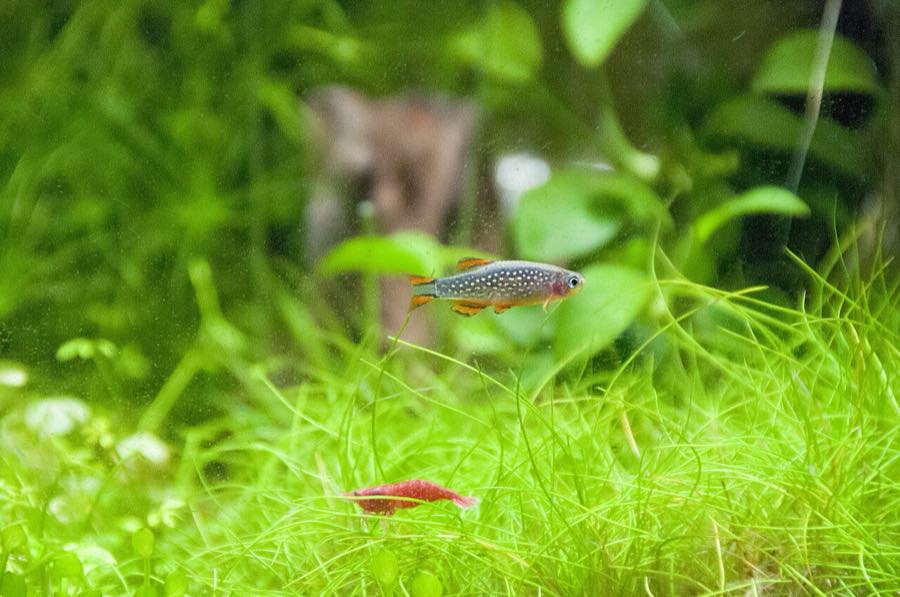
Celestial pearl danio tank size
Plan for a minimum tank length of 45 cm and a tank width of at least 30 cm for celestial pearl danios. Dominant males spar over territory, so this footprint gives enough space to break sightlines using hardscape and greenery.Plan for a minimum tank length of 18 in and a tank width of at least 12 in for celestial pearl danios. Dominant males spar over territory, so this footprint gives enough space to break sightlines using hardscape and greenery.[1]
Provide dense live plants and a dark substrate across the base, leaving open clearings where you can watch the fish feed. In their wild habitat, these fish navigate clear, densely vegetated water, making gentle filtration such as an air-powered sponge filter a suitable choice.Provide dense live plants and a dark substrate across the base, leaving open clearings where you can watch the fish feed. In their wild habitat, these fish navigate clear, densely vegetated water, making gentle filtration such as an air-powered sponge filter a suitable choice.[1][6]
Celestial pearl danio water parameters
Maintain your aquarium between 20–24 °C, keeping acidity within pH 6.5–7.5 and general hardness within 5–15 dGH. While many hobbyists treat small fish as soft-water blackwater species, do not add tannin-rich leaf litter; this species comes from clear planted habitats.Maintain your aquarium between 68–75 °F, keeping acidity within pH 6.5–7.5 and general hardness within 5–15 dGH. While many hobbyists treat small fish as soft-water blackwater species, do not add tannin-rich leaf litter; this species comes from clear planted habitats.[1][6]
A mature biological filter is essential to process fish waste. Ammonia should remain undetectable in the aquarium water. Test ammonia levels regularly, and run immediate checks if fish stop feeding or behave abnormally. Overfeeding and impaired filtration can raise ammonia levels, causing tissue damage and greater vulnerability to infection.A mature biological filter is essential to process fish waste. Ammonia should remain undetectable in the aquarium water. Test ammonia levels regularly, and run immediate checks if fish stop feeding or behave abnormally. Overfeeding and impaired filtration can raise ammonia levels, causing tissue damage and greater vulnerability to infection.[3]
Feeding celestial pearl danios
Celestial pearl danios seldom rise to the surface to take floating flakes. Offer fine sinking dry food balanced with small live or frozen daphnia and brine shrimp. A practical starting feeding routine is two small meals daily, with portions eaten in about two minutes; adjust amounts to fish size and remove uneaten food.Celestial pearl danios seldom rise to the surface to take floating flakes. Offer fine sinking dry food balanced with small live or frozen daphnia and brine shrimp. A practical starting feeding routine is two small meals daily, with portions eaten in about two minutes; adjust amounts to fish size and remove uneaten food.[1][2]
Newly imported specimens may arrive thin and reluctant to eat. Offer small live foods as a starting point, introducing suitable dry and frozen foods gradually as the fish settle into the aquarium.Newly imported specimens may arrive thin and reluctant to eat. Offer small live foods as a starting point, introducing suitable dry and frozen foods gradually as the fish settle into the aquarium.[1]
Celestial pearl danio behaviour
These fish do not form a continuously tight school. Instead, males actively display and spar with one another, and nipped fins can occur within the group during these interactions.These fish do not form a continuously tight school. Instead, males actively display and spar with one another, and nipped fins can occur within the group during these interactions.[1]
Six fish is the minimum group size, and six to seven is recommended. Where space permits, keeping twenty or more fish is preferred because larger numbers distribute male rivalry across the group. A captive lifespan of three to five years is an estimate from Aquarium Source, rather than a controlled survival study.Six fish is the minimum group size, and six to seven is recommended. Where space permits, keeping twenty or more fish is preferred because larger numbers distribute male rivalry across the group. A captive lifespan of three to five years is an estimate from Aquarium Source, rather than a controlled survival study.[1][10]
Also known by the trade name galaxy rasbora, this species reaches an adult length of 2–2.5 cm, with a standard length of 2.1 cm. Its dark blue body and red-orange fins differ from the striped emerald dwarf rasbora. Some commercial specimens show altered fin patterning or deformities, but pattern differences alone do not establish a separate species.Also known by the trade name galaxy rasbora, this species reaches an adult length of 0.8–1 in, with a standard length of 0.8 in. Its dark blue body and red-orange fins differ from the striped emerald dwarf rasbora. Some commercial specimens show altered fin patterning or deformities, but pattern differences alone do not establish a separate species.[1][6]
Celestial pearl danio tank mates
Larger or boisterous companions can frighten celestial pearl danios or take their food. Timid individuals need dense cover to retreat into and unhurried opportunities to feed.Larger or boisterous companions can frighten celestial pearl danios or take their food. Timid individuals need dense cover to retreat into and unhurried opportunities to feed.[1]
Neon green rasborasNeon green rasboras can work with them as small cyprinids, though shared temperature choices are narrow, so check your full aquarium plan before combining them. can work with them as small cyprinids, though shared temperature choices are narrow, so check your full aquarium plan before combining them. Pygmy corydorasPygmy corydoras can work with them when their own group, feeding and space needs are met. can work with them when their own group, feeding and space needs are met.[1][10]
Invertebrates like Invertebrates like cherry shrimpcherry shrimp and and Amano shrimpAmano shrimp are suggested peaceful tank mates in shared suitable water. Dense cover and separate feeding remain useful, and shrimplets may still be eaten. are suggested peaceful tank mates in shared suitable water. Dense cover and separate feeding remain useful, and shrimplets may still be eaten.[10][1]
Do not house them with large predators or aggressive species. Avoid Do not house them with large predators or aggressive species. Avoid oscarsoscars, which can swallow tiny danios. Avoid , which can swallow tiny danios. Avoid Jack DempseysJack Dempseys because their territorial behaviour and size make them unsuitable, and avoid because their territorial behaviour and size make them unsuitable, and avoid pea pufferspea puffers, which can nip and harass peaceful companions., which can nip and harass peaceful companions.[7][8][1][9]
Usually fine together
- Agassiz's cory
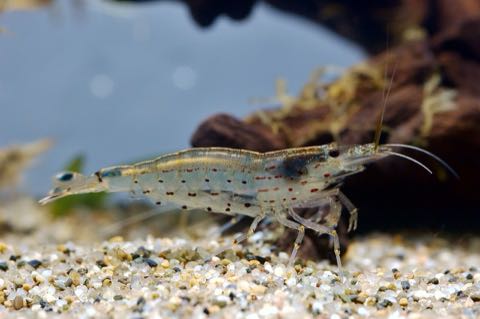 Amano shrimp
- American flagfish
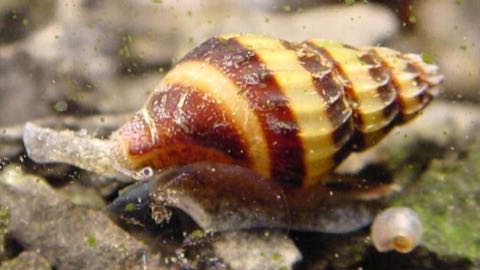 Assassin snail
- Banded gourami
- Bandit cory
- Banjo catfish
- Black phantom tetra
- Black ruby barb
- Blood parrot cichlid
- Bloodfin tetra
- Blue acara
Avoid with
- African clawed frog
African clawed frog may eat Celestial pearl danioAfrican clawed frog may eat Celestial pearl danio
- Black kuhli loach
No shared temperature rangeNo shared temperature range
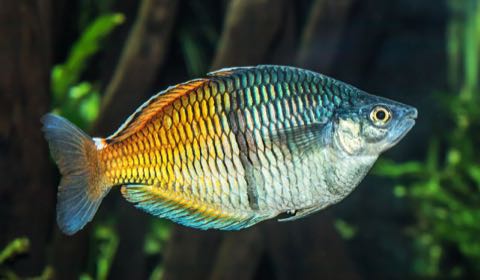 Boeseman rainbowfish
No shared temperature rangeNo shared temperature range
- Irian Jaya rainbowfish
No shared temperature rangeNo shared temperature range
- Julii cory
No shared temperature rangeNo shared temperature range
- Parkinson's rainbowfish
No shared temperature rangeNo shared temperature range
- Rusty cichlid
No shared temperature rangeNo shared temperature range
- Abei puffer
Abei puffer may eat Celestial pearl danioAbei puffer may eat Celestial pearl danio
- Afra cichlid
No shared temperature rangeNo shared temperature range
- African butterflyfish
African butterflyfish may eat Celestial pearl danioAfrican butterflyfish may eat Celestial pearl danio
- African knifefish
African knifefish may eat Celestial pearl danioAfrican knifefish may eat Celestial pearl danio
- African pike
No shared temperature rangeNo shared temperature range
Breeding celestial pearl danios
Celestial pearl danios scatter mildly adhesive eggs among plants and do not protect their offspring. In mature planted aquariums, surviving fry may occasionally appear without special intervention.Celestial pearl danios scatter mildly adhesive eggs among plants and do not protect their offspring. In mature planted aquariums, surviving fry may occasionally appear without special intervention.[1][6]
For deliberate breeding, supply fine plants or spawning mops, and move adults away from the eggs because the parents eat them. Offer paramecia or dry fry food of a sufficiently fine particle size as first foods, followed by brine shrimp nauplii once the young have mouths large enough to ingest them.For deliberate breeding, supply fine plants or spawning mops, and move adults away from the eggs because the parents eat them. Offer paramecia or dry fry food of a sufficiently fine particle size as first foods, followed by brine shrimp nauplii once the young have mouths large enough to ingest them.[1]
Celestial pearl danio health problems
Ich is a parasitic infection that can produce white spots, rubbing, clamped fins and laboured breathing. Some gill infections have no obvious body spots. Because ich can arrive on fish or wet equipment, quarantine new arrivals for at least 30 days and avoid sharing uncleaned nets between tanks.Ich is a parasitic infection that can produce white spots, rubbing, clamped fins and laboured breathing. Some gill infections have no obvious body spots. Because ich can arrive on fish or wet equipment, quarantine new arrivals for at least 30 days and avoid sharing uncleaned nets between tanks.[5]
Fin rot is usually a bacterial problem associated with poor conditions. Look for fins that keep fraying or shrinking, as well as blood-streaked edges. Reduce risk by maintaining water quality and removing harassment or injury sources, and assess progressive damage promptly rather than assuming every torn fin is infected.Fin rot is usually a bacterial problem associated with poor conditions. Look for fins that keep fraying or shrinking, as well as blood-streaked edges. Reduce risk by maintaining water quality and removing harassment or injury sources, and assess progressive damage promptly rather than assuming every torn fin is infected.[4]
Fungal cotton-wool disease produces fluffy white or grey growth on damaged tissue, with injury and environmental stress allowing fungi to gain a foothold. Prevent fungal problems by avoiding sharp decor, avoiding rough handling and correcting poor water conditions. Fuzzy growth warrants prompt diagnosis because mouth rot can resemble fungus.Fungal cotton-wool disease produces fluffy white or grey growth on damaged tissue, with injury and environmental stress allowing fungi to gain a foothold. Prevent fungal problems by avoiding sharp decor, avoiding rough handling and correcting poor water conditions. Fuzzy growth warrants prompt diagnosis because mouth rot can resemble fungus.[4]
Male or female?
Males usually have deeper blue bodies and stronger red-and-black fin markings. In contrast, females are rounder, displaying more subdued blue-green bodies and orange fins.Males usually have deeper blue bodies and stronger red-and-black fin markings. In contrast, females are rounder, displaying more subdued blue-green bodies and orange fins.[1]
Females carrying eggs become noticeably rounder. When in spawning condition, mature females can also show a dark mark near the vent.Females carrying eggs become noticeably rounder. When in spawning condition, mature females can also show a dark mark near the vent.[1]
Questions
How many Pearl Danios should be kept together?
Keep a group of at least six celestial pearl danios, with six to seven recommended as a starting group. Where aquarium space permits, keeping twenty or more fish is preferred because larger numbers help distribute rivalry among displaying males.Keep a group of at least six celestial pearl danios, with six to seven recommended as a starting group. Where aquarium space permits, keeping twenty or more fish is preferred because larger numbers help distribute rivalry among displaying males.[1][10]
Are celestial pearl danios aggressive?
Males display and spar with each other rather than schooling tightly, and nipped fins can occur within the group. Larger or boisterous tank companions can frighten them, so they require peaceful setups with adequate cover.Males display and spar with each other rather than schooling tightly, and nipped fins can occur within the group. Larger or boisterous tank companions can frighten them, so they require peaceful setups with adequate cover.[1]
What are the best tank mates for a celestial pearl danio?
Species that can work with them include Species that can work with them include neon green rasborasneon green rasboras, , pygmy corydoraspygmy corydoras, , cherry shrimpcherry shrimp and and Amano shrimpAmano shrimp. Ensure you meet the specific space, feeding and temperature requirements for each species.. Ensure you meet the specific space, feeding and temperature requirements for each species.[1][10]
How long can celestial pearl danios live?
Aquarium Source estimates a captive lifespan of three to five years for celestial pearl danios. This figure reflects an expert hobby husbandry estimate rather than findings from a controlled survival study.Aquarium Source estimates a captive lifespan of three to five years for celestial pearl danios. This figure reflects an expert hobby husbandry estimate rather than findings from a controlled survival study.[10]
Do celestial pearl danios breed easily?
These fish scatter mildly adhesive eggs among plants and do not protect their offspring. While mature planted tanks may occasionally produce surviving fry, adults eat their eggs, so deliberate breeding involves moving parents away from spawning mops or fine plants.These fish scatter mildly adhesive eggs among plants and do not protect their offspring. While mature planted tanks may occasionally produce surviving fry, adults eat their eggs, so deliberate breeding involves moving parents away from spawning mops or fine plants.[1][6]
Sources
- Celestichthys margaritatus (Celestial Pearl 'Danio') — Seriously Fish. Accessed 2026-10-05.
- What to feed your fish — RSPCA. Accessed 2026-10-05.
- Ammonia in Aquatic Systems — UF/IFAS Extension. Accessed 2026-10-05.
- Frequently asked questions on treating sick fish — Practical Fishkeeping. Accessed 2026-10-05.
- Ichthyophthirius multifiliis (White Spot) Infections in Fish — UF/IFAS Extension. Accessed 2026-10-05.
- The Micro-Danio Duo: Danio margaritatus vs. Danio erythromicron — Practical Fishkeeping. Accessed 2026-10-05.
- Astronotus ocellatus (Oscar) — Seriously Fish. Accessed 2026-10-05.
- Rocio octofasciata (Jack Dempsey) — Seriously Fish. Accessed 2026-10-05.
- Carinotetraodon travancoricus (Dwarf Puffer) — Seriously Fish. Accessed 2026-10-05.
- Celestial Pearl Danio Care Guide (aka Galaxy Rasbora) — Aquarium Source. Accessed 2026-10-05.
Written from the sources above. Not yet reviewed by an aquarist.
Data used by the planner
| Temperature | 18–24 | AqAdvisor (aqadvisor.com), retrieved 2026-10-04 · medium confidence |
|---|---|---|
| pH | 6–8 | AqAdvisor (aqadvisor.com), retrieved 2026-10-04 · medium confidence |
| Hardness (dGH) | 5–15 | AqAdvisor (aqadvisor.com), retrieved 2026-10-04 · medium confidence |
| Origin | Asia or captive aquarium strains | curated-v0 (needs expert review) · low confidence |
| Beginner friendly | Yes | curated-v0 (needs expert review) · medium confidence |
| Care level | easy | curated-v0 (needs expert review) · medium confidence |
| Activity | moderate | curated-v0 (needs expert review) · medium confidence |
| Swimming level | middle | curated-v0 (needs expert review) · medium confidence |
| Temperament | peaceful | curated-v0 (needs expert review) · medium confidence |
| Nips fins | No | curated-v0 (needs expert review) · medium confidence |
| Long fins | No | curated-v0 (needs expert review) · medium confidence |
| Territorial | No | curated-v0 (needs expert review) · medium confidence |
| Lives in groups | Yes | curated-v0 (needs expert review) · medium confidence |
| Minimum group | 6 | curated-v0 (needs expert review) · medium confidence |
| Diet | omnivore | curated-v0 (needs expert review) · medium confidence |
| Lifespan (years) | 2–4 | curated-v0 (needs expert review) · low confidence |
| Months to adult size | 6 | curated-v0 (needs expert review) · low confidence |
| Safe with plants | Yes | curated-v0 (needs expert review) · medium confidence |
| Minimum tank length | 45 | curated-v0 (needs expert review) · medium confidence |