Bloodfin tetra tank size
Use a tank base at least 60 cm long and 30 cm wide for a small group of bloodfin tetras. Arrange the layout with planted cover and open swimming areas. Roots and bogwood can complement planted areas, but do not let decorations fill all the swimming space.Use a tank base at least 24 in long and 12 in wide for a small group of bloodfin tetras. Arrange the layout with planted cover and open swimming areas. Roots and bogwood can complement planted areas, but do not let decorations fill all the swimming space.[1]
A tight-fitting cover is necessary because bloodfin tetras can jump. Floating plants give cover near the upper water, where this species spends time.A tight-fitting cover is necessary because bloodfin tetras can jump. Floating plants give cover near the upper water, where this species spends time.[1]
Bloodfin tetra water parameters
Target a temperature between 18 °C and 28 °C, noting that the fish is less colourful in cool water. Maintain overlapping care targets of pH 6.0–7.5 and hardness 3–15 dGH within their broader profile range of pH 6.0–8.0. Avoid sudden changes in these parameters.Target a temperature between 64 °F and 82 °F, noting that the fish is less colourful in cool water. Maintain overlapping care targets of pH 6.0–7.5 and hardness 3–15 dGH within their broader profile range of pH 6.0–8.0. Avoid sudden changes in these parameters.[1]
Test water weekly; ammonia and nitrite should be zero. Change about one quarter of the water weekly with conditioned replacement water. Rinse filter media gently in removed aquarium water rather than chlorinated tap water to preserve the established bacteria, because chlorine can damage filter bacteria.Test water weekly; ammonia and nitrite should be zero. Change about one quarter of the water weekly with conditioned replacement water. Rinse filter media gently in removed aquarium water rather than chlorinated tap water to preserve the established bacteria, because chlorine can damage filter bacteria.[2]
Feeding bloodfin tetras
Feed once a day and only the amount the fish finish within a few minutes, avoiding leftover food. Good-quality small flake or granules are a staple for bloodfin tetras. Small frozen or live daphnia and bloodworm add variety to their diet.Feed once a day and only the amount the fish finish within a few minutes, avoiding leftover food. Good-quality small flake or granules are a staple for bloodfin tetras. Small frozen or live daphnia and bloodworm add variety to their diet.[2][1]
Bloodfin tetra behaviour
This species comes from the Paraná drainage in Brazil, Paraguay, and Argentina, living in streams and rivers with shaded vegetation. The planning typical adult length is 4.5 cm, with an adult standard length of 5.5 cm and a maximum of 5.6 cm reported.This species comes from the Paraná drainage in Brazil, Paraguay, and Argentina, living in streams and rivers with shaded vegetation. The planning typical adult length is 1.8 in, with an adult standard length of 2.2 in and a maximum of 2.2 in reported.[1]
Maintain a group of at least six bloodfin tetras in total; other tetra species do not replace the bloodfin group. Bloodfin tetras may nip slow-moving or long-finned fish, so plan community companions around this tendency.Maintain a group of at least six bloodfin tetras in total; other tetra species do not replace the bloodfin group. Bloodfin tetras may nip slow-moving or long-finned fish, so plan community companions around this tendency.[1]
Bloodfin tetra tank mates
Neon tetrasNeon tetras can work where water ranges overlap and both species have their own school. can work where water ranges overlap and both species have their own school. X-ray tetrasX-ray tetras are another small-characid option; allow space for both schools and watch for nipping, as bloodfins may nip slow-moving or long-finned fish. are another small-characid option; allow space for both schools and watch for nipping, as bloodfins may nip slow-moving or long-finned fish.[1]
Bronze corydorasBronze corydoras can work if you provide a separate group, suitable bottom space, and sinking food. can work if you provide a separate group, suitable bottom space, and sinking food. Bristlenose plecosBristlenose plecos can also work; plan for adult bottom space and feed the catfish separately. can also work; plan for adult bottom space and feed the catfish separately.[1]
Avoid Avoid oscarsoscars, as much smaller fish can be eaten by this predatory cichlid. Avoid , as much smaller fish can be eaten by this predatory cichlid. Avoid Jack DempseysJack Dempseys because their tankmates need to be too large to be prey. Separate because their tankmates need to be too large to be prey. Separate pea pufferspea puffers, which are not generally suited to a community and may lose food to vigorous companions., which are not generally suited to a community and may lose food to vigorous companions.[5][6][7]
Usually fine together
- African butterfly cichlid
- African clawed frog
- Agassiz's cory
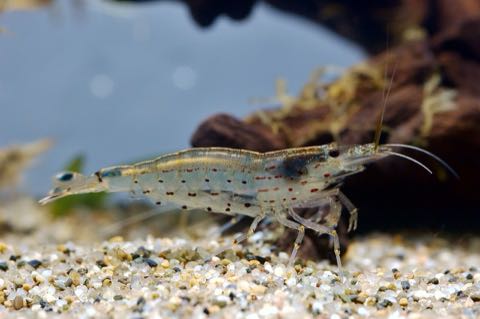 Amano shrimp
- American flagfish
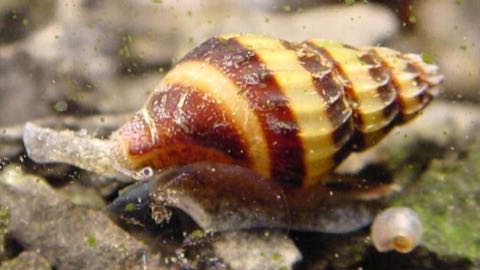 Assassin snail
- Banded gourami
- Bandit cory
- Banjo catfish
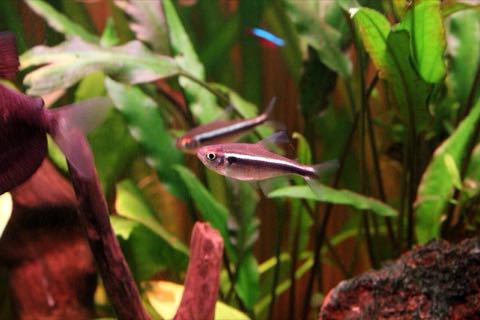 Black neon tetra
- Black phantom tetra
- Black ruby barb
Avoid with
- Acei cichlid
No shared pH rangeNo shared pH range
- Brevis shell dweller
No shared pH rangeNo shared pH range
- Caudopunctatus
No shared pH rangeNo shared pH range
- Multies
No shared pH rangeNo shared pH range
- Pindani
No shared pH rangeNo shared pH range
- Rusty cichlid
No shared pH rangeNo shared pH range
- Saulosi cichlid
No shared pH rangeNo shared pH range
- Similis shell dweller
No shared pH rangeNo shared pH range
- Afra cichlid
No shared pH rangeNo shared pH range
- African knifefish
African knifefish may eat Bloodfin tetraAfrican knifefish may eat Bloodfin tetra
- African pike
African pike may eat Bloodfin tetraAfrican pike may eat Bloodfin tetra
- Alligator gar
Alligator gar may eat Bloodfin tetraAlligator gar may eat Bloodfin tetra
Breeding bloodfin tetras
Use a separate spawning tank with fine-leaved plants and gentle sponge filtration. Eggs are not adhesive. Remove adults after spawning because they can eat eggs.Use a separate spawning tank with fine-leaved plants and gentle sponge filtration. Eggs are not adhesive. Remove adults after spawning because they can eat eggs.[1]
Eggs hatch in about 24 hours. After yolk-sac absorption, offer infusoria-sized food to the fry. Follow this initial diet with microworm or brine shrimp nauplii as the young develop.Eggs hatch in about 24 hours. After yolk-sac absorption, offer infusoria-sized food to the fry. Follow this initial diet with microworm or brine shrimp nauplii as the young develop.[1]
Bloodfin tetra health problems
Ich is a freshwater parasite infection where salt-like white spots, rubbing, reduced appetite, and gill irritation are possible signs. Appearance alone does not confirm diagnosis. A 30-day quarantine for arrivals and separate or disinfected nets help prevent introduction of ich.Ich is a freshwater parasite infection where salt-like white spots, rubbing, reduced appetite, and gill irritation are possible signs. Appearance alone does not confirm diagnosis. A 30-day quarantine for arrivals and separate or disinfected nets help prevent introduction of ich.[3]
Fin rot can cause fraying and red streaks followed by shrinking fins. This bacterial disease is encouraged by poor conditions and stress. Prevent avoidable fin rot by maintaining water quality and removing sources of injury or harassment, and seek assessment if fins deteriorate.Fin rot can cause fraying and red streaks followed by shrinking fins. This bacterial disease is encouraged by poor conditions and stress. Prevent avoidable fin rot by maintaining water quality and removing sources of injury or harassment, and seek assessment if fins deteriorate.[4]
Fungal infection can appear as grey-white cottony growth on damaged skin when injury and environmental stress weaken the protective mucus. Smooth furnishings and gentle handling reduce injury risk, while good water quality reduces environmental stress. Cottony growth warrants prompt advice.Fungal infection can appear as grey-white cottony growth on damaged skin when injury and environmental stress weaken the protective mucus. Smooth furnishings and gentle handling reduce injury risk, while good water quality reduces environmental stress. Cottony growth warrants prompt advice.[4]
Male or female?
Adult males are generally slimmer than females. Mature males also develop small hooks on some pelvic and anal fin rays.Adult males are generally slimmer than females. Mature males also develop small hooks on some pelvic and anal fin rays.[1]
Questions
Are bloodfin tetras easy to care for?
Yes, the bloodfin tetra is a hardy beginner species. Keep at least six of their own species in a tank with a base at least 60 cm long and 30 cm wide.Yes, the bloodfin tetra is a hardy beginner species. Keep at least six of their own species in a tank with a base at least 24 in long and 12 in wide.[1]
How many bloodfin tetras should be kept together?
Maintain a group of at least six bloodfin tetras in total. Other tetra species do not replace the bloodfin group, so keep them with their own species.Maintain a group of at least six bloodfin tetras in total. Other tetra species do not replace the bloodfin group, so keep them with their own species.[1]
Are bloodfin tetras aggressive?
Bloodfin tetras carry a documented nipping risk: they may nip slow-moving or long-finned fish. Do not assume that keeping a larger group or housing them with active tankmates will eliminate this nipping behavior.Bloodfin tetras carry a documented nipping risk: they may nip slow-moving or long-finned fish. Do not assume that keeping a larger group or housing them with active tankmates will eliminate this nipping behavior.[1]
What is the average lifespan of a bloodfin tetra?
Captive individuals over ten years have been reported, representing a possible longevity observation rather than a measured average.Captive individuals over ten years have been reported, representing a possible longevity observation rather than a measured average.[1]
How big do bloodfin tetras get?
The planning typical adult length is 4.5 cm. Adult standard length of 5.5 cm and a maximum length of 5.6 cm are documented.The planning typical adult length is 1.8 in. Adult standard length of 2.2 in and a maximum length of 2.2 in are documented.[1]
Sources
- Aphyocharax anisitsi (Bloodfin Tetra) — Seriously Fish. Accessed 2026-10-05.
- How to look after tetras and pencilfish — Ornamental Aquatic Trade Association. Accessed 2026-10-05.
- Ichthyophthirius multifiliis (White Spot) Infections in Fish — UF/IFAS Extension. Accessed 2026-10-05.
- Frequently asked questions on treating sick fish — Practical Fishkeeping. Accessed 2026-10-05.
- Astronotus ocellatus (Oscar) — Seriously Fish. Accessed 2026-10-05.
- Rocio octofasciata (Jack Dempsey) — Seriously Fish. Accessed 2026-10-05.
- Carinotetraodon travancoricus (Dwarf Puffer) — Seriously Fish. Accessed 2026-10-05.
Written from the sources above. Not yet reviewed by an aquarist.
Data used by the planner
| Temperature | 18–28 | AqAdvisor (aqadvisor.com), retrieved 2026-10-04; agrees with FishBase (fishbase.se), retrieved 2026-10-04 · medium confidence |
|---|---|---|
| pH | 5.5–7.5 | AqAdvisor (aqadvisor.com), retrieved 2026-10-04; agrees with FishBase (fishbase.se), retrieved 2026-10-04 · medium confidence |
| Hardness (dGH) | 1–15 | AqAdvisor (aqadvisor.com), retrieved 2026-10-04 · medium confidence |
| Origin | Paraná basin, Argentina and Paraguay | curated-v0 (needs expert review) · low confidence |
| Beginner friendly | Yes | curated-v0 (needs expert review) · medium confidence |
| Care level | easy | curated-v0 (needs expert review) · medium confidence |
| Activity | active | curated-v0 (needs expert review) · medium confidence |
| Swimming level | middle | curated-v0 (needs expert review) · medium confidence |
| Temperament | peaceful | curated-v0 (needs expert review) · medium confidence |
| Nips fins | No | curated-v0 (needs expert review) · medium confidence |
| Long fins | No | curated-v0 (needs expert review) · medium confidence |
| Territorial | No | curated-v0 (needs expert review) · medium confidence |
| Lives in groups | Yes | curated-v0 (needs expert review) · medium confidence |
| Minimum group | 6 | curated-v0 (needs expert review) · medium confidence |
| Diet | omnivore | curated-v0 (needs expert review) · medium confidence |
| Lifespan (years) | 5–10 | curated-v0 (needs expert review) · low confidence |
| Months to adult size | 6 | curated-v0 (needs expert review) · low confidence |
| Safe with plants | Yes | curated-v0 (needs expert review) · medium confidence |