African butterfly cichlid tank size
House a small group in an aquarium with a tank length of at least 80 cm. The Nordic Cichlid Association pairs this 80 cm tank length with a 100 L recommendation. This footprint provides sufficient space for natural territories and room to retreat.House a small group in an aquarium with a tank length of at least 31 in. The Nordic Cichlid Association pairs this 31 in tank length with a 26.4 gal recommendation. This footprint provides sufficient space for natural territories and room to retreat.[1][8]
Equip the tank with flat stones, broad leaves, roots, wood and clay-pot shelters. Flat stones and broad leaves offer potential spawning surfaces, while plants and wood provide shy fish with shelter without keeping a bare cichlid layout.Equip the tank with flat stones, broad leaves, roots, wood and clay-pot shelters. Flat stones and broad leaves offer potential spawning surfaces, while plants and wood provide shy fish with shelter without keeping a bare cichlid layout.[1]
Keep open viewing space around potential breeding sites to observe neighbours. African butterfly cichlids leave rooted plants undisturbed, although breeding pairs may dig shallow brood pits in the surrounding substrate.Keep open viewing space around potential breeding sites to observe neighbours. African butterfly cichlids leave rooted plants undisturbed, although breeding pairs may dig shallow brood pits in the surrounding substrate.[1]
African butterfly cichlid water parameters
Maintain a water temperature of 23–27 °C, pH 5.5–7.5 and hardness of 1–15 dGH. This species is a West African stream cichlid rather than a hard-water lake cichlid.Maintain a water temperature of 73–81 °F, pH 5.5–7.5 and hardness of 1–15 dGH. This species is a West African stream cichlid rather than a hard-water lake cichlid.[1][2]
Keep ammonia and nitrite undetectable with mature biological filtration. Test aquarium water weekly and after adding fish, and change a quarter of the water weekly using conditioned water.Keep ammonia and nitrite undetectable with mature biological filtration. Test aquarium water weekly and after adding fish, and change a quarter of the water weekly using conditioned water.[2]
Rinse biological filter media in removed aquarium water rather than chlorinated tap water. Neglecting water quality can stress dwarf cichlids and increase disease vulnerability.Rinse biological filter media in removed aquarium water rather than chlorinated tap water. Neglecting water quality can stress dwarf cichlids and increase disease vulnerability.[2]
Feeding african butterfly cichlids
Feed once a day with only the amount eaten in a few minutes, using small cichlid pellets as the staple so leftovers do not accumulate and decompose. Vary pellets with live or frozen daphnia, brine shrimp and other suitably small foods. In nature, their omnivorous diet includes small crustaceans, algae particles and eggs.Feed once a day with only the amount eaten in a few minutes, using small cichlid pellets as the staple so leftovers do not accumulate and decompose. Vary pellets with live or frozen daphnia, brine shrimp and other suitably small foods. In nature, their omnivorous diet includes small crustaceans, algae particles and eggs.[1][2][8]
African butterfly cichlid behaviour
African butterfly cichlids are shy and generally peaceful for cichlids, but paired fish defend a territory during spawning. Because pairs guard these areas, unrestricted community safety cannot be assumed.African butterfly cichlids are shy and generally peaceful for cichlids, but paired fish defend a territory during spawning. Because pairs guard these areas, unrestricted community safety cannot be assumed.[1][8]
They are loosely gregarious and form strong pairs. Growing a group of six or more juveniles allows natural pair formation, after which territorial pairs may require extra space or separation.They are loosely gregarious and form strong pairs. Growing a group of six or more juveniles allows natural pair formation, after which territorial pairs may require extra space or separation.[1][2][8]
The adult length is approximately 8 cm in species sources, and young shop fish often appear much duller than settled mature specimens. With appropriate care, dwarf cichlids can live several years.The adult length is approximately 3 in in species sources, and young shop fish often appear much duller than settled mature specimens. With appropriate care, dwarf cichlids can live several years.[1][8][2]
Known locality forms include a violet-toned Sierra Leone form and a Guinea form with a more oval side mark and dark scale spots near the dorsal fin. These variations are not all assigned separate species names.Known locality forms include a violet-toned Sierra Leone form and a Guinea form with a more oval side mark and dark scale spots near the dorsal fin. These variations are not all assigned separate species names.[8]
African butterfly cichlid tank mates
Neon tetrasNeon tetras and and glowlight tetrasglowlight tetras are conditional choices for a quiet shoal swimming above the cichlids. Maintain their groups, matching water conditions and enough room for are conditional choices for a quiet shoal swimming above the cichlids. Maintain their groups, matching water conditions and enough room for neon tetrasneon tetras and and glowlight tetrasglowlight tetras to leave any defended breeding territory. to leave any defended breeding territory.[1][2]
Bronze corydorasBronze corydoras are a conditional peaceful catfish group. Because bottom-dwelling are a conditional peaceful catfish group. Because bottom-dwelling bronze corydorasbronze corydoras may enter a spawning area, reserve ample floor space and watch territorial pairs. may enter a spawning area, reserve ample floor space and watch territorial pairs.[1][2]
Honey gouramisHoney gouramis are a conditional smaller-anabantoid option in a calm planted community. Avoid crowding available cover, and check that are a conditional smaller-anabantoid option in a calm planted community. Avoid crowding available cover, and check that honey gouramishoney gouramis and cichlids reach their food without aggressive competition. and cichlids reach their food without aggressive competition.[1][2]
These companion choices apply published characin, Corydoras and smaller-anabantoid care guidance rather than documented pair trials. For breeding success, a separate pair setup prevents tank mates from disturbing eggs or fry.These companion choices apply published characin, Corydoras and smaller-anabantoid care guidance rather than documented pair trials. For breeding success, a separate pair setup prevents tank mates from disturbing eggs or fry.[1][2]
Avoid keeping large Avoid keeping large oscarsoscars because adult because adult oscarsoscars prey on substantially smaller fish, and purchasing juveniles together does not remove this adult mismatch. Avoid prey on substantially smaller fish, and purchasing juveniles together does not remove this adult mismatch. Avoid Jack DempseysJack Dempseys because the mature territorial aggression and predation of because the mature territorial aggression and predation of Jack DempseysJack Dempseys do not suit shy dwarf cichlids. do not suit shy dwarf cichlids.[5][6]
Avoid Avoid pea pufferspea puffers in this setup. The fin-nipping behaviour and difficult feeding competition of in this setup. The fin-nipping behaviour and difficult feeding competition of pea pufferspea puffers make them an unreliable choice around shy fish. make them an unreliable choice around shy fish.[7]
Usually fine together
- Agassiz's cory
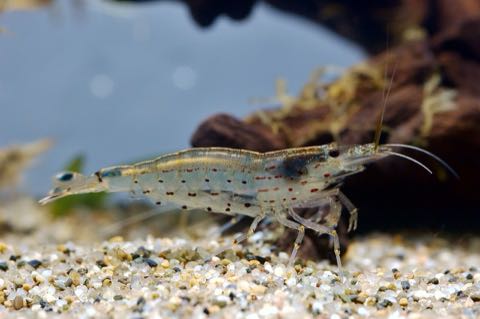 Amano shrimp
- American flagfish
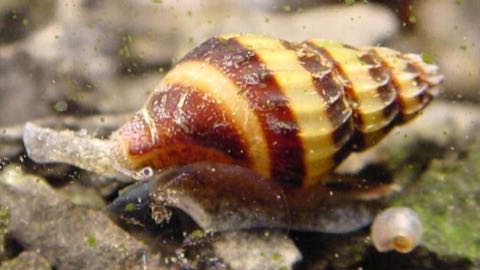 Assassin snail
- Banded gourami
- Bandit cory
- Banjo catfish
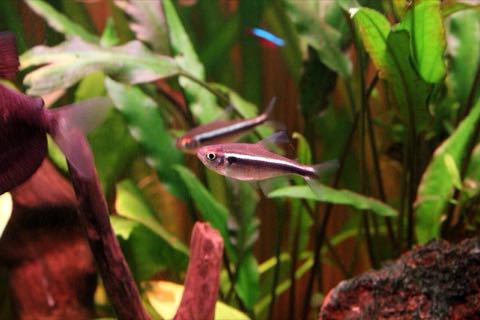 Black neon tetra
- Black phantom tetra
- Black ruby barb
- Blackline rasbora
- Bleeding heart tetra
Avoid with
- African pike
African pike may eat African butterfly cichlidAfrican pike may eat African butterfly cichlid
- Alligator gar
Alligator gar may eat African butterfly cichlidAlligator gar may eat African butterfly cichlid
- Antenna ray
Antenna ray may eat African butterfly cichlidAntenna ray may eat African butterfly cichlid
- Arapaima
Arapaima may eat African butterfly cichlidArapaima may eat African butterfly cichlid
- Asian arowana
Asian arowana may eat African butterfly cichlidAsian arowana may eat African butterfly cichlid
- Australian pearl arowana
Australian pearl arowana may eat African butterfly cichlidAustralian pearl arowana may eat African butterfly cichlid
- Barred bichir
Barred bichir may eat African butterfly cichlidBarred bichir may eat African butterfly cichlid
- Black bullhead
Black bullhead may eat African butterfly cichlidBlack bullhead may eat African butterfly cichlid
- Black diamond cichlid
Black diamond cichlid may eat African butterfly cichlidBlack diamond cichlid may eat African butterfly cichlid
- Brown bullhead
Brown bullhead may eat African butterfly cichlidBrown bullhead may eat African butterfly cichlid
- Bullseye snakehead
Bullseye snakehead may eat African butterfly cichlidBullseye snakehead may eat African butterfly cichlid
- Butterfly peacock bass
Butterfly peacock bass may eat African butterfly cichlidButterfly peacock bass may eat African butterfly cichlid
Breeding african butterfly cichlids
This is a substrate-spawning species where a bonded pair cleans a stone or broad leaf. The female deposits eggs and the male fertilises them, with both parents participating in guarding the brood.This is a substrate-spawning species where a bonded pair cleans a stone or broad leaf. The female deposits eggs and the male fertilises them, with both parents participating in guarding the brood.[1][8]
A gently filtered breeding setup with several flat surfaces lets a pair select a site. Because parents defend their spawning territory, reserve extra tank room if any other fish share the aquarium.A gently filtered breeding setup with several flat surfaces lets a pair select a site. Because parents defend their spawning territory, reserve extra tank room if any other fish share the aquarium.[1][2]
Eggs hatch in roughly 48 hours, and parents move the brood between shallow pits before the fry become free swimming after about another 72 hours. After the remaining yolk is used, feed microworms or newly hatched Artemia. Parents may continue brood care for about a month, and the fry grow slowly.Eggs hatch in roughly 48 hours, and parents move the brood between shallow pits before the fry become free swimming after about another 72 hours. After the remaining yolk is used, feed microworms or newly hatched Artemia. Parents may continue brood care for about a month, and the fry grow slowly.[1]
African butterfly cichlid health problems
Ich is caused by the parasite Ichthyophthirius multifiliis. White grains on skin or fins, rubbing and faster breathing are possible signs. Quarantine incoming fish for 30 days, use separate nets and siphons to avoid moving sticky cysts between aquariums, and seek prompt diagnosis if signs appear.Ich is caused by the parasite Ichthyophthirius multifiliis. White grains on skin or fins, rubbing and faster breathing are possible signs. Quarantine incoming fish for 30 days, use separate nets and siphons to avoid moving sticky cysts between aquariums, and seek prompt diagnosis if signs appear.[3]
Bacterial fin disease can show ragged or blood-streaked fins, ulcers or sores. Stress makes fish more vulnerable to infection. Reduce bacterial disease risk by maintaining good water quality and removing sources of injury or aggression, observing symptoms before choosing treatment.Bacterial fin disease can show ragged or blood-streaked fins, ulcers or sores. Stress makes fish more vulnerable to infection. Reduce bacterial disease risk by maintaining good water quality and removing sources of injury or aggression, observing symptoms before choosing treatment.[4][2]
Fungal cotton-wool disease produces pale fluffy growth over damaged tissue. Physical injury, rough handling and poor conditions allow fungi to overcome the protective mucus coat. Prevent fungal entry by handling fish gently, avoiding sharp decor and maintaining water quality; fluffy growth needs prompt assessment rather than guessing medication.Fungal cotton-wool disease produces pale fluffy growth over damaged tissue. Physical injury, rough handling and poor conditions allow fungi to overcome the protective mucus coat. Prevent fungal entry by handling fish gently, avoiding sharp decor and maintaining water quality; fluffy growth needs prompt assessment rather than guessing medication.[4]
Male or female?
Males reach a larger size, usually show less distinct black markings, and develop longer unpaired fins. Females become round through the belly when carrying eggs.Males reach a larger size, usually show less distinct black markings, and develop longer unpaired fins. Females become round through the belly when carrying eggs.[1][8]
Questions
How big do African Butterfly cichlids get?
African butterfly cichlids reach an adult length of approximately 8 cm in species records. Young fish in shops often appear much duller than settled, fully grown adults.African butterfly cichlids reach an adult length of approximately 3 in in species records. Young fish in shops often appear much duller than settled, fully grown adults.[1][8]
Can dwarf cichlids be kept in a community tank?
Yes, provided companions are peaceful and water parameters align. Quiet shoaling characins or smaller gouramis can share the aquarium, though you must leave enough room for neighbours to retreat from defended spawning territories.Yes, provided companions are peaceful and water parameters align. Quiet shoaling characins or smaller gouramis can share the aquarium, though you must leave enough room for neighbours to retreat from defended spawning territories.[1][8][2]
How many dwarf cichlids should be kept together?
Keep a group of six or more juveniles together to allow natural pair formation. Once pairs establish, provide additional space or separate bonded fish if territorial disputes emerge.Keep a group of six or more juveniles together to allow natural pair formation. Once pairs establish, provide additional space or separate bonded fish if territorial disputes emerge.[1][2][8]
Are African cichlids easy to care for?
This West African species requires specific stream conditions rather than hard-water lake parameters. Provide a water temperature of 23–27 °C, pH 5.5–7.5 and hardness of 1–15 dGH, keeping ammonia and nitrite undetectable.This West African species requires specific stream conditions rather than hard-water lake parameters. Provide a water temperature of 73–81 °F, pH 5.5–7.5 and hardness of 1–15 dGH, keeping ammonia and nitrite undetectable.[1][2]
Are African Cichlids hard to maintain?
Maintaining this species requires keeping ammonia and nitrite undetectable through mature biological filtration. Test water parameters weekly, change a quarter of the water weekly using conditioned water, and rinse filter media only in old tank water.Maintaining this species requires keeping ammonia and nitrite undetectable through mature biological filtration. Test water parameters weekly, change a quarter of the water weekly using conditioned water, and rinse filter media only in old tank water.[2]
Sources
- Anomalochromis thomasi (African Butterfly Cichlid) — Seriously Fish. Accessed 2026-10-05.
- How to look after dwarf cichlids — Ornamental Aquatic Trade Association. Accessed 2026-10-05.
- Ichthyophthirius multifiliis (White Spot) Infections in Fish — UF/IFAS Extension. Accessed 2026-10-05.
- Frequently asked questions on treating sick fish — Practical Fishkeeping. Accessed 2026-10-05.
- Astronotus ocellatus (Oscar) — Seriously Fish. Accessed 2026-10-05.
- Rocio octofasciata (Jack Dempsey) — Seriously Fish. Accessed 2026-10-05.
- Carinotetraodon travancoricus (Dwarf Puffer) — Seriously Fish. Accessed 2026-10-05.
- Anomalochromis thomasi - Nordiska Ciklidsällskapet artregister — Nordiska Ciklidsällskapet. Accessed 2026-10-05.
Written from the sources above. Not yet reviewed by an aquarist.
Data used by the planner
| Temperature | 23–27 | AqAdvisor (aqadvisor.com), retrieved 2026-10-04; agrees with FishBase (fishbase.se), retrieved 2026-10-04 · medium confidence |
|---|---|---|
| pH | 5.5–7.8 | AqAdvisor (aqadvisor.com), retrieved 2026-10-04; agrees with FishBase (fishbase.se), retrieved 2026-10-04 · medium confidence |
| Hardness (dGH) | 1–15 | AqAdvisor (aqadvisor.com), retrieved 2026-10-04 · low confidence |
| Origin | Coastal West Africa, Guinea to Liberia | curated-v0 (needs expert review) · low confidence |
| Beginner friendly | Yes | curated-v0 (needs expert review) · medium confidence |
| Care level | easy | curated-v0 (needs expert review) · medium confidence |
| Activity | moderate | curated-v0 (needs expert review) · medium confidence |
| Swimming level | bottom | curated-v0 (needs expert review) · medium confidence |
| Temperament | peaceful | curated-v0 (needs expert review) · medium confidence |
| Nips fins | No | curated-v0 (needs expert review) · medium confidence |
| Long fins | No | curated-v0 (needs expert review) · medium confidence |
| Territorial | Yes | curated-v0 (needs expert review) · medium confidence |
| Lives in groups | No | curated-v0 (needs expert review) · medium confidence |
| Minimum group | 1 | curated-v0 (needs expert review) · medium confidence |
| Diet | omnivore | curated-v0 (needs expert review) · medium confidence |
| Lifespan (years) | 4–6 | curated-v0 (needs expert review) · low confidence |
| Months to adult size | 8 | curated-v0 (needs expert review) · low confidence |
| Safe with plants | Yes | curated-v0 (needs expert review) · medium confidence |