Bandit cory tank size
Plan for a tank base measuring at least 80 cm × 30 cm. Bandit corys are social bottom-foraging omnivores that need adequate floor space so the entire group can browse together. Furnish the aquarium with fine sand or clean rounded gravel, add cover, and keep feeding areas clear and accessible.Plan for a tank base measuring at least 31 in × 12 in. Bandit corys are social bottom-foraging omnivores that need adequate floor space so the entire group can browse together. Furnish the aquarium with fine sand or clean rounded gravel, add cover, and keep feeding areas clear and accessible.[1]
Keep an unobstructed route from the bottom to the water surface. Bandit corys possess a modified intestine that allows them to take in atmospheric air, so plants and decorative hardscape must leave clear vertical swimming lanes.Keep an unobstructed route from the bottom to the water surface. Bandit corys possess a modified intestine that allows them to take in atmospheric air, so plants and decorative hardscape must leave clear vertical swimming lanes.[1]
Bandit cory water parameters
Maintain water temperature between 22–26 °C, keep the pH within 6.5–7.5, and provide a general hardness of 5–12 dGH.Maintain water temperature between 72–79 °F, keep the pH within 6.5–7.5, and provide a general hardness of 5–12 dGH.[1]
Fish waste and uneaten feed release ammonia into the system. Ammonia is toxic to aquatic life and should not be detectable in the aquarium. Use an established biological filter to process waste, practice portion control to avoid excess food, and test the water whenever you observe changes in feeding appetite or normal behaviour.Fish waste and uneaten feed release ammonia into the system. Ammonia is toxic to aquatic life and should not be detectable in the aquarium. Use an established biological filter to process waste, practice portion control to avoid excess food, and test the water whenever you observe changes in feeding appetite or normal behaviour.[3]
Feeding Bandit cories
Feed Bandit corys a varied diet composed of sinking dry foods, sinking tablets, and small live or frozen items such as bloodworm and Tubifex. Supply meals directly to the fish twice daily in portions they can finish in roughly two minutes. Because they are dedicated bottom dwellers, monitor them during feeding to ensure sinking food reaches the substrate rather than being intercepted entirely by midwater tank mates.Feed Bandit corys a varied diet composed of sinking dry foods, sinking tablets, and small live or frozen items such as bloodworm and Tubifex. Supply meals directly to the fish twice daily in portions they can finish in roughly two minutes. Because they are dedicated bottom dwellers, monitor them during feeding to ensure sinking food reaches the substrate rather than being intercepted entirely by midwater tank mates.[1][2]
Do not expect these fish to survive on leftovers from other species or to clean aquarium waste from the bottom. They are foraging omnivores that require their own dedicated food supply delivered straight to their social group.Do not expect these fish to survive on leftovers from other species or to clean aquarium waste from the bottom. They are foraging omnivores that require their own dedicated food supply delivered straight to their social group.[1]
Bandit cory behaviour
Bandit corys are native to the upper Meta tributaries of the Orinoco system in eastern Colombia. They reach an adult standard length of 5 cm. A prominent oblique dark bar marks the rear body and ends cleanly at the base of the tail fin without extending onto the fin rays.Bandit corys are native to the upper Meta tributaries of the Orinoco system in eastern Colombia. They reach an adult standard length of 2 in. A prominent oblique dark bar marks the rear body and ends cleanly at the base of the tail fin without extending onto the fin rays.[1]
These catfish are peaceful and social, requiring a group of six or more fish of the same species. When moving around the tank, individual fish occasionally dart upward to swallow atmospheric air using their modified intestine. While this breathing behaviour is natural, it does not compensate for deficient oxygen or degraded conditions; persistent distress requires water testing and husbandry assessment.These catfish are peaceful and social, requiring a group of six or more fish of the same species. When moving around the tank, individual fish occasionally dart upward to swallow atmospheric air using their modified intestine. While this breathing behaviour is natural, it does not compensate for deficient oxygen or degraded conditions; persistent distress requires water testing and husbandry assessment.[1][3]
Exercise caution during tank maintenance and handling. The pectoral spines of Bandit corys can pierce human skin and catch during handling, so avoid gripping the fish directly with bare hands.Exercise caution during tank maintenance and handling. The pectoral spines of Bandit corys can pierce human skin and catch during handling, so avoid gripping the fish directly with bare hands.[1]
Bandit cory tank mates
Small, peaceful shoaling species make suitable companions if water conditions match, the tank offers ample space, and their schooling needs are respected. Midwater characins such as Small, peaceful shoaling species make suitable companions if water conditions match, the tank offers ample space, and their schooling needs are respected. Midwater characins such as neon tetrasneon tetras and active cyprinids like and active cyprinids like harlequin rasborasharlequin rasboras can swim in upper zones while corys forage on the substrate. can swim in upper zones while corys forage on the substrate.[1][9][10]
Zebra daniosZebra danios can also share the aquarium provided their fast swimming habits have sufficient room and you ensure sinking food drops past them to reach the corys. Similarly, peaceful can also share the aquarium provided their fast swimming habits have sufficient room and you ensure sinking food drops past them to reach the corys. Similarly, peaceful honey gouramishoney gouramis work well if the tank includes plant cover, open space, and matching water parameters for both species. work well if the tank includes plant cover, open space, and matching water parameters for both species.[1][11][12]
Avoid predatory and aggressive species. Large adult Avoid predatory and aggressive species. Large adult OscarsOscars can swallow small tank mates, while the aggression and predatory nature of can swallow small tank mates, while the aggression and predatory nature of Jack DempseysJack Dempseys present clear hazards. Additionally, avoid present clear hazards. Additionally, avoid Pea puffersPea puffers due to known fin-nipping habits and challenging community behaviour. due to known fin-nipping habits and challenging community behaviour.[1][6][7][8]
Usually fine together
- African butterfly cichlid
- African clawed frog
- Agassiz's cory
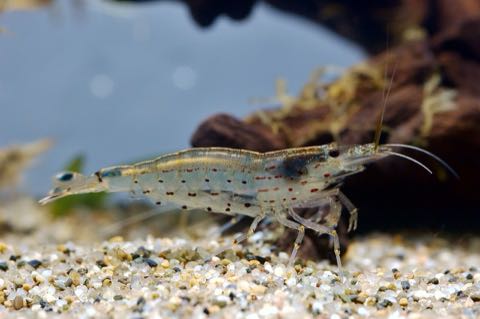 Amano shrimp
- American flagfish
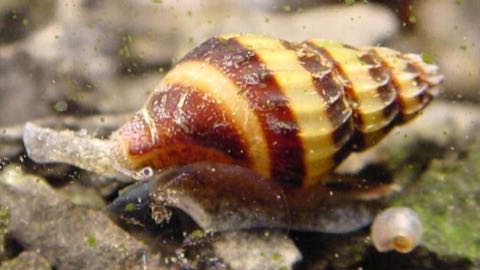 Assassin snail
- Banded gourami
- Banjo catfish
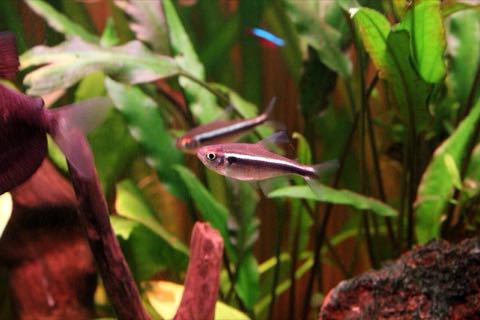 Black neon tetra
- Black phantom tetra
- Black ruby barb
- Blackline rasbora
Avoid with
- Acei cichlid
No shared pH rangeNo shared pH range
- Brevis shell dweller
No shared pH rangeNo shared pH range
- Caudopunctatus
No shared pH rangeNo shared pH range
- Irian Jaya rainbowfish
No shared temperature rangeNo shared temperature range
- Multies
No shared pH rangeNo shared pH range
- Pindani
No shared pH rangeNo shared pH range
- Rusty cichlid
No shared pH rangeNo shared pH range
- Saulosi cichlid
No shared pH rangeNo shared pH range
- Similis shell dweller
No shared pH rangeNo shared pH range
- Afra cichlid
No shared pH rangeNo shared pH range
- African knifefish
African knifefish may eat Bandit coryAfrican knifefish may eat Bandit cory
- African pike
African pike may eat Bandit coryAfrican pike may eat Bandit cory
Bandit cory health problems
White spot disease, or ich, is caused by a parasite that can trigger scattered white specks across the body, fin clamping, rubbing, and laboured respiration. Because the parasite can attack gill tissue without displaying obvious skin spots, seek a clear diagnosis rather than assuming every pale mark indicates ich.White spot disease, or ich, is caused by a parasite that can trigger scattered white specks across the body, fin clamping, rubbing, and laboured respiration. Because the parasite can attack gill tissue without displaying obvious skin spots, seek a clear diagnosis rather than assuming every pale mark indicates ich.[5]
To reduce the risk of introducing ich into your aquarium, quarantine all newly acquired fish for at least 30 days and never transfer wet maintenance equipment between separate aquariums.To reduce the risk of introducing ich into your aquarium, quarantine all newly acquired fish for at least 30 days and never transfer wet maintenance equipment between separate aquariums.[5]
Bacterial fin rot shows as red or blood-streaked fins alongside progressively frayed, receding edges. Substandard environmental conditions elevate this risk. Maintaining water parameters and addressing sources of harassment help reduce risk, though an isolated split fin alone does not constitute a bacterial diagnosis.Bacterial fin rot shows as red or blood-streaked fins alongside progressively frayed, receding edges. Substandard environmental conditions elevate this risk. Maintaining water parameters and addressing sources of harassment help reduce risk, though an isolated split fin alone does not constitute a bacterial diagnosis.[4]
Cotton-wool disease is a fungal condition that presents as fluffy pale growths on damaged tissues, often appearing following rough handling, physical injury, or environmental stress. To reduce risk, avoid sharp decorations, handle fish gently, maintain stable water conditions, and seek prompt identification, as bacterial mouth rot can look similar.Cotton-wool disease is a fungal condition that presents as fluffy pale growths on damaged tissues, often appearing following rough handling, physical injury, or environmental stress. To reduce risk, avoid sharp decorations, handle fish gently, maintain stable water conditions, and seek prompt identification, as bacterial mouth rot can look similar.[4]
Male or female?
Sexing becomes clearer as fish reach maturity. Adult female Bandit corys tend to grow noticeably larger, rounder, and broader across the body than adult males, an outline that becomes particularly obvious when females are carrying eggs.Sexing becomes clearer as fish reach maturity. Adult female Bandit corys tend to grow noticeably larger, rounder, and broader across the body than adult males, an outline that becomes particularly obvious when females are carrying eggs.[1]
Questions
How many Corydoras should be kept together?
Keep six or more fish of the same species together. Bandit corys are peaceful, social bottom dwellers that require a social group to forage and interact naturally across the aquarium floor.Keep six or more fish of the same species together. Bandit corys are peaceful, social bottom dwellers that require a social group to forage and interact naturally across the aquarium floor.[1]
Do Corydoras keep your tank clean?
No, do not rely on Bandit corys to clean the tank or survive on leftovers. They are bottom-foraging omnivores that require direct feedings of sinking dry foods, sinking tablets, and live or frozen fare.No, do not rely on Bandit corys to clean the tank or survive on leftovers. They are bottom-foraging omnivores that require direct feedings of sinking dry foods, sinking tablets, and live or frozen fare.[1][2]
Do Corydoras create a lot of waste?
Fish waste and leftover feed both contribute ammonia to the aquarium water. You can reduce risk and monitor conditions by using biological filtration, feeding measured amounts twice daily, and conducting regular water tests.Fish waste and leftover feed both contribute ammonia to the aquarium water. You can reduce risk and monitor conditions by using biological filtration, feeding measured amounts twice daily, and conducting regular water tests.[3][2][1]
How many times should I feed my Corydoras?
Feed your Bandit corys twice daily with small meals finished in about two minutes. Observe the fish eating at the bottom, adjust portions to actual intake, and check that sinking tablets or foods reach them rather than midwater feeders.Feed your Bandit corys twice daily with small meals finished in about two minutes. Observe the fish eating at the bottom, adjust portions to actual intake, and check that sinking tablets or foods reach them rather than midwater feeders.[2][1]
Do Corydoras prefer sand or gravel?
Provide fine sand or clean rounded gravel across the base of the tank. Bandit corys are bottom-foraging omnivores that browse the substrate, so plan for accessible feeding areas and adequate floor space for the entire social group.Provide fine sand or clean rounded gravel across the base of the tank. Bandit corys are bottom-foraging omnivores that browse the substrate, so plan for accessible feeding areas and adequate floor space for the entire social group.[1]
Sources
- Hoplisoma metae (Bandit Cory) — Seriously Fish. Accessed 2026-10-05.
- What to feed your fish — RSPCA. Accessed 2026-10-05.
- Ammonia in Aquatic Systems — UF/IFAS Extension. Accessed 2026-10-05.
- Frequently asked questions on treating sick fish — Practical Fishkeeping. Accessed 2026-10-05.
- Ichthyophthirius multifiliis (White Spot) Infections in Fish — UF/IFAS Extension. Accessed 2026-10-05.
- Astronotus ocellatus (Oscar) — Seriously Fish. Accessed 2026-10-05.
- Rocio octofasciata (Jack Dempsey) — Seriously Fish. Accessed 2026-10-05.
- Carinotetraodon travancoricus (Dwarf Puffer) — Seriously Fish. Accessed 2026-10-05.
- Neon tetra species profile — Seriously Fish. Accessed 2026-10-05.
- Harlequin rasbora species profile — Seriously Fish. Accessed 2026-10-05.
- Zebra danio species profile — Seriously Fish. Accessed 2026-10-05.
- Honey gourami species profile — Seriously Fish. Accessed 2026-10-05.
Written from the sources above. Not yet reviewed by an aquarist.
Data used by the planner
| Temperature | 22–26 | AqAdvisor (aqadvisor.com), retrieved 2026-10-04; agrees with FishBase (fishbase.se), retrieved 2026-10-04 · medium confidence |
|---|---|---|
| pH | 6.5–7.5 | AqAdvisor (aqadvisor.com), retrieved 2026-10-04; agrees with FishBase (fishbase.se), retrieved 2026-10-04 · medium confidence |
| Hardness (dGH) | 1–15 | AqAdvisor (aqadvisor.com), retrieved 2026-10-04 · low confidence |
| Origin | Rio Meta basin, Colombia | curated-v0 (needs expert review) · low confidence |
| Beginner friendly | Yes | curated-v0 (needs expert review) · medium confidence |
| Care level | easy | curated-v0 (needs expert review) · medium confidence |
| Activity | moderate | curated-v0 (needs expert review) · medium confidence |
| Swimming level | bottom | curated-v0 (needs expert review) · medium confidence |
| Temperament | peaceful | curated-v0 (needs expert review) · medium confidence |
| Nips fins | No | curated-v0 (needs expert review) · medium confidence |
| Long fins | No | curated-v0 (needs expert review) · medium confidence |
| Territorial | No | curated-v0 (needs expert review) · medium confidence |
| Lives in groups | Yes | curated-v0 (needs expert review) · medium confidence |
| Minimum group | 6 | curated-v0 (needs expert review) · medium confidence |
| Diet | omnivore | curated-v0 (needs expert review) · medium confidence |
| Lifespan (years) | 5–10 | curated-v0 (needs expert review) · low confidence |
| Months to adult size | 12 | curated-v0 (needs expert review) · low confidence |
| Safe with plants | Yes | curated-v0 (needs expert review) · medium confidence |