Banjo catfish tank size
A tank length of 60 cm and a width of 38 cm is the source recommendation for this largely inactive catfish. Provide generous bottom area along with hiding places, but do not assume these dimensions prevent crowding or accommodate every community setup.A tank length of 24 in and a width of 15 in is the source recommendation for this largely inactive catfish. Provide generous bottom area along with hiding places, but do not assume these dimensions prevent crowding or accommodate every community setup.[1]
Seriously Fish reports an adult length of 15 cm standard length. In their native waters in Bolivia, Peru, and Brazil, these catfish dwell in forest streams, lakes, and ponds littered with fallen branches and organic debris.Seriously Fish reports an adult length of 6 in standard length. In their native waters in Bolivia, Peru, and Brazil, these catfish dwell in forest streams, lakes, and ponds littered with fallen branches and organic debris.[1]
Use fine sand substrate and dim lighting so the catfish can conceal itself during the day. Crevices among rocks and bogwood offer further shelter, while dried oak or beech leaves can recreate the natural leaf-litter floor of its native waterways.Use fine sand substrate and dim lighting so the catfish can conceal itself during the day. Crevices among rocks and bogwood offer further shelter, while dried oak or beech leaves can recreate the natural leaf-litter floor of its native waterways.[1]
Banjo catfish water parameters
Aim for care targets of 22–27 °C, pH 6.0–7.8, and 5–15 dGH. The species profile favours the warmer end of this temperature range for long-term maintenance.Aim for care targets of 72–81 °F, pH 6.0–7.8, and 5–15 dGH. The species profile favours the warmer end of this temperature range for long-term maintenance.[1]
Test your aquarium water weekly to keep ammonia and nitrite at zero. Carry out a weekly water change of about one quarter of the aquarium volume, always treating replacement water with conditioner beforehand.Test your aquarium water weekly to keep ammonia and nitrite at zero. Carry out a weekly water change of about one quarter of the aquarium volume, always treating replacement water with conditioner beforehand.[2]
Rinse filter media gently in dirty tank water collected during your routine maintenance. Tap water contains chlorine or chloramine, which can damage beneficial filter bacteria.Rinse filter media gently in dirty tank water collected during your routine maintenance. Tap water contains chlorine or chloramine, which can damage beneficial filter bacteria.[2]
Feeding banjo catfish
Banjo catfish are active at night, meaning food must be delivered after the aquarium lights are off. Their sedentary nature makes routine feeding tricky, so you cannot assume they will simply clean up daytime leftovers.Banjo catfish are active at night, meaning food must be delivered after the aquarium lights are off. Their sedentary nature makes routine feeding tricky, so you cannot assume they will simply clean up daytime leftovers.[1]
Offer sinking dried foods once daily, alternating with live or frozen bloodworms or earthworms. Supply a portion that the fish consumes within a few minutes, and watch carefully after dark to confirm it is actually eating.Offer sinking dried foods once daily, alternating with live or frozen bloodworms or earthworms. Supply a portion that the fish consumes within a few minutes, and watch carefully after dark to confirm it is actually eating.[1][2]
Banjo catfish behaviour
Banjo catfish spend the daytime hidden in substrate or crevices, showing extreme inactivity. Inactivity during daylight hours is typical behaviour, though it does not rule out the presence of disease.Banjo catfish spend the daytime hidden in substrate or crevices, showing extreme inactivity. Inactivity during daylight hours is typical behaviour, though it does not rule out the presence of disease.[1]
With its flattened body, this fish closely resembles a dead leaf. You can keep a banjo catfish singly or alongside others of its own species, as it does not require a regular social school.With its flattened body, this fish closely resembles a dead leaf. You can keep a banjo catfish singly or alongside others of its own species, as it does not require a regular social school.[1]
Seriously Fish notes that this species is peaceful with small fish. However, its secretive habits can make regular community management difficult, especially when tracking feeding success.Seriously Fish notes that this species is peaceful with small fish. However, its secretive habits can make regular community management difficult, especially when tracking feeding success.[1]
Banjo catfish tank mates
Midwater shoalers such as Midwater shoalers such as neon tetrasneon tetras and and X-ray tetrasX-ray tetras can share an aquarium under suitable conditions. Ensure both species have adequate space, matching water chemistry, and verify after dark that your catfish receives food past faster daytime feeders. can share an aquarium under suitable conditions. Ensure both species have adequate space, matching water chemistry, and verify after dark that your catfish receives food past faster daytime feeders.[1]
Bottom companions like Bottom companions like bronze corydorasbronze corydoras and and bristlenose plecosbristlenose plecos can also coexist. Provide plenty of floor area and hiding shelters, and monitor nighttime feedings to confirm the banjo catfish is not outcompeted for sinking rations. can also coexist. Provide plenty of floor area and hiding shelters, and monitor nighttime feedings to confirm the banjo catfish is not outcompeted for sinking rations.[1]
Avoid large predatory cichlids including Avoid large predatory cichlids including oscarsoscars and and Jack DempseysJack Dempseys. Large, aggressive cichlids require companions too large to swallow, and keeping them with an inactive catfish introduces significant predation risks.. Large, aggressive cichlids require companions too large to swallow, and keeping them with an inactive catfish introduces significant predation risks.[5][6]
Keep Keep pea pufferspea puffers out of this community. Pea puffers tend to nip slow-moving fish, so separating them avoids exposing the sedentary banjo catfish to potential nipping. out of this community. Pea puffers tend to nip slow-moving fish, so separating them avoids exposing the sedentary banjo catfish to potential nipping.[7]
Usually fine together
- African butterfly cichlid
- African clawed frog
- Agassiz's cory
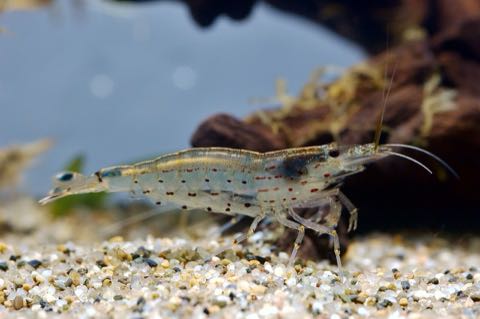 Amano shrimp
- American flagfish
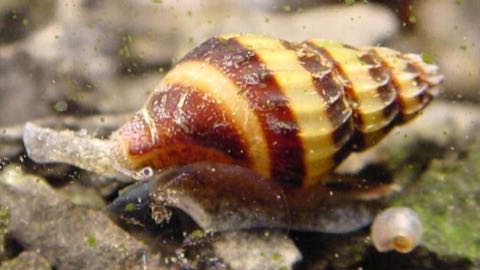 Assassin snail
- Banded gourami
- Bandit cory
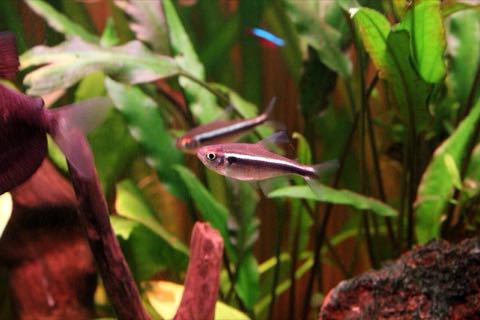 Black neon tetra
- Black phantom tetra
- Black ruby barb
- Blackline rasbora
Avoid with
- Alligator gar
Alligator gar may eat Banjo catfishAlligator gar may eat Banjo catfish
- Antenna ray
Antenna ray may eat Banjo catfishAntenna ray may eat Banjo catfish
- Arapaima
Arapaima may eat Banjo catfishArapaima may eat Banjo catfish
- Asian arowana
Asian arowana may eat Banjo catfishAsian arowana may eat Banjo catfish
- Australian pearl arowana
Australian pearl arowana may eat Banjo catfishAustralian pearl arowana may eat Banjo catfish
- Bullseye snakehead
Bullseye snakehead may eat Banjo catfishBullseye snakehead may eat Banjo catfish
- Butterfly peacock bass
Butterfly peacock bass may eat Banjo catfishButterfly peacock bass may eat Banjo catfish
- Channel catfish
No shared temperature rangeNo shared temperature range
- Clown knifefish
Clown knifefish may eat Banjo catfishClown knifefish may eat Banjo catfish
- Common river stingray
Common river stingray may eat Banjo catfishCommon river stingray may eat Banjo catfish
- Congo bichir
Congo bichir may eat Banjo catfishCongo bichir may eat Banjo catfish
- Cuban gar
Cuban gar may eat Banjo catfishCuban gar may eat Banjo catfish
Banjo catfish health problems
Ich is a freshwater parasite infection marked by salt-like white spots, rubbing, reduced appetite, and gill irritation, though appearance alone does not confirm diagnosis. Quarantining new arrivals for 30 days and using disinfected or dedicated nets helps lower introduction risks.Ich is a freshwater parasite infection marked by salt-like white spots, rubbing, reduced appetite, and gill irritation, though appearance alone does not confirm diagnosis. Quarantining new arrivals for 30 days and using disinfected or dedicated nets helps lower introduction risks.[3]
Fin rot is a bacterial disease encouraged by poor water conditions and stress, leading to fraying, red streaks, and shrinking fins. Reduce risks by maintaining water quality and eliminating harassment or injury sources, seeking assessment if fins deteriorate.Fin rot is a bacterial disease encouraged by poor water conditions and stress, leading to fraying, red streaks, and shrinking fins. Reduce risks by maintaining water quality and eliminating harassment or injury sources, seeking assessment if fins deteriorate.[4]
Smooth furnishings and gentle handling reduce physical injuries, while good water quality reduces environmental stress. Any cottony growth warrants prompt advice.Smooth furnishings and gentle handling reduce physical injuries, while good water quality reduces environmental stress. Any cottony growth warrants prompt advice.[4]
Male or female?
Distinguishing sex in banjo catfish is difficult. When mature, adult females tend to grow slightly larger and display rounder bellies than males, but this general body shape tendency does not provide a certain identification of an individual.Distinguishing sex in banjo catfish is difficult. When mature, adult females tend to grow slightly larger and display rounder bellies than males, but this general body shape tendency does not provide a certain identification of an individual.[1]
Questions
Are Banjo Catfish hard to keep?
Routine keeping can prove challenging because of their secretive nature. Banjo catfish remain hidden during daylight, meaning you must deliberately deliver sinking food after dark and confirm they actually feed.Routine keeping can prove challenging because of their secretive nature. Banjo catfish remain hidden during daylight, meaning you must deliberately deliver sinking food after dark and confirm they actually feed.[1]
Will Banjo Catfish eat other fish?
Seriously Fish describes them as peaceful with small fish. Even so, their secretive habits can make routine community keeping challenging, and careful observation of your aquarium is advised.Seriously Fish describes them as peaceful with small fish. Even so, their secretive habits can make routine community keeping challenging, and careful observation of your aquarium is advised.[1]
Are Banjo Catfish good for a community tank?
They are peaceful with small fish, but Seriously Fish cautions that their secretive habits make routine community keeping challenging. Because they stay hidden, they need deliberately delivered food rather than assumed leftovers.They are peaceful with small fish, but Seriously Fish cautions that their secretive habits make routine community keeping challenging. Because they stay hidden, they need deliberately delivered food rather than assumed leftovers.[1]
How big do Banjo Catfish grow?
Seriously Fish reports an adult standard length of 15 cm. A tank length of 60 cm and width of 38 cm is the source recommendation, providing bottom area and hiding places.Seriously Fish reports an adult standard length of 6 in. A tank length of 24 in and width of 15 in is the source recommendation, providing bottom area and hiding places.[1]
What is the downside of catfish?
For banjo catfish, extreme daytime inactivity and concealment are notable downsides. Because they stay buried or hidden by day, feeding is difficult and you must deliberately deliver sinking food after dark.For banjo catfish, extreme daytime inactivity and concealment are notable downsides. Because they stay buried or hidden by day, feeding is difficult and you must deliberately deliver sinking food after dark.[1]
Sources
- Bunocephalus coracoideus (Banjo Catfish) — Seriously Fish. Accessed 2026-10-05.
- How to look after freshwater catfish — Ornamental Aquatic Trade Association. Accessed 2026-10-05.
- Ichthyophthirius multifiliis (White Spot) Infections in Fish — UF/IFAS Extension. Accessed 2026-10-05.
- Frequently asked questions on treating sick fish — Practical Fishkeeping. Accessed 2026-10-05.
- Astronotus ocellatus (Oscar) — Seriously Fish. Accessed 2026-10-05.
- Rocio octofasciata (Jack Dempsey) — Seriously Fish. Accessed 2026-10-05.
- Carinotetraodon travancoricus (Dwarf Puffer) — Seriously Fish. Accessed 2026-10-05.
Written from the sources above. Not yet reviewed by an aquarist.
Data used by the planner
| Temperature | 22–28 | AqAdvisor (aqadvisor.com), retrieved 2026-10-04 · low confidence |
|---|---|---|
| pH | 6–8 | AqAdvisor (aqadvisor.com), retrieved 2026-10-04; agrees with FishBase (fishbase.se), retrieved 2026-10-04 · medium confidence |
| Hardness (dGH) | 5–15 | AqAdvisor (aqadvisor.com), retrieved 2026-10-04 · low confidence |
| Origin | Amazon basin, South America | curated-v0 (needs expert review) · low confidence |
| Beginner friendly | Yes | curated-v0 (needs expert review) · medium confidence |
| Care level | easy | curated-v0 (needs expert review) · medium confidence |
| Activity | sedentary | curated-v0 (needs expert review) · medium confidence |
| Swimming level | bottom | curated-v0 (needs expert review) · medium confidence |
| Temperament | peaceful | curated-v0 (needs expert review) · medium confidence |
| Nips fins | No | curated-v0 (needs expert review) · medium confidence |
| Long fins | No | curated-v0 (needs expert review) · medium confidence |
| Territorial | No | curated-v0 (needs expert review) · medium confidence |
| Lives in groups | No | curated-v0 (needs expert review) · medium confidence |
| Minimum group | 1 | curated-v0 (needs expert review) · medium confidence |
| Diet | omnivore | curated-v0 (needs expert review) · medium confidence |
| Lifespan (years) | 8–12 | curated-v0 (needs expert review) · low confidence |
| Months to adult size | 18 | curated-v0 (needs expert review) · low confidence |
| Safe with plants | Yes | curated-v0 (needs expert review) · medium confidence |