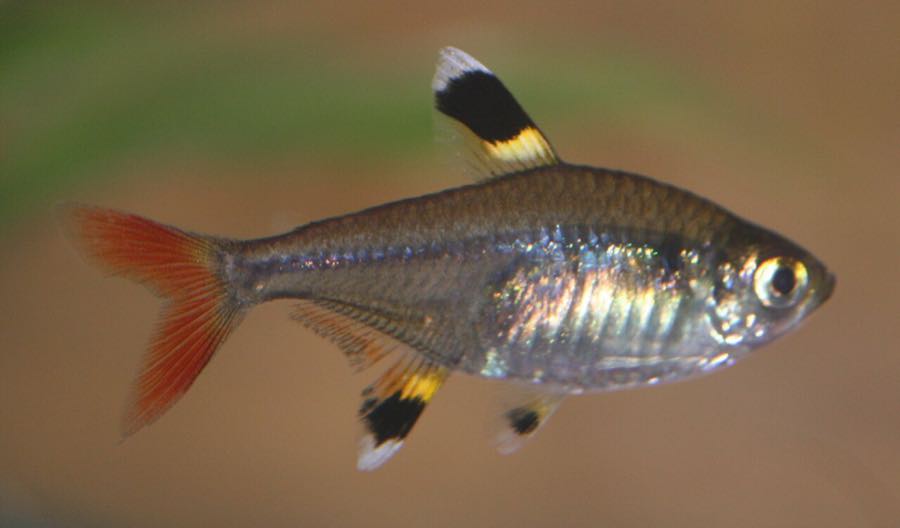
X-ray tetra tank size
Provide a minimum tank length of 60 cm for a shoal, with planted shelter and an open swimming area. Mass-produced X-ray tetras adapt to many layouts but show better colour in planted surroundings than in very bare aquariums.Provide a minimum tank length of 24 in for a shoal, with planted shelter and an open swimming area. Mass-produced X-ray tetras adapt to many layouts but show better colour in planted surroundings than in very bare aquariums.[1][2]
Sand, branching wood and dried leaves create shelter under dim light. Replace deteriorating leaves before accumulated decay fouls the water in your aquarium.Sand, branching wood and dried leaves create shelter under dim light. Replace deteriorating leaves before accumulated decay fouls the water in your aquarium.[1][2]
X-ray tetra water parameters
Keep 24–28 °C, pH 6.0–7.5 and hardness 2–15 dGH, within the shared care ranges. The species experiences seasonal changes in dissolved minerals in nature; its adaptability is not a reason to neglect stable clean aquarium water.Keep 75–82 °F, pH 6.0–7.5 and hardness 2–15 dGH, within the shared care ranges. The species experiences seasonal changes in dissolved minerals in nature; its adaptability is not a reason to neglect stable clean aquarium water.[1][2]
Use a mature filter and keep ammonia and nitrite undetectable; test weekly and after stocking changes. Change a quarter of the water each week with conditioned replacement water, and preserve filter bacteria by rinsing media in removed tank water.Use a mature filter and keep ammonia and nitrite undetectable; test weekly and after stocking changes. Change a quarter of the water each week with conditioned replacement water, and preserve filter bacteria by rinsing media in removed tank water.[1][2]
Feeding x-ray tetras
Feed once daily with only the amount eaten within a few minutes; excess food decomposes and adds toxic waste to the water. Offer small flakes or granules and rotate live or frozen daphnia and Artemia; in nature this fish eats mainly tiny invertebrates.Feed once daily with only the amount eaten within a few minutes; excess food decomposes and adds toxic waste to the water. Offer small flakes or granules and rotate live or frozen daphnia and Artemia; in nature this fish eats mainly tiny invertebrates.[2][1]
Very large or boisterous tank mates can outcompete peaceful X-ray tetras, so observe feeding access rather than assuming every fish has eaten in the display.Very large or boisterous tank mates can outcompete peaceful X-ray tetras, so observe feeding access rather than assuming every fish has eaten in the display.[1][2]
X-ray tetra behaviour
Keep a minimum group of six; ten or more is preferable when the tank has space for them. This is a peaceful shoaling fish whose company should include its own species; a lone fish does not meet its social needs.Keep a minimum group of six; ten or more is preferable when the tank has space for them. This is a peaceful shoaling fish whose company should include its own species; a lone fish does not meet its social needs.[1][2]
Peaceful is a species-level description; observe changes in behaviour rather than assuming an individual cannot nip or chase. Adult length is approximately 4.5 cm in standard length.Peaceful is a species-level description; observe changes in behaviour rather than assuming an individual cannot nip or chase. Adult length is approximately 1.8 in in standard length.[1][2]
Pristella tetra and water goldfinch are alternative common names; the selectively bred golden strain is semi-albino and needs the same basic care. The species is commercially bred in large numbers and considered a hardy beginner choice once basic aquarium needs are met.Pristella tetra and water goldfinch are alternative common names; the selectively bred golden strain is semi-albino and needs the same basic care. The species is commercially bred in large numbers and considered a hardy beginner choice once basic aquarium needs are met.[1]
X-ray tetra tank mates
Neon tetrasNeon tetras are a conditional small South American shoal, and are a conditional small South American shoal, and harlequin rasborasharlequin rasboras are a conditional small-rasbora option; keep full groups and verify temperature overlap and swimming space. Similar size and calm behaviour matter because this tetra competes poorly with boisterous fish. are a conditional small-rasbora option; keep full groups and verify temperature overlap and swimming space. Similar size and calm behaviour matter because this tetra competes poorly with boisterous fish.[1][2]
Bronze corydorasBronze corydoras and and kuhli loacheskuhli loaches are conditional peaceful bottom-dwelling groups. Each requires its own floor space and accessible food instead of being treated as a cleanup accessory. are conditional peaceful bottom-dwelling groups. Each requires its own floor space and accessible food instead of being treated as a cleanup accessory.[1][2]
Avoid Avoid oscarsoscars because predatory adults can swallow small tetras; plants do not remove the adult size mismatch. Avoid because predatory adults can swallow small tetras; plants do not remove the adult size mismatch. Avoid Jack DempseysJack Dempseys because territorial adults and predation are unsafe around small peaceful shoals. because territorial adults and predation are unsafe around small peaceful shoals.[5][6]
Avoid Avoid pea pufferspea puffers because fin nipping and their own feeding-competition problems make them unsuitable for this calm community. because fin nipping and their own feeding-competition problems make them unsuitable for this calm community.[7]
Usually fine together
- African butterfly cichlid
- Agassiz's cory
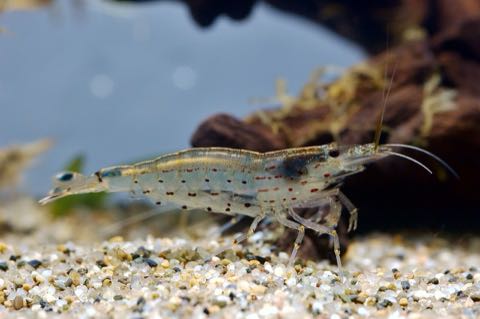 Amano shrimp
- American flagfish
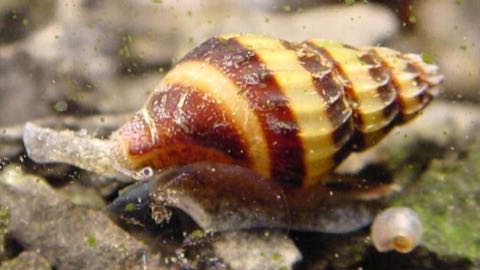 Assassin snail
- Banded gourami
- Bandit cory
- Banjo catfish
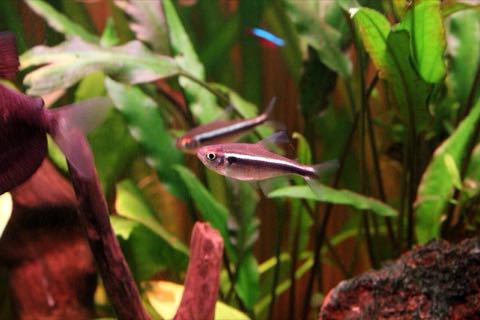 Black neon tetra
- Black phantom tetra
- Black ruby barb
- Bleeding heart tetra
Avoid with
- Acei cichlid
No shared pH rangeNo shared pH range
- Brevis shell dweller
No shared pH rangeNo shared pH range
- Caudopunctatus
No shared pH rangeNo shared pH range
- Multies
No shared pH rangeNo shared pH range
- Pindani
No shared pH rangeNo shared pH range
- Rusty cichlid
No shared pH rangeNo shared pH range
- Saulosi cichlid
No shared pH rangeNo shared pH range
- Similis shell dweller
No shared pH rangeNo shared pH range
- Afra cichlid
No shared pH rangeNo shared pH range
- African knifefish
African knifefish may eat X ray tetraAfrican knifefish may eat X ray tetra
- African pike
African pike may eat X ray tetraAfrican pike may eat X ray tetra
- Alligator gar
Alligator gar may eat X ray tetraAlligator gar may eat X ray tetra
Breeding x-ray tetras
Spawning is achievable but raising the very small fry is more demanding; a dedicated dim aquarium gives better control than a mixed community.Spawning is achievable but raising the very small fry is more demanding; a dedicated dim aquarium gives better control than a mixed community.[1]
Fine-leaved plants or spawning mops provide egg sites, and mesh can prevent adults from reaching fallen eggs; remove parents once eggs appear.Fine-leaved plants or spawning mops provide egg sites, and mesh can prevent adults from reaching fallen eggs; remove parents once eggs appear.[1]
Use gentle air-driven sponge filtration and keep eggs and early fry shaded because they are light sensitive.Use gentle air-driven sponge filtration and keep eggs and early fry shaded because they are light sensitive.[1]
Eggs hatch in roughly 24–36 hours and fry become free swimming three to four days later; start with infusoria-sized foods before microworm or Artemia nauplii.Eggs hatch in roughly 24–36 hours and fry become free swimming three to four days later; start with infusoria-sized foods before microworm or Artemia nauplii.[1]
X-ray tetra health problems
Ich is caused by Ichthyophthirius multifiliis; white grains on skin or fins, rubbing and faster breathing are possible signs. Quarantine incoming fish for 30 days; separate nets and siphons prevent moving sticky ich cysts between aquariums. Seek prompt diagnosis if signs appear.Ich is caused by Ichthyophthirius multifiliis; white grains on skin or fins, rubbing and faster breathing are possible signs. Quarantine incoming fish for 30 days; separate nets and siphons prevent moving sticky ich cysts between aquariums. Seek prompt diagnosis if signs appear.[3]
Bacterial fin disease can show ragged or blood-streaked fins, ulcers or sores; stress makes fish more vulnerable to infection. Reduce bacterial disease risk by maintaining good water quality and removing sources of injury or aggression; observe symptoms before choosing treatment.Bacterial fin disease can show ragged or blood-streaked fins, ulcers or sores; stress makes fish more vulnerable to infection. Reduce bacterial disease risk by maintaining good water quality and removing sources of injury or aggression; observe symptoms before choosing treatment.[4][2]
Fungal cotton-wool disease produces pale fluffy growth over damaged tissue; injury, rough handling and poor conditions let fungi overcome the protective mucus. Prevent fungal entry by handling fish gently, avoiding sharp decor and maintaining water quality; fluffy growth needs prompt assessment rather than guessing medication.Fungal cotton-wool disease produces pale fluffy growth over damaged tissue; injury, rough handling and poor conditions let fungi overcome the protective mucus. Prevent fungal entry by handling fish gently, avoiding sharp decor and maintaining water quality; fluffy growth needs prompt assessment rather than guessing medication.[4]
Male or female?
Mature females are normally larger and stockier than males; breeding females become fuller with eggs, while males in breeding condition show stronger colour. These sexing cues apply to mature fish and relative body condition; the golden ornamental strain is a colour form, not a sex.Mature females are normally larger and stockier than males; breeding females become fuller with eggs, while males in breeding condition show stronger colour. These sexing cues apply to mature fish and relative body condition; the golden ornamental strain is a colour form, not a sex.[1]
Questions
How many X-Ray Tetras should be kept together?
Keep a minimum group of six; ten or more is preferable when the tank has space for them. This is a shoaling fish whose company should include its own species, and a lone fish does not meet its social needs.Keep a minimum group of six; ten or more is preferable when the tank has space for them. This is a shoaling fish whose company should include its own species, and a lone fish does not meet its social needs.[1][2]
Are X-Ray Tetras peaceful?
This is a peaceful shoaling fish whose company should include its own species. Peaceful is a species-level description; observe changes in behaviour rather than assuming an individual cannot nip or chase.This is a peaceful shoaling fish whose company should include its own species. Peaceful is a species-level description; observe changes in behaviour rather than assuming an individual cannot nip or chase.[1][2]
Are X-Ray Tetras good for beginners?
Yes, the species is commercially bred in large numbers and considered a hardy beginner choice once basic aquarium needs are met.Yes, the species is commercially bred in large numbers and considered a hardy beginner choice once basic aquarium needs are met.[1]
Are X-Ray Tetras fin nippers?
Peaceful is a species-level description for this shoaling fish, but individual fish can still nip or chase. Observe changes in behaviour in your aquarium.Peaceful is a species-level description for this shoaling fish, but individual fish can still nip or chase. Observe changes in behaviour in your aquarium.[1][2]
How big do X-Ray Tetras get?
Adult length is approximately 4.5 cm in standard length. Mature females are normally larger and stockier than males, becoming fuller with eggs.Adult length is approximately 1.8 in in standard length. Mature females are normally larger and stockier than males, becoming fuller with eggs.[1]
Sources
- Pristella maxillaris (X-Ray Tetra) — Seriously Fish. Accessed 2026-10-05.
- How to look after tetras and pencilfish — Ornamental Aquatic Trade Association. Accessed 2026-10-05.
- Ichthyophthirius multifiliis (White Spot) Infections in Fish — UF/IFAS Extension. Accessed 2026-10-05.
- Frequently asked questions on treating sick fish — Practical Fishkeeping. Accessed 2026-10-05.
- Astronotus ocellatus (Oscar) — Seriously Fish. Accessed 2026-10-05.
- Rocio octofasciata (Jack Dempsey) — Seriously Fish. Accessed 2026-10-05.
- Carinotetraodon travancoricus (Dwarf Puffer) — Seriously Fish. Accessed 2026-10-05.
Written from the sources above. Not yet reviewed by an aquarist.
Data used by the planner
| Temperature | 24–28 | AqAdvisor (aqadvisor.com), retrieved 2026-10-04; agrees with FishBase (fishbase.se), retrieved 2026-10-04 · medium confidence |
|---|---|---|
| pH | 5.5–7.5 | AqAdvisor (aqadvisor.com), retrieved 2026-10-04; agrees with FishBase (fishbase.se), retrieved 2026-10-04 · medium confidence |
| Hardness (dGH) | 1–15 | AqAdvisor (aqadvisor.com), retrieved 2026-10-04 · medium confidence |
| Origin | South America | curated-v0 (needs expert review) · low confidence |
| Beginner friendly | Yes | curated-v0 (needs expert review) · medium confidence |
| Care level | easy | curated-v0 (needs expert review) · medium confidence |
| Activity | moderate | curated-v0 (needs expert review) · medium confidence |
| Swimming level | middle | curated-v0 (needs expert review) · medium confidence |
| Temperament | peaceful | curated-v0 (needs expert review) · medium confidence |
| Nips fins | No | curated-v0 (needs expert review) · medium confidence |
| Long fins | No | curated-v0 (needs expert review) · medium confidence |
| Territorial | No | curated-v0 (needs expert review) · medium confidence |
| Lives in groups | Yes | curated-v0 (needs expert review) · medium confidence |
| Minimum group | 6 | curated-v0 (needs expert review) · medium confidence |
| Diet | omnivore | curated-v0 (needs expert review) · medium confidence |
| Lifespan (years) | 3–6 | curated-v0 (needs expert review) · low confidence |
| Months to adult size | 12 | curated-v0 (needs expert review) · low confidence |
| Safe with plants | Yes | curated-v0 (needs expert review) · medium confidence |
| Minimum tank length | 60 | curated-v0 (needs expert review) · medium confidence |