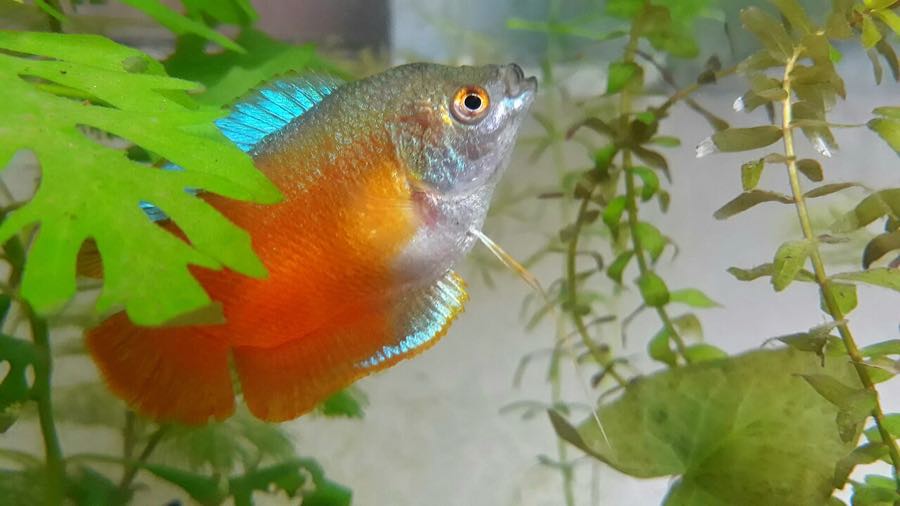
Honey gourami tank size
Provide a minimum tank length of 60 cm to allow space for a planted, sheltered aquascape. Include plenty of live vegetation and floating cover so these shy fish feel secure near the surface.Provide a minimum tank length of 24 in to allow space for a planted, sheltered aquascape. Include plenty of live vegetation and floating cover so these shy fish feel secure near the surface.[1]
Run gentle filtration to prevent strong currents from pushing these slow swimmers. Fit a tight aquarium lid to maintain a layer of warm, humid air above the surface and to stop jumping, as labyrinth fish regularly breathe atmospheric air.Run gentle filtration to prevent strong currents from pushing these slow swimmers. Fit a tight aquarium lid to maintain a layer of warm, humid air above the surface and to stop jumping, as labyrinth fish regularly breathe atmospheric air.[1]
Honey gourami water parameters
Maintain a steady water temperature between 22–27 °C, a pH of 6.0–7.5, and general hardness within 5–15 dGH. A mature biological filter helps preserve these stable water parameters.Maintain a steady water temperature between 72–81 °F, a pH of 6.0–7.5, and general hardness within 5–15 dGH. A mature biological filter helps preserve these stable water parameters.[1][2]
Keep ammonia and nitrite undetectable at all times. Test the aquarium water weekly and perform regular partial water changes using conditioned water to protect your fish.Keep ammonia and nitrite undetectable at all times. Test the aquarium water weekly and perform regular partial water changes using conditioned water to protect your fish.[2]
Feeding honey gouramis
Offer small dried foods alongside appropriately sized frozen or live daphnia, brine shrimp, or bloodworm. Small mouth sizes mean their food must be finely sized to swallow easily.Offer small dried foods alongside appropriately sized frozen or live daphnia, brine shrimp, or bloodworm. Small mouth sizes mean their food must be finely sized to swallow easily.[1]
Feed one meal daily, offering only what the fish eats in a few minutes. Honey gouramis are slow feeders, so watch closely during feeding to verify that faster tank mates do not steal their share.Feed one meal daily, offering only what the fish eats in a few minutes. Honey gouramis are slow feeders, so watch closely during feeding to verify that faster tank mates do not steal their share.[1][2]
Honey gourami behaviour
Honey gouramis are slow-moving, peaceful fish that spend much of their time navigating the upper and middle water layers. Fast or vigorous feeders easily intimidate them, causing them to hide during feeding time.Honey gouramis are slow-moving, peaceful fish that spend much of their time navigating the upper and middle water layers. Fast or vigorous feeders easily intimidate them, causing them to hide during feeding time.[1]
While not schooling fish, Seriously Fish recommends maintaining a group of four to six for social interaction. Dense plant cover breaks sightlines and reduces chasing, though shelter will not prevent every territorial dispute. Small gouramis can live several years in home aquariums.While not schooling fish, Seriously Fish recommends maintaining a group of four to six for social interaction. Dense plant cover breaks sightlines and reduces chasing, though shelter will not prevent every territorial dispute. Small gouramis can live several years in home aquariums.[1][2]
Ornamental strains such as red, golden, and sunset varieties are commonly available in the hobby. Commercial trade names alone do not establish biological sex or specific species identity.Ornamental strains such as red, golden, and sunset varieties are commonly available in the hobby. Commercial trade names alone do not establish biological sex or specific species identity.[1]
Honey gourami tank mates
Calm, small companions work best in a sheltered display. Calm, small companions work best in a sheltered display. Harlequin rasborasHarlequin rasboras make suitable midwater cyprinids when the setup meets the swimming needs of both species. make suitable midwater cyprinids when the setup meets the swimming needs of both species. Chili rasborasChili rasboras are another gentle shoaling choice, provided you supply sufficiently tiny foods. are another gentle shoaling choice, provided you supply sufficiently tiny foods.[1]
Ember tetrasEmber tetras share planted aquariums comfortably; preserve ample space for the tetra group and watch that both species eat their share. For the substrate, peaceful share planted aquariums comfortably; preserve ample space for the tetra group and watch that both species eat their share. For the substrate, peaceful kuhli loacheskuhli loaches make great tank mates when provided with soft sand and their own social group. make great tank mates when provided with soft sand and their own social group.[1][8]
Avoid large or predatory cichlids. Avoid large or predatory cichlids. OscarsOscars are predatory and swallow small or slender tank mates, while mature are predatory and swallow small or slender tank mates, while mature Jack DempseysJack Dempseys establish aggressive territories that intimidate smaller fish. establish aggressive territories that intimidate smaller fish.[5][6]
Do not house honey gouramis with Do not house honey gouramis with pea pufferspea puffers. The persistent fin-nipping tendencies of dwarf puffers make them unsuitable tank mates for slow, calm community fish, posing an ongoing risk to trailing fins.. The persistent fin-nipping tendencies of dwarf puffers make them unsuitable tank mates for slow, calm community fish, posing an ongoing risk to trailing fins.[1][7]
Usually fine together
- African butterfly cichlid
- African clawed frog
- Agassiz's cory
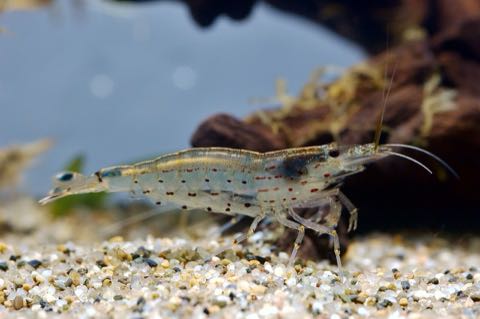 Amano shrimp
- American flagfish
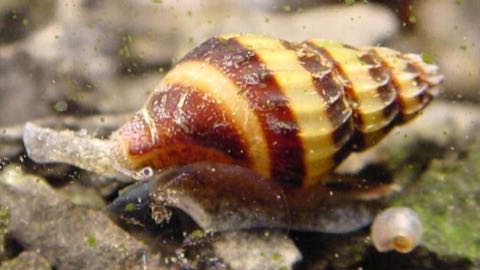 Assassin snail
- Banded gourami
- Bandit cory
- Banjo catfish
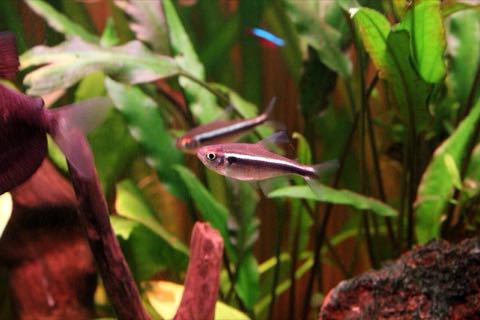 Black neon tetra
- Black phantom tetra
- Black ruby barb
Avoid with
- African knifefish
African knifefish may eat Honey gouramiAfrican knifefish may eat Honey gourami
- African pike
African pike may eat Honey gouramiAfrican pike may eat Honey gourami
- Alligator gar
Alligator gar may eat Honey gouramiAlligator gar may eat Honey gourami
- Antenna ray
Antenna ray may eat Honey gouramiAntenna ray may eat Honey gourami
- Arapaima
Arapaima may eat Honey gouramiArapaima may eat Honey gourami
- Asian arowana
Asian arowana may eat Honey gouramiAsian arowana may eat Honey gourami
- Asian upside-down catfish
Asian upside down catfish may eat Honey gouramiAsian upside down catfish may eat Honey gourami
- Australian pearl arowana
Australian pearl arowana may eat Honey gouramiAustralian pearl arowana may eat Honey gourami
- Barred bichir
Barred bichir may eat Honey gouramiBarred bichir may eat Honey gourami
- Black bullhead
Black bullhead may eat Honey gouramiBlack bullhead may eat Honey gourami
- Black diamond cichlid
Black diamond cichlid may eat Honey gouramiBlack diamond cichlid may eat Honey gourami
- Brown bullhead
Brown bullhead may eat Honey gouramiBrown bullhead may eat Honey gourami
Breeding honey gouramis
The male constructs a floating bubble nest anchored beneath surface leaves and plants. After spawning, he gathers the eggs and places them safely into the nest; provide the female a separate safe area to rest after breeding ends.The male constructs a floating bubble nest anchored beneath surface leaves and plants. After spawning, he gathers the eggs and places them safely into the nest; provide the female a separate safe area to rest after breeding ends.[1]
Honey gourami eggs usually hatch within 24–36 hours. The tiny fry need infusoria-sized microscopic food, very gentle filtration, and warm, humid air trapped beneath the lid as their breathing organs develop.Honey gourami eggs usually hatch within 24–36 hours. The tiny fry need infusoria-sized microscopic food, very gentle filtration, and warm, humid air trapped beneath the lid as their breathing organs develop.[1]
Honey gourami health problems
Ich is a parasite infection that can cause salt-like white dots across the body, clamped fins, scratching on objects, and gill irritation. Physical appearance alone does not provide a definitive diagnosis, but quarantining new arrivals for 30 days and using separate nets will reduce transmission risks.Ich is a parasite infection that can cause salt-like white dots across the body, clamped fins, scratching on objects, and gill irritation. Physical appearance alone does not provide a definitive diagnosis, but quarantining new arrivals for 30 days and using separate nets will reduce transmission risks.[2][3]
Fin rot presents as fraying edges, red streaks, and progressive tissue loss on the fins. This bacterial condition is triggered by environmental stress and degraded water quality; maintaining clean water and preventing aggressive tank-mate harassment reduces disease risk.Fin rot presents as fraying edges, red streaks, and progressive tissue loss on the fins. This bacterial condition is triggered by environmental stress and degraded water quality; maintaining clean water and preventing aggressive tank-mate harassment reduces disease risk.[4]
Fungal infections appear as white or grey cotton-like patches over damaged tissue. Skin injuries and poor water conditions weaken the protective slime coat; using smooth hardscape, handling fish gently, and testing parameters regularly lower these infection risks.Fungal infections appear as white or grey cotton-like patches over damaged tissue. Skin injuries and poor water conditions weaken the protective slime coat; using smooth hardscape, handling fish gently, and testing parameters regularly lower these infection risks.[4]
Male or female?
Wild-type females display a brownish background with a noticeable dark horizontal stripe running along the flank. In contrast, breeding males exhibit vibrant orange hues and develop a dark blue-black throat and underside. Ornamental captive colour forms do not always show these classic colour differences.Wild-type females display a brownish background with a noticeable dark horizontal stripe running along the flank. In contrast, breeding males exhibit vibrant orange hues and develop a dark blue-black throat and underside. Ornamental captive colour forms do not always show these classic colour differences.[1]
Questions
Are honey gourami easy to care for?
Yes, provided you keep water conditions stable and offer peaceful tank mates. Keep ammonia and nitrite at zero, maintain water temperatures of 22–27 °C, and feed appropriate small foods once daily.Yes, provided you keep water conditions stable and offer peaceful tank mates. Keep ammonia and nitrite at zero, maintain water temperatures of 72–81 °F, and feed appropriate small foods once daily.[1][2]
How many honey gourami should be kept together?
Keeping four to six provides beneficial social interaction. While they do not form true schools, keeping a small group in a sheltered tank with plenty of plant cover breaks lines of sight and reduces chasing.Keeping four to six provides beneficial social interaction. While they do not form true schools, keeping a small group in a sheltered tank with plenty of plant cover breaks lines of sight and reduces chasing.[1]
What are the signs that a honey gourami is stressed?
Stressed honey gouramis often exhibit reduced feeding, faded or changing coloration, rapid breathing, clamped fins, or extended periods of hiding. Test your water parameters immediately whenever you observe these abnormal behaviours.Stressed honey gouramis often exhibit reduced feeding, faded or changing coloration, rapid breathing, clamped fins, or extended periods of hiding. Test your water parameters immediately whenever you observe these abnormal behaviours.[2]
Is it okay to keep honey gourami alone?
Yes. Honey gouramis are not obligate schooling fish and can be kept singly. However, keeping a group of four to six allows natural social interactions if the tank offers sufficient cover.Yes. Honey gouramis are not obligate schooling fish and can be kept singly. However, keeping a group of four to six allows natural social interactions if the tank offers sufficient cover.[1]
What fish pair well with honey gourami?
Quiet, non-aggressive species make ideal tank mates. Good choices include Quiet, non-aggressive species make ideal tank mates. Good choices include harlequin rasborasharlequin rasboras, , chili rasboraschili rasboras, , ember tetrasember tetras, and bottom-dwelling , and bottom-dwelling kuhli loacheskuhli loaches. Avoid aggressive cichlids and fin-nippers.. Avoid aggressive cichlids and fin-nippers.[1][8][6][7]
Do honey gouramis jump out of a tank?
Yes, honey gouramis can jump. Always secure the aquarium with a tight-fitting lid, which also preserves the warm, humid air pocket required for their labyrinth organ breathing.Yes, honey gouramis can jump. Always secure the aquarium with a tight-fitting lid, which also preserves the warm, humid air pocket required for their labyrinth organ breathing.[1]
Sources
- Trichogaster chuna (Honey Gourami) — Seriously Fish. Accessed 2026-10-05.
- How to look after gouramis and paradise fish — Ornamental Aquatic Trade Association. Accessed 2026-10-05.
- Ichthyophthirius multifiliis (White Spot) Infections in Fish — UF/IFAS Extension. Accessed 2026-10-05.
- Frequently asked questions on treating sick fish — Practical Fishkeeping. Accessed 2026-10-05.
- Astronotus ocellatus (Oscar) — Seriously Fish. Accessed 2026-10-05.
- Rocio octofasciata (Jack Dempsey) — Seriously Fish. Accessed 2026-10-05.
- Carinotetraodon travancoricus (Dwarf Puffer) — Seriously Fish. Accessed 2026-10-05.
- Hyphessobrycon amandae (Ember Tetra) — Seriously Fish. Accessed 2026-10-05.
Written from the sources above. Not yet reviewed by an aquarist.
Data used by the planner
| Temperature | 22–28 | AqAdvisor (aqadvisor.com), retrieved 2026-10-04; agrees with FishBase (fishbase.se), retrieved 2026-10-04 · medium confidence |
|---|---|---|
| pH | 6–8 | AqAdvisor (aqadvisor.com), retrieved 2026-10-04; agrees with FishBase (fishbase.se), retrieved 2026-10-04 · medium confidence |
| Hardness (dGH) | 5–15 | AqAdvisor (aqadvisor.com), retrieved 2026-10-04 · low confidence |
| Origin | Asia | curated-v0 (needs expert review) · low confidence |
| Beginner friendly | Yes | curated-v0 (needs expert review) · medium confidence |
| Care level | easy | curated-v0 (needs expert review) · medium confidence |
| Activity | sedentary | curated-v0 (needs expert review) · medium confidence |
| Swimming level | top | curated-v0 (needs expert review) · medium confidence |
| Temperament | peaceful | curated-v0 (needs expert review) · medium confidence |
| Nips fins | No | curated-v0 (needs expert review) · medium confidence |
| Long fins | No | curated-v0 (needs expert review) · medium confidence |
| Territorial | No | curated-v0 (needs expert review) · medium confidence |
| Lives in groups | No | curated-v0 (needs expert review) · medium confidence |
| Minimum group | 1 | curated-v0 (needs expert review) · medium confidence |
| Diet | omnivore | curated-v0 (needs expert review) · medium confidence |
| Lifespan (years) | 3–6 | curated-v0 (needs expert review) · low confidence |
| Months to adult size | 12 | curated-v0 (needs expert review) · low confidence |
| Safe with plants | Yes | curated-v0 (needs expert review) · medium confidence |
| Minimum tank length | 60 | curated-v0 (needs expert review) · medium confidence |