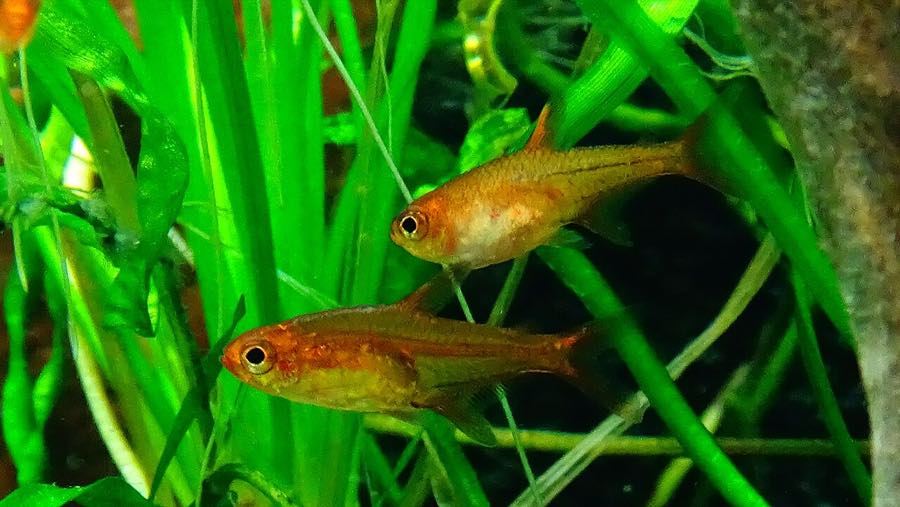
Ember tetra tank size
Plan for a minimum tank length of 45 cm and a width of 30 cm. This footprint preserves open swimming space for the group while meeting the baseline space requirements for the species.Plan for a minimum tank length of 18 in and a width of 12 in. This footprint preserves open swimming space for the group while meeting the baseline space requirements for the species.[1]
Set up dark substrate with dense plants around sheltered retreat areas. Incorporate driftwood, floating plants to diffuse overhead light, and dried aquarium-safe leaf litter to mimic natural habitat.Set up dark substrate with dense plants around sheltered retreat areas. Incorporate driftwood, floating plants to diffuse overhead light, and dried aquarium-safe leaf litter to mimic natural habitat.[1]
Use gentle filtration to protect these diminutive fish. An air-driven sponge filter works well, though modest water movement from low-flow equipment is acceptable.Use gentle filtration to protect these diminutive fish. An air-driven sponge filter works well, though modest water movement from low-flow equipment is acceptable.[1]
Ember tetra water parameters
Maintain water temperature between 24–28 °C, a pH of 5.5–7.0, and general hardness from 1–10 dGH. These ranges serve as your ongoing water care targets.Maintain water temperature between 75–82 °F, a pH of 5.5–7.0, and general hardness from 1–10 dGH. These ranges serve as your ongoing water care targets.[1]
Confirm zero ammonia and zero nitrite before introducing any fish. Test your parameters weekly and perform a weekly water change of roughly one quarter of the tank volume using conditioned replacement water.Confirm zero ammonia and zero nitrite before introducing any fish. Test your parameters weekly and perform a weekly water change of roughly one quarter of the tank volume using conditioned replacement water.[2]
Feeding ember tetras
Feed your ember tetras once a day with small portions consumed within a few minutes. Remove any uneaten food promptly to prevent organic decomposition and water fouling.Feed your ember tetras once a day with small portions consumed within a few minutes. Remove any uneaten food promptly to prevent organic decomposition and water fouling.[2]
Because their mouths are tiny, offer finely crushed dry foods alongside live or frozen Artemia nauplii, Moina, or grindal worms. Sizing the particles small enough allows each fish to swallow its food easily.Because their mouths are tiny, offer finely crushed dry foods alongside live or frozen Artemia nauplii, Moina, or grindal worms. Sizing the particles small enough allows each fish to swallow its food easily.[1]
Observe feedings carefully. Ember tetras feed gently and can lose out to boisterous or much larger tank companions that rush for food.Observe feedings carefully. Ember tetras feed gently and can lose out to boisterous or much larger tank companions that rush for food.[1]
Ember tetra behaviour
Keep a social group of at least eight fish, with eight to ten or more preferred. Kept together in proper numbers, ember tetras become less timid and display active shoaling behaviour.Keep a social group of at least eight fish, with eight to ten or more preferred. Kept together in proper numbers, ember tetras become less timid and display active shoaling behaviour.[1]
Native to the Rio das Mortes within Brazil's Araguaia river basin, this peaceful species spends most of its time swimming through the middle and upper levels of the water column.Native to the Rio das Mortes within Brazil's Araguaia river basin, this peaceful species spends most of its time swimming through the middle and upper levels of the water column.[1]
Small tetras can live for several years in well-matured aquariums. Trade labels like fire tetra, Amanda's tetra, red tetra, and dwarf red tetra refer to the exact same species rather than separate varieties.Small tetras can live for several years in well-matured aquariums. Trade labels like fire tetra, Amanda's tetra, red tetra, and dwarf red tetra refer to the exact same species rather than separate varieties.[2][1]
Watch your fish for shifts in appetite, body colour, respiration, fin condition, or swimming motion. If behaviour alters, test the water promptly, though a single sign alone does not confirm a specific disease.Watch your fish for shifts in appetite, body colour, respiration, fin condition, or swimming motion. If behaviour alters, test the water promptly, though a single sign alone does not confirm a specific disease.[2]
Ember tetra tank mates
You can keep peaceful companions such as You can keep peaceful companions such as chili rasboraschili rasboras if you provide suitably tiny foods and match their soft-water requirements. if you provide suitably tiny foods and match their soft-water requirements. Pygmy corydorasPygmy corydoras also work well when maintained in their own social group, provided you ensure food reaches the substrate where they forage. also work well when maintained in their own social group, provided you ensure food reaches the substrate where they forage.[1]
In planted setups with ample cover and unhurried feeding, In planted setups with ample cover and unhurried feeding, honey gouramishoney gouramis serve as peaceful upper-level companions. serve as peaceful upper-level companions. Harlequin rasborasHarlequin rasboras can also share a tank, but they require careful temperature control within a narrow shared range of 24–25 °C alongside adequate group sizes for both species. can also share a tank, but they require careful temperature control within a narrow shared range of 75–77 °F alongside adequate group sizes for both species.[1]
Avoid predatory cichlids like Avoid predatory cichlids like oscarsoscars, whose predatory feeding puts small, slender fish at risk of being swallowed. Similarly, avoid mature territorial cichlids like , whose predatory feeding puts small, slender fish at risk of being swallowed. Similarly, avoid mature territorial cichlids like Jack DempseysJack Dempseys, which can harass smaller fish., which can harass smaller fish.[5][6]
Do not house ember tetras with Do not house ember tetras with pea pufferspea puffers. The fin-nipping tendencies of pea puffers make them unsuitable tank mates for a peaceful community setup.. The fin-nipping tendencies of pea puffers make them unsuitable tank mates for a peaceful community setup.[7]
Usually fine together
- African butterfly cichlid
- Agassiz's cory
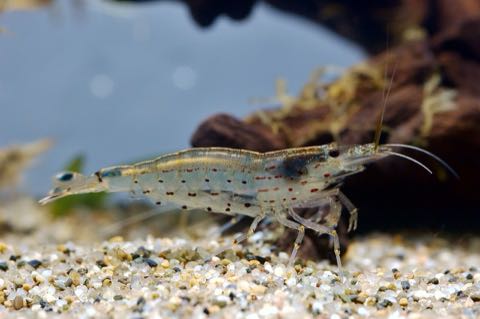 Amano shrimp
- American flagfish
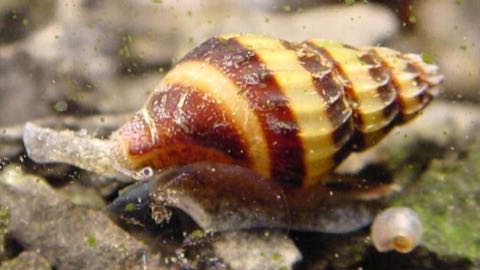 Assassin snail
- Banded gourami
- Bandit cory
- Banjo catfish
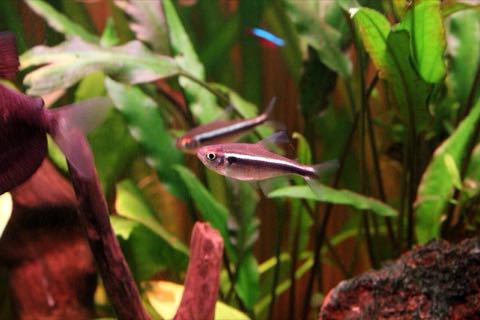 Black neon tetra
- Black phantom tetra
- Black ruby barb
- Bleeding heart tetra
Avoid with
- Acei cichlid
No shared pH rangeNo shared pH range
- African clawed frog
African clawed frog may eat Ember tetraAfrican clawed frog may eat Ember tetra
- Brevis shell dweller
No shared pH rangeNo shared pH range
- Caudopunctatus
No shared pH rangeNo shared pH range
- Multies
No shared pH rangeNo shared pH range
- Pindani
No shared pH rangeNo shared pH range
- Rusty cichlid
No shared pH rangeNo shared pH range
- Saulosi cichlid
No shared pH rangeNo shared pH range
- Similis shell dweller
No shared pH rangeNo shared pH range
- Abei puffer
Abei puffer may eat Ember tetraAbei puffer may eat Ember tetra
- Afra cichlid
No shared pH rangeNo shared pH range
- African butterflyfish
African butterflyfish may eat Ember tetraAfrican butterflyfish may eat Ember tetra
Breeding ember tetras
Ember tetras scatter their eggs among vegetation and provide no parental care. For improved fry survival, move conditioning adults into a dedicated, dimly lit breeding aquarium furnished with fine-leaved plants or a protective mesh base that separates falling eggs from hungry parents.Ember tetras scatter their eggs among vegetation and provide no parental care. For improved fry survival, move conditioning adults into a dedicated, dimly lit breeding aquarium furnished with fine-leaved plants or a protective mesh base that separates falling eggs from hungry parents.[1]
Condition the parent fish with small live or frozen foods prior to spawning, and remove them promptly after eggs are laid. Feed newly free-swimming fry microscopic foods such as Paramecium or fine fry starter before stepping up to newly hatched Artemia nauplii.Condition the parent fish with small live or frozen foods prior to spawning, and remove them promptly after eggs are laid. Feed newly free-swimming fry microscopic foods such as Paramecium or fine fry starter before stepping up to newly hatched Artemia nauplii.[1]
Ember tetra health problems
Ich is a freshwater parasite infection where salt-like white spots, rubbing, reduced appetite, and gill irritation are possible signs, though appearance alone does not confirm a diagnosis. A 30-day quarantine for new arrivals and separate or disinfected nets help prevent introduction.Ich is a freshwater parasite infection where salt-like white spots, rubbing, reduced appetite, and gill irritation are possible signs, though appearance alone does not confirm a diagnosis. A 30-day quarantine for new arrivals and separate or disinfected nets help prevent introduction.[3]
Fin rot is a bacterial disease encouraged by poor conditions and stress that can cause fraying and red streaks followed by shrinking fins. Prevent avoidable fin rot by maintaining water quality and removing sources of injury or harassment, and seek assessment if fins deteriorate.Fin rot is a bacterial disease encouraged by poor conditions and stress that can cause fraying and red streaks followed by shrinking fins. Prevent avoidable fin rot by maintaining water quality and removing sources of injury or harassment, and seek assessment if fins deteriorate.[4]
Fungal infection can appear as grey-white cottony growth on damaged skin when injury and environmental stress weaken the protective mucus. Smooth furnishings, gentle handling, and good water quality reduce injuries that allow fungus to establish, and cottony growth warrants prompt advice.Fungal infection can appear as grey-white cottony growth on damaged skin when injury and environmental stress weaken the protective mucus. Smooth furnishings, gentle handling, and good water quality reduce injuries that allow fungus to establish, and cottony growth warrants prompt advice.[4]
Male or female?
Sexing adult ember tetras relies on body shape and color intensity. Mature males are more intensely coloured, especially during breeding, whereas mature females are rounder-bodied. Colour alone is not a dependable juvenile sexing method.Sexing adult ember tetras relies on body shape and color intensity. Mature males are more intensely coloured, especially during breeding, whereas mature females are rounder-bodied. Colour alone is not a dependable juvenile sexing method.[1]
Questions
How many ember tetras should be together?
Keep at least eight ember tetras together, though groups of eight to ten or more are preferred. A proper group reduces shyness and shows more social behaviour.Keep at least eight ember tetras together, though groups of eight to ten or more are preferred. A proper group reduces shyness and shows more social behaviour.[1]
How long do ember tetras last?
Small tetras can live for several years in well-matured aquariums with stable conditions.Small tetras can live for several years in well-matured aquariums with stable conditions.[2]
How often should ember tetras be fed?
Feed them once a day. Offer a portion consumed in a few minutes, and remove any excess food so it does not decompose in the tank.Feed them once a day. Offer a portion consumed in a few minutes, and remove any excess food so it does not decompose in the tank.[2]
What are some good tank mates for an Ember Tetra?
Chili rasboras work if you provide tiny foods and compatible water, while pygmy corydoras can share the tank if given their own group and food that reaches them. Honey gouramis also suit planted tanks with enough cover and gentle feeding.Chili rasboras work if you provide tiny foods and compatible water, while pygmy corydoras can share the tank if given their own group and food that reaches them. Honey gouramis also suit planted tanks with enough cover and gentle feeding.[1]
Sources
- Hyphessobrycon amandae (Ember Tetra) — Seriously Fish. Accessed 2026-10-05.
- How to look after tetras and pencilfish — Ornamental Aquatic Trade Association. Accessed 2026-10-05.
- Ichthyophthirius multifiliis (White Spot) Infections in Fish — UF/IFAS Extension. Accessed 2026-10-05.
- Frequently asked questions on treating sick fish — Practical Fishkeeping. Accessed 2026-10-05.
- Astronotus ocellatus (Oscar) — Seriously Fish. Accessed 2026-10-05.
- Rocio octofasciata (Jack Dempsey) — Seriously Fish. Accessed 2026-10-05.
- Carinotetraodon travancoricus (Dwarf Puffer) — Seriously Fish. Accessed 2026-10-05.
Written from the sources above. Not yet reviewed by an aquarist.
Data used by the planner
| Temperature | 24–28 | AqAdvisor (aqadvisor.com), retrieved 2026-10-04; agrees with FishBase (fishbase.se), retrieved 2026-10-04 · medium confidence |
|---|---|---|
| pH | 5.5–7.5 | AqAdvisor (aqadvisor.com), retrieved 2026-10-04 · medium confidence |
| Hardness (dGH) | 1–15 | AqAdvisor (aqadvisor.com), retrieved 2026-10-04 · medium confidence |
| Origin | South America | curated-v0 (needs expert review) · low confidence |
| Beginner friendly | Yes | curated-v0 (needs expert review) · medium confidence |
| Care level | easy | curated-v0 (needs expert review) · medium confidence |
| Activity | moderate | curated-v0 (needs expert review) · medium confidence |
| Swimming level | middle | curated-v0 (needs expert review) · medium confidence |
| Temperament | peaceful | curated-v0 (needs expert review) · medium confidence |
| Nips fins | No | curated-v0 (needs expert review) · medium confidence |
| Long fins | No | curated-v0 (needs expert review) · medium confidence |
| Territorial | No | curated-v0 (needs expert review) · medium confidence |
| Lives in groups | Yes | curated-v0 (needs expert review) · medium confidence |
| Minimum group | 8 | curated-v0 (needs expert review) · medium confidence |
| Diet | omnivore | curated-v0 (needs expert review) · medium confidence |
| Lifespan (years) | 2–4 | curated-v0 (needs expert review) · low confidence |
| Months to adult size | 6 | curated-v0 (needs expert review) · low confidence |
| Safe with plants | Yes | curated-v0 (needs expert review) · medium confidence |
| Minimum tank length | 40 | curated-v0 (needs expert review) · medium confidence |