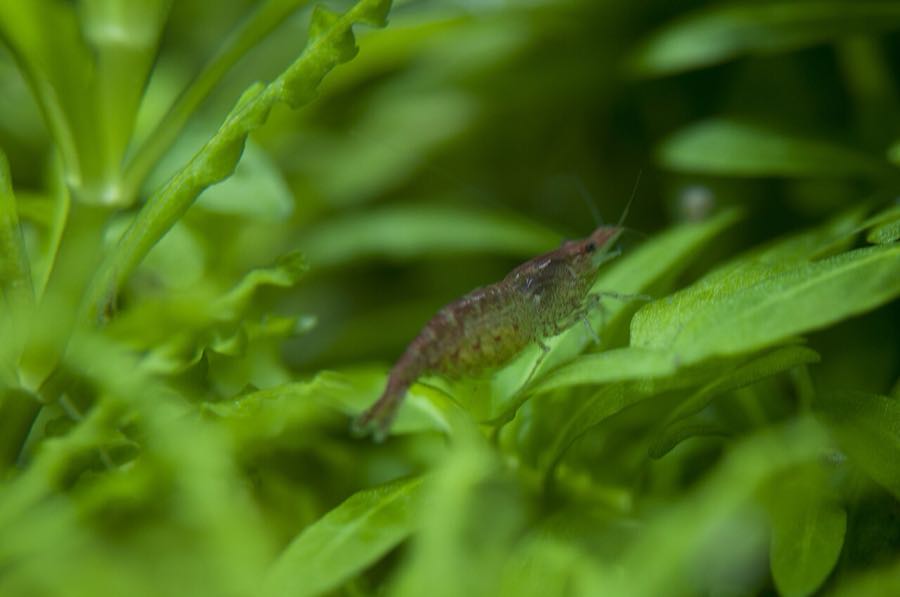
Cherry shrimp tank size
Choose a tank length of at least 30 cm, and give your shrimp a larger aquarium whenever space permits. A larger volume of water changes temperature and chemistry more slowly, which makes maintaining a steady environment simpler for a new keeper.Choose a tank length of at least 12 in, and give your shrimp a larger aquarium whenever space permits. A larger volume of water changes temperature and chemistry more slowly, which makes maintaining a steady environment simpler for a new keeper.[2][4]
Equip the tank with a gentle sponge filter or cover your power filter intake with a fine intake sponge. Tiny shrimp will otherwise get pulled into moving impellers.Equip the tank with a gentle sponge filter or cover your power filter intake with a fine intake sponge. Tiny shrimp will otherwise get pulled into moving impellers.[1][4]
Allow the aquarium to mature thoroughly before stocking your colony. Clean surfaces in newly established tanks lack the biofilm and microscopic growth that provide essential daily grazing.Allow the aquarium to mature thoroughly before stocking your colony. Clean surfaces in newly established tanks lack the biofilm and microscopic growth that provide essential daily grazing.[1][4]
Cherry shrimp water parameters
Maintain stable water conditions within a temperature range of 21–27 °C, pH 6.0–8.0, and general hardness between 5–15 dGH. For daily husbandry, keeping parameters near the centre of these ranges matches common cherry shrimp care standards.Maintain stable water conditions within a temperature range of 70–81 °F, pH 6.0–8.0, and general hardness between 5–15 dGH. For daily husbandry, keeping parameters near the centre of these ranges matches common cherry shrimp care standards.[1][2][4]
Prepare all replacement water carefully, matching temperature and dissolved mineral levels before adding it to the tank. Treat your tap water appropriately to prevent chemical shock and sharp shifts during routine maintenance.Prepare all replacement water carefully, matching temperature and dissolved mineral levels before adding it to the tank. Treat your tap water appropriately to prevent chemical shock and sharp shifts during routine maintenance.[1][4]
Feeding cherry shrimp
In an established planted aquarium, provide supplemental feedings every other day with dedicated shrimp pellets or granules. Dose only what the colony can clean up within two hours, and promptly siphon out any leftover food to safeguard water quality.In an established planted aquarium, provide supplemental feedings every other day with dedicated shrimp pellets or granules. Dose only what the colony can clean up within two hours, and promptly siphon out any leftover food to safeguard water quality.[2][5]
Add variety by offering small slices of blanched courgette, spinach, or cucumber. Place foods in a shallow glass feeding dish so you can clear away uneaten vegetable remains after two hours without disturbing the substrate.Add variety by offering small slices of blanched courgette, spinach, or cucumber. Place foods in a shallow glass feeding dish so you can clear away uneaten vegetable remains after two hours without disturbing the substrate.[2][5][1]
Cherry shrimp behaviour
Adult cherry shrimp reach an adult length of 3–3 cm and typically live for one to two years under aquarium care. Selective breeding has produced distinct colour forms like blue, yellow, and orange, but all share identical baseline habits and care requirements.Adult cherry shrimp reach an adult length of 1–1 in and typically live for one to two years under aquarium care. Selective breeding has produced distinct colour forms like blue, yellow, and orange, but all share identical baseline habits and care requirements.[1][2]
Finding a clear, hollow shell on the substrate indicates normal moulting rather than a dead shrimp. Freshly moulted animals remain soft and vulnerable, often seeking sheltered hideouts for a few days while their new exoskeleton hardens.Finding a clear, hollow shell on the substrate indicates normal moulting rather than a dead shrimp. Freshly moulted animals remain soft and vulnerable, often seeking sheltered hideouts for a few days while their new exoskeleton hardens.[1]
Cherry shrimp tank mates
Non-predatory snails make suitable tank mates because they graze biofilm alongside the colony. Non-predatory snails make suitable tank mates because they graze biofilm alongside the colony. Horned nerite snailsHorned nerite snails and and ramshorn snailsramshorn snails will not hunt adults or juveniles, provided you supply adequate supplementary food and stable mineral levels to support their shells. will not hunt adults or juveniles, provided you supply adequate supplementary food and stable mineral levels to support their shells.[2]
Malaysian trumpet snailsMalaysian trumpet snails and and mystery snailsmystery snails are also peaceful companions. Keep an eye on overall snail reproduction when feeding, and ensure you leave sufficient space and extra rations for the bulkier mystery snails. are also peaceful companions. Keep an eye on overall snail reproduction when feeding, and ensure you leave sufficient space and extra rations for the bulkier mystery snails.[1][2]
Keep cherry shrimp away from predatory fish. Avoid Keep cherry shrimp away from predatory fish. Avoid bettasbettas, which actively hunt small shrimp, as well as , which actively hunt small shrimp, as well as angelfishangelfish and and oscarsoscars, which view small invertebrates as prey., which view small invertebrates as prey.[2][6]
Usually fine together
- African butterfly cichlid
- Agassiz's cory
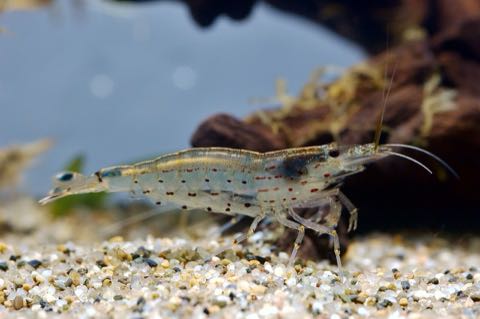 Amano shrimp
- American flagfish
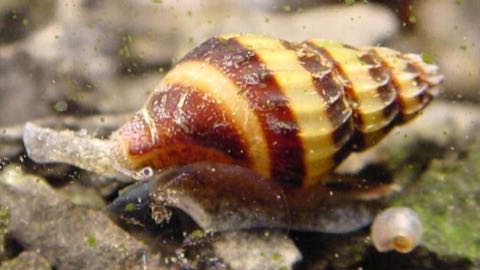 Assassin snail
- Banded gourami
- Bandit cory
- Banjo catfish
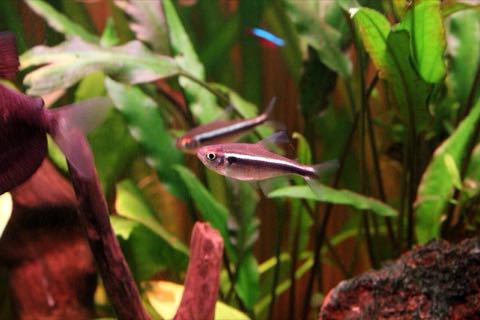 Black neon tetra
- Black phantom tetra
- Black ruby barb
- Blackline rasbora
Avoid with
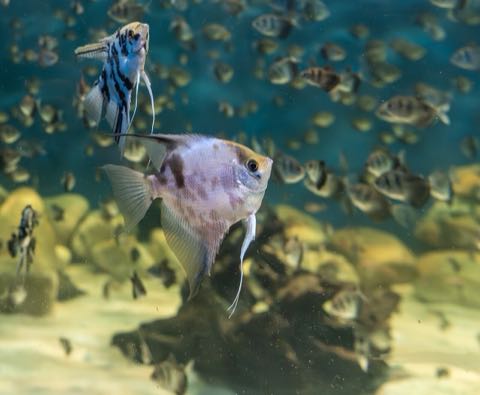 Angelfish
Angelfish may eat Cherry shrimp and their youngAngelfish may eat Cherry shrimp and their young
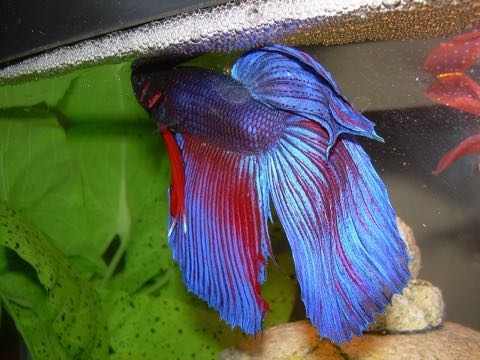 Betta
BettaBetta may eat Cherry shrimp and their youngBetta may eat Cherry shrimp and their young
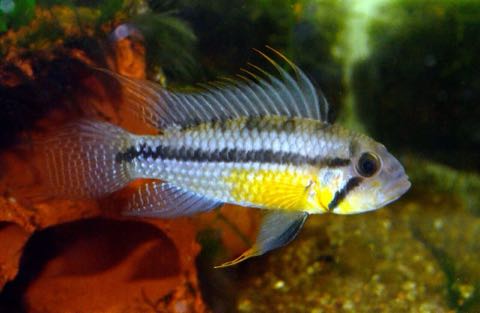 Cockatoo dwarf cichlid
Cockatoo dwarf cichlid may eat Cherry shrimp and their youngCockatoo dwarf cichlid may eat Cherry shrimp and their young
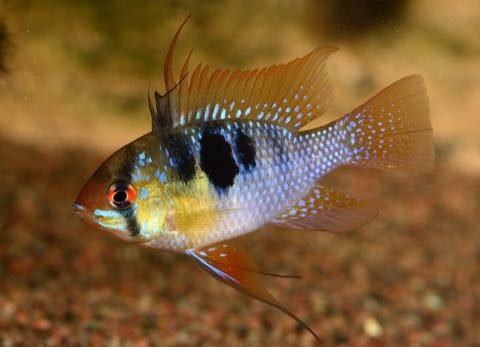 German blue ram
German blue ram may eat Cherry shrimp and their youngGerman blue ram may eat Cherry shrimp and their young
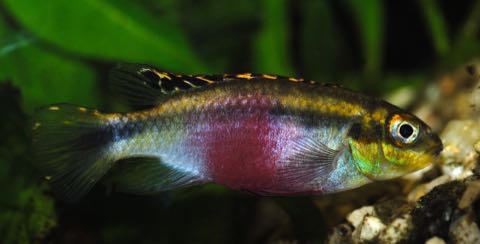 Kribensis
Kribensis may eat Cherry shrimp and their youngKribensis may eat Cherry shrimp and their young
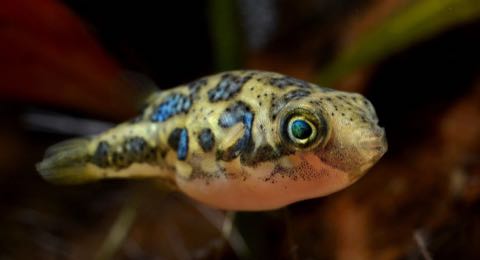 Pea puffer
Pea puffer may eat Cherry shrimp and their youngPea puffer may eat Cherry shrimp and their young
- African clawed frog
African clawed frog may eat Cherry shrimpAfrican clawed frog may eat Cherry shrimp
- Abei puffer
Abei puffer may eat Cherry shrimpAbei puffer may eat Cherry shrimp
- African butterflyfish
African butterflyfish may eat Cherry shrimpAfrican butterflyfish may eat Cherry shrimp
- African knifefish
African knifefish may eat Cherry shrimpAfrican knifefish may eat Cherry shrimp
- African pike
African pike may eat Cherry shrimpAfrican pike may eat Cherry shrimp
- Alligator gar
Alligator gar may eat Cherry shrimpAlligator gar may eat Cherry shrimp
Breeding cherry shrimp
Cherry shrimp reproduce entirely in freshwater without requiring brackish larval stages. Berried females carry their brood attached under the abdomen, regularly fanning the developing eggs with their pleopods to keep them clean and oxygenated.Cherry shrimp reproduce entirely in freshwater without requiring brackish larval stages. Berried females carry their brood attached under the abdomen, regularly fanning the developing eggs with their pleopods to keep them clean and oxygenated.[2][4]
Maintain steady baseline water parameters rather than elevating the water temperature to force faster breeding. While heat accelerates maturation, it can shorten adult lifespan, and newly hatched shrimplets require abundant grazing surfaces and dense plant shelter to survive.Maintain steady baseline water parameters rather than elevating the water temperature to force faster breeding. While heat accelerates maturation, it can shorten adult lifespan, and newly hatched shrimplets require abundant grazing surfaces and dense plant shelter to survive.[4]
Cherry shrimp health problems
Failed moulting occurs when a shrimp is unable to cast off its old exoskeleton, often dying trapped halfway through the shed. This is primarily caused by inadequate dietary minerals or unsuitable general hardness (GH). Test your GH levels, feed mineral-rich foods, and keep water changes consistent to prevent shedding issues.Failed moulting occurs when a shrimp is unable to cast off its old exoskeleton, often dying trapped halfway through the shed. This is primarily caused by inadequate dietary minerals or unsuitable general hardness (GH). Test your GH levels, feed mineral-rich foods, and keep water changes consistent to prevent shedding issues.[1]
Scutariella are small ectosymbionts that present as tiny whitish worms protruding around the shrimp's rostrum between its eyes. They are typically introduced into the aquarium on newly acquired stock, and dense infestations can interfere with the shrimp's breathing organs. Quarantine and visually inspect new arrivals to prevent spreading them.Scutariella are small ectosymbionts that present as tiny whitish worms protruding around the shrimp's rostrum between its eyes. They are typically introduced into the aquarium on newly acquired stock, and dense infestations can interfere with the shrimp's breathing organs. Quarantine and visually inspect new arrivals to prevent spreading them.[1][3]
Vorticella appears as pale, fuzzy colonial growth clinging around the head and gill margins. These ciliates become hazardous when heavy growth physically obstructs respiratory water flow. Prevent outbreaks by keeping the tank clean, siphoning out uneaten food promptly, and isolating suspect newcomers before adding them.Vorticella appears as pale, fuzzy colonial growth clinging around the head and gill margins. These ciliates become hazardous when heavy growth physically obstructs respiratory water flow. Prevent outbreaks by keeping the tank clean, siphoning out uneaten food promptly, and isolating suspect newcomers before adding them.[1][3][5]
Male or female?
Adult females are typically larger, broader in the abdomen, and display deeper colouration than males. In translucent or lighter colour varieties, developing unfertilised eggs form a noticeable yellow patch known as a saddle behind the head before migrating underneath the abdomen.Adult females are typically larger, broader in the abdomen, and display deeper colouration than males. In translucent or lighter colour varieties, developing unfertilised eggs form a noticeable yellow patch known as a saddle behind the head before migrating underneath the abdomen.[1][2]
Questions
Are cherry shrimp easy to take care of?
Yes, provided their aquarium is fully mature and water parameters remain stable within 21–27 °C, pH 6.0–8.0, and 5–15 dGH. Their main requirements are regular biofilm grazing, protected filter intakes, and steady water chemistry.Yes, provided their aquarium is fully mature and water parameters remain stable within 70–81 °F, pH 6.0–8.0, and 5–15 dGH. Their main requirements are regular biofilm grazing, protected filter intakes, and steady water chemistry.[1][4][2]
How many cherry shrimp should be kept together?
Cherry shrimp do not have a mandatory minimum group size, but keeping a group allows them to graze naturally and reproduce entirely in freshwater.Cherry shrimp do not have a mandatory minimum group size, but keeping a group allows them to graze naturally and reproduce entirely in freshwater.[1][4][2]
How can you tell if a cherry shrimp is healthy and settled?
A settled shrimp actively grazes surfaces throughout the day, moults cleanly, and carries developing eggs. Finding complete, empty cast shells indicates normal growth, while soft shrimp will discreetly hide until their new exoskeletons harden.A settled shrimp actively grazes surfaces throughout the day, moults cleanly, and carries developing eggs. Finding complete, empty cast shells indicates normal growth, while soft shrimp will discreetly hide until their new exoskeletons harden.[1][4][2]
Can I keep just one cherry shrimp?
Yes, keeping a single cherry shrimp is possible because they have no obligate schooling requirement. However, a solitary shrimp cannot form a breeding colony.Yes, keeping a single cherry shrimp is possible because they have no obligate schooling requirement. However, a solitary shrimp cannot form a breeding colony.[2][4]
Can I give cucumber to my cherry shrimp?
Yes, blanched cucumber is a suitable supplemental vegetable treat. Offer small pieces in a feeding dish and remove all uneaten portions within two hours to prevent water fouling.Yes, blanched cucumber is a suitable supplemental vegetable treat. Offer small pieces in a feeding dish and remove all uneaten portions within two hours to prevent water fouling.[2][5][1]
Sources
- An introduction to Shrimp — Practical Fishkeeping. Accessed 2026-10-05.
- Red Cherry Shrimp – Detailed Guide: Care, Diet and Breeding — Shrimp and Snail Breeder. Accessed 2026-10-05.
- Epibiont Cohabitation in Freshwater Shrimp Neocaridina davidi with the Description of Two Species New to Science, Cladogonium kumaki sp. nov. and Monodiscus kumaki sp. nov., and Redescription of Scutariella japonica and Holtodrilus truncatus — Animals (MDPI). Accessed 2026-10-05.
- Frequently asked questions on Neocaridina shrimps — Practical Fishkeeping. Accessed 2026-10-05.
- Shrimp Feeding Guide: How Much, How Often, and When to Stop — Shrimp and Snail Breeder. Accessed 2026-10-05.
- How should I care for my Siamese fighting fish? — RSPCA Australia. Accessed 2026-10-05.
Written from the sources above. Not yet reviewed by an aquarist.
Data used by the planner
| Temperature | 21–27 | AqAdvisor (aqadvisor.com), retrieved 2026-10-04 · medium confidence |
|---|---|---|
| pH | 6–8 | AqAdvisor (aqadvisor.com), retrieved 2026-10-04 · medium confidence |
| Hardness (dGH) | 5–15 | AqAdvisor (aqadvisor.com), retrieved 2026-10-04 · medium confidence |
| Origin | Freshwater; exact natural range needs expert review | curated-v0 (needs expert review) · low confidence |
| Beginner friendly | Yes | curated-v0 (needs expert review) · medium confidence |
| Care level | moderate | curated-v0 (needs expert review) · medium confidence |
| Activity | sedentary | curated-v0 (needs expert review) · medium confidence |
| Swimming level | bottom | curated-v0 (needs expert review) · medium confidence |
| Temperament | peaceful | curated-v0 (needs expert review) · medium confidence |
| Nips fins | No | curated-v0 (needs expert review) · medium confidence |
| Long fins | No | curated-v0 (needs expert review) · medium confidence |
| Territorial | No | curated-v0 (needs expert review) · medium confidence |
| Lives in groups | No | curated-v0 (needs expert review) · medium confidence |
| Minimum group | 1 | curated-v0 (needs expert review) · medium confidence |
| Diet | omnivore | curated-v0 (needs expert review) · medium confidence |
| Lifespan (years) | 1–5 | curated-v0 (needs expert review) · medium confidence |
| Months to adult size | 6 | curated-v0 (needs expert review) · low confidence |
| Safe with plants | Yes | curated-v0 (needs expert review) · medium confidence |
| Minimum tank length | 30 | curated-v0 (needs expert review) · medium confidence |