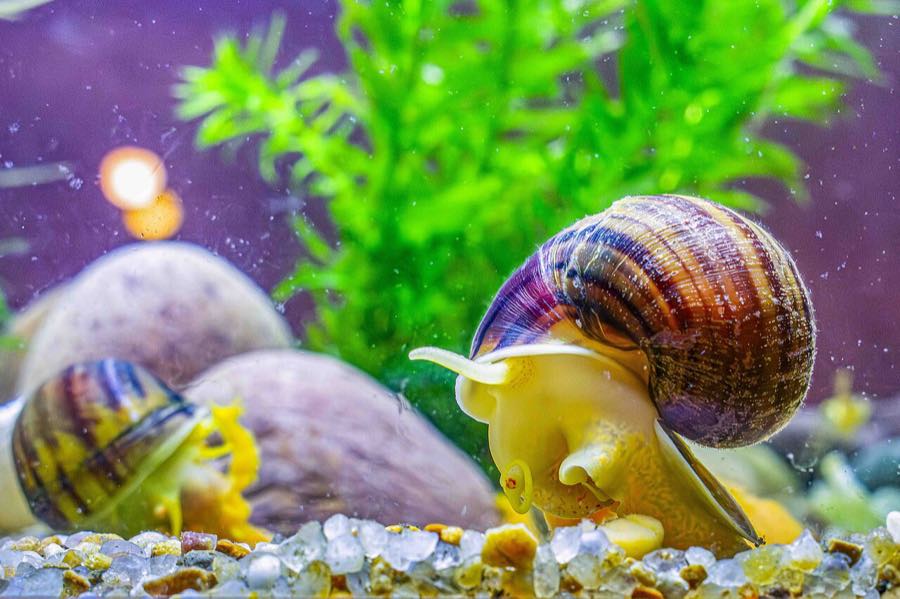
Mystery snail tank size
Pomacea diffusa is native to tropical and subtropical South America, including Bolivia, Peru and the Amazon system of Brazil. In home aquariums, OATA advises approximately 20 L for larger snails such as apple snails, allowing more room when adding fish. The adult length measures up to 6 cm in shell height rather than shell diameter.Pomacea diffusa is native to tropical and subtropical South America, including Bolivia, Peru and the Amazon system of Brazil. In home aquariums, OATA advises approximately 5.3 gal for larger snails such as apple snails, allowing more room when adding fish. The adult length measures up to 2 in in shell height rather than shell diameter.[1][2]
House mystery snails in a covered established aquarium. Snails that escape can dry out or suffer injury from falling onto hard surfaces outside the tank.House mystery snails in a covered established aquarium. Snails that escape can dry out or suffer injury from falling onto hard surfaces outside the tank.[3]
Leave space between the water surface and the aquarium lid instead of filling the tank to the top. The snails require air access to extend their breathing siphon, and females use this emergent surface area when laying egg clutches.Leave space between the water surface and the aquarium lid instead of filling the tank to the top. The snails require air access to extend their breathing siphon, and females use this emergent surface area when laying egg clutches.[5][1][3]
Mystery snail water parameters
Routine shared targets are 20–28 °C and pH 7.0–7.5. Keep water on the hard side with enough calcium, as acidic water dissolves shell material over time.Routine shared targets are 68–82 °F and pH 7.0–7.5. Keep water on the hard side with enough calcium, as acidic water dissolves shell material over time.[3]
Maintain zero ammonia and nitrite in the system. Test water weekly, and replace roughly one quarter of the volume weekly with conditioned water to control waste accumulation.Maintain zero ammonia and nitrite in the system. Test water weekly, and replace roughly one quarter of the volume weekly with conditioned water to control waste accumulation.[2]
Rinse filter media in removed aquarium water instead of chlorinated tap water to protect biological filtration. Stock new animals gradually so filtration adjusts to increased biological waste.Rinse filter media in removed aquarium water instead of chlorinated tap water to protect biological filtration. Stock new animals gradually so filtration adjusts to increased biological waste.[2]
Feeding mystery snails
Supply sinking algae wafers, fish-food tablets or pellets, and soft washed vegetables like blanched zucchini and lettuce to supplement soft algae and plant debris. Pomacea diffusa prefers dead and rotting plants to fresh vegetation, but it occasionally eats softer live plants. Snails can starve in a planted tank without enough supplied food.Supply sinking algae wafers, fish-food tablets or pellets, and soft washed vegetables like blanched zucchini and lettuce to supplement soft algae and plant debris. Pomacea diffusa prefers dead and rotting plants to fresh vegetation, but it occasionally eats softer live plants. Snails can starve in a planted tank without enough supplied food.[3][4]
Feeding schedules vary across sources. The apple-snail care guide describes observing daily intake and supplying that amount every day, reducing portions when activity declines. Alternatively, OATA offers a different supplemental schedule of feeding two or three times weekly.Feeding schedules vary across sources. The apple-snail care guide describes observing daily intake and supplying that amount every day, reducing portions when activity declines. Alternatively, OATA offers a different supplemental schedule of feeding two or three times weekly.[2][4]
Provide at least 30 minutes access to pellets or wafers. Watch food access and avoid excess leftovers that decay and release waste. Offering calcium-fortified foods alongside sufficient minerals in the water supports strong new shell growth.Provide at least 30 minutes access to pellets or wafers. Watch food access and avoid excess leftovers that decay and release waste. Offering calcium-fortified foods alongside sufficient minerals in the water supports strong new shell growth.[2][3]
Mystery snail behaviour
Mystery snails are docile and non-aggressive. When disturbed, they close their operculum to retreat entirely inside their shell. They may graze actively with the aquarium lights on or at night.Mystery snails are docile and non-aggressive. When disturbed, they close their operculum to retreat entirely inside their shell. They may graze actively with the aquarium lights on or at night.[3]
All Pomacea have both lungs and gills; mystery snails extend a siphon to reach atmospheric air at the surface. They can remain inactive for extended periods, so resting or floating alone is not proof of death.All Pomacea have both lungs and gills; mystery snails extend a siphon to reach atmospheric air at the surface. They can remain inactive for extended periods, so resting or floating alone is not proof of death.[1][3][5]
Shell forms can be brown, creamy white or patterned, and body colours vary, though colour alone does not reliably identify an apple-snail species. Sourced lifespan estimates differ: Aquarium Care Basics gives about one year for aquarium mystery snails, whereas USGS describes several years for Pomacea diffusa.Shell forms can be brown, creamy white or patterned, and body colours vary, though colour alone does not reliably identify an apple-snail species. Sourced lifespan estimates differ: Aquarium Care Basics gives about one year for aquarium mystery snails, whereas USGS describes several years for Pomacea diffusa.[3][4][1]
Mystery snail tank mates
Cherry shrimpCherry shrimp and and Amano shrimpAmano shrimp are conditional peaceful companions named for mystery snails. If combining them with are conditional peaceful companions named for mystery snails. If combining them with cherry shrimpcherry shrimp or or Amano shrimpAmano shrimp, provide the shrimp with their own required water conditions, supplemental food and social group sizes., provide the shrimp with their own required water conditions, supplemental food and social group sizes.[3]
Other invertebrates like Other invertebrates like ramshorn snailsramshorn snails and and zebra neriteszebra nerites can share the tank. When keeping can share the tank. When keeping ramshorn snailsramshorn snails or or zebra neriteszebra nerites alongside mystery snails, allow enough grazing surfaces and supplemental food for all of them. alongside mystery snails, allow enough grazing surfaces and supplemental food for all of them.[3]
Avoid predatory cichlids such as Avoid predatory cichlids such as oscarsoscars and and Jack DempseysJack Dempseys. Care guidance identifies clear attack risks from . Care guidance identifies clear attack risks from oscarsoscars and and Jack DempseysJack Dempseys, including damage to snail eyes and tentacles or eating the snail completely., including damage to snail eyes and tentacles or eating the snail completely.[3]
Avoid housing mystery snails with Avoid housing mystery snails with pea pufferspea puffers. Pufferfish such as . Pufferfish such as pea pufferspea puffers can eat snails, making predatory puffers unsuitable tank companions. can eat snails, making predatory puffers unsuitable tank companions.[2]
Usually fine together
- Acei cichlid
- African butterfly cichlid
- African clawed frog
- Agassiz's cory
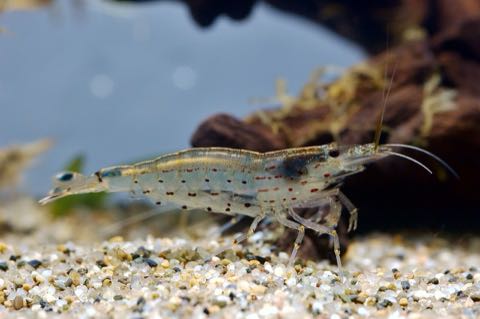 Amano shrimp
- American flagfish
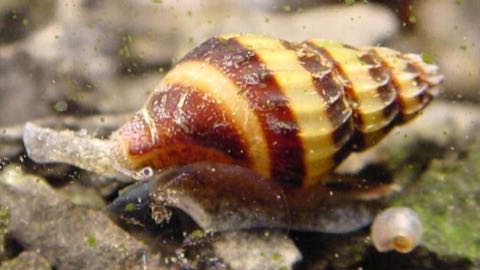 Assassin snail
- Banded gourami
- Bandit cory
- Banjo catfish
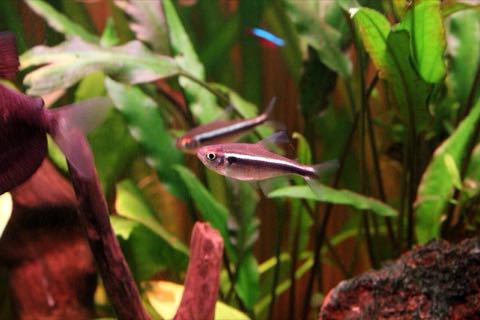 Black neon tetra
- Black phantom tetra
Avoid with
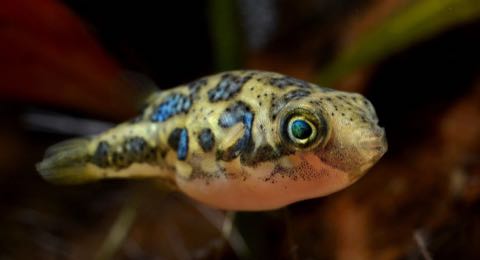 Pea puffer
Pea puffers may bite exposed snail tissue even when the shell is too large to swallowPea puffers may bite exposed snail tissue even when the shell is too large to swallow
- Brilliant rasbora
No shared pH rangeNo shared pH range
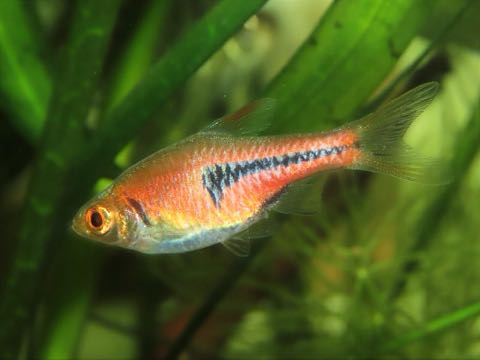 Lambchop rasbora
No shared pH rangeNo shared pH range
- African knifefish
African knifefish may eat Mystery snailAfrican knifefish may eat Mystery snail
- African pike
African pike may eat Mystery snailAfrican pike may eat Mystery snail
- Alligator gar
Alligator gar may eat Mystery snailAlligator gar may eat Mystery snail
- Altum angelfish
No shared water hardness rangeNo shared water hardness range
- Amazon leaffish
No shared water hardness rangeNo shared water hardness range
- Antenna ray
Antenna ray may eat Mystery snailAntenna ray may eat Mystery snail
- Arapaima
Arapaima may eat Mystery snailArapaima may eat Mystery snail
- Asian arowana
Asian arowana may eat Mystery snailAsian arowana may eat Mystery snail
- Asian upside-down catfish
Asian upside down catfish may eat Mystery snailAsian upside down catfish may eat Mystery snail
Breeding mystery snails
Pomacea species have separate sexes rather than reproducing alone. Females crawl above the water surface to place egg clutches on emergent plants or hard aquarium surfaces.Pomacea species have separate sexes rather than reproducing alone. Females crawl above the water surface to place egg clutches on emergent plants or hard aquarium surfaces.[1]
USGS describes Pomacea diffusa egg colour as tan to salmon. After developing above the waterline, the eggs hatch and the young snails drop into the water.USGS describes Pomacea diffusa egg colour as tan to salmon. After developing above the waterline, the eggs hatch and the young snails drop into the water.[1]
Mystery snail health problems
Shell erosion or calcium-poor growth may appear as thin, cracked or excessively pitted shells, and acidic water can dissolve shell material. Provide calcium-rich water and food. Use water tests before changing minerals because rapid pH shifts cause stress.Shell erosion or calcium-poor growth may appear as thin, cracked or excessively pitted shells, and acidic water can dissolve shell material. Provide calcium-rich water and food. Use water tests before changing minerals because rapid pH shifts cause stress.[3]
Copper toxicity may follow exposure to medications or contaminated replacement water. Sudden complete inactivity or attempts to leave after a water change warrant water checks and advice, but these signs do not diagnose copper exposure. Use only invertebrate-safe products.Copper toxicity may follow exposure to medications or contaminated replacement water. Sudden complete inactivity or attempts to leave after a water change warrant water checks and advice, but these signs do not diagnose copper exposure. Use only invertebrate-safe products.[2][4]
Filter-intake injury can trap the head and cause swelling. Fit a sponge prefilter to strong intakes before adding snails. If an intake traps a snail, do not force the animal out.Filter-intake injury can trap the head and cause swelling. Fit a sponge prefilter to strong intakes before adding snails. If an intake traps a snail, do not force the animal out.[3]
New tank syndrome can cause harmful ammonia or nitrite buildup, leading to illness or death. Test weekly and maintain zero readings while adding livestock gradually. Changed activity, colour or appetite warrant checking water and getting advice.New tank syndrome can cause harmful ammonia or nitrite buildup, leading to illness or death. Test weekly and maintain zero readings while adding livestock gradually. Changed activity, colour or appetite warrant checking water and getting advice.[2]
Male or female?
The sexes are separate rather than hermaphroditic. Male apple snails have a penis sheath in the upper right mantle cavity near the shell edge, though recognising this organ requires experience.The sexes are separate rather than hermaphroditic. Male apple snails have a penis sheath in the upper right mantle cavity near the shell edge, though recognising this organ requires experience.[1][5]
Questions
Do mystery snails eat live aquarium plants?
Pomacea diffusa prefers dead and rotting plants to fresh vegetation, but it occasionally eats softer live plants. Snails can starve in a planted tank without enough supplied food.Pomacea diffusa prefers dead and rotting plants to fresh vegetation, but it occasionally eats softer live plants. Snails can starve in a planted tank without enough supplied food.[4]
Why does my mystery snail use a breathing tube?
Mystery snails have both lungs and gills. They extend a siphon to reach atmospheric air at the surface without leaving the water completely.Mystery snails have both lungs and gills. They extend a siphon to reach atmospheric air at the surface without leaving the water completely.[1][3]
How long do mystery snails live?
Reported captive lifespans differ. Aquarium Care Basics gives about one year for aquarium mystery snails, whereas USGS describes a lifespan of several years for Pomacea diffusa.Reported captive lifespans differ. Aquarium Care Basics gives about one year for aquarium mystery snails, whereas USGS describes a lifespan of several years for Pomacea diffusa.[1][3]
Can mystery snails reproduce alone?
No, mystery snails cannot reproduce alone. Pomacea species have separate sexes rather than being hermaphrodites, so breeding requires both a male and a female.No, mystery snails cannot reproduce alone. Pomacea species have separate sexes rather than being hermaphrodites, so breeding requires both a male and a female.[1][5]
Why is my mystery snail shell pitted?
Pitted shells indicate shell erosion or calcium-poor growth. Acidic water dissolves shell material, so snails require hard, calcium-rich water and mineral-fortified food to support strong new growth.Pitted shells indicate shell erosion or calcium-poor growth. Acidic water dissolves shell material, so snails require hard, calcium-rich water and mineral-fortified food to support strong new growth.[3]
Can mystery snails live with cherry shrimp?
Yes, cherry shrimp are named peaceful companions for mystery snails. Ensure you provide for the shrimp's individual feeding, group size and water requirements alongside the snails.Yes, cherry shrimp are named peaceful companions for mystery snails. Ensure you provide for the shrimp's individual feeding, group size and water requirements alongside the snails.[3]
Sources
- spike-topped applesnail (Pomacea diffusa) - Species Profile — U.S. Geological Survey. Accessed 2026-10-05.
- How to look after freshwater shrimp and snails — Ornamental Aquatic Trade Association. Accessed 2026-10-05.
- Mystery Snail Care, Diet, Feeding & Shell Size – Video — Aquarium Care Basics. Accessed 2026-10-05.
- How to take care of apple snails: food, housing and breeding. — The Apple Snail Website. Accessed 2026-10-05.
- Frequently asked questions about apple snails — The Apple Snail Website. Accessed 2026-10-05.
Written from the sources above. Not yet reviewed by an aquarist.
Data used by the planner
| Temperature | 16–30 | AqAdvisor (aqadvisor.com), retrieved 2026-10-04 · medium confidence |
|---|---|---|
| pH | 7–9 | AqAdvisor (aqadvisor.com), retrieved 2026-10-04 · medium confidence |
| Hardness (dGH) | 10–30 | AqAdvisor (aqadvisor.com), retrieved 2026-10-04 · medium confidence |
| Origin | Freshwater; exact natural range needs expert review | curated-v0 (needs expert review) · low confidence |
| Beginner friendly | Yes | curated-v0 (needs expert review) · medium confidence |
| Care level | moderate | curated-v0 (needs expert review) · medium confidence |
| Activity | sedentary | curated-v0 (needs expert review) · medium confidence |
| Swimming level | bottom | curated-v0 (needs expert review) · medium confidence |
| Temperament | peaceful | curated-v0 (needs expert review) · medium confidence |
| Nips fins | No | curated-v0 (needs expert review) · medium confidence |
| Long fins | No | curated-v0 (needs expert review) · medium confidence |
| Territorial | No | curated-v0 (needs expert review) · medium confidence |
| Lives in groups | No | curated-v0 (needs expert review) · medium confidence |
| Minimum group | 1 | curated-v0 (needs expert review) · medium confidence |
| Diet | omnivore | curated-v0 (needs expert review) · medium confidence |
| Lifespan (years) | 1–5 | curated-v0 (needs expert review) · medium confidence |
| Months to adult size | 6 | curated-v0 (needs expert review) · low confidence |
| Safe with plants | Yes | curated-v0 (needs expert review) · medium confidence |
| Minimum tank length | 30 | curated-v0 (needs expert review) · medium confidence |