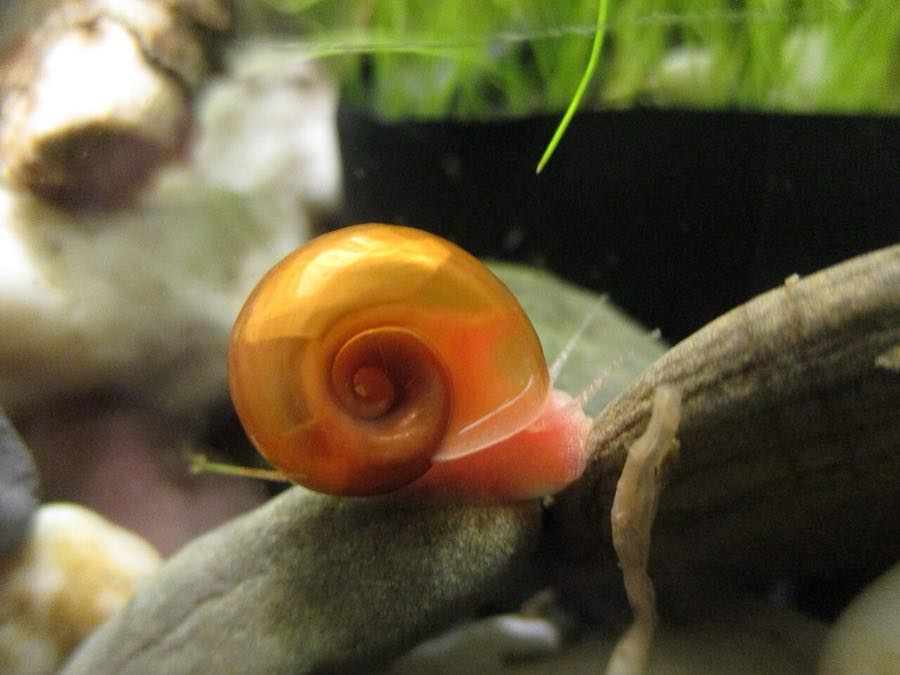
Ramshorn snail tank size
Planorbella duryi is native to peninsular Florida, ranging north and west as far as Taylor County. For housing small snails, OATA recommends an aquarium of at least 10 L, noting that keepers must provide more room when adding fish. The planner minimum tank length is 30 cm, which serves as a provisional planner floor rather than a measured source threshold. Keepers should also provide filtration even in small aquariums.Planorbella duryi is native to peninsular Florida, ranging north and west as far as Taylor County. For housing small snails, OATA recommends an aquarium of at least 2.6 gal, noting that keepers must provide more room when adding fish. The planner minimum tank length is 12 in, which serves as a provisional planner floor rather than a measured source threshold. Keepers should also provide filtration even in small aquariums.[1][2]
Set up the aquarium using gravel or sand alongside plants and cover, and fit the tank with a lid to help prevent escape. As young ramshorns grow toward their maximum shell adult length of 2.5 cm, their shells change visibly. Young ramshorns have translucent shells that become thicker and less transparent as they develop.Set up the aquarium using gravel or sand alongside plants and cover, and fit the tank with a lid to help prevent escape. As young ramshorns grow toward their maximum shell adult length of 1 in, their shells change visibly. Young ramshorns have translucent shells that become thicker and less transparent as they develop.[2][3][4]
Ramshorn snail water parameters
Routine overlap values between the mixed-species ramshorn guide and this record identify a temperature of 21–25 °C, a pH of 7–8, and a general hardness of 10–15 dGH. Introduce snails into the aquarium only when ammonia and nitrite test at zero. Add livestock gradually so biological filtration can accommodate the additional waste produced by new tank inhabitants.Routine overlap values between the mixed-species ramshorn guide and this record identify a temperature of 70–77 °F, a pH of 7–8, and a general hardness of 10–15 dGH. Introduce snails into the aquarium only when ammonia and nitrite test at zero. Add livestock gradually so biological filtration can accommodate the additional waste produced by new tank inhabitants.[4][2]
Test aquarium water at least weekly to track conditions. Replace roughly one quarter of the water weekly with conditioned water to keep the environment stable. When performing regular filter cleaning, rinse the filter media in water removed from the tank during maintenance rather than in chlorinated tap water.Test aquarium water at least weekly to track conditions. Replace roughly one quarter of the water weekly with conditioned water to keep the environment stable. When performing regular filter cleaning, rinse the filter media in water removed from the tank during maintenance rather than in chlorinated tap water.[2]
Feeding ramshorn snails
Feed ramshorn snails two or three times per week with supplemental items, leaving food in the aquarium for at least 30 minutes so snails can reach it. Include commercial food fortified with calcium for shell growth, and avoid overfeeding and accumulating decaying leftovers. Outside these scheduled feedings, ramshorns graze soft algae, decaying plant matter, and uneaten food across glass, filter intakes, decor, and plant leaves.Feed ramshorn snails two or three times per week with supplemental items, leaving food in the aquarium for at least 30 minutes so snails can reach it. Include commercial food fortified with calcium for shell growth, and avoid overfeeding and accumulating decaying leftovers. Outside these scheduled feedings, ramshorns graze soft algae, decaying plant matter, and uneaten food across glass, filter intakes, decor, and plant leaves.[2][3][4]
Ramshorn snail behaviour
Ramshorns are non-aggressive grazers that lack an operculum to close their shell opening when retreating. Snails are not social creatures and do not need a shoal, though solitary habits do not imply compatibility with predators.Ramshorns are non-aggressive grazers that lack an operculum to close their shell opening when retreating. Snails are not social creatures and do not need a shoal, though solitary habits do not imply compatibility with predators.[3][2]
Ramshorns may eat delicate live plants, with feeding levels and plant hardiness affecting the overall risk. Hardy Anubias leaves provide a more robust choice in planted setups, though feeding does not prevent all plant damage.Ramshorns may eat delicate live plants, with feeding levels and plant hardiness affecting the overall risk. Hardy Anubias leaves provide a more robust choice in planted setups, though feeding does not prevent all plant damage.[3]
Trade forms include common brown, red, pink, and blue ramshorns. Because several ramshorn species are sold under similar labels, a trade colour name does not verify species identity. Lifespan is variable: Aquarium Care Basics notes about one year for healthy ramshorns, whereas the mixed-species breeder guide gives one to three years.Trade forms include common brown, red, pink, and blue ramshorns. Because several ramshorn species are sold under similar labels, a trade colour name does not verify species identity. Lifespan is variable: Aquarium Care Basics notes about one year for healthy ramshorns, whereas the mixed-species breeder guide gives one to three years.[3][4]
Ramshorn snail tank mates
Guidance notes that Guidance notes that cherry shrimpcherry shrimp and and Amano shrimpAmano shrimp can work with ramshorns. When keeping them together, meet each species' own water, food, and space requirements rather than assuming the snail aquarium is sufficient for both. can work with ramshorns. When keeping them together, meet each species' own water, food, and space requirements rather than assuming the snail aquarium is sufficient for both.[3]
Guidance also indicates that Guidance also indicates that mystery snailsmystery snails and and zebra neriteszebra nerites can work with ramshorns. If keeping these snail groups together, allow enough grazing surfaces and supplemental food so all inhabitants receive adequate nourishment. can work with ramshorns. If keeping these snail groups together, allow enough grazing surfaces and supplemental food so all inhabitants receive adequate nourishment.[3]
Avoid housing ramshorns with known snail predators. OATA warns that pufferfish eat snails, making Avoid housing ramshorns with known snail predators. OATA warns that pufferfish eat snails, making pea pufferspea puffers an unsuitable choice. OATA also advises keeping snails away from snail-eating loaches, which rules out an unsuitable choice. OATA also advises keeping snails away from snail-eating loaches, which rules out clown loachesclown loaches. In addition, avoid . In addition, avoid assassin snailsassassin snails, which prey on other snail species and are kept to reduce excessive snail populations., which prey on other snail species and are kept to reduce excessive snail populations.[2]
Usually fine together
- Acei cichlid
- African butterfly cichlid
- Agassiz's cory
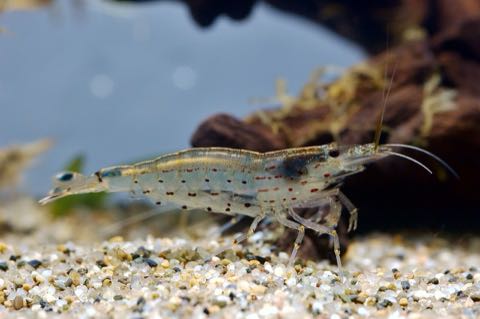 Amano shrimp
- American flagfish
- Banded gourami
- Bandit cory
- Banjo catfish
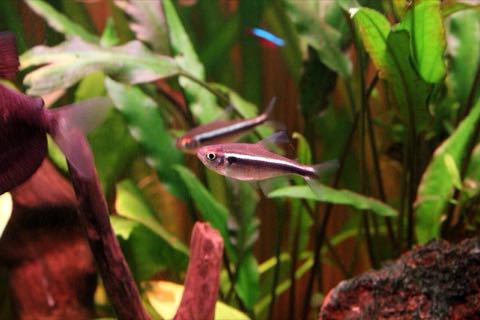 Black neon tetra
- Black phantom tetra
- Black ruby barb
- Bleeding heart tetra
Avoid with
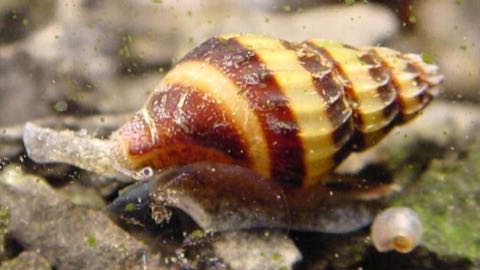 Assassin snail
Assassin snails prey on small ramshorn snailsAssassin snails prey on small ramshorn snails
- African clawed frog
African clawed frog may eat Ramshorn snailAfrican clawed frog may eat Ramshorn snail
- Brilliant rasbora
No shared pH rangeNo shared pH range
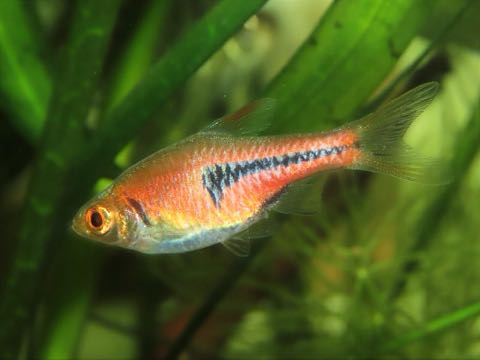 Lambchop rasbora
No shared pH rangeNo shared pH range
- Abei puffer
Abei puffer may eat Ramshorn snailAbei puffer may eat Ramshorn snail
- African butterflyfish
African butterflyfish may eat Ramshorn snailAfrican butterflyfish may eat Ramshorn snail
- African knifefish
African knifefish may eat Ramshorn snailAfrican knifefish may eat Ramshorn snail
- African pike
African pike may eat Ramshorn snailAfrican pike may eat Ramshorn snail
- Alligator gar
Alligator gar may eat Ramshorn snailAlligator gar may eat Ramshorn snail
- Altum angelfish
No shared water hardness rangeNo shared water hardness range
- Amazon leaffish
No shared water hardness rangeNo shared water hardness range
- Amazon toadfish
Amazon toadfish may eat Ramshorn snailAmazon toadfish may eat Ramshorn snail
Breeding ramshorn snails
Ramshorns lay clear gelatinous egg clusters on aquarium glass and other hard surfaces. Each clutch contains distinct tiny developing eggs visible inside the protective mass.Ramshorns lay clear gelatinous egg clusters on aquarium glass and other hard surfaces. Each clutch contains distinct tiny developing eggs visible inside the protective mass.[3]
Reproduction can be rapid in home aquariums. Greater food availability encourages more reproduction under otherwise similar conditions. Controlling excess food helps limit population growth across the aquarium.Reproduction can be rapid in home aquariums. Greater food availability encourages more reproduction under otherwise similar conditions. Controlling excess food helps limit population growth across the aquarium.[3]
Ramshorn snail health problems
Calcium-poor shell growth can show thinner shells and small ridge-like cracks. Provide a balanced diet including calcium-fortified food to support shell development, but do not expect existing cracks to be repaired by dietary supplementation.Calcium-poor shell growth can show thinner shells and small ridge-like cracks. Provide a balanced diet including calcium-fortified food to support shell development, but do not expect existing cracks to be repaired by dietary supplementation.[3]
Copper toxicity represents a serious risk for freshwater snails, including exposure from common aquarium treatments. Always check that products are safe for invertebrates before using them in the tank.Copper toxicity represents a serious risk for freshwater snails, including exposure from common aquarium treatments. Always check that products are safe for invertebrates before using them in the tank.[2]
Ammonia and nitrite accumulation can make snails ill or kill them when livestock stocking exceeds biological filtration capacity. Maintain zero readings for ammonia and nitrite, test water at least weekly, and stock livestock gradually to reduce the risk of new-tank syndrome.Ammonia and nitrite accumulation can make snails ill or kill them when livestock stocking exceeds biological filtration capacity. Maintain zero readings for ammonia and nitrite, test water at least weekly, and stock livestock gradually to reduce the risk of new-tank syndrome.[2]
Changes in activity, colour, or appetite and shell damage are general signs of trouble that warrant checking water quality and seeking advice. In addition, dead snails decay and can raise ammonia levels, so remove confirmed dead inhabitants promptly. Keep in mind that a resting, motionless snail alone is not proof of death.Changes in activity, colour, or appetite and shell damage are general signs of trouble that warrant checking water quality and seeking advice. In addition, dead snails decay and can raise ammonia levels, so remove confirmed dead inhabitants promptly. Keep in mind that a resting, motionless snail alone is not proof of death.[2][3]
Questions
Do ramshorn snails eat live plants?
Ramshorns may eat delicate live plants, with feeding amounts and plant hardiness affecting the risk. Hardy Anubias leaves are a more robust choice, though regular feeding does not prevent all plant damage.Ramshorns may eat delicate live plants, with feeding amounts and plant hardiness affecting the risk. Hardy Anubias leaves are a more robust choice, though regular feeding does not prevent all plant damage.[3]
How long do ramshorn snails live?
Lifespans vary across published sources. Aquarium Care Basics notes about one year for healthy ramshorns, while the mixed-species breeder guide gives one to three years for ramshorns collectively.Lifespans vary across published sources. Aquarium Care Basics notes about one year for healthy ramshorns, while the mixed-species breeder guide gives one to three years for ramshorns collectively.[3][4]
How often should I feed ramshorn snails?
Provide supplemental feedings two or three times per week using algae wafers, commercial shrimp-and-snail pellets, or small vegetable portions. Leave food in place for at least 30 minutes so snails have time to reach it.Provide supplemental feedings two or three times per week using algae wafers, commercial shrimp-and-snail pellets, or small vegetable portions. Leave food in place for at least 30 minutes so snails have time to reach it.[2][3][4]
Why is my ramshorn snail shell cracking?
Calcium-poor shell growth can show thinner shells and small ridge-like cracks. Feed a balanced diet including calcium-fortified commercial food to support shell development, though supplementation will not repair existing cracks.Calcium-poor shell growth can show thinner shells and small ridge-like cracks. Feed a balanced diet including calcium-fortified commercial food to support shell development, though supplementation will not repair existing cracks.[3]
Can ramshorn snails live with cherry shrimp?
Cherry shrimp can work with ramshorns under proper conditions. To keep them together, meet the shrimp's own water, food, and space requirements rather than assuming the snail aquarium is sufficient for both.Cherry shrimp can work with ramshorns under proper conditions. To keep them together, meet the shrimp's own water, food, and space requirements rather than assuming the snail aquarium is sufficient for both.[3]
Are ramshorn snails male or female?
Ramshorns are hermaphrodites rather than separate male and female individuals. They do not possess external male-versus-female traits for selecting breeding groups.Ramshorns are hermaphrodites rather than separate male and female individuals. They do not possess external male-versus-female traits for selecting breeding groups.[4]
Sources
- Seminole rams-horn (Planorbella duryi) - Species Profile — U.S. Geological Survey. Accessed 2026-10-05.
- How to look after freshwater shrimp and snails — Ornamental Aquatic Trade Association. Accessed 2026-10-05.
- Ramshorn Snail Care, Size, Food, Reproduction, Lifespan — Aquarium Care Basics. Accessed 2026-10-05.
- Ramshorn Snails – Detailed Guide: Care, Diet and Breeding — Shrimp and Snail Breeder. Accessed 2026-10-05.
Written from the sources above. Not yet reviewed by an aquarist.
Data used by the planner
| Temperature | 16–30 | AqAdvisor (aqadvisor.com), retrieved 2026-10-04 · medium confidence |
|---|---|---|
| pH | 7–9 | AqAdvisor (aqadvisor.com), retrieved 2026-10-04 · medium confidence |
| Hardness (dGH) | 10–30 | AqAdvisor (aqadvisor.com), retrieved 2026-10-04 · medium confidence |
| Origin | Freshwater; exact natural range needs expert review | curated-v0 (needs expert review) · low confidence |
| Beginner friendly | Yes | curated-v0 (needs expert review) · medium confidence |
| Care level | moderate | curated-v0 (needs expert review) · medium confidence |
| Activity | sedentary | curated-v0 (needs expert review) · medium confidence |
| Swimming level | bottom | curated-v0 (needs expert review) · medium confidence |
| Temperament | peaceful | curated-v0 (needs expert review) · medium confidence |
| Nips fins | No | curated-v0 (needs expert review) · medium confidence |
| Long fins | No | curated-v0 (needs expert review) · medium confidence |
| Territorial | No | curated-v0 (needs expert review) · medium confidence |
| Lives in groups | No | curated-v0 (needs expert review) · medium confidence |
| Minimum group | 1 | curated-v0 (needs expert review) · medium confidence |
| Diet | omnivore | curated-v0 (needs expert review) · medium confidence |
| Lifespan (years) | 1–5 | curated-v0 (needs expert review) · medium confidence |
| Months to adult size | 6 | curated-v0 (needs expert review) · low confidence |
| Safe with plants | Yes | curated-v0 (needs expert review) · medium confidence |
| Minimum tank length | 30 | curated-v0 (needs expert review) · medium confidence |