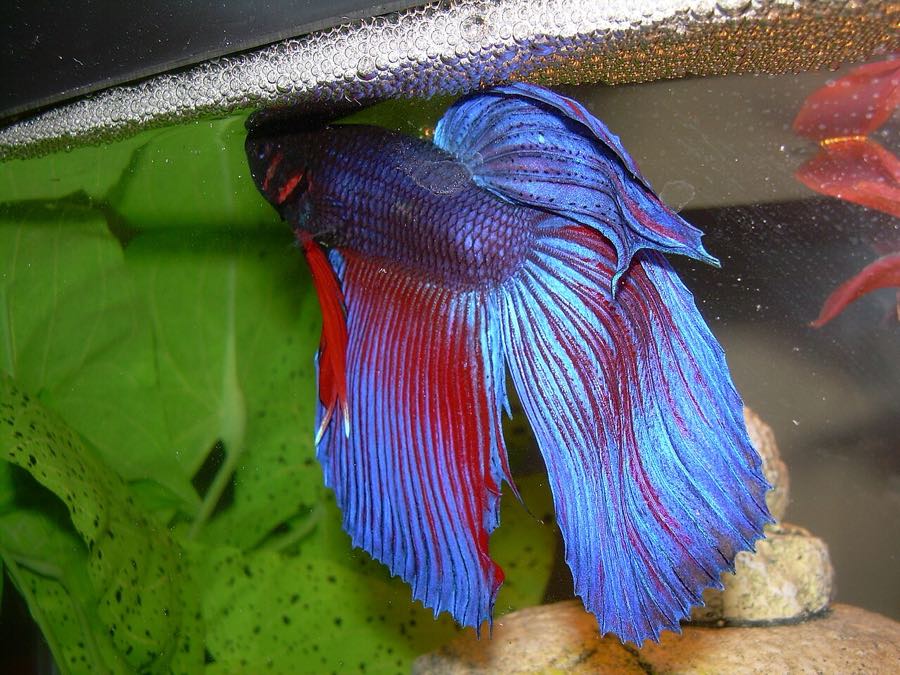
Betta tank size
Choose an aquarium with a tank length of at least 40 cm for a single betta. Seriously Fish recommends a longer tank base of 45 cm, which leaves extra room for heating equipment, filtration, and dense plant cover.Choose an aquarium with a tank length of at least 16 in for a single betta. Seriously Fish recommends a longer tank base of 18 in, which leaves extra room for heating equipment, filtration, and dense plant cover.[1][2]
Always fit a secure lid and leave an open air gap above the water surface. Bettas jump readily and rely on their labyrinth organ to breathe humid air directly from the surface alongside gill respiration.Always fit a secure lid and leave an open air gap above the water surface. Bettas jump readily and rely on their labyrinth organ to breathe humid air directly from the surface alongside gill respiration.[1][2]
Betta water parameters
Keep the aquarium temperature steadily at 24–26 °C. Install a reliable thermostatic heater to prevent chilling and verify the setting using a separate thermometer placed inside the tank.Keep the aquarium temperature steadily at 75–79 °F. Install a reliable thermostatic heater to prevent chilling and verify the setting using a separate thermometer placed inside the tank.[1][2]
Maintain a pH between 6.0 and 8.0 for domestic ornamental strains. Fully cycle your biological filter before introducing the fish, and test the water regularly so ammonia and nitrite remain completely undetectable.Maintain a pH between 6.0 and 8.0 for domestic ornamental strains. Fully cycle your biological filter before introducing the fish, and test the water regularly so ammonia and nitrite remain completely undetectable.[1][2][4]
Feeding bettas
Feed an adult betta once per day, offering only what it can consume in under two minutes. Use small, high-protein betta pellets or granules as the daily staple food.Feed an adult betta once per day, offering only what it can consume in under two minutes. Use small, high-protein betta pellets or granules as the daily staple food.[2]
Wild bettas feed on insects and small invertebrates, so captive fish thrive when provided animal-rich meals. Offer thawed brine shrimp or daphnia periodically for variety rather than expecting them to survive on plant material or submerged roots.Wild bettas feed on insects and small invertebrates, so captive fish thrive when provided animal-rich meals. Offer thawed brine shrimp or daphnia periodically for variety rather than expecting them to survive on plant material or submerged roots.[2][1]
Betta behaviour
House male bettas individually in their own tanks. Never house two males together, and avoid adding a female companion to a male's home, as territorial displays escalate quickly into severe physical damage.House male bettas individually in their own tanks. Never house two males together, and avoid adding a female companion to a male's home, as territorial displays escalate quickly into severe physical damage.[1][2]
Expect a mature adult length around 4.8 cm, though larger individuals reach an adult length of 5.6 cm. Captive strains come in diverse shapes such as veiltails, crowntails, halfmoons, and short-finned plakats, with an average lifespan of 3–4 years.Expect a mature adult length around 1.9 in, though larger individuals reach an adult length of 2.2 in. Captive strains come in diverse shapes such as veiltails, crowntails, halfmoons, and short-finned plakats, with an average lifespan of 3–4 years.[1][3][7][2]
Betta tank mates
Peaceful bottom dwellers make reliable tank mates when given adequate space. Peaceful bottom dwellers make reliable tank mates when given adequate space. Bronze corydorasBronze corydoras and and harlequin rasborasharlequin rasboras behave placidly, but both require their own social shoals and a tank significantly larger than a lone betta needs. behave placidly, but both require their own social shoals and a tank significantly larger than a lone betta needs. Kuhli loachesKuhli loaches also stay near the floor if you provide secure hiding spots and target-feed them directly. also stay near the floor if you provide secure hiding spots and target-feed them directly.[1][2][7][3]
A full shoal of A full shoal of neon tetrasneon tetras can share a larger display, but watch them carefully for fin nipping. Some individual bettas also turn aggressive toward brightly coloured midwater tank mates, making ongoing observation vital. can share a larger display, but watch them carefully for fin nipping. Some individual bettas also turn aggressive toward brightly coloured midwater tank mates, making ongoing observation vital.[1][2][3]
Avoid boisterous fin nippers such as Avoid boisterous fin nippers such as tiger barbstiger barbs, which shred ornamental fins. Never house a betta with , which shred ornamental fins. Never house a betta with guppiesguppies, because their colourful flowing tails provoke aggressive territorial attacks. Small invertebrates like , because their colourful flowing tails provoke aggressive territorial attacks. Small invertebrates like cherry shrimpcherry shrimp should also be avoided, as bettas actively hunt and eat them. should also be avoided, as bettas actively hunt and eat them.[1][2][7]
Usually fine together
- African butterfly cichlid
- Agassiz's cory
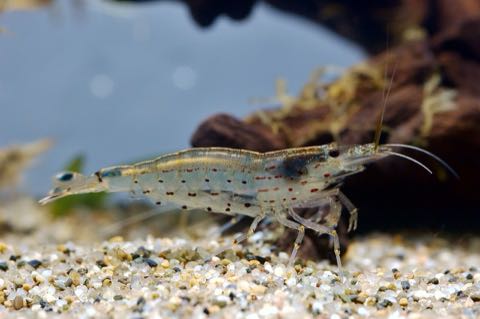 Amano shrimp
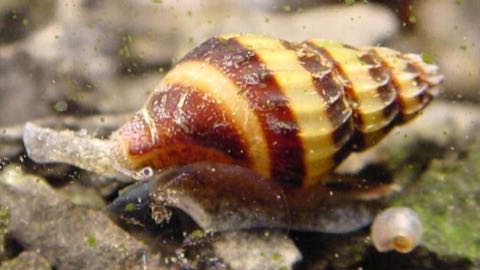 Assassin snail
- Banded gourami
- Bandit cory
- Banjo catfish
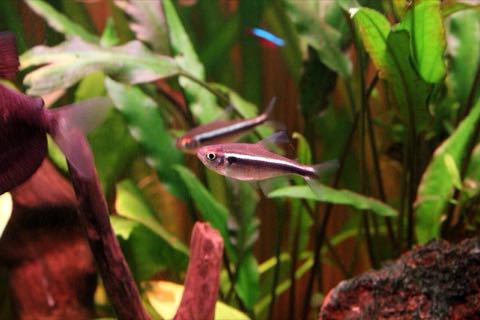 Black neon tetra
- Black phantom tetra
- Black ruby barb
- Bleeding heart tetra
- Blood parrot cichlid
Avoid with
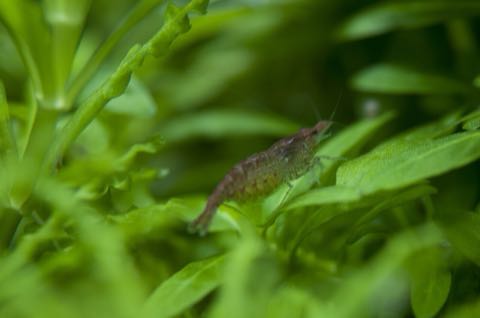 Cherry shrimp
Betta may eat Cherry shrimp and their youngBetta may eat Cherry shrimp and their young
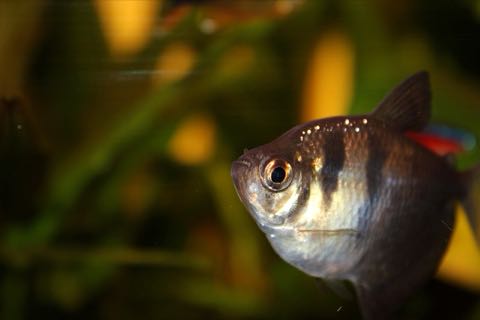 Black skirt tetra
Black skirt tetra may nip the long fins of BettaBlack skirt tetra may nip the long fins of Betta
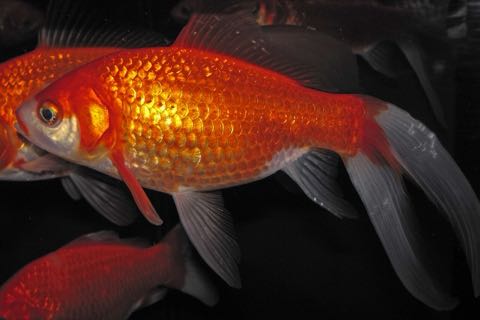 Common goldfish
Check Betta with Common goldfishCheck Betta with Common goldfish
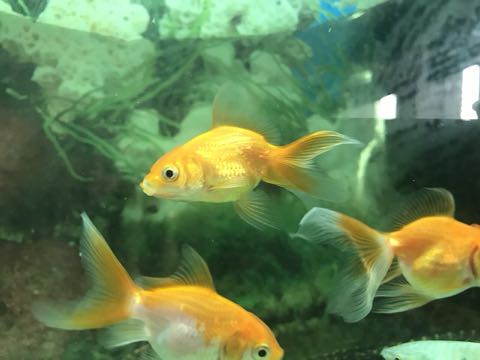 Fancy goldfish
Check Betta with Fancy goldfishCheck Betta with Fancy goldfish
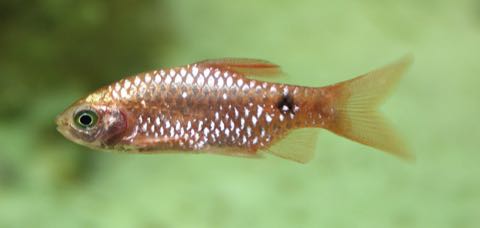 Rosy barb
Rosy barb may nip the long fins of BettaRosy barb may nip the long fins of Betta
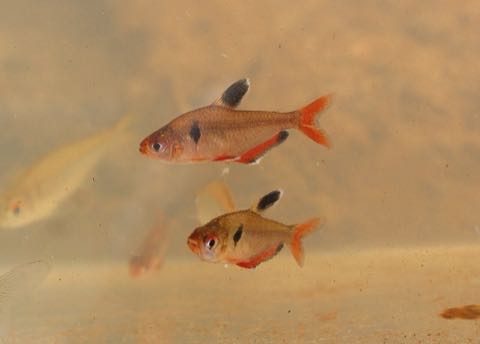 Serpae tetra
Serpae tetra may nip the long fins of BettaSerpae tetra may nip the long fins of Betta
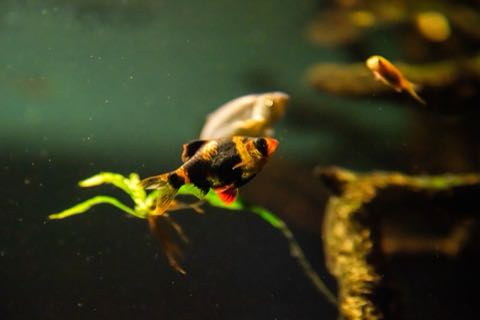 Tiger barb
Tiger barbs nip a betta's long finsTiger barbs nip a betta's long fins
- American flagfish
American flagfish may nip BettaAmerican flagfish may nip Betta
- Blind cave tetra
Blind cave tetra may nip BettaBlind cave tetra may nip Betta
- Buenos Aires tetra
Buenos Aires tetra may nip BettaBuenos Aires tetra may nip Betta
- Butterfly splitfin
Butterfly splitfin may nip BettaButterfly splitfin may nip Betta
- Chinese barb
Chinese barb may nip BettaChinese barb may nip Betta
Breeding bettas
A male betta frequently builds a floating bubble nest at the water surface, but this natural instinct does not mean he needs a mate. In breeding setups, the male constructs the nest and protects the fertilised eggs alone after spawning.A male betta frequently builds a floating bubble nest at the water surface, but this natural instinct does not mean he needs a mate. In breeding setups, the male constructs the nest and protects the fertilised eggs alone after spawning.[1][2]
Betta health problems
Fin rot reveals itself through ragged, deteriorating fins, sometimes displaying red streaks along the affected edges. Bacterial infections usually stem from degraded water parameters or sustained stress. Test your water immediately, correct conditions, and eliminate any aggressive tank mates causing physical damage.Fin rot reveals itself through ragged, deteriorating fins, sometimes displaying red streaks along the affected edges. Bacterial infections usually stem from degraded water parameters or sustained stress. Test your water immediately, correct conditions, and eliminate any aggressive tank mates causing physical damage.[5]
Ich, or white spot disease, produces distinct white salt-like dots across the body and fins. Diseased fish often breathe heavily or flick against hard surfaces. This condition is caused by an external parasite introduced on new fish, making quarantine and clean aquarium equipment essential.Ich, or white spot disease, produces distinct white salt-like dots across the body and fins. Diseased fish often breathe heavily or flick against hard surfaces. This condition is caused by an external parasite introduced on new fish, making quarantine and clean aquarium equipment essential.[5][6]
Velvet presents as a fine yellowish or golden dust across the scales, contrasting with the larger solitary dots of white spot. Because velvet is a parasitic condition, quarantine incoming fish to prevent transmission. Avoid diagnosing velvet solely by torchlight, as healthy iridescent scales naturally shine brightly under direct light.Velvet presents as a fine yellowish or golden dust across the scales, contrasting with the larger solitary dots of white spot. Because velvet is a parasitic condition, quarantine incoming fish to prevent transmission. Avoid diagnosing velvet solely by torchlight, as healthy iridescent scales naturally shine brightly under direct light.[5]
Male or female?
Male bettas generally display richer coloration and dramatically longer finnage than females. However, short-finned male plakat strains look remarkably similar to females. Ask your supplier to verify the sex rather than guessing from tail dimensions alone.Male bettas generally display richer coloration and dramatically longer finnage than females. However, short-finned male plakat strains look remarkably similar to females. Ask your supplier to verify the sex rather than guessing from tail dimensions alone.[1][3]
Questions
How to care for betta fish for beginners?
Provide a heated, cycled tank at least 40 cm long with a secure lid and an air gap. Keep the water at 24–26 °C and feed animal-based pellets once daily.Provide a heated, cycled tank at least 16 in long with a secure lid and an air gap. Keep the water at 75–79 °F and feed animal-based pellets once daily.[1][2][4]
What are the do's and don'ts of a betta fish?
Do heat the water to 24–26 °C, cover the tank, and feed quality pellets once per day. Do not keep two males together, add female partners, or house them with fin nippers like tiger barbs.Do heat the water to 75–79 °F, cover the tank, and feed quality pellets once per day. Do not keep two males together, add female partners, or house them with fin nippers like tiger barbs.[1][2][7]
Are betta fish easy to care for?
They are manageable if their core needs are respected. You must maintain a fully cycled filter, stable heating at 24–26 °C, zero ammonia, and house them away from territorial rivals or nippy companions.They are manageable if their core needs are respected. You must maintain a fully cycled filter, stable heating at 75–79 °F, zero ammonia, and house them away from territorial rivals or nippy companions.[1][2][4][7]
How to tell if a betta is happy?
A healthy betta shows intact fins, clear skin free of white speckles or velvet dust, active surface breathing without gasping, and eagerly finishes meals in under two minutes.A healthy betta shows intact fins, clear skin free of white speckles or velvet dust, active surface breathing without gasping, and eagerly finishes meals in under two minutes.[1][2][5][6]
Can a male and female betta live together?
No, do not add a female as company for a male betta. Male bettas are intensely territorial, and living together leads to severe fighting and physical injuries.No, do not add a female as company for a male betta. Male bettas are intensely territorial, and living together leads to severe fighting and physical injuries.[1][2]
Sources
- Betta splendens (Siamese Fighting Fish) — Seriously Fish. Accessed 2026-10-05.
- How should I care for my Siamese fighting fish? — RSPCA Australia. Accessed 2026-10-05.
- Frequently asked questions on Siamese fighters — Practical Fishkeeping. Accessed 2026-10-05.
- Ammonia in Aquatic Systems — UF/IFAS Extension. Accessed 2026-10-05.
- Frequently asked questions on treating sick fish — Practical Fishkeeping. Accessed 2026-10-05.
- Ichthyophthirius multifiliis (White Spot) Infections in Fish — UF/IFAS Extension. Accessed 2026-10-05.
- Betta Care Guide — Aqueon. Accessed 2026-10-05.
Written from the sources above. Not yet reviewed by an aquarist.
Data used by the planner
| Temperature | 24–30 | AqAdvisor (aqadvisor.com), retrieved 2026-10-04; agrees with FishBase (fishbase.se), retrieved 2026-10-04 · medium confidence |
|---|---|---|
| pH | 6–8 | AqAdvisor (aqadvisor.com), retrieved 2026-10-04; agrees with FishBase (fishbase.se), retrieved 2026-10-04 · medium confidence |
| Hardness (dGH) | 5–15 | AqAdvisor (aqadvisor.com), retrieved 2026-10-04 · low confidence |
| Origin | Asia | curated-v0 (needs expert review) · low confidence |
| Beginner friendly | No | curated-v0 (needs expert review) · medium confidence |
| Care level | moderate | curated-v0 (needs expert review) · medium confidence |
| Activity | sedentary | curated-v0 (needs expert review) · medium confidence |
| Swimming level | top | curated-v0 (needs expert review) · medium confidence |
| Temperament | semi aggressive | curated-v0 (needs expert review) · medium confidence |
| Nips fins | No | curated-v0 (needs expert review) · medium confidence |
| Long fins | Yes | curated-v0 (needs expert review) · medium confidence |
| Territorial | Yes | curated-v0 (needs expert review) · medium confidence |
| Lives in groups | No | curated-v0 (needs expert review) · medium confidence |
| Minimum group | 1 | curated-v0 (needs expert review) · medium confidence |
| Diet | omnivore | curated-v0 (needs expert review) · medium confidence |
| Lifespan (years) | 2–5 | curated-v0 (needs expert review) · low confidence |
| Months to adult size | 12 | curated-v0 (needs expert review) · low confidence |
| Safe with plants | Yes | curated-v0 (needs expert review) · medium confidence |
| Minimum tank length | 40 | curated-v0 (needs expert review) · medium confidence |