Butterfly splitfin tank size
Adult standard length is about 9 cm. Provide a minimum tank length of 90 cm. Extra filtration cannot substitute for this necessary swimming room.Adult standard length is about 4 in. Provide a minimum tank length of 35 in. Extra filtration cannot substitute for this necessary swimming room.[1][5]
Specialist recommendations advise an aquarium of at least 250 L with a generous base area. In nature, these fish occupy Jalisco, Mexico, inhabiting the Río Ameca and Teuchitlán basins in clear springs and outflows with plants and varied substrates of mud, sand, gravel, and rock.Specialist recommendations advise an aquarium of at least 66.0 gal with a generous base area. In nature, these fish occupy Jalisco, Mexico, inhabiting the Río Ameca and Teuchitlán basins in clear springs and outflows with plants and varied substrates of mud, sand, gravel, and rock.[5]
Arrange the interior with patches of aquatic plants, roots, and rocks that break sightlines. Combine these shelters with open swimming areas. Ensure the water is well-oxygenated and circulates with moderate flow.Arrange the interior with patches of aquatic plants, roots, and rocks that break sightlines. Combine these shelters with open swimming areas. Ensure the water is well-oxygenated and circulates with moderate flow.[1][5]
Butterfly splitfin water parameters
Maintain the aquarium water around 24 °C. The species profile targets a pH of 7.0–8.0 and a general hardness of 10–20 dGH. Do not expose this species to constant temperatures above 25 °C.Maintain the aquarium water around 75 °F. The species profile targets a pH of 7.0–8.0 and a general hardness of 10–20 dGH. Do not expose this species to constant temperatures above 77 °F.[1][5]
Cycle the biological filter completely before introducing any fish, and increase stocking numbers gradually. When filter media becomes clogged, rinse it gently in water taken from the aquarium during maintenance rather than tap water.Cycle the biological filter completely before introducing any fish, and increase stocking numbers gradually. When filter media becomes clogged, rinse it gently in water taken from the aquarium during maintenance rather than tap water.[2]
Test the aquarium water weekly to verify that ammonia and nitrite remain at zero. Change three fifths to four fifths of the aquarium volume each week. Always treat new replacement water with a conditioner to neutralize chlorine and chloramine.Test the aquarium water weekly to verify that ammonia and nitrite remain at zero. Change three fifths to four fifths of the aquarium volume each week. Always treat new replacement water with a conditioner to neutralize chlorine and chloramine.[5][2]
Feeding butterfly splitfins
Natural diets consist heavily of algae and aufwuchs, so regular green foods are essential. Supply blanched spinach, nori, and Spirulina flakes alongside standard prepared meals. Dried flakes, granules, and sinking tablets are readily accepted.Natural diets consist heavily of algae and aufwuchs, so regular green foods are essential. Supply blanched spinach, nori, and Spirulina flakes alongside standard prepared meals. Dried flakes, granules, and sinking tablets are readily accepted.[1][5]
Provide additional variety using fresh vegetables and fibre-rich animal items such as freeze-dried Artemia. A sensible feeding routine is once daily, offering only what the group consumes within a few minutes. Promptly remove any leftover food from the aquarium.Provide additional variety using fresh vegetables and fibre-rich animal items such as freeze-dried Artemia. A sensible feeding routine is once daily, offering only what the group consumes within a few minutes. Promptly remove any leftover food from the aquarium.[5][2]
Butterfly splitfin behaviour
Keep at least three butterfly splitfins together to satisfy their social baseline. Furnish the aquarium with plenty of open space and structured visual barriers. Maintaining larger groups can help decrease aggression between fish of the same species, especially among males of similar size.Keep at least three butterfly splitfins together to satisfy their social baseline. Furnish the aquarium with plenty of open space and structured visual barriers. Maintaining larger groups can help decrease aggression between fish of the same species, especially among males of similar size.[1][5]
Males can be quite aggressive, and individuals display intense competition at feeding times. They may attack the fins of tank mates, although other goodeid species are usually left alone. A selectively bred dark ornamental strain exists, though colour expression can vary.Males can be quite aggressive, and individuals display intense competition at feeding times. They may attack the fins of tank mates, although other goodeid species are usually left alone. A selectively bred dark ornamental strain exists, though colour expression can vary.[1][5]
Butterfly splitfin tank mates
Species-only housing is preferable for butterfly splitfins. Other robust splitfins such as Species-only housing is preferable for butterfly splitfins. Other robust splitfins such as redtail splitfinsredtail splitfins and and tequila splitfinstequila splitfins may be considered if their own space, grouping, and overlapping water needs are met. Aggression or fin nipping remains possible depending on individual temperament. may be considered if their own space, grouping, and overlapping water needs are met. Aggression or fin nipping remains possible depending on individual temperament.[1][5]
Active companions like Active companions like short-finned swordtailsshort-finned swordtails and and Chinese barbsChinese barbs can be evaluated under identical conditions. They require sufficient swimming room, shared water values, and equal access to daily feeding, though fin nipping is not impossible. can be evaluated under identical conditions. They require sufficient swimming room, shared water values, and equal access to daily feeding, though fin nipping is not impossible.[1][5]
Avoid pairing them with long-finned species such as ornamental Avoid pairing them with long-finned species such as ornamental bettasbettas, , angelfishangelfish, or , or ornamental guppiesornamental guppies. Butterfly splitfins compete aggressively for food and may attack delicate trailing fins.. Butterfly splitfins compete aggressively for food and may attack delicate trailing fins.[1][5]
Usually fine together
- Acei cichlid
- African butterfly cichlid
- African clawed frog
- Agassiz's cory
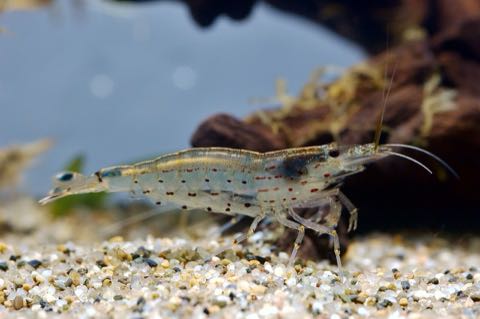 Amano shrimp
- American flagfish
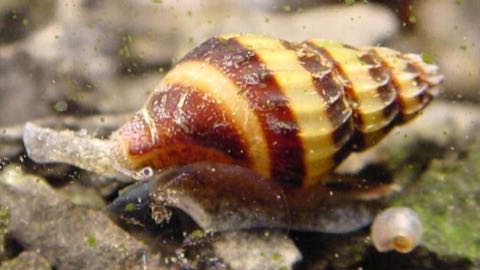 Assassin snail
- Banded gourami
- Bandit cory
- Banjo catfish
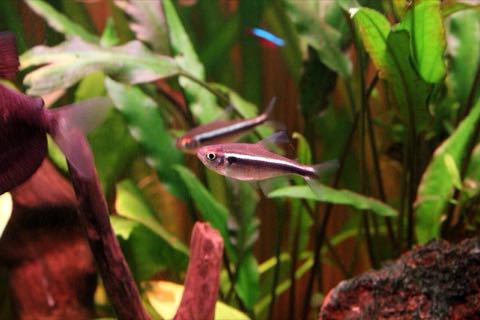 Black neon tetra
- Black phantom tetra
Avoid with
- Blue lyretail
Butterfly splitfin may nip Blue lyretailButterfly splitfin may nip Blue lyretail
- Brilliant rasbora
No shared pH rangeNo shared pH range
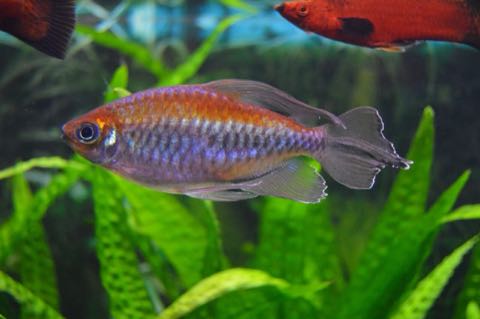 Congo tetra
Butterfly splitfin may nip Congo tetraButterfly splitfin may nip Congo tetra
- Featherfin squeaker
Butterfly splitfin may nip Featherfin squeakerButterfly splitfin may nip Featherfin squeaker
- Filament barb
Butterfly splitfin may nip Filament barbButterfly splitfin may nip Filament barb
- Guppy
Butterfly splitfin may nip GuppyButterfly splitfin may nip Guppy
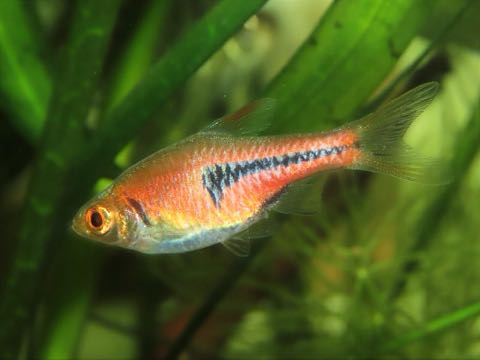 Lambchop rasbora
No shared pH rangeNo shared pH range
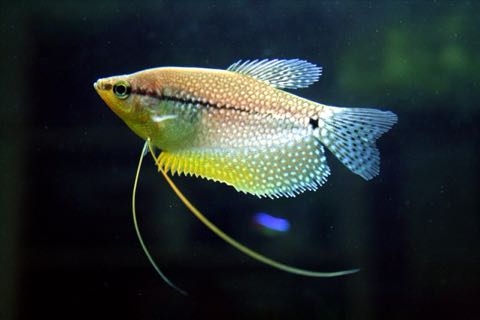 Pearl gourami
Butterfly splitfin may nip Pearl gouramiButterfly splitfin may nip Pearl gourami
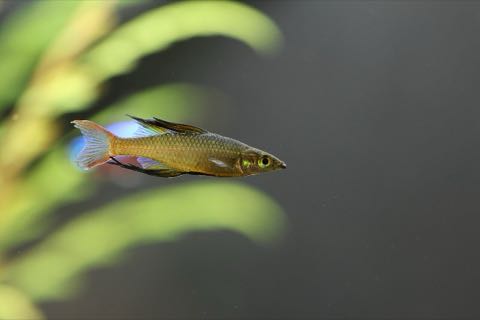 Threadfin rainbowfish
Butterfly splitfin may nip Threadfin rainbowfishButterfly splitfin may nip Threadfin rainbowfish
- African pike
African pike may eat Butterfly splitfinAfrican pike may eat Butterfly splitfin
- Alligator gar
Alligator gar may eat Butterfly splitfinAlligator gar may eat Butterfly splitfin
- Altum angelfish
No shared pH rangeNo shared pH range
Breeding butterfly splitfins
A densely planted species aquarium provides an effective environment for maintaining a breeding colony. Unlike many other livebearers, female goodeids lack a dark gravid spot and cannot store sperm for successive broods. Each clutch of fry requires an independent fertilisation event.A densely planted species aquarium provides an effective environment for maintaining a breeding colony. Unlike many other livebearers, female goodeids lack a dark gravid spot and cannot store sperm for successive broods. Each clutch of fry requires an independent fertilisation event.[1]
Gestation lasts approximately 55–60 days, yielding broods between 5 and 30 young. Developing embryos receive internal nourishment through ribbon-like structures called trophotaenia. Remnants of this tissue are sometimes visible on newborn fry and typically detach and disappear within 2–3 days.Gestation lasts approximately 55–60 days, yielding broods between 5 and 30 young. Developing embryos receive internal nourishment through ribbon-like structures called trophotaenia. Remnants of this tissue are sometimes visible on newborn fry and typically detach and disappear within 2–3 days.[1]
Newborn fry are large enough to eat the same foods as adult splitfins immediately. Adult fish rarely prey on their offspring, though fry removal is an option if maximum survival is desired.Newborn fry are large enough to eat the same foods as adult splitfins immediately. Adult fish rarely prey on their offspring, though fry removal is an option if maximum survival is desired.[1]
Butterfly splitfin health problems
Ich is caused by the parasite Ichthyophthirius multifiliis, which must be introduced into the habitat to trigger an outbreak. Typical signs include salt-like white spots on the body, rubbing against objects, reduced appetite, and rapid respiration, though spots alone do not confirm diagnosis. Reduce risk by quarantining incoming stock for at least 30 days and using dedicated or disinfected equipment, seeking fish-health advice if signs appear.Ich is caused by the parasite Ichthyophthirius multifiliis, which must be introduced into the habitat to trigger an outbreak. Typical signs include salt-like white spots on the body, rubbing against objects, reduced appetite, and rapid respiration, though spots alone do not confirm diagnosis. Reduce risk by quarantining incoming stock for at least 30 days and using dedicated or disinfected equipment, seeking fish-health advice if signs appear.[3][4]
Fin rot is a bacterial issue linked to environmental stress and poor water quality. Affected fish show fraying fins, shrinking tissue, or red streaks. Check water chemistry, manage tank mate harassment or physical damage, and contact a specialist if conditions worsen.Fin rot is a bacterial issue linked to environmental stress and poor water quality. Affected fish show fraying fins, shrinking tissue, or red streaks. Check water chemistry, manage tank mate harassment or physical damage, and contact a specialist if conditions worsen.[4]
Physical abrasions or degraded water can disrupt the protective mucus layer. Use smooth decor, handle fish gently, maintain clean water, and consult a fish-health professional for treatment guidance.Physical abrasions or degraded water can disrupt the protective mucus layer. Use smooth decor, handle fish gently, maintain clean water, and consult a fish-health professional for treatment guidance.[4]
Male or female?
Adult males possess a noticeable notch in the anal fin that forms the andropodium used for mating. They display reflective scales on their flanks and distinct black and yellow bands along the edge of the tail.Adult males possess a noticeable notch in the anal fin that forms the andropodium used for mating. They display reflective scales on their flanks and distinct black and yellow bands along the edge of the tail.[1][5]
Females lack the andropodium and reflective flank markings. Their caudal fin is clearer, bearing only short, scattered dark lines across the fin rays.Females lack the andropodium and reflective flank markings. Their caudal fin is clearer, bearing only short, scattered dark lines across the fin rays.[1][5]
Questions
What is the minimum tank size for livebearer fish?
For butterfly splitfins, provide a tank length of at least 90 cm and a width of at least 30 cm. Specialist guidance recommends a volume of at least 250 L to accommodate their adult length of about 9 cm and active nature.For butterfly splitfins, provide a tank length of at least 35 in and a width of at least 12 in. Specialist guidance recommends a volume of at least 66.0 gal to accommodate their adult length of about 4 in and active nature.[1][5]
What do livebearer fish eat?
Butterfly splitfins consume green foods such as blanched spinach, nori, and Spirulina flakes, reflecting their wild grazing on algae and aufwuchs. They also eat flakes, granules, tablets, and fibre-rich items like freeze-dried Artemia.Butterfly splitfins consume green foods such as blanched spinach, nori, and Spirulina flakes, reflecting their wild grazing on algae and aufwuchs. They also eat flakes, granules, tablets, and fibre-rich items like freeze-dried Artemia.[1][5]
How do livebearer fish breed?
Butterfly splitfins give birth to free-swimming young after a gestation period of about 55–60 days. Females do not store sperm, requiring fertilisation for each brood. Developing embryos receive nutrients via maternal trophotaenia structures before birth.Butterfly splitfins give birth to free-swimming young after a gestation period of about 55–60 days. Females do not store sperm, requiring fertilisation for each brood. Developing embryos receive nutrients via maternal trophotaenia structures before birth.[1][2]
Are livebearer fish easy to care for?
Butterfly splitfins require careful maintenance, including weekly water changes of three fifths to four fifths of the aquarium volume. Because males are aggressive and compete fiercely for food, species-only housing with plenty of space is best.Butterfly splitfins require careful maintenance, including weekly water changes of three fifths to four fifths of the aquarium volume. Because males are aggressive and compete fiercely for food, species-only housing with plenty of space is best.[5][2][1]
What are the common diseases of livebearer fish?
Common freshwater issues include white spot parasite infections, bacterial fin rot, and fungal growths on wounded tissue. Maintaining clean water, reducing bullying, and quarantining new fish for 30 days help minimize these health risks.Common freshwater issues include white spot parasite infections, bacterial fin rot, and fungal growths on wounded tissue. Maintaining clean water, reducing bullying, and quarantining new fish for 30 days help minimize these health risks.[3][4]
Sources
- Ameca splendens (Butterfly Goodeid) — Seriously Fish. Accessed 2026-10-05.
- How to look after platies and swordtails — OATA. Accessed 2026-10-05.
- Ichthyophthirius multifiliis (White Spot) Infections in Fish — UF/IFAS Extension. Accessed 2026-10-05.
- Frequently asked questions on treating sick fish — Practical Fishkeeping. Accessed 2026-10-05.
- Ameca splendens — Goodeid Working Group. Accessed 2026-10-05.
Written from the sources above. Not yet reviewed by an aquarist.
Data used by the planner
| Temperature | 15–30 | AqAdvisor (aqadvisor.com), retrieved 2026-10-04 · low confidence |
|---|---|---|
| pH | 7–8.5 | AqAdvisor (aqadvisor.com), retrieved 2026-10-04 · low confidence |
| Hardness (dGH) | 5–20 | AqAdvisor (aqadvisor.com), retrieved 2026-10-04 · low confidence |
| Origin | Rio Ameca basin, Jalisco, Mexico | curated-v0 (needs expert review) · low confidence |
| Beginner friendly | Yes | curated-v0 (needs expert review) · medium confidence |
| Care level | easy | curated-v0 (needs expert review) · medium confidence |
| Activity | active | curated-v0 (needs expert review) · medium confidence |
| Swimming level | middle | curated-v0 (needs expert review) · medium confidence |
| Temperament | semi aggressive | curated-v0 (needs expert review) · medium confidence |
| Nips fins | Yes | curated-v0 (needs expert review) · medium confidence |
| Long fins | No | curated-v0 (needs expert review) · medium confidence |
| Territorial | No | curated-v0 (needs expert review) · medium confidence |
| Lives in groups | No | curated-v0 (needs expert review) · medium confidence |
| Minimum group | 1 | curated-v0 (needs expert review) · medium confidence |
| Diet | omnivore | curated-v0 (needs expert review) · medium confidence |
| Lifespan (years) | 3–5 | curated-v0 (needs expert review) · low confidence |
| Months to adult size | 6 | curated-v0 (needs expert review) · low confidence |
| Safe with plants | No | curated-v0 (needs expert review) · medium confidence |