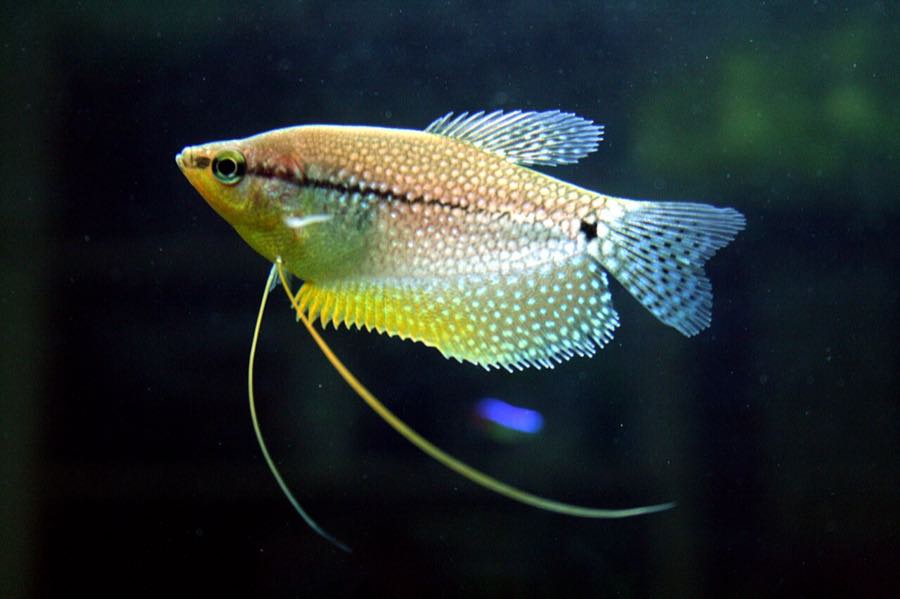
Pearl gourami tank size
Wild pearl gouramis inhabit lowland coastal swamps in Thailand, Malaysia, Borneo, and Sumatra. In an aquarium, survival of eight years or more is possible when housing conditions meet their needs.Wild pearl gouramis inhabit lowland coastal swamps in Thailand, Malaysia, Borneo, and Sumatra. In an aquarium, survival of eight years or more is possible when housing conditions meet their needs.[1]
Housing requirements differ among published recommendations. Seriously Fish advises an aquarium of at least 90 cm tank length, while Practical Fishkeeping recommends at least 120 cm tank length to provide more swimming space.Housing requirements differ among published recommendations. Seriously Fish advises an aquarium of at least 35 in tank length, while Practical Fishkeeping recommends at least about 4 ft (47 in) tank length to provide more swimming space.[1][8]
Decorate the tank with living plants and floating vegetation while maintaining open swimming areas. Dense planting and sheltered hiding places are essential, particularly when keeping several fish together.Decorate the tank with living plants and floating vegetation while maintaining open swimming areas. Dense planting and sheltered hiding places are essential, particularly when keeping several fish together.[1]
Pearl gourami water parameters
Practical Fishkeeping prefers soft, acidic water for pearl gouramis. However, the source notes that captive stock tolerates less acidic conditions than fish living in wild blackwater habitats.Practical Fishkeeping prefers soft, acidic water for pearl gouramis. However, the source notes that captive stock tolerates less acidic conditions than fish living in wild blackwater habitats.[8]
Feeding pearl gouramis
Pearl gouramis are unfussy feeders that accept most foods, and keepers use live foods to condition breeding fish. General guidance from the RSPCA recommends feeding two or three small meals daily, offering only what the fish finish in 2–5 minutes. Adjust the total portion to match the number and size of your fish.Pearl gouramis are unfussy feeders that accept most foods, and keepers use live foods to condition breeding fish. General guidance from the RSPCA recommends feeding two or three small meals daily, offering only what the fish finish in 2–5 minutes. Adjust the total portion to match the number and size of your fish.[1][2]
Excess uneaten food can decay in the aquarium and worsen water quality. Avoid accumulating leftovers by removing extra food after meals.Excess uneaten food can decay in the aquarium and worsen water quality. Avoid accumulating leftovers by removing extra food after meals.[2]
Pearl gourami behaviour
Pearl gouramis rank among the most peaceful gouramis. Even so, males can be territorial toward one another and harsh toward females during breeding.Pearl gouramis rank among the most peaceful gouramis. Even so, males can be territorial toward one another and harsh toward females during breeding.[1]
Aggressive or very vigorous companions can make pearl gouramis withdrawn. When several pearl gouramis are kept together, Practical Fishkeeping recommends keeping more females than males.Aggressive or very vigorous companions can make pearl gouramis withdrawn. When several pearl gouramis are kept together, Practical Fishkeeping recommends keeping more females than males.[1][8]
Pearl gourami tank mates
Calm bottom dwellers and schooling fish make suitable tank mates. Practical Fishkeeping recommends smaller Corydoras, such as Calm bottom dwellers and schooling fish make suitable tank mates. Practical Fishkeeping recommends smaller Corydoras, such as bronze corydorasbronze corydoras, provided water parameters and swimming space are compatible. The source also recommends peaceful midwater species, including , provided water parameters and swimming space are compatible. The source also recommends peaceful midwater species, including black neon tetrasblack neon tetras, , harlequin rasborasharlequin rasboras, and , and cherry barbscherry barbs, if tank conditions match., if tank conditions match.[8]
Certain species should be avoided. Practical Fishkeeping explicitly warns that Certain species should be avoided. Practical Fishkeeping explicitly warns that tiger barbstiger barbs nip the long fins of pearl gouramis, and Seriously Fish describes tiger barbs as boisterous fish unsuitable for timid, slow, long-finned companions. Fin-nipping tetras such as serpae tetras should also be excluded. nip the long fins of pearl gouramis, and Seriously Fish describes tiger barbs as boisterous fish unsuitable for timid, slow, long-finned companions. Fin-nipping tetras such as serpae tetras should also be excluded.[8][5]
Large or combative fish pose significant risks. Large or combative fish pose significant risks. Jack DempseysJack Dempseys need tank mates that are too large to be prey, making the pairing one to avoid. Furthermore, need tank mates that are too large to be prey, making the pairing one to avoid. Furthermore, dwarf puffersdwarf puffers can nip tank mates and compete poorly for food in general community tanks. can nip tank mates and compete poorly for food in general community tanks.[6][7]
Usually fine together
- African butterfly cichlid
- Agassiz's cory
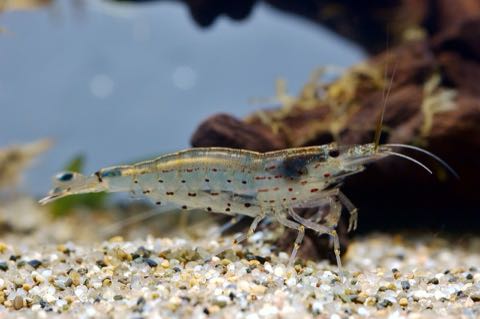 Amano shrimp
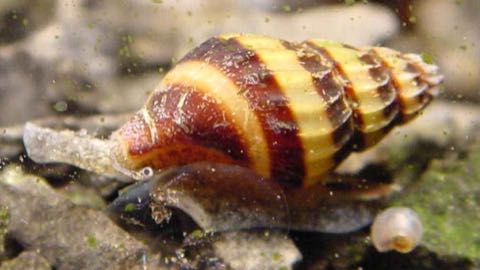 Assassin snail
- Banded gourami
- Bandit cory
- Banjo catfish
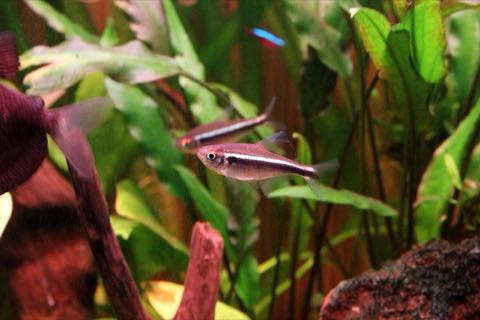 Black neon tetra
- Black phantom tetra
- Black ruby barb
- Bleeding heart tetra
- Blood parrot cichlid
Avoid with
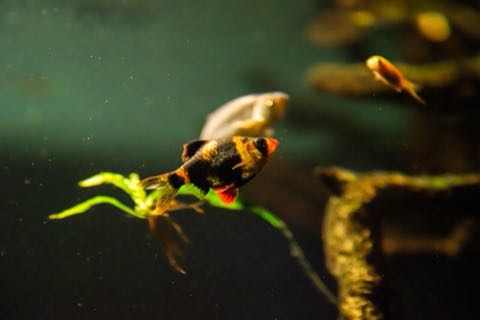 Tiger barb
 may nip the long fins of Pearl gouramiTiger barb may nip the long fins of Pearl gourami
- American flagfish
American flagfish may nip Pearl gouramiAmerican flagfish may nip Pearl gourami
- Blind cave tetra
Blind cave tetra may nip Pearl gouramiBlind cave tetra may nip Pearl gourami
- Buenos Aires tetra
Buenos Aires tetra may nip Pearl gouramiBuenos Aires tetra may nip Pearl gourami
- Butterfly splitfin
Butterfly splitfin may nip Pearl gouramiButterfly splitfin may nip Pearl gourami
- Chinese barb
Chinese barb may nip Pearl gouramiChinese barb may nip Pearl gourami
- Colombian tetra
Colombian tetra may nip Pearl gouramiColombian tetra may nip Pearl gourami
- Red eye tetra
Red eye tetra may nip Pearl gouramiRed eye tetra may nip Pearl gourami
- Silvertip tetra
Silvertip tetra may nip Pearl gouramiSilvertip tetra may nip Pearl gourami
- Ticto barb
Ticto barb may nip Pearl gouramiTicto barb may nip Pearl gourami
- Alligator gar
Alligator gar may eat Pearl gouramiAlligator gar may eat Pearl gourami
- Amazon puffer
Amazon puffer may nip Pearl gouramiAmazon puffer may nip Pearl gourami
Breeding pearl gouramis
Pearl gouramis are bubble-nest builders that breed in a separate aquarium. Provide floating plants to support the structure and install a gentle air-powered filter to protect the surface.Pearl gouramis are bubble-nest builders that breed in a separate aquarium. Provide floating plants to support the structure and install a gentle air-powered filter to protect the surface.[1]
The male constructs a bubble nest before initiating a spawning embrace beneath it. The floating eggs rise, and the male guides them into the bubble nest.The male constructs a bubble nest before initiating a spawning embrace beneath it. The floating eggs rise, and the male guides them into the bubble nest.[1]
Remove the female after spawning because the male may seriously harm her. The male remains behind to guard the nest until hatching occurs.Remove the female after spawning because the male may seriously harm her. The male remains behind to guard the nest until hatching occurs.[1]
Hatching occurs in about 20–30 hours, and fry become free-swimming another four or five days later. Remove the male once the fry swim freely.Hatching occurs in about 20–30 hours, and fry become free-swimming another four or five days later. Remove the male once the fry swim freely.[1]
Offer infusoria or liquid fry food during the first week. After that initial period, feed Artemia nauplii, microworms, or powdered flake food.Offer infusoria or liquid fry food during the first week. After that initial period, feed Artemia nauplii, microworms, or powdered flake food.[1]
Pearl gourami health problems
Ich is a freshwater parasite infection. Salt-like white spots, rubbing, reduced appetite, and gill irritation are possible signs, though appearance alone does not confirm diagnosis. Seek qualified advice promptly if you notice these issues. To reduce the risk of introducing ich, quarantine new arrivals for at least 30 days and use separate or disinfected nets.Ich is a freshwater parasite infection. Salt-like white spots, rubbing, reduced appetite, and gill irritation are possible signs, though appearance alone does not confirm diagnosis. Seek qualified advice promptly if you notice these issues. To reduce the risk of introducing ich, quarantine new arrivals for at least 30 days and use separate or disinfected nets.[3]
Fin rot can cause fraying fins with red streaks followed by progressive shrinking. Poor conditions and stress encourage this bacterial disease. Maintain water quality and remove sources of physical injury or harassment to reduce fin-rot risk. These steps represent prevention, and deteriorating fins need assessment.Fin rot can cause fraying fins with red streaks followed by progressive shrinking. Poor conditions and stress encourage this bacterial disease. Maintain water quality and remove sources of physical injury or harassment to reduce fin-rot risk. These steps represent prevention, and deteriorating fins need assessment.[4]
Fungal infection can appear as grey-white cottony growth on damaged skin. Injury and environmental stress compromise the protective mucus layer. Smooth decor, gentle handling, and good water quality reduce injury risk. Seek prompt advice when cottony growth appears.Fungal infection can appear as grey-white cottony growth on damaged skin. Injury and environmental stress compromise the protective mucus layer. Smooth decor, gentle handling, and good water quality reduce injury risk. Seek prompt advice when cottony growth appears.[4]
Male or female?
Adult males display orange or red throats, stronger colours, and extended dorsal and anal fins. In contrast, mature females are plumper and less colourful.Adult males display orange or red throats, stronger colours, and extended dorsal and anal fins. In contrast, mature females are plumper and less colourful.[1][8]
Varieties described as gold, blue, opaline, or three-spot gouramis in Practical Fishkeeping are colour forms of Trichopodus trichopterus rather than pearl gourami varieties.Varieties described as gold, blue, opaline, or three-spot gouramis in Practical Fishkeeping are colour forms of Trichopodus trichopterus rather than pearl gourami varieties.[8]
Questions
What tank size do pearl gouramis need?
Seriously Fish recommends at least 90 cm tank length, while Practical Fishkeeping recommends at least 120 cm tank length.Seriously Fish recommends at least 35 in tank length, while Practical Fishkeeping recommends at least about 4 ft (47 in) tank length.[1][8]
Can I keep one pearl gourami?
When several fish are kept, Practical Fishkeeping recommends keeping more females than males, though this group composition advice specifies no minimum schooling number.When several fish are kept, Practical Fishkeeping recommends keeping more females than males, though this group composition advice specifies no minimum schooling number.[8]
What fish can live with pearl gouramis?
Smaller Corydoras such as bronze corydoras, as well as peaceful barbs, rasboras, and tetras like black neon tetras, harlequin rasboras, and cherry barbs, can live alongside them when environmental conditions match.Smaller Corydoras such as bronze corydoras, as well as peaceful barbs, rasboras, and tetras like black neon tetras, harlequin rasboras, and cherry barbs, can live alongside them when environmental conditions match.[8]
How can I tell male and female pearl gouramis apart?
Adult males develop orange or red throats, stronger coloration, and extended dorsal and anal fins, whereas mature females are plumper and less colourful.Adult males develop orange or red throats, stronger coloration, and extended dorsal and anal fins, whereas mature females are plumper and less colourful.[1][8]
How do pearl gouramis breed?
Pearl gouramis build bubble nests among floating plants. The male embraces the female beneath the nest, guides the floating eggs into place, and guards them until hatching.Pearl gouramis build bubble nests among floating plants. The male embraces the female beneath the nest, guides the floating eggs into place, and guards them until hatching.[1]
Sources
- Trichopodus leerii (Pearl Gourami) — Seriously Fish. Accessed 2026-10-05.
- What to feed your pet fish — RSPCA. Accessed 2026-10-05.
- Ichthyophthirius multifiliis (White Spot) Infections in Fish — UF/IFAS Extension. Accessed 2026-10-05.
- Frequently asked questions on treating sick fish — Practical Fishkeeping. Accessed 2026-10-05.
- Puntigrus tetrazona (Tiger Barb) — Seriously Fish. Accessed 2026-10-05.
- Rocio octofasciata (Jack Dempsey) — Seriously Fish. Accessed 2026-10-05.
- Carinotetraodon travancoricus (Dwarf Puffer) — Seriously Fish. Accessed 2026-10-05.
- Are pearl gourami good community fish? — Practical Fishkeeping. Accessed 2026-10-05.
Written from the sources above. Not yet reviewed by an aquarist.
Data used by the planner
| Temperature range | 24–28 | AqAdvisor (aqadvisor.com), retrieved 2026-10-04; agrees with FishBase (fishbase.se), retrieved 2026-10-04 · medium confidence |
|---|---|---|
| pH | 6–8 | AqAdvisor (aqadvisor.com), retrieved 2026-10-04; agrees with FishBase (fishbase.se), retrieved 2026-10-04 · medium confidence |
| Hardness (dGH) | 5–15 | AqAdvisor (aqadvisor.com), retrieved 2026-10-04 · low confidence |
| Origin | Asia | curated-v0 (needs expert review) · low confidence |
| Beginner friendly | Yes | curated-v0 (needs expert review) · medium confidence |
| Care level | easy | curated-v0 (needs expert review) · medium confidence |
| Activity | moderate | curated-v0 (needs expert review) · medium confidence |
| Swimming level | top | curated-v0 (needs expert review) · medium confidence |
| Temperament | peaceful | curated-v0 (needs expert review) · medium confidence |
| Nips fins | No | curated-v0 (needs expert review) · medium confidence |
| Long fins | Yes | curated-v0 (needs expert review) · medium confidence |
| Territorial | No | curated-v0 (needs expert review) · medium confidence |
| Lives in groups | No | curated-v0 (needs expert review) · medium confidence |
| Minimum group | 1 | curated-v0 (needs expert review) · medium confidence |
| Diet | omnivore | curated-v0 (needs expert review) · medium confidence |
| Lifespan (years) | 5–10 | curated-v0 (needs expert review) · low confidence |
| Months to adult size | 12 | curated-v0 (needs expert review) · low confidence |
| Safe with plants | Yes | curated-v0 (needs expert review) · medium confidence |
| Minimum tank length | 90 | curated-v0 (needs expert review) · medium confidence |