Silvertip tetra tank size
For swimming room, Seriously Fish recommends a minimum tank length of 60 cm and a width of 38 cm. Tetra suggests a larger 100 L aquarium. These active fish need clear swimming lanes across the centre of the tank, so plan an open centre alongside any decor.For swimming room, Seriously Fish recommends a minimum tank length of 24 in and a width of 15 in. Tetra suggests a larger 26.4 gal aquarium. These active fish need clear swimming lanes across the centre of the tank, so plan an open centre alongside any decor.[1][5]
A naturalistic setup works well with sand, wood roots and aquarium-safe dried leaves under dim lighting. Live plants can be positioned along the edges to provide sheltered areas while leaving the middle open for active swimming.A naturalistic setup works well with sand, wood roots and aquarium-safe dried leaves under dim lighting. Live plants can be positioned along the edges to provide sheltered areas while leaving the middle open for active swimming.[1][5]
Silvertip tetra water parameters
Maintain water temperatures between 23–28 °C, a pH of 6.0–7.5 and a hardness of 5–15 dGH. Silvertip tetras need stable conditions, so avoid sudden changes in water chemistry or temperature when performing tank maintenance.Maintain water temperatures between 73–82 °F, a pH of 6.0–7.5 and a hardness of 5–15 dGH. Silvertip tetras need stable conditions, so avoid sudden changes in water chemistry or temperature when performing tank maintenance.[1]
Test your aquarium water at least weekly to ensure ammonia and nitrite remain at zero. Perform weekly water changes by replacing roughly one quarter of the aquarium volume with conditioned water to keep dissolved waste low.Test your aquarium water at least weekly to ensure ammonia and nitrite remain at zero. Perform weekly water changes by replacing roughly one quarter of the aquarium volume with conditioned water to keep dissolved waste low.[2]
Feeding silvertip tetras
Feed silvertip tetras once a day. Small flakes or granules make a dependable staple food. Rotate these dry foods with suitably sized live or frozen daphnia, brine shrimp and bloodworm to offer dietary variety.Feed silvertip tetras once a day. Small flakes or granules make a dependable staple food. Rotate these dry foods with suitably sized live or frozen daphnia, brine shrimp and bloodworm to offer dietary variety.[2][1]
Offer only what the fish can consume within a few minutes at each feeding. Promptly remove any uneaten food that settles to the bottom to avoid degrading water quality.Offer only what the fish can consume within a few minutes at each feeding. Promptly remove any uneaten food that settles to the bottom to avoid degrading water quality.[2]
Silvertip tetra behaviour
Silvertip tetras come from creeks and tributaries in Brazil's Rio São Francisco basin and spend their time actively swimming in the midwater zone. They grow to an adult length of around 5 cm.Silvertip tetras come from creeks and tributaries in Brazil's Rio São Francisco basin and spend their time actively swimming in the midwater zone. They grow to an adult length of around 2 in.[1][5]
Keep a group of at least eight silvertip tetras, though Seriously Fish prefers ten or more. Larger groups help reduce nipping by keeping interactions within the school, but they cannot ensure peaceful behaviour under all circumstances.Keep a group of at least eight silvertip tetras, though Seriously Fish prefers ten or more. Larger groups help reduce nipping by keeping interactions within the school, but they cannot ensure peaceful behaviour under all circumstances.[1]
Also sold under the name copper tetra, this species stands out because it lacks an adipose fin and displays bright white fin tips alongside a dark tail mark. In terms of longevity, Tetra notes potential survival up to ten years, whereas OATA reports several years for tetras.Also sold under the name copper tetra, this species stands out because it lacks an adipose fin and displays bright white fin tips alongside a dark tail mark. In terms of longevity, Tetra notes potential survival up to ten years, whereas OATA reports several years for tetras.[1][5][2]
Silvertip tetra tank mates
Harlequin rasborasHarlequin rasboras are a conditional schooling companion from the rasbora group; leave open swimming space and observe for chasing. are a conditional schooling companion from the rasbora group; leave open swimming space and observe for chasing. Zebra daniosZebra danios can also share a tank conditionally, though their temperature ranges overlap only within a narrow 23–24 °C band. can also share a tank conditionally, though their temperature ranges overlap only within a narrow 73–75 °F band.[1]
For the bottom, For the bottom, bronze corydorasbronze corydoras are a conditional peaceful bottom-dweller option when you keep their own group and supply sinking food. are a conditional peaceful bottom-dweller option when you keep their own group and supply sinking food. PlatiesPlaties are a conditional livebearer companion where water parameters overlap and both groups have enough room. are a conditional livebearer companion where water parameters overlap and both groups have enough room.[1]
Avoid Avoid oscarsoscars, as their predatory feeding puts small or slender fish at risk. In addition, avoid , as their predatory feeding puts small or slender fish at risk. In addition, avoid Jack DempseysJack Dempseys because mature territorial cichlids can harass smaller peaceful fish. Avoid because mature territorial cichlids can harass smaller peaceful fish. Avoid pea pufferspea puffers because their nipping makes this pairing unsuitable for a calm community. because their nipping makes this pairing unsuitable for a calm community.[6][7][8]
Usually fine together
- African butterfly cichlid
- Agassiz's cory
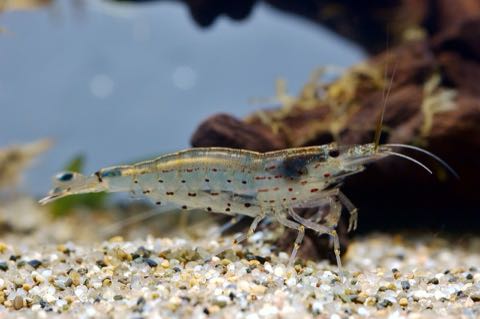 Amano shrimp
- American flagfish
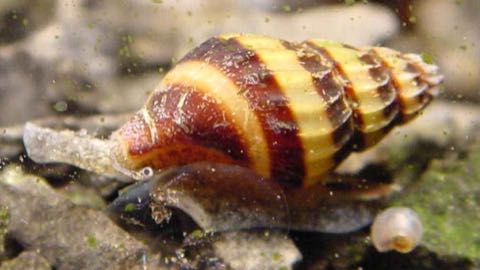 Assassin snail
- Banded gourami
- Bandit cory
- Banjo catfish
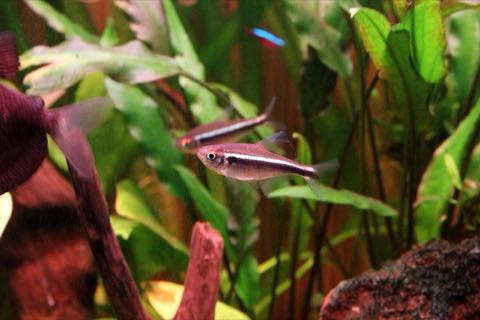 Black neon tetra
- Black phantom tetra
- Black ruby barb
- Blackline rasbora
Avoid with
- Acei cichlid
No shared pH rangeNo shared pH range
- Blue lyretail
Silvertip tetra may nip Blue lyretailSilvertip tetra may nip Blue lyretail
- Brevis shell dweller
No shared pH rangeNo shared pH range
- Caudopunctatus
No shared pH rangeNo shared pH range
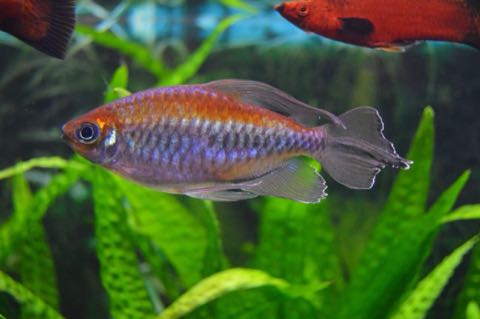 Congo tetra
Silvertip tetra may nip Congo tetraSilvertip tetra may nip Congo tetra
- Featherfin squeaker
Silvertip tetra may nip Featherfin squeakerSilvertip tetra may nip Featherfin squeaker
- Filament barb
Silvertip tetra may nip Filament barbSilvertip tetra may nip Filament barb
- Guppy
Silvertip tetra may nip GuppySilvertip tetra may nip Guppy
- Multies
No shared pH rangeNo shared pH range
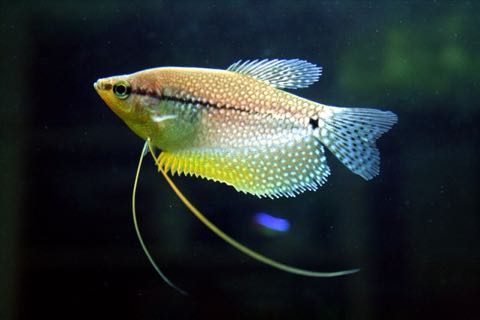 Pearl gourami
Silvertip tetra may nip Pearl gouramiSilvertip tetra may nip Pearl gourami
- Pindani
No shared pH rangeNo shared pH range
- Rusty cichlid
No shared pH rangeNo shared pH range
Breeding silvertip tetras
Silvertip tetras are egg scatterers that spawn among fine-leaved plants or artificial mops.Silvertip tetras are egg scatterers that spawn among fine-leaved plants or artificial mops.[1]
Eggs hatch after roughly 24–36 hours, and fry swim freely three to four days later. Both eggs and early fry are light sensitive. Provide infusoria-sized food first, followed by microworm or newly hatched brine shrimp when the fry are large enough to take them.Eggs hatch after roughly 24–36 hours, and fry swim freely three to four days later. Both eggs and early fry are light sensitive. Provide infusoria-sized food first, followed by microworm or newly hatched brine shrimp when the fry are large enough to take them.[1]
Silvertip tetra health problems
Ich is a freshwater parasite infection. Possible signs include salt-like white spots, rubbing, reduced appetite and gill irritation, though appearance alone does not confirm diagnosis. If swimming, breathing, colour, appetite or fin condition changes, test the water and investigate.Ich is a freshwater parasite infection. Possible signs include salt-like white spots, rubbing, reduced appetite and gill irritation, though appearance alone does not confirm diagnosis. If swimming, breathing, colour, appetite or fin condition changes, test the water and investigate.[3][2]
A 30-day quarantine for new arrivals and separate or disinfected nets help prevent the introduction of ich.A 30-day quarantine for new arrivals and separate or disinfected nets help prevent the introduction of ich.[3]
Fin rot is a bacterial disease encouraged by poor conditions and stress, causing fraying, red streaks and shrinking fins. Prevent avoidable fin rot by maintaining water quality and removing sources of injury or harassment, and seek an assessment if fins deteriorate.Fin rot is a bacterial disease encouraged by poor conditions and stress, causing fraying, red streaks and shrinking fins. Prevent avoidable fin rot by maintaining water quality and removing sources of injury or harassment, and seek an assessment if fins deteriorate.[4]
Fungal infection can appear as grey-white cottony growth on damaged skin when injury and environmental stress weaken the protective mucus layer. Smooth furnishings, gentle handling and good water quality reduce injuries that allow fungus to establish, and cottony growth warrants prompt advice.Fungal infection can appear as grey-white cottony growth on damaged skin when injury and environmental stress weaken the protective mucus layer. Smooth furnishings, gentle handling and good water quality reduce injuries that allow fungus to establish, and cottony growth warrants prompt advice.[4]
Male or female?
Adult males tend to be slimmer and richer copper in colour. Females are fuller in the body and paler yellow-brown to silver. Juvenile colour alone is not reliable sexing.Adult males tend to be slimmer and richer copper in colour. Females are fuller in the body and paler yellow-brown to silver. Juvenile colour alone is not reliable sexing.[1][5]
Questions
Are silvertip tetras aggressive?
Keeping at least eight individuals, and preferably ten or more, helps reduce nipping by keeping interactions within the group, but it cannot ensure entirely peaceful behaviour.Keeping at least eight individuals, and preferably ten or more, helps reduce nipping by keeping interactions within the group, but it cannot ensure entirely peaceful behaviour.[1]
How big do silvertip tetras get?
Silvertip tetras reach an adult length of around 5 cm. Because they are active midwater swimmers, Seriously Fish recommends an aquarium of at least 60 cm in length and 38 cm in width.Silvertip tetras reach an adult length of around 2 in. Because they are active midwater swimmers, Seriously Fish recommends an aquarium of at least 24 in in length and 15 in in width.[1][5]
How long do silvertip tetras live?
Silvertip tetras live for several years according to OATA, while Tetra reports a potential longevity of up to ten years. Neither source establishes a typical species average lifespan.Silvertip tetras live for several years according to OATA, while Tetra reports a potential longevity of up to ten years. Neither source establishes a typical species average lifespan.[2][5]
How to tell if tetra fish are happy?
Changes in swimming, breathing, colour, appetite or fin condition are clear reasons to test your aquarium water and investigate further.Changes in swimming, breathing, colour, appetite or fin condition are clear reasons to test your aquarium water and investigate further.[2]
Should tetras be fed every day?
Yes, feed silvertip tetras once a day. Offer small flakes or granules alongside daphnia, brine shrimp or bloodworm, providing only what they consume in a few minutes and removing any uneaten food.Yes, feed silvertip tetras once a day. Offer small flakes or granules alongside daphnia, brine shrimp or bloodworm, providing only what they consume in a few minutes and removing any uneaten food.[2][1]
Sources
- Hasemania nana (Silvertip Tetra) — Seriously Fish. Accessed 2026-10-05.
- How to look after tetras and pencilfish — Ornamental Aquatic Trade Association. Accessed 2026-10-05.
- Ichthyophthirius multifiliis (White Spot) Infections in Fish — UF/IFAS Extension. Accessed 2026-10-05.
- Frequently asked questions on treating sick fish — Practical Fishkeeping. Accessed 2026-10-05.
- Silvertip tetra (Hasemania nana) — Tetra. Accessed 2026-10-05.
- Astronotus ocellatus (Oscar) — Seriously Fish. Accessed 2026-10-05.
- Rocio octofasciata (Jack Dempsey) — Seriously Fish. Accessed 2026-10-05.
- Carinotetraodon travancoricus (Dwarf Puffer) — Seriously Fish. Accessed 2026-10-05.
Written from the sources above. Not yet reviewed by an aquarist.
Data used by the planner
| Temperature range | 23–28 | AqAdvisor (aqadvisor.com), retrieved 2026-10-04; agrees with FishBase (fishbase.se), retrieved 2026-10-04 · medium confidence |
|---|---|---|
| pH | 5.5–7.5 | AqAdvisor (aqadvisor.com), retrieved 2026-10-04; agrees with FishBase (fishbase.se), retrieved 2026-10-04 · medium confidence |
| Hardness (dGH) | 1–15 | AqAdvisor (aqadvisor.com), retrieved 2026-10-04 · low confidence |
| Origin | Sao Francisco basin, Brazil | curated-v0 (needs expert review) · low confidence |
| Beginner friendly | Yes | curated-v0 (needs expert review) · medium confidence |
| Care level | easy | curated-v0 (needs expert review) · medium confidence |
| Activity | active | curated-v0 (needs expert review) · medium confidence |
| Swimming level | middle | curated-v0 (needs expert review) · medium confidence |
| Temperament | peaceful | curated-v0 (needs expert review) · medium confidence |
| Nips fins | Yes | curated-v0 (needs expert review) · medium confidence |
| Long fins | No | curated-v0 (needs expert review) · medium confidence |
| Territorial | No | curated-v0 (needs expert review) · medium confidence |
| Lives in groups | Yes | curated-v0 (needs expert review) · medium confidence |
| Minimum group | 8 | curated-v0 (needs expert review) · medium confidence |
| Diet | omnivore | curated-v0 (needs expert review) · medium confidence |
| Lifespan (years) | 3–5 | curated-v0 (needs expert review) · low confidence |
| Months to adult size | 6 | curated-v0 (needs expert review) · low confidence |
| Safe with plants | Yes | curated-v0 (needs expert review) · medium confidence |