Cherry barb tank size
House these fish in an enclosure featuring a tank length of at least 60 cm. Balance open swimming areas against planted hiding spots throughout the quarters. Always fit a snug aquarium cover, as keeping a lid on the system lowers jumping risk.House these fish in an enclosure featuring a tank length of at least 24 in. Balance open swimming areas against planted hiding spots throughout the quarters. Always fit a snug aquarium cover, as keeping a lid on the system lowers jumping risk.[1][2]
Using dark floor substrate alongside thick vegetation highlights the red tones of the fish. Pieces of wood, dried leaf litter, and surface plants create extra shaded retreats. Heavy filtration is not required, although the group enjoys mild water circulation.Using dark floor substrate alongside thick vegetation highlights the red tones of the fish. Pieces of wood, dried leaf litter, and surface plants create extra shaded retreats. Heavy filtration is not required, although the group enjoys mild water circulation.[1][2]
Cherry barb water parameters
Farm-raised stock settles across a pH spanning 6.0–8.0. Set the thermal range between 23–27 °C, and hold general mineral levels at 5–15 dGH within their overlapping environmental thresholds.Farm-raised stock settles across a pH spanning 6.0–8.0. Set the thermal range between 73–81 °F, and hold general mineral levels at 5–15 dGH within their overlapping environmental thresholds.[1]
Run a fully matured filter that consistently maintains zero detectable ammonia and nitrite. When building up community numbers, introduce livestock in small increments to prevent overloading the colony of beneficial microbes.Run a fully matured filter that consistently maintains zero detectable ammonia and nitrite. When building up community numbers, introduce livestock in small increments to prevent overloading the colony of beneficial microbes.[2]
Swap out a quarter of the water weekly using conditioned tap water, and gently clean dirty sponge or biological media in old tank water. Run diagnostic tests every week, repeating tests whenever new specimens enter the system.Swap out a quarter of the water weekly using conditioned tap water, and gently clean dirty sponge or biological media in old tank water. Run diagnostic tests every week, repeating tests whenever new specimens enter the system.[2]
Feeding cherry barbs
Offer food once daily in portions consumed within a few minutes. Base the diet on dry flakes or small granules containing an algae or botanical component, supplementing with tiny daphnia, Artemia, and bloodworms. Wild specimens browse on vegetable matter alongside small invertebrates, so a balanced assortment maintains physical condition and pigmentation without overusing a single heavy food. Clear away accumulating leftover food and reduce meal sizes, because decomposing rations degrade aquatic conditions.Offer food once daily in portions consumed within a few minutes. Base the diet on dry flakes or small granules containing an algae or botanical component, supplementing with tiny daphnia, Artemia, and bloodworms. Wild specimens browse on vegetable matter alongside small invertebrates, so a balanced assortment maintains physical condition and pigmentation without overusing a single heavy food. Clear away accumulating leftover food and reduce meal sizes, because decomposing rations degrade aquatic conditions.[2][1]
Cherry barb behaviour
Maintain a cohort of at least six cherry barbs, extending to six to ten or greater numbers when space permits. Living with other fish of the same species lessens nervous darting, and males show off richer colour when rival males are close by.Maintain a cohort of at least six cherry barbs, extending to six to ten or greater numbers when space permits. Living with other fish of the same species lessens nervous darting, and males show off richer colour when rival males are close by.[1]
Cherry barbs generally show a mild, peaceful nature and should not be burdened with the aggressive labels attached to different barb kin. Commercially produced colour varieties like albino or super-red specimens demand the exact same baseline husbandry as standard specimens.Cherry barbs generally show a mild, peaceful nature and should not be burdened with the aggressive labels attached to different barb kin. Commercially produced colour varieties like albino or super-red specimens demand the exact same baseline husbandry as standard specimens.[1][2]
Smaller members of the barb family can persist for several years within an established, seasoned environment. Evaluate hiding tendencies, food intake, skin colour, respiration rates, and fullness of the body simultaneously when assessing health, and run chemical water checks whenever abrupt shifts appear.Smaller members of the barb family can persist for several years within an established, seasoned environment. Evaluate hiding tendencies, food intake, skin colour, respiration rates, and fullness of the body simultaneously when assessing health, and run chemical water checks whenever abrupt shifts appear.[2]
Cherry barb tank mates
Harlequin rasborasHarlequin rasboras form a conditional peaceful schooling option, while form a conditional peaceful schooling option, while honey gouramishoney gouramis offer a conditional calm labyrinth fish. Arrange dense vegetation and confirm matching water chemistry and space rather than assuming every mixed setup functions smoothly. Supply dedicated groups for schooling varieties. offer a conditional calm labyrinth fish. Arrange dense vegetation and confirm matching water chemistry and space rather than assuming every mixed setup functions smoothly. Supply dedicated groups for schooling varieties.[1][2]
Bronze corydorasBronze corydoras can populate the bottom zone alongside cherry barbs whenever bottom space and catfish group counts are met. can populate the bottom zone alongside cherry barbs whenever bottom space and catfish group counts are met. GuppiesGuppies are another conditional livebearer companion in shared parameters; cherry barbs are typically non-aggressive, but watch livestock behaviours directly and verify all inhabitants get nourishment. are another conditional livebearer companion in shared parameters; cherry barbs are typically non-aggressive, but watch livestock behaviours directly and verify all inhabitants get nourishment.[1][2]
Keep larger, predatory cichlids away from these small barbs. Fully grown Keep larger, predatory cichlids away from these small barbs. Fully grown oscarsoscars consume smaller species, and raising one from a small juvenile does not fix this eventual predatory threat. Similarly, avoid consume smaller species, and raising one from a small juvenile does not fix this eventual predatory threat. Similarly, avoid Jack DempseysJack Dempseys because their territorial drives and predatory tendencies put small, docile fish in direct danger. because their territorial drives and predatory tendencies put small, docile fish in direct danger.[5][6]
Exclude Exclude pea pufferspea puffers from this community. Fin nipping tendencies and intense mealtime competition make pea puffers unsuitable companions despite their diminutive stature. from this community. Fin nipping tendencies and intense mealtime competition make pea puffers unsuitable companions despite their diminutive stature.[7]
Usually fine together
- African butterfly cichlid
- Agassiz's cory
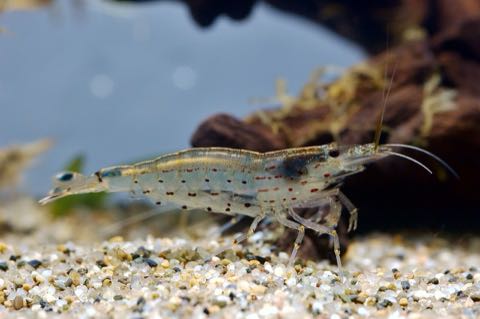 Amano shrimp
- American flagfish
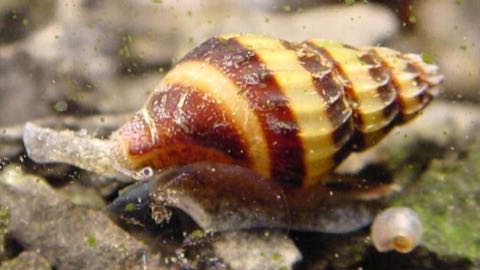 Assassin snail
- Banded gourami
- Bandit cory
- Banjo catfish
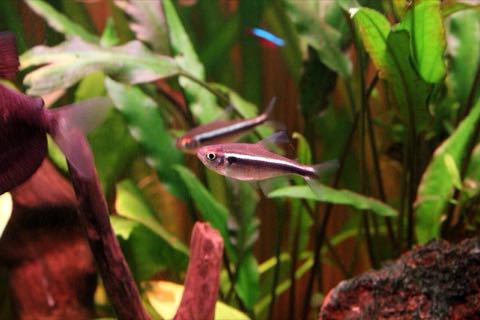 Black neon tetra
- Black phantom tetra
- Black ruby barb
- Blackline rasbora
Avoid with
- African knifefish
African knifefish may eat Cherry barbAfrican knifefish may eat Cherry barb
- African pike
African pike may eat Cherry barbAfrican pike may eat Cherry barb
- Alligator gar
Alligator gar may eat Cherry barbAlligator gar may eat Cherry barb
- Antenna ray
Antenna ray may eat Cherry barbAntenna ray may eat Cherry barb
- Arapaima
Arapaima may eat Cherry barbArapaima may eat Cherry barb
- Arrowhead puffer
Arrowhead puffer may eat Cherry barbArrowhead puffer may eat Cherry barb
- Asian arowana
Asian arowana may eat Cherry barbAsian arowana may eat Cherry barb
- Asian upside-down catfish
Asian upside down catfish may eat Cherry barbAsian upside down catfish may eat Cherry barb
- Australian pearl arowana
Australian pearl arowana may eat Cherry barbAustralian pearl arowana may eat Cherry barb
- Barred bichir
Barred bichir may eat Cherry barbBarred bichir may eat Cherry barb
- Black bullhead
Black bullhead may eat Cherry barbBlack bullhead may eat Cherry barb
- Black diamond cichlid
Black diamond cichlid may eat Cherry barbBlack diamond cichlid may eat Cherry barb
Breeding cherry barbs
Cherry barbs drop scattered eggs across surfaces and provide zero parental protection, which means reproductive efforts are far simpler to supervise in an independent spawning setup than a community tank.Cherry barbs drop scattered eggs across surfaces and provide zero parental protection, which means reproductive efforts are far simpler to supervise in an independent spawning setup than a community tank.[1]
A dimly lit breeding tank paired with an air-driven sponge filter establishes calm circulation alongside plenty of oxygen. Use fine-leaved foliage, synthetic yarn mops, or a protective screen floor to isolate the clutch from predatory parents, and net out the adult fish as soon as eggs are discovered.A dimly lit breeding tank paired with an air-driven sponge filter establishes calm circulation alongside plenty of oxygen. Use fine-leaved foliage, synthetic yarn mops, or a protective screen floor to isolate the clutch from predatory parents, and net out the adult fish as soon as eggs are discovered.[1]
The eggs usually incubate within 24–48 hours, with tiny fry becoming mobile roughly twenty-four hours after hatching. Offer minuscule infusoria-grade fare early on before graduating the brood onto microworms or newly hatched Artemia.The eggs usually incubate within 24–48 hours, with tiny fry becoming mobile roughly twenty-four hours after hatching. Offer minuscule infusoria-grade fare early on before graduating the brood onto microworms or newly hatched Artemia.[1]
Cherry barb health problems
Ich emerges from an infection by the parasite Ichthyophthirius multifiliis. Tiny white specks across the scales or fins, frequent flashing against hardscape, and laboured breathing serve as possible signs of the disease. Isolate new arrivals in quarantine for 30 days, maintain dedicated maintenance tools to avoid distributing sticky cysts between aquariums, and pursue prompt diagnostic confirmation if signs appear.Ich emerges from an infection by the parasite Ichthyophthirius multifiliis. Tiny white specks across the scales or fins, frequent flashing against hardscape, and laboured breathing serve as possible signs of the disease. Isolate new arrivals in quarantine for 30 days, maintain dedicated maintenance tools to avoid distributing sticky cysts between aquariums, and pursue prompt diagnostic confirmation if signs appear.[3]
Bacterial fin conditions can present as torn or blood-tinted fin edges, bodily sores, or open lesions, with environmental stress elevating vulnerability to pathogens. Lower bacterial risks by sustaining clean water parameters and cutting down stressors like physical scrapes and bullying. Carefully check symptoms before choosing treatment.Bacterial fin conditions can present as torn or blood-tinted fin edges, bodily sores, or open lesions, with environmental stress elevating vulnerability to pathogens. Lower bacterial risks by sustaining clean water parameters and cutting down stressors like physical scrapes and bullying. Carefully check symptoms before choosing treatment.[4][2]
Fungal cotton-wool disease creates pale, fluffy growths over injured tissue surfaces. Scrapes, clumsy netting, and dirty water permit opportunistic fungi to penetrate past the protective slime coat. Prevent fungal entry by handling fish gently, avoiding sharp decor, and maintaining water quality; fluffy growth needs prompt assessment rather than guessing medication.Fungal cotton-wool disease creates pale, fluffy growths over injured tissue surfaces. Scrapes, clumsy netting, and dirty water permit opportunistic fungi to penetrate past the protective slime coat. Prevent fungal entry by handling fish gently, avoiding sharp decor, and maintaining water quality; fluffy growth needs prompt assessment rather than guessing medication.[4]
Male or female?
Fully developed males are smaller, more slender, and display significantly deeper red coloration than females, particularly during reproductive bouts. Mature females possess noticeably rounder, heavier bellies.Fully developed males are smaller, more slender, and display significantly deeper red coloration than females, particularly during reproductive bouts. Mature females possess noticeably rounder, heavier bellies.[1]
Because certain bred domestic lines feature heavy red coloration in both sexes, examine adult body contours in addition to external colours when separating males from females.Because certain bred domestic lines feature heavy red coloration in both sexes, examine adult body contours in addition to external colours when separating males from females.[1]
Questions
How many cherry barbs should be kept together?
Keep a group of at least six cherry barbs, extending to six to ten or more if tank dimensions allow. Being around fish of the same species lessens shyness, and males develop richer colour when other males are present.Keep a group of at least six cherry barbs, extending to six to ten or more if tank dimensions allow. Being around fish of the same species lessens shyness, and males develop richer colour when other males are present.[1]
How long do cherry barbs last?
Smaller barbs can live several years in a well-matured aquarium. Judge hiding habits, appetite, colour changes, breathing rate, and overall body condition together when evaluating welfare, and test water values if abrupt changes occur.Smaller barbs can live several years in a well-matured aquarium. Judge hiding habits, appetite, colour changes, breathing rate, and overall body condition together when evaluating welfare, and test water values if abrupt changes occur.[2]
Are cherry barbs aggressive?
Cherry barbs are generally peaceful cyprinids. They do not share the disruptive, aggressive reputation seen in certain other barb species.Cherry barbs are generally peaceful cyprinids. They do not share the disruptive, aggressive reputation seen in certain other barb species.[1][2]
Can cherry barbs live with guppies?
Guppies are a conditional livebearer choice in water suitable for both species. Cherry barbs are generally peaceful, but monitor actual behaviour rather than assuming success, making sure every fish receives food.Guppies are a conditional livebearer choice in water suitable for both species. Cherry barbs are generally peaceful, but monitor actual behaviour rather than assuming success, making sure every fish receives food.[1][2]
How often do cherry barbs eat?
Feed cherry barbs once a day with portions finished within a few minutes. Offer quality flake or granule foods containing plant matter, rotated with small invertebrate items such as Artemia, daphnia, or bloodworms.Feed cherry barbs once a day with portions finished within a few minutes. Offer quality flake or granule foods containing plant matter, rotated with small invertebrate items such as Artemia, daphnia, or bloodworms.[2][1]
Do cherry barbs breed easily?
Cherry barbs scatter their eggs without offering parental care, so breeding is easier to oversee in a dedicated aquarium. Add fine plants, mops, or mesh to safeguard eggs, and remove the adult pair once eggs appear.Cherry barbs scatter their eggs without offering parental care, so breeding is easier to oversee in a dedicated aquarium. Add fine plants, mops, or mesh to safeguard eggs, and remove the adult pair once eggs appear.[1]
Sources
- Puntius titteya (Cherry Barb) — Seriously Fish. Accessed 2026-10-05.
- How to look after barbs — Ornamental Aquatic Trade Association. Accessed 2026-10-05.
- Ichthyophthirius multifiliis (White Spot) Infections in Fish — UF/IFAS Extension. Accessed 2026-10-05.
- Frequently asked questions on treating sick fish — Practical Fishkeeping. Accessed 2026-10-05.
- Astronotus ocellatus (Oscar) — Seriously Fish. Accessed 2026-10-05.
- Rocio octofasciata (Jack Dempsey) — Seriously Fish. Accessed 2026-10-05.
- Carinotetraodon travancoricus (Dwarf Puffer) — Seriously Fish. Accessed 2026-10-05.
Written from the sources above. Not yet reviewed by an aquarist.
Data used by the planner
| Temperature | 23–27 | AqAdvisor (aqadvisor.com), retrieved 2026-10-04; agrees with FishBase (fishbase.se), retrieved 2026-10-04 · medium confidence |
|---|---|---|
| pH | 6–8 | AqAdvisor (aqadvisor.com), retrieved 2026-10-04; agrees with FishBase (fishbase.se), retrieved 2026-10-04 · medium confidence |
| Hardness (dGH) | 5–15 | AqAdvisor (aqadvisor.com), retrieved 2026-10-04 · low confidence |
| Origin | Sri Lanka | curated-v0 (needs expert review) · medium confidence |
| Beginner friendly | Yes | curated-v0 (needs expert review) · medium confidence |
| Care level | easy | curated-v0 (needs expert review) · medium confidence |
| Activity | moderate | curated-v0 (needs expert review) · medium confidence |
| Swimming level | middle | curated-v0 (needs expert review) · medium confidence |
| Temperament | peaceful | curated-v0 (needs expert review) · medium confidence |
| Nips fins | No | curated-v0 (needs expert review) · medium confidence |
| Long fins | No | curated-v0 (needs expert review) · medium confidence |
| Territorial | No | curated-v0 (needs expert review) · medium confidence |
| Lives in groups | Yes | curated-v0 (needs expert review) · medium confidence |
| Minimum group | 6 | curated-v0 (needs expert review) · medium confidence |
| Diet | omnivore | curated-v0 (needs expert review) · medium confidence |
| Lifespan (years) | 3–6 | curated-v0 (needs expert review) · low confidence |
| Months to adult size | 12 | curated-v0 (needs expert review) · low confidence |
| Safe with plants | Yes | curated-v0 (needs expert review) · medium confidence |
| Minimum tank length | 60 | curated-v0 (needs expert review) · medium confidence |