Buenos Aires tetra tank size
A minimum tank length of 90 cm is recommended for this species. Buenos Aires tetras need a long open route across the aquarium for an active shoal rather than an enclosure filled entirely with decor.A minimum tank length of 35 in is recommended for this species. Buenos Aires tetras need a long open route across the aquarium for an active shoal rather than an enclosure filled entirely with decor.[1]
A structured layout and some water movement suit this fish, though filtration does not need to create a powerful torrent. Position shelter so it leaves open swimming space.A structured layout and some water movement suit this fish, though filtration does not need to create a powerful torrent. Position shelter so it leaves open swimming space.[1][2]
The care source suggests a planted layout, but the species eats some plant material as part of its diet. Ornamental plants may suffer damage, as aquatic vegetation is not safe from being consumed.The care source suggests a planted layout, but the species eats some plant material as part of its diet. Ornamental plants may suffer damage, as aquatic vegetation is not safe from being consumed.[1]
Buenos Aires tetra water parameters
Maintain water temperature at 22–26 °C, pH 5.5–7.5, and hardness 1–15 dGH. As a subtropical fish, it should not be kept at the hot extreme of its published tolerance long term.Maintain water temperature at 72–79 °F, pH 5.5–7.5, and hardness 1–15 dGH. As a subtropical fish, it should not be kept at the hot extreme of its published tolerance long term.[1]
A mature filter should keep ammonia and nitrite undetectable. Test weekly and after stocking changes, and replace a quarter of the water weekly with conditioned water.A mature filter should keep ammonia and nitrite undetectable. Test weekly and after stocking changes, and replace a quarter of the water weekly with conditioned water.[2]
Rinse biological filter media in removed aquarium water to protect the beneficial bacteria. Never clean filter media under chlorinated tap water.Rinse biological filter media in removed aquarium water to protect the beneficial bacteria. Never clean filter media under chlorinated tap water.[2]
Feeding buenos aires tetras
Feed once daily with only what the fish consume in a few minutes. Because uneaten food decomposes into toxic waste, adjust portions when scraps remain in the aquarium.Feed once daily with only what the fish consume in a few minutes. Because uneaten food decomposes into toxic waste, adjust portions when scraps remain in the aquarium.[2]
Use good flakes or granules containing plant or algae material, and vary the diet with small bloodworms, daphnia, and Artemia. The wild diet includes small animals as well as plant-associated matter.Use good flakes or granules containing plant or algae material, and vary the diet with small bloodworms, daphnia, and Artemia. The wild diet includes small animals as well as plant-associated matter.[1]
Buenos Aires tetra behaviour
Keep eight to ten or more together when space permits. A substantial group helps direct social interactions within the shoal, but delicate tank mates remain at risk.Keep eight to ten or more together when space permits. A substantial group helps direct social interactions within the shoal, but delicate tank mates remain at risk.[1]
Males compete over position and female attention in a loose hierarchy. This species is boisterous and can nip fins, especially when kept in small groups or restricted space.Males compete over position and female attention in a loose hierarchy. This species is boisterous and can nip fins, especially when kept in small groups or restricted space.[1][2]
Adult length is about 6 cm standard length according to the species profile. An albino strain is also sold under the name golden tetra.Adult length is about 2 in standard length according to the species profile. An albino strain is also sold under the name golden tetra.[1]
Argentina's national parks biodiversity database recognises Psalidodon anisitsi and lists Hyphessobrycon anisitsi as a synonym. Both names refer to the Buenos Aires tetra.Argentina's national parks biodiversity database recognises Psalidodon anisitsi and lists Hyphessobrycon anisitsi as a synonym. Both names refer to the Buenos Aires tetra.[5]
Small tetras are multiyear commitments according to OATA, though the opened sources give no numerical average lifespan for this species.Small tetras are multiyear commitments according to OATA, though the opened sources give no numerical average lifespan for this species.[2]
Buenos Aires tetra tank mates
Normal short-finned Normal short-finned red-eye tetrasred-eye tetras and and black skirt tetrasblack skirt tetras can work with this species. Provide room for both shoals, maintain overlapping water conditions, and observe for nipping; long-finned varieties are unsuitable. can work with this species. Provide room for both shoals, maintain overlapping water conditions, and observe for nipping; long-finned varieties are unsuitable.[1][2]
Bronze corydorasBronze corydoras and short-finned and short-finned bristlenose plecosbristlenose plecos can work as bottom-dwelling companions. Reserve adequate bottom space and ensure their food is not intercepted by the active tetras. can work as bottom-dwelling companions. Reserve adequate bottom space and ensure their food is not intercepted by the active tetras.[1][2]
These named companions apply robust characid and catfish criteria rather than pair-specific experiments. Similar adult size, appropriate groups, and a roomy layout matter more than a generic community label.These named companions apply robust characid and catfish criteria rather than pair-specific experiments. Similar adult size, appropriate groups, and a roomy layout matter more than a generic community label.[1]
Avoid long-finned Avoid long-finned bettasbettas and and guppiesguppies. Sources explicitly caution against keeping slow or long-finned anabantoids and livebearers with this species because of fin nipping.. Sources explicitly caution against keeping slow or long-finned anabantoids and livebearers with this species because of fin nipping.[1][2]
Avoid Avoid angelfishangelfish because their long fins and calmer behaviour make a poor match for this boisterous fin-nipping shoal. Keeping a larger group reduces some risk but will not ensure compatibility. because their long fins and calmer behaviour make a poor match for this boisterous fin-nipping shoal. Keeping a larger group reduces some risk but will not ensure compatibility.[1][2]
Usually fine together
- African butterfly cichlid
- African clawed frog
- Agassiz's cory
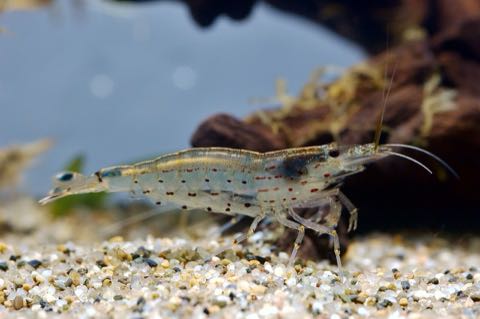 Amano shrimp
- American flagfish
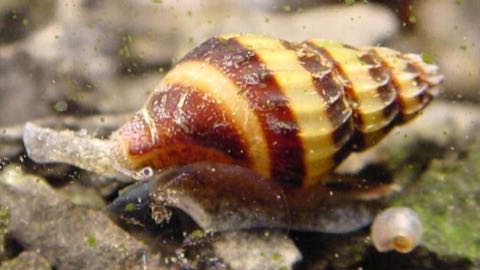 Assassin snail
- Banded gourami
- Bandit cory
- Banjo catfish
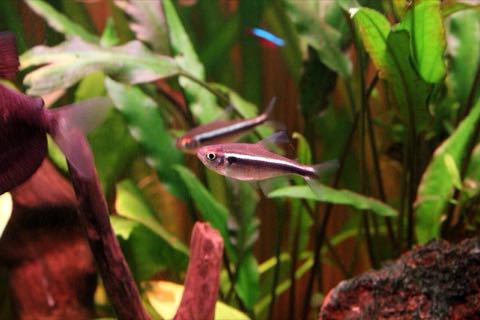 Black neon tetra
- Black phantom tetra
- Black ruby barb
Avoid with
- Acei cichlid
No shared pH rangeNo shared pH range
- Blue lyretail
Buenos Aires tetra may nip Blue lyretailBuenos Aires tetra may nip Blue lyretail
- Brevis shell dweller
No shared pH rangeNo shared pH range
- Caudopunctatus
No shared pH rangeNo shared pH range
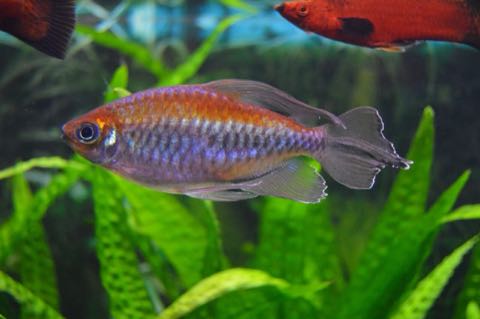 Congo tetra
Buenos Aires tetra may nip Congo tetraBuenos Aires tetra may nip Congo tetra
- Featherfin squeaker
Buenos Aires tetra may nip Featherfin squeakerBuenos Aires tetra may nip Featherfin squeaker
- Filament barb
Buenos Aires tetra may nip Filament barbBuenos Aires tetra may nip Filament barb
- Guppy
Buenos Aires tetra may nip GuppyBuenos Aires tetra may nip Guppy
- Irian Jaya rainbowfish
No shared temperature rangeNo shared temperature range
- Multies
No shared pH rangeNo shared pH range
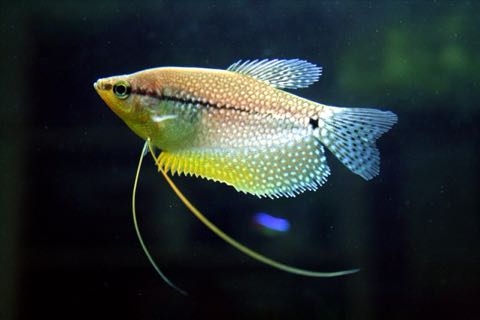 Pearl gourami
Buenos Aires tetra may nip Pearl gouramiBuenos Aires tetra may nip Pearl gourami
- Pindani
No shared pH rangeNo shared pH range
Breeding buenos aires tetras
This species scatters eggs and provides no parental care. Fine plants, spawning mops, or egg-protecting mesh in a separate dim aquarium keep the spawn less accessible to adults.This species scatters eggs and provides no parental care. Fine plants, spawning mops, or egg-protecting mesh in a separate dim aquarium keep the spawn less accessible to adults.[1]
Condition breeders with suitable small foods prior to spawning. Use gentle air-driven filtration in the spawning aquarium and move adults away once eggs appear.Condition breeders with suitable small foods prior to spawning. Use gentle air-driven filtration in the spawning aquarium and move adults away once eggs appear.[1]
Eggs commonly hatch within 24–36 hours. Offer Paramecium or similarly tiny fry food as a first food before moving to Artemia nauplii or microworms as the fry grow.Eggs commonly hatch within 24–36 hours. Offer Paramecium or similarly tiny fry food as a first food before moving to Artemia nauplii or microworms as the fry grow.[1]
Buenos Aires tetra health problems
Ich is caused by Ichthyophthirius multifiliis; white grains on skin or fins, rubbing, and faster breathing are possible signs. Quarantine incoming fish for 30 days, use separate nets and siphons to prevent moving sticky ich cysts between aquariums, and seek prompt diagnosis if signs appear.Ich is caused by Ichthyophthirius multifiliis; white grains on skin or fins, rubbing, and faster breathing are possible signs. Quarantine incoming fish for 30 days, use separate nets and siphons to prevent moving sticky ich cysts between aquariums, and seek prompt diagnosis if signs appear.[3]
Bacterial fin disease can show ragged or blood-streaked fins, ulcers, or sores, and stress makes fish more vulnerable to infection. Reduce bacterial disease risk by maintaining good water quality and removing sources of injury or aggression, and observe symptoms before choosing treatment.Bacterial fin disease can show ragged or blood-streaked fins, ulcers, or sores, and stress makes fish more vulnerable to infection. Reduce bacterial disease risk by maintaining good water quality and removing sources of injury or aggression, and observe symptoms before choosing treatment.[4][2]
Fungal cotton-wool disease produces pale fluffy growth over damaged tissue when injury, rough handling, and poor conditions let fungi overcome protective mucus. Prevent fungal entry by handling fish gently, avoiding sharp decor, and maintaining water quality; fluffy growth needs prompt assessment rather than guessing medication.Fungal cotton-wool disease produces pale fluffy growth over damaged tissue when injury, rough handling, and poor conditions let fungi overcome protective mucus. Prevent fungal entry by handling fish gently, avoiding sharp decor, and maintaining water quality; fluffy growth needs prompt assessment rather than guessing medication.[4]
Male or female?
Mature males tend to be smaller, slimmer, and more brightly coloured than females. Compare mature fish rather than relying on colour alone as an infallible method for sexing juveniles.Mature males tend to be smaller, slimmer, and more brightly coloured than females. Compare mature fish rather than relying on colour alone as an infallible method for sexing juveniles.[1]
Questions
How to tell the difference between male and female Buenos Aires Tetras?
Mature males tend to be smaller, slimmer, and more brightly coloured than females. Compare mature fish directly rather than using colour alone to sex juveniles.Mature males tend to be smaller, slimmer, and more brightly coloured than females. Compare mature fish directly rather than using colour alone to sex juveniles.[1]
Are Buenos Aires tetra fin nippers?
Yes, this boisterous species can nip fins, especially when kept in small groups or restricted space. Maintaining eight to ten or more fish helps direct social interactions within the shoal.Yes, this boisterous species can nip fins, especially when kept in small groups or restricted space. Maintaining eight to ten or more fish helps direct social interactions within the shoal.[1][2]
What can live with Buenos Aires tetra?
Robust fish like short-finned red-eye tetras, black skirt tetras, bronze corydoras, and short-finned bristlenose plecos can work with them. Both shoals need adequate room, overlapping water conditions, reserved bottom space, and observation so catfish food is not intercepted.Robust fish like short-finned red-eye tetras, black skirt tetras, bronze corydoras, and short-finned bristlenose plecos can work with them. Both shoals need adequate room, overlapping water conditions, reserved bottom space, and observation so catfish food is not intercepted.[1][2]
What is the average lifespan of a Buenos Aires tetra?
Small tetras are multiyear commitments according to OATA, but the opened sources give no numerical average lifespan for this species.Small tetras are multiyear commitments according to OATA, but the opened sources give no numerical average lifespan for this species.[2]
Are Buenos Aires Tetras peaceful?
No, they are boisterous fish that can nip fins, particularly in restricted space or small groups. Males compete over position in a loose hierarchy, and slow or long-finned fish like bettas, guppies, and angelfish should be avoided.No, they are boisterous fish that can nip fins, particularly in restricted space or small groups. Males compete over position in a loose hierarchy, and slow or long-finned fish like bettas, guppies, and angelfish should be avoided.[1][2]
Sources
- Hyphessobrycon anisitsi (Buenos Aires Tetra) — Seriously Fish. Accessed 2026-10-05.
- How to look after tetras and pencilfish — Ornamental Aquatic Trade Association. Accessed 2026-10-05.
- Ichthyophthirius multifiliis (White Spot) Infections in Fish — UF/IFAS Extension. Accessed 2026-10-05.
- Frequently asked questions on treating sick fish — Practical Fishkeeping. Accessed 2026-10-05.
- Psalidodon anisitsi (tetra Buenos Aires - Buenos Aires Tetra) — Administración de Parques Nacionales, Argentina. Accessed 2026-10-05.
Written from the sources above. Not yet reviewed by an aquarist.
Data used by the planner
| Temperature | 22–26 | AqAdvisor (aqadvisor.com), retrieved 2026-10-04 · medium confidence |
|---|---|---|
| pH | 5.5–7.5 | AqAdvisor (aqadvisor.com), retrieved 2026-10-04 · medium confidence |
| Hardness (dGH) | 1–15 | AqAdvisor (aqadvisor.com), retrieved 2026-10-04 · medium confidence |
| Origin | Paraná basin, Argentina, Paraguay and Brazil | curated-v0 (needs expert review) · low confidence |
| Beginner friendly | Yes | curated-v0 (needs expert review) · medium confidence |
| Care level | easy | curated-v0 (needs expert review) · medium confidence |
| Activity | active | curated-v0 (needs expert review) · medium confidence |
| Swimming level | middle | curated-v0 (needs expert review) · medium confidence |
| Temperament | peaceful | curated-v0 (needs expert review) · medium confidence |
| Nips fins | Yes | curated-v0 (needs expert review) · medium confidence |
| Long fins | No | curated-v0 (needs expert review) · medium confidence |
| Territorial | No | curated-v0 (needs expert review) · medium confidence |
| Lives in groups | Yes | curated-v0 (needs expert review) · medium confidence |
| Minimum group | 6 | curated-v0 (needs expert review) · medium confidence |
| Diet | omnivore | curated-v0 (needs expert review) · medium confidence |
| Lifespan (years) | 5–6 | curated-v0 (needs expert review) · low confidence |
| Months to adult size | 10 | curated-v0 (needs expert review) · low confidence |
| Safe with plants | No | curated-v0 (needs expert review) · medium confidence |