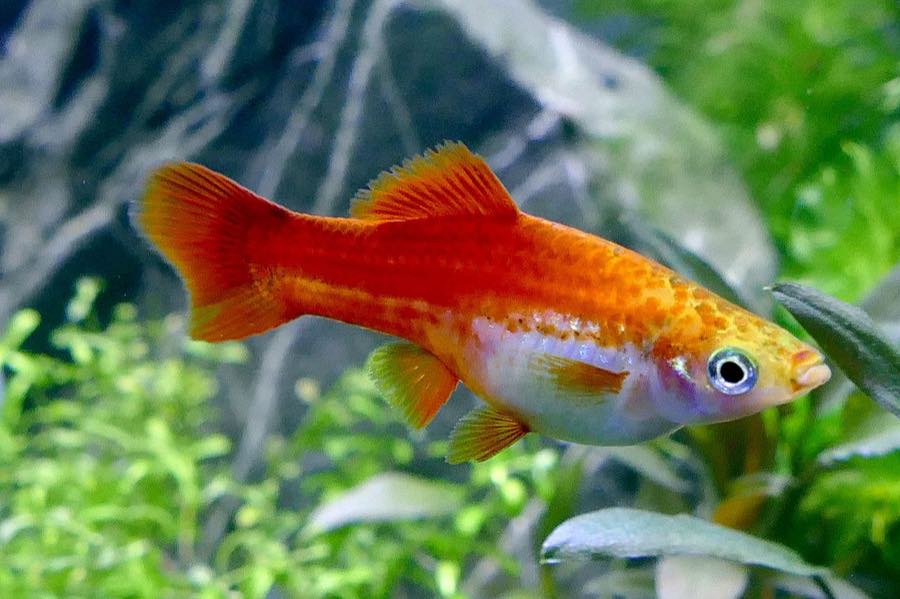
Swordtail tank size
Plan for an aquarium with a tank length of at least 120 cm. Swordtails are active swimmers that require open swimming space. Higher filtration capacity cannot substitute for this tank length.Plan for an aquarium with a tank length of at least about 4 ft (47 in). Swordtails are active swimmers that require open swimming space. Higher filtration capacity cannot substitute for this tank length.[1][2]
Seriously Fish gives an adult length of 14 cm standard length, measuring without the caudal fin. This figure differs from smaller maximum listings, and not every individual reaches this size.Seriously Fish gives an adult length of 6 in standard length, measuring without the caudal fin. This figure differs from smaller maximum listings, and not every individual reaches this size.[1]
Plant the sides and provide sheltered areas while maintaining open swimming space in the centre. You can use sand or gravel as substrate, and some water movement is appreciated.Plant the sides and provide sheltered areas while maintaining open swimming space in the centre. You can use sand or gravel as substrate, and some water movement is appreciated.[1][2]
Swordtails originate in southeastern Mexico and parts of Guatemala, Belize, and Honduras, inhabiting streams, ponds, and rivers. Selective breeding and hybridisation with platies have produced ornamental colours and extended fins.Swordtails originate in southeastern Mexico and parts of Guatemala, Belize, and Honduras, inhabiting streams, ponds, and rivers. Selective breeding and hybridisation with platies have produced ornamental colours and extended fins.[1]
Swordtail water parameters
Maintain water temperature between 22–27 °C, pH between 7.0–7.8, and general hardness between 10–12 dGH. These values provide standard maintenance targets across overlapping recommendations.Maintain water temperature between 72–81 °F, pH between 7.0–7.8, and general hardness between 10–12 dGH. These values provide standard maintenance targets across overlapping recommendations.[1][2]
A fully cycled filter is essential for swordtails. Add stock gradually, and always rinse filter media in aquarium water removed during maintenance rather than in chlorinated tap water.A fully cycled filter is essential for swordtails. Add stock gradually, and always rinse filter media in aquarium water removed during maintenance rather than in chlorinated tap water.[2]
Keep ammonia and nitrite at zero, test parameters weekly, and perform a weekly water change of one quarter of the tank volume. Use water conditioner to treat chlorine and chloramine in fresh tap water.Keep ammonia and nitrite at zero, test parameters weekly, and perform a weekly water change of one quarter of the tank volume. Use water conditioner to treat chlorine and chloramine in fresh tap water.[2]
Feeding swordtails
Feed swordtails once a day, giving only what they can consume within a few minutes. Uneaten rations decompose and pollute the aquarium water, so restricting feeding to a small portion limits waste.Feed swordtails once a day, giving only what they can consume within a few minutes. Uneaten rations decompose and pollute the aquarium water, so restricting feeding to a small portion limits waste.[2][1][5][7]
Provide quality flakes or granules containing algae, and vary this routine with small live or frozen bloodworm and daphnia. Wild stomach analyses show a mixed diet of algae, detritus, plant material, and small invertebrates, though natural foraging does not replace routine tank maintenance.Provide quality flakes or granules containing algae, and vary this routine with small live or frozen bloodworm and daphnia. Wild stomach analyses show a mixed diet of algae, detritus, plant material, and small invertebrates, though natural foraging does not replace routine tank maintenance.[2][1]
Swordtail behaviour
Keep at least three swordtails together, maintaining two females per male. This sex ratio spreads male attention across multiple females, which reduces individual pressure without eliminating all conflict.Keep at least three swordtails together, maintaining two females per male. This sex ratio spreads male attention across multiple females, which reduces individual pressure without eliminating all conflict.[2]
Swordtails can live for several years in captivity. When kept in confined spaces, males can establish dominance hierarchies. Large swordtails can be boisterous and may chase timid tank mates.Swordtails can live for several years in captivity. When kept in confined spaces, males can establish dominance hierarchies. Large swordtails can be boisterous and may chase timid tank mates.[2][1]
Observe your fish regularly for changes in appetite, hiding, swimming, skin colour, breathing, or fin condition. If their health deteriorates, test water parameters promptly and seek advice.Observe your fish regularly for changes in appetite, hiding, swimming, skin colour, breathing, or fin condition. If their health deteriorates, test water parameters promptly and seek advice.[2]
Swordtail tank mates
PlatiesPlaties share community life and overlapping water needs, but swordtails can hybridise with platies, so avoid this combination if you want to keep pure strains. share community life and overlapping water needs, but swordtails can hybridise with platies, so avoid this combination if you want to keep pure strains. MolliesMollies can fit a roomy community that matches their hard-water needs, provided you confirm all parameters and monitor for chasing. can fit a roomy community that matches their hard-water needs, provided you confirm all parameters and monitor for chasing.[1][2][5][7]
GuppiesGuppies can share compatible water conditions, but active swordtails must be watched closely, and you should separate them if timid guppies are chased. can share compatible water conditions, but active swordtails must be watched closely, and you should separate them if timid guppies are chased. Bronze corydorasBronze corydoras can also be considered where water conditions align, provided their bottom floor space and separate shoaling requirements are met. can also be considered where water conditions align, provided their bottom floor space and separate shoaling requirements are met.[2]
Avoid predatory cichlids like Avoid predatory cichlids like oscarsoscars, whose predatory nature makes substantially smaller fish potential prey. Avoid , whose predatory nature makes substantially smaller fish potential prey. Avoid Jack DempseysJack Dempseys due to mature territorial aggression and predation risks. You should also avoid due to mature territorial aggression and predation risks. You should also avoid pea pufferspea puffers, which can nip long fins and damage ornamental swordtail finnage., which can nip long fins and damage ornamental swordtail finnage.[5][6][7][1]
Usually fine together
- African butterfly cichlid
- African clawed frog
- Agassiz's cory
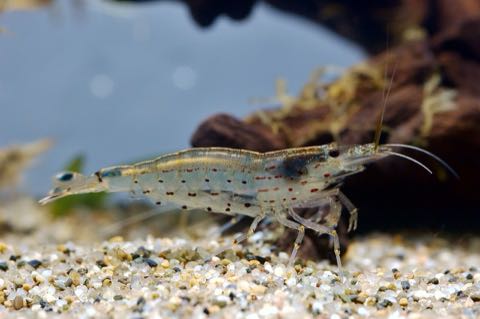 Amano shrimp
- American flagfish
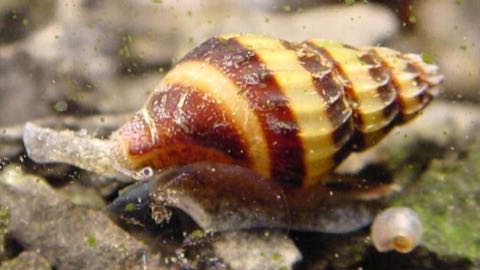 Assassin snail
- Banded gourami
- Bandit cory
- Banjo catfish
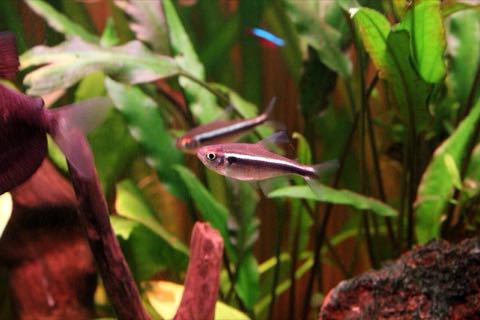 Black neon tetra
- Black phantom tetra
- Black ruby barb
Avoid with
- Alligator gar
Alligator gar may eat SwordtailAlligator gar may eat Swordtail
- Antenna ray
Antenna ray may eat SwordtailAntenna ray may eat Swordtail
- Arapaima
Arapaima may eat SwordtailArapaima may eat Swordtail
- Asian arowana
Asian arowana may eat SwordtailAsian arowana may eat Swordtail
- Australian pearl arowana
Australian pearl arowana may eat SwordtailAustralian pearl arowana may eat Swordtail
- Barred bichir
Barred bichir may eat SwordtailBarred bichir may eat Swordtail
- Bullseye snakehead
Bullseye snakehead may eat SwordtailBullseye snakehead may eat Swordtail
- Butterfly peacock bass
Butterfly peacock bass may eat SwordtailButterfly peacock bass may eat Swordtail
- Channel catfish
Channel catfish may eat SwordtailChannel catfish may eat Swordtail
- Clown knifefish
Clown knifefish may eat SwordtailClown knifefish may eat Swordtail
- Common river stingray
Common river stingray may eat SwordtailCommon river stingray may eat Swordtail
- Congo bichir
Congo bichir may eat SwordtailCongo bichir may eat Swordtail
Breeding swordtails
Swordtails reproduce through internal fertilisation and give birth to live fry. Females can store viable sperm for months after mating, allowing them to produce subsequent broods after males have been removed.Swordtails reproduce through internal fertilisation and give birth to live fry. Females can store viable sperm for months after mating, allowing them to produce subsequent broods after males have been removed.[1][2]
Within the livebearer care group, pregnancy lasts around 24–30 days and yields broods of 20–80 fry according to OATA. These numbers serve as approximate care-sheet figures rather than fixed outcomes.Within the livebearer care group, pregnancy lasts around 24–30 days and yields broods of 20–80 fry according to OATA. These numbers serve as approximate care-sheet figures rather than fixed outcomes.[2][1]
Adult swordtails may eat fry. Supplying plant cover or using a separate suitable rearing aquarium improves the chance of raising young, which should be fed an appropriate specialist fry food.Adult swordtails may eat fry. Supplying plant cover or using a separate suitable rearing aquarium improves the chance of raising young, which should be fed an appropriate specialist fry food.[2][1]
Swordtail health problems
Ich is caused by the parasite Ichthyophthirius multifiliis. Possible visible signs include salt-like white spots, rubbing, reduced appetite, and rapid breathing, though appearance alone is not a complete diagnosis. Quarantining new fish for 30 days and keeping nets separate or disinfected helps reduce the introduction of the parasite.Ich is caused by the parasite Ichthyophthirius multifiliis. Possible visible signs include salt-like white spots, rubbing, reduced appetite, and rapid breathing, though appearance alone is not a complete diagnosis. Quarantining new fish for 30 days and keeping nets separate or disinfected helps reduce the introduction of the parasite.[3]
Fin rot is a bacterial issue associated with poor conditions and stress, causing fins to fray, develop red blood streaks, and progressively shrink. Check water quality, address injuries and harassment from tank mates, and seek fish-health advice if fin condition deteriorates.Fin rot is a bacterial issue associated with poor conditions and stress, causing fins to fray, develop red blood streaks, and progressively shrink. Check water quality, address injuries and harassment from tank mates, and seek fish-health advice if fin condition deteriorates.[4]
Fungal infection can present as grey-white cotton on injured skin when physical wounds or environmental stress weaken protective mucus layers. Reduce injury through smooth furnishings, careful handling, and good water quality, and seek prompt advice if unusual growths appear.Fungal infection can present as grey-white cotton on injured skin when physical wounds or environmental stress weaken protective mucus layers. Reduce injury through smooth furnishings, careful handling, and good water quality, and seek prompt advice if unusual growths appear.[4]
Male or female?
Adult males usually have a gonopodium, which is a modified anal fin, and a lower tail extension. Females have a triangular anal fin and are usually larger than males.Adult males usually have a gonopodium, which is a modified anal fin, and a lower tail extension. Females have a triangular anal fin and are usually larger than males.[1][2]
In some ornamental strains, females can also develop extended fins, meaning tail shape alone is not sufficient to determine sex. Inspect the anal fin to identify whether a gonopodium or a triangular anal fin is present.In some ornamental strains, females can also develop extended fins, meaning tail shape alone is not sufficient to determine sex. Inspect the anal fin to identify whether a gonopodium or a triangular anal fin is present.[1][2]
Questions
Are swordtail fish easy to care for?
Swordtails require a tank length of at least 120 cm for active swimming. You must maintain zero ammonia and nitrite, a temperature of 22–27 °C, pH 7.0–7.8, and 10–12 dGH.Swordtails require a tank length of at least about 4 ft (47 in) for active swimming. You must maintain zero ammonia and nitrite, a temperature of 72–81 °F, pH 7.0–7.8, and 10–12 dGH.[1][2]
How many swordtails should I keep together?
Keep at least three swordtails together, maintaining two females per male. This ratio spreads male attention across multiple fish, reducing pressure without eliminating conflict.Keep at least three swordtails together, maintaining two females per male. This ratio spreads male attention across multiple fish, reducing pressure without eliminating conflict.[2]
How long do swordtail fish last?
Swordtails live for several years according to OATA descriptions. You can observe their daily condition through activity, swimming, skin colour, fin state, and appetite.Swordtails live for several years according to OATA descriptions. You can observe their daily condition through activity, swimming, skin colour, fin state, and appetite.[2]
Can you mix swordtails and guppies?
Yes, swordtails and guppies can share suitable water conditions. However, large swordtails can be boisterous, so watch them closely and separate them if timid guppies are chased.Yes, swordtails and guppies can share suitable water conditions. However, large swordtails can be boisterous, so watch them closely and separate them if timid guppies are chased.[2][1]
How to tell if swordtail is male or female?
Adult males usually have a gonopodium, which is a modified anal fin, and a lower tail extension. Females have a triangular anal fin and are usually larger.Adult males usually have a gonopodium, which is a modified anal fin, and a lower tail extension. Females have a triangular anal fin and are usually larger.[1][2]
Sources
- Xiphophorus hellerii (Green Swordtail) — Seriously Fish. Accessed 2026-10-05.
- How to look after platies and swordtails — Ornamental Aquatic Trade Association. Accessed 2026-10-05.
- Ichthyophthirius multifiliis (White Spot) Infections in Fish — UF/IFAS Extension. Accessed 2026-10-05.
- Frequently asked questions on treating sick fish — Practical Fishkeeping. Accessed 2026-10-05.
- Astronotus ocellatus (Oscar) — Seriously Fish. Accessed 2026-10-05.
- Rocio octofasciata (Jack Dempsey) — Seriously Fish. Accessed 2026-10-05.
- Carinotetraodon travancoricus (Dwarf Puffer) — Seriously Fish. Accessed 2026-10-05.
Written from the sources above. Not yet reviewed by an aquarist.
Data used by the planner
| Temperature | 18–27 | AqAdvisor (aqadvisor.com), retrieved 2026-10-04 · low confidence |
|---|---|---|
| pH | 5.5–7.8 | AqAdvisor (aqadvisor.com), retrieved 2026-10-04 · low confidence |
| Hardness (dGH) | 1–15 | AqAdvisor (aqadvisor.com), retrieved 2026-10-04 · low confidence |
| Origin | Central and northern South America | curated-v0 (needs expert review) · low confidence |
| Beginner friendly | Yes | curated-v0 (needs expert review) · medium confidence |
| Care level | easy | curated-v0 (needs expert review) · medium confidence |
| Activity | active | curated-v0 (needs expert review) · medium confidence |
| Swimming level | middle | curated-v0 (needs expert review) · medium confidence |
| Temperament | peaceful | curated-v0 (needs expert review) · medium confidence |
| Nips fins | No | curated-v0 (needs expert review) · medium confidence |
| Long fins | No | curated-v0 (needs expert review) · medium confidence |
| Territorial | No | curated-v0 (needs expert review) · medium confidence |
| Lives in groups | No | curated-v0 (needs expert review) · medium confidence |
| Minimum group | 1 | curated-v0 (needs expert review) · medium confidence |
| Diet | omnivore | curated-v0 (needs expert review) · medium confidence |
| Lifespan (years) | 5–10 | curated-v0 (needs expert review) · low confidence |
| Months to adult size | 12 | curated-v0 (needs expert review) · low confidence |
| Safe with plants | Yes | curated-v0 (needs expert review) · medium confidence |
| Minimum tank length | 90 | curated-v0 (needs expert review) · medium confidence |