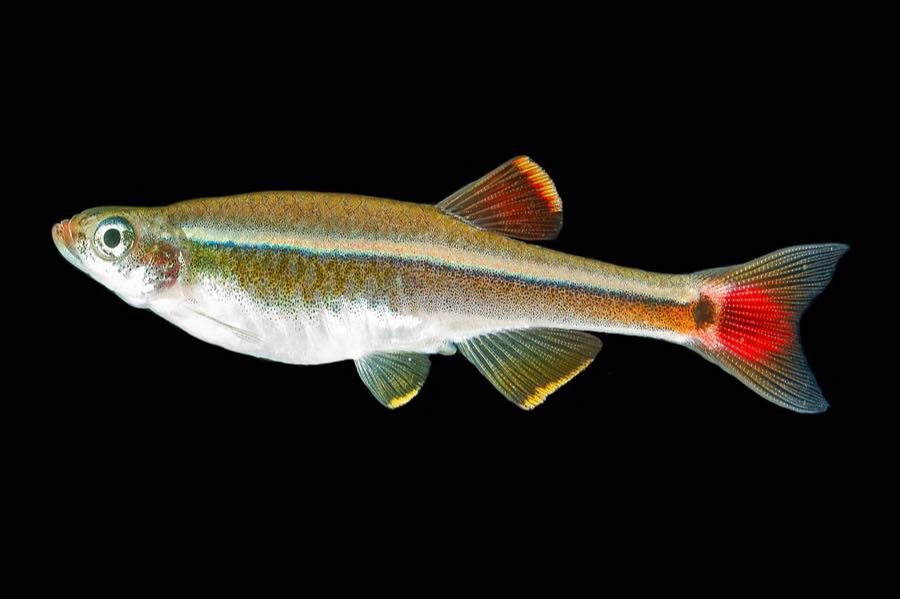
White cloud minnow tank size
Plan for an aquarium with a minimum tank length of 60 cm to allow adequate swimming room for a group. Adults reach about 4 cm adult length standard length, making them modest in individual size yet demanding of open lateral space. Provide adequate base width to accommodate planting and movement rather than focusing on narrow vertical displays.Plan for an aquarium with a minimum tank length of 24 in to allow adequate swimming room for a group. Adults reach about 2 in adult length standard length, making them modest in individual size yet demanding of open lateral space. Provide adequate base width to accommodate planting and movement rather than focusing on narrow vertical displays.[1]
Wild populations inhabit southern China and northern Vietnam, including a clear spring-fed mountain stream in Guangdong with thick aquatic growth. Use a dark substrate with dense planting to encourage your minnows to show their richest coloration. You can create a natural layout by adding floating plants, driftwood roots, branches, and dried leaf litter.Wild populations inhabit southern China and northern Vietnam, including a clear spring-fed mountain stream in Guangdong with thick aquatic growth. Use a dark substrate with dense planting to encourage your minnows to show their richest coloration. You can create a natural layout by adding floating plants, driftwood roots, branches, and dried leaf litter.[1]
White cloud minnow water parameters
Maintain water temperatures between 14–22 °C, with a pH of 6–8 and hardness of 5–15 dGH. While these fish tolerate a range of conditions, routine exposure to warmer tropical temperatures is likely to shorten their lifespan. A heater may be unnecessary in an indoor room that stays within this thermal window.Maintain water temperatures between 57–72 °F, with a pH of 6–8 and hardness of 5–15 dGH. While these fish tolerate a range of conditions, routine exposure to warmer tropical temperatures is likely to shorten their lifespan. A heater may be unnecessary in an indoor room that stays within this thermal window.[1]
Provide moderate water movement, though the filtration does not need to be excessively turbulent. Establish mature biological filtration before introducing any stock. Keep ammonia and nitrite undetectable, test your parameters weekly, and perform a weekly water change of roughly one quarter using conditioned replacement water.Provide moderate water movement, though the filtration does not need to be excessively turbulent. Establish mature biological filtration before introducing any stock. Keep ammonia and nitrite undetectable, test your parameters weekly, and perform a weekly water change of roughly one quarter using conditioned replacement water.[1][7][2]
Feeding white cloud minnows
Offer a varied diet consisting of good-quality dried flakes or granules with added plant or algal content. Supplement dry foods with small live or frozen fare such as Daphnia, Artemia, and small bloodworm. Feed your fish once per day, offering only what they consume within a few minutes to prevent decaying leftovers from polluting the water.Offer a varied diet consisting of good-quality dried flakes or granules with added plant or algal content. Supplement dry foods with small live or frozen fare such as Daphnia, Artemia, and small bloodworm. Feed your fish once per day, offering only what they consume within a few minutes to prevent decaying leftovers from polluting the water.[1][2]
White cloud minnow behaviour
Keep a group of at least ten minnows together in the aquarium. Maintaining an adequate group reduces nervousness in the school and encourages rival males to display their finest colours. This peaceful species acts as a schooling fish that swims in the midwater area of the tank.Keep a group of at least ten minnows together in the aquarium. Maintaining an adequate group reduces nervousness in the school and encourages rival males to display their finest colours. This peaceful species acts as a schooling fish that swims in the midwater area of the tank.[1][7]
In a mature tank with clean water, these small minnows can live for several years. Several captive colour forms exist, including golden, albino, super red, and long-finned strains. All of these ornamental varieties share identical care requirements with the wild type.In a mature tank with clean water, these small minnows can live for several years. Several captive colour forms exist, including golden, albino, super red, and long-finned strains. All of these ornamental varieties share identical care requirements with the wild type.[2][1]
White cloud minnow tank mates
Any tank companions must share the cooler water preferences of this species. Peaceful companions include Any tank companions must share the cooler water preferences of this species. Peaceful companions include rosy barbsrosy barbs and and gold barbsgold barbs, provided the tank offers enough space and correct group sizes for each species. , provided the tank offers enough space and correct group sizes for each species. Zebra daniosZebra danios can also work in a cool stream-style setup, though you should monitor feeding time to ensure both shoals get food. can also work in a cool stream-style setup, though you should monitor feeding time to ensure both shoals get food.[1][2]
You can add You can add Amano shrimpAmano shrimp to a planted or moss-heavy setup, provided their specific feeding and parameter needs are met. Avoid keeping minnows with large predatory fishes like to a planted or moss-heavy setup, provided their specific feeding and parameter needs are met. Avoid keeping minnows with large predatory fishes like oscarsoscars or aggressive cichlids like or aggressive cichlids like Jack DempseysJack Dempseys, which prey on or harass small fish. You must also avoid , which prey on or harass small fish. You must also avoid common goldfishcommon goldfish, as larger goldfish can swallow these tiny minnows despite sharing cool water temperatures., as larger goldfish can swallow these tiny minnows despite sharing cool water temperatures.[7][5][6][2]
Usually fine together
- African butterfly cichlid
- African clawed frog
- Agassiz's cory
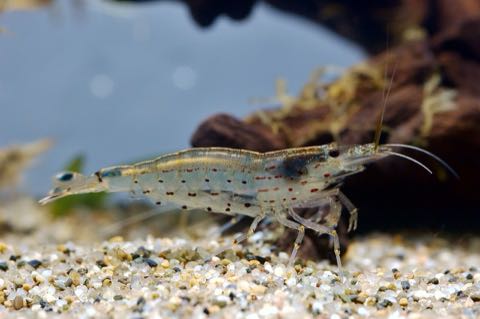 Amano shrimp
- American flagfish
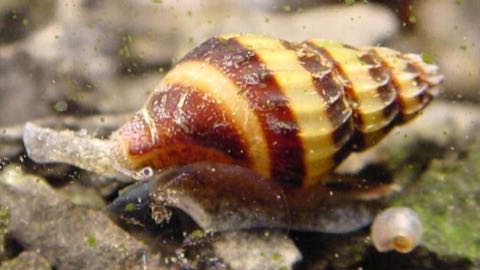 Assassin snail
- Banded gourami
- Bandit cory
- Banjo catfish
- Black phantom tetra
- Black ruby barb
- Blackline rasbora
Avoid with
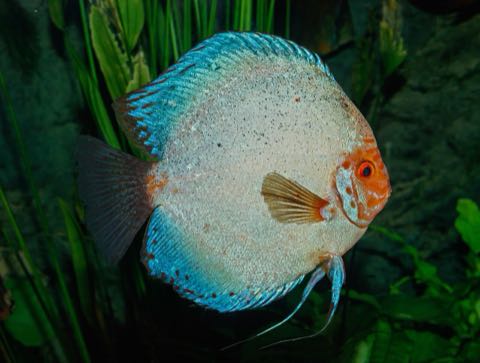 Discus
Check Discus with White cloud mountain minnowCheck Discus with White cloud mountain minnow
- Irian Jaya rainbowfish
No shared temperature rangeNo shared temperature range
- Parkinson's rainbowfish
No shared temperature rangeNo shared temperature range
- Rusty cichlid
No shared temperature rangeNo shared temperature range
- African knifefish
African knifefish may eat White cloud mountain minnowAfrican knifefish may eat White cloud mountain minnow
- African pike
African pike may eat White cloud mountain minnowAfrican pike may eat White cloud mountain minnow
- Alligator gar
Alligator gar may eat White cloud mountain minnowAlligator gar may eat White cloud mountain minnow
- Altum angelfish
No shared temperature rangeNo shared temperature range
- Antenna ray
Antenna ray may eat White cloud mountain minnowAntenna ray may eat White cloud mountain minnow
- Arapaima
Arapaima may eat White cloud mountain minnowArapaima may eat White cloud mountain minnow
- Arrowhead puffer
Arrowhead puffer may eat White cloud mountain minnowArrowhead puffer may eat White cloud mountain minnow
- Asian arowana
Asian arowana may eat White cloud mountain minnowAsian arowana may eat White cloud mountain minnow
Breeding white cloud minnows
White clouds are egg-scatterers that provide no parental care. In a mature, heavily planted species display, a small number of fry may appear without active human intervention. However, the adult fish may eat their own eggs after spawning takes place.White clouds are egg-scatterers that provide no parental care. In a mature, heavily planted species display, a small number of fry may appear without active human intervention. However, the adult fish may eat their own eggs after spawning takes place.[1]
For deliberate propagation, set up a dimly lit separate tank equipped with an air stone or gentle sponge filter. Add fine-leaved plants, spawning mops, or a mesh floor that lets eggs fall out of reach of the adults. Remove the breeding adults within two to three days after spawning.For deliberate propagation, set up a dimly lit separate tank equipped with an air stone or gentle sponge filter. Add fine-leaved plants, spawning mops, or a mesh floor that lets eggs fall out of reach of the adults. Remove the breeding adults within two to three days after spawning.[1]
The eggs hatch within 48–60 hours. Once the young become free-swimming, supply them with microscopic infusoria-grade foods until they are large enough to take microworms or newly hatched Artemia nauplii.The eggs hatch within 48–60 hours. Once the young become free-swimming, supply them with microscopic infusoria-grade foods until they are large enough to take microworms or newly hatched Artemia nauplii.[1]
White cloud minnow health problems
Ich is a freshwater parasite infection that can manifest as salt-like white spots over the body and fins. Affected fish may exhibit flashing or rubbing against decor, reduced appetite, and irritated gills. Appearance alone does not confirm diagnosis, so seek prompt advice. You can reduce introduction risks by quarantining new arrivals for at least 30 days and disinfecting nets.Ich is a freshwater parasite infection that can manifest as salt-like white spots over the body and fins. Affected fish may exhibit flashing or rubbing against decor, reduced appetite, and irritated gills. Appearance alone does not confirm diagnosis, so seek prompt advice. You can reduce introduction risks by quarantining new arrivals for at least 30 days and disinfecting nets.[3]
Fin rot is a bacterial issue prompted by poor water conditions and chronic stress. Visible signs include fraying fins, red streaks on fin tissue, and progressive tissue shrinking. Maintain water quality and eliminate sources of physical trauma or chasing from tank mates to lower the likelihood of rot developing.Fin rot is a bacterial issue prompted by poor water conditions and chronic stress. Visible signs include fraying fins, red streaks on fin tissue, and progressive tissue shrinking. Maintain water quality and eliminate sources of physical trauma or chasing from tank mates to lower the likelihood of rot developing.[4]
Fungal infection appears as grey-white, cottony patches on damaged skin where injury and environmental stress compromise the protective mucus. Using smooth decor, handling fish gently, and maintaining good water quality reduce injury risks. Seek prompt advice whenever cottony growths develop on your fish.Fungal infection appears as grey-white, cottony patches on damaged skin where injury and environmental stress compromise the protective mucus. Using smooth decor, handling fish gently, and maintaining good water quality reduce injury risks. Seek prompt advice whenever cottony growths develop on your fish.[4]
Male or female?
Sexing requires observing body shape and coloration. Mature females typically display rounder bellies and may appear slightly larger overall. Males remain noticeably slimmer and show more vibrant, intense colour displays, especially when flaring alongside rival males in the school.Sexing requires observing body shape and coloration. Mature females typically display rounder bellies and may appear slightly larger overall. Males remain noticeably slimmer and show more vibrant, intense colour displays, especially when flaring alongside rival males in the school.[1]
Questions
Do white cloud minnows need a heater?
A heater is often unnecessary if your aquarium room stays within their 14–22 °C range. However, you must avoid chronic warmth, as long-term exposure to higher temperatures shortens their lifespan.A heater is often unnecessary if your aquarium room stays within their 57–72 °F range. However, you must avoid chronic warmth, as long-term exposure to higher temperatures shortens their lifespan.[1]
How many white cloud minnows should I keep together?
Keep a group of at least ten minnows. Adequate numbers reduce nervousness in the school and prompt the males to show off their best colours.Keep a group of at least ten minnows. Adequate numbers reduce nervousness in the school and prompt the males to show off their best colours.[1]
Can white cloud minnows live with goldfish?
No, you should avoid housing them together. While both species tolerate cool water, larger common goldfish can readily eat small minnows.No, you should avoid housing them together. While both species tolerate cool water, larger common goldfish can readily eat small minnows.[2]
What is a golden white cloud minnow?
A golden white cloud minnow is a captive ornamental colour variety of the species. It shares the exact same care, diet, and water temperature requirements as the standard wild form.A golden white cloud minnow is a captive ornamental colour variety of the species. It shares the exact same care, diet, and water temperature requirements as the standard wild form.[1]
How often should I feed white cloud minnows?
Feed them once per day. Offer only the amount of dried or live food they will completely consume within a few minutes to protect water quality.Feed them once per day. Offer only the amount of dried or live food they will completely consume within a few minutes to protect water quality.[2]
How can I tell male and female white cloud minnows apart?
Look at belly fullness and color intensity. Mature females possess rounder bellies and slightly larger bodies, while males are slimmer and display brighter colours.Look at belly fullness and color intensity. Mature females possess rounder bellies and slightly larger bodies, while males are slimmer and display brighter colours.[1]
Sources
- Tanichthys albonubes (White Cloud Mountain Minnow) — Seriously Fish. Accessed 2026-10-05.
- How to look after danios and white cloud mountain minnows — Ornamental Aquatic Trade Association. Accessed 2026-10-05.
- Ichthyophthirius multifiliis (White Spot) Infections in Fish — UF/IFAS Extension. Accessed 2026-10-05.
- Frequently asked questions on treating sick fish — Practical Fishkeeping. Accessed 2026-10-05.
- Astronotus ocellatus (Oscar) — Seriously Fish. Accessed 2026-10-05.
- Rocio octofasciata (Jack Dempsey) — Seriously Fish. Accessed 2026-10-05.
- How to set up a White Cloud biotope — Practical Fishkeeping. Accessed 2026-10-05.
Written from the sources above. Not yet reviewed by an aquarist.
Data used by the planner
| Temperature | 8–25 | AqAdvisor (aqadvisor.com), retrieved 2026-10-04 · low confidence |
|---|---|---|
| pH | 6–8 | AqAdvisor (aqadvisor.com), retrieved 2026-10-04; agrees with FishBase (fishbase.se), retrieved 2026-10-04 · medium confidence |
| Hardness (dGH) | 5–15 | AqAdvisor (aqadvisor.com), retrieved 2026-10-04 · low confidence |
| Origin | Asia or captive aquarium strains | curated-v0 (needs expert review) · low confidence |
| Beginner friendly | Yes | curated-v0 (needs expert review) · medium confidence |
| Care level | easy | curated-v0 (needs expert review) · medium confidence |
| Activity | active | curated-v0 (needs expert review) · medium confidence |
| Swimming level | middle | curated-v0 (needs expert review) · medium confidence |
| Temperament | peaceful | curated-v0 (needs expert review) · medium confidence |
| Nips fins | No | curated-v0 (needs expert review) · medium confidence |
| Long fins | No | curated-v0 (needs expert review) · medium confidence |
| Territorial | No | curated-v0 (needs expert review) · medium confidence |
| Lives in groups | Yes | curated-v0 (needs expert review) · medium confidence |
| Minimum group | 6 | curated-v0 (needs expert review) · medium confidence |
| Diet | omnivore | curated-v0 (needs expert review) · medium confidence |
| Lifespan (years) | 2–4 | curated-v0 (needs expert review) · low confidence |
| Months to adult size | 6 | curated-v0 (needs expert review) · low confidence |
| Safe with plants | Yes | curated-v0 (needs expert review) · medium confidence |
| Minimum tank length | 60 | curated-v0 (needs expert review) · medium confidence |