Firemouth cichlid tank size
Plan on a footprint of at least 120 cm × 30 cm when housing a bonded pair. Additional volume and floor space are required for larger cohorts or community companions, as extra biological filtration cannot compensate for limited swimming room or shared territory boundaries.Plan on a footprint of at least about 4 ft (47 in) × 12 in when housing a bonded pair. Additional volume and floor space are required for larger cohorts or community companions, as extra biological filtration cannot compensate for limited swimming room or shared territory boundaries.[1]
Standard adult length is roughly 12 cm standard length, though males can attain 15 cm. Their geographic range spans Atlantic drainages in Mexico, northern Belize, and Guatemala, where they occupy quiet cenotes, ponds, and slow-moving stream systems.Standard adult length is roughly 5 in standard length, though males can attain 6 in. Their geographic range spans Atlantic drainages in Mexico, northern Belize, and Guatemala, where they occupy quiet cenotes, ponds, and slow-moving stream systems.[1][5]
Aquascape with soft sand, water-smoothed river stones, driftwood branches, and shaded crevices. Firemouths sift through substrate by scooping mouthfuls of fine sand, filtering out food particles, and expelling leftover sediment through their gills and mouth.Aquascape with soft sand, water-smoothed river stones, driftwood branches, and shaded crevices. Firemouths sift through substrate by scooping mouthfuls of fine sand, filtering out food particles, and expelling leftover sediment through their gills and mouth.[1]
Aquarists occasionally encounter the Angeles river variety from Río Mamantel under the name black firemouth. Certain specimens from this regional population, especially females, display deeply darkened flanks paired with yellowish throat markings.Aquarists occasionally encounter the Angeles river variety from Río Mamantel under the name black firemouth. Certain specimens from this regional population, especially females, display deeply darkened flanks paired with yellowish throat markings.[5]
Firemouth cichlid water parameters
Aim for water temperatures between 24–27 °C, with acidity between pH 6.5–7.5 and hardness around 6–10 dGH. Always establish the nitrogen cycle before introducing stock, avoiding immature filtration setups entirely.Aim for water temperatures between 75–81 °F, with acidity between pH 6.5–7.5 and hardness around 6–10 dGH. Always establish the nitrogen cycle before introducing stock, avoiding immature filtration setups entirely.[1][2][5]
Swap out one quarter of tank volume weekly, preparing replacement water with conditioner to neutralise chlorine and chloramines.Swap out one quarter of tank volume weekly, preparing replacement water with conditioner to neutralise chlorine and chloramines.[2]
Allow biological filters to mature fully before purchasing fish, building population levels gradually. When sponge or foam media blocks flow, clean it by squeezing it inside discarded tank water rather than tap water.Allow biological filters to mature fully before purchasing fish, building population levels gradually. When sponge or foam media blocks flow, clean it by squeezing it inside discarded tank water rather than tap water.[2]
Feeding firemouth cichlids
Wild cichlids browse on detritus, small molluscs, and aquatic crustaceans. In captivity, provide fine-grade dry pellets or flakes supplemented with Spirulina flakes and live or frozen invertebrate fare like bloodworms, brine shrimp, and daphnia.Wild cichlids browse on detritus, small molluscs, and aquatic crustaceans. In captivity, provide fine-grade dry pellets or flakes supplemented with Spirulina flakes and live or frozen invertebrate fare like bloodworms, brine shrimp, and daphnia.[1][5]
Feed fish once a day, gauging the portion so everything disappears within a few minutes.Feed fish once a day, gauging the portion so everything disappears within a few minutes.[2]
Firemouth cichlid behaviour
While not remarkably aggressive compared with larger Central American cichlids, firemouths become territorial while spawning and may consume much smaller tank companions.While not remarkably aggressive compared with larger Central American cichlids, firemouths become territorial while spawning and may consume much smaller tank companions.[1]
Non-breeding firemouths behave socially. Keeping a single specimen alone is not the preferred approach.Non-breeding firemouths behave socially. Keeping a single specimen alone is not the preferred approach.[1]
When resolving territorial boundaries, individuals erect their branchiostegal membranes in gill-flaring stances. The bright orange or crimson pigmentation beneath the lower jaw intensifies as fish reach adult maturity.When resolving territorial boundaries, individuals erect their branchiostegal membranes in gill-flaring stances. The bright orange or crimson pigmentation beneath the lower jaw intensifies as fish reach adult maturity.[1][5]
Provided they receive routine maintenance in an established, mature aquarium environment, these cichlids can live for several years.Provided they receive routine maintenance in an established, mature aquarium environment, these cichlids can live for several years.[2]
Firemouth cichlid tank mates
SwordtailsSwordtails can be housed alongside firemouths under livebearer guidance if tank dimensions provide enough open swimming lanes and retreat zones away from active nesting territories. can be housed alongside firemouths under livebearer guidance if tank dimensions provide enough open swimming lanes and retreat zones away from active nesting territories.[1]
PlatiesPlaties represent another livebearer option provided every specimen is large enough to avoid being eaten and water requirements match, although the shared temperature window is narrow. represent another livebearer option provided every specimen is large enough to avoid being eaten and water requirements match, although the shared temperature window is narrow.[1]
Sailfin molliesSailfin mollies can be considered where hard water chemistry overlaps, giving them plenty of vertical space to steer clear of bottom-dwelling cichlid territories. can be considered where hard water chemistry overlaps, giving them plenty of vertical space to steer clear of bottom-dwelling cichlid territories.[1]
Full-grown adult Full-grown adult gold barbsgold barbs may work well if individual body sizes are too large to be swallowed and group numbers, swimming space, and water values align. may work well if individual body sizes are too large to be swallowed and group numbers, swimming space, and water values align.[5]
Steer clear of tiny schooling fish such as Steer clear of tiny schooling fish such as neon tetrasneon tetras, , ember tetrasember tetras, and , and chili rasboraschili rasboras. Their small stature exposes them to predation risks, as adult firemouths may consume much smaller tank mates.. Their small stature exposes them to predation risks, as adult firemouths may consume much smaller tank mates.[1]
Usually fine together
- African butterfly cichlid
- Agassiz's cory
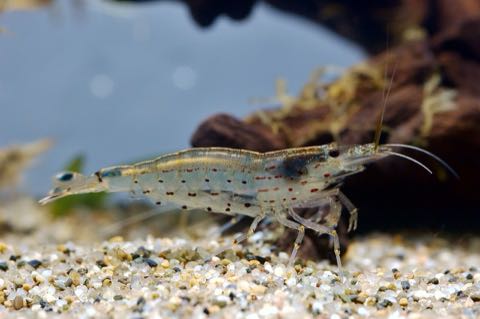 Amano shrimp
- American flagfish
- Banded gourami
- Bandit cory
- Banjo catfish
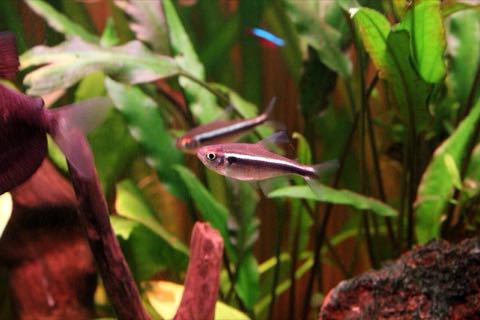 Black neon tetra
- Black phantom tetra
- Black ruby barb
- Bleeding heart tetra
- Blind cave tetra
Avoid with
- Acei cichlid
No shared pH rangeNo shared pH range
- Brevis shell dweller
No shared pH rangeNo shared pH range
- Caudopunctatus
No shared pH rangeNo shared pH range
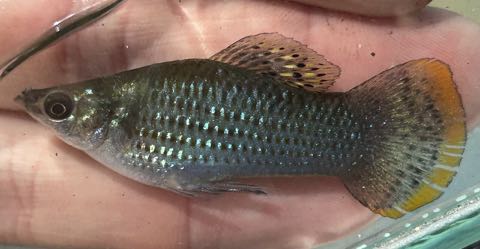 Molly
MollyNo shared water hardness rangeNo shared water hardness range
- Multies
No shared pH rangeNo shared pH range
- Pindani
No shared pH rangeNo shared pH range
- Rusty cichlid
No shared pH rangeNo shared pH range
- Saulosi cichlid
No shared pH rangeNo shared pH range
- Similis shell dweller
No shared pH rangeNo shared pH range
- Afra cichlid
No shared pH rangeNo shared pH range
- Alligator gar
Alligator gar may eat Firemouth cichlidAlligator gar may eat Firemouth cichlid
- Antenna ray
Antenna ray may eat Firemouth cichlidAntenna ray may eat Firemouth cichlid
Breeding firemouth cichlids
Firemouths form biparental partnerships and spawn on hard substrates. Females affix adhesive clutches to flat rocks, submerged wood, broad plant leaves, or aquarium glass, with both parents standing guard over the brood, though disturbed young pairs may consume early spawns.Firemouths form biparental partnerships and spawn on hard substrates. Females affix adhesive clutches to flat rocks, submerged wood, broad plant leaves, or aquarium glass, with both parents standing guard over the brood, though disturbed young pairs may consume early spawns.[1]
Allow compatible pairs to select each other naturally out of a juvenile cohort, moving bonded pairs into designated quarters. If your objective is raising heavy numbers of fry in community tanks, removing tank mates or moving clutches is recommended.Allow compatible pairs to select each other naturally out of a juvenile cohort, moving bonded pairs into designated quarters. If your objective is raising heavy numbers of fry in community tanks, removing tank mates or moving clutches is recommended.[1]
Larvae reach the free-swimming stage roughly 4–5 days after egg deposition. At this point, offer fine powdered starter meals, newly hatched baby brine shrimp nauplii, or live microworms.Larvae reach the free-swimming stage roughly 4–5 days after egg deposition. At this point, offer fine powdered starter meals, newly hatched baby brine shrimp nauplii, or live microworms.[1]
Firemouth cichlid health problems
White spot disease arises from the ciliate Ichthyophthirius multifiliis. Visible warning signs include salt-like white cysts across the epidermis, scratching on decor, inappetence, and rapid gill movement, though cysts alone do not confirm diagnosis. Reduce parasite introduction by isolating new arrivals in quarantine for at least 30 days and using dedicated or disinfected gear, contacting an aquatic veterinary professional if sickness occurs.White spot disease arises from the ciliate Ichthyophthirius multifiliis. Visible warning signs include salt-like white cysts across the epidermis, scratching on decor, inappetence, and rapid gill movement, though cysts alone do not confirm diagnosis. Reduce parasite introduction by isolating new arrivals in quarantine for at least 30 days and using dedicated or disinfected gear, contacting an aquatic veterinary professional if sickness occurs.[3]
Fin rot is a bacterial disorder prompted by physical stress, aggression, or poor water parameters. Fins begin fraying, exhibit bloody red streaks, and slowly erode away. Inspect chemical parameters, reduce social aggression, and seek veterinary advice if tissues deteriorate.Fin rot is a bacterial disorder prompted by physical stress, aggression, or poor water parameters. Fins begin fraying, exhibit bloody red streaks, and slowly erode away. Inspect chemical parameters, reduce social aggression, and seek veterinary advice if tissues deteriorate.[4]
Fungal issues may present as pale greyish, cotton-like tufts across traumatized skin when damaged mucus barriers leave flesh exposed.Fungal issues may present as pale greyish, cotton-like tufts across traumatized skin when damaged mucus barriers leave flesh exposed.[4]
Male or female?
Distinguishing sex in juvenile fish is exceptionally challenging. Mature males generally reach larger overall sizes, display deeper red coloration, and develop elongated filaments extending from their anal and dorsal fins.Distinguishing sex in juvenile fish is exceptionally challenging. Mature males generally reach larger overall sizes, display deeper red coloration, and develop elongated filaments extending from their anal and dorsal fins.[1]
Questions
How many firemouth cichlids should be kept together?
Seriously Fish recommends groups of eight or more outside of breeding periods. Alternatively, house a single compatible pair on a footprint measuring at least 120 cm × 30 cm.Seriously Fish recommends groups of eight or more outside of breeding periods. Alternatively, house a single compatible pair on a footprint measuring at least about 4 ft (47 in) × 12 in.[1]
How to tell if a firemouth is male or female?
Adult males are typically larger than females, display more vibrant coloration, and possess elongated trailing filaments on their dorsal and anal fins. Juveniles cannot be reliably sexed.Adult males are typically larger than females, display more vibrant coloration, and possess elongated trailing filaments on their dorsal and anal fins. Juveniles cannot be reliably sexed.[1]
How big will a firemouth cichlid get?
Adult length reaches approximately 12 cm standard length according to Seriously Fish, while the publisher notes male specimens can attain around 15 cm.Adult length reaches approximately 5 in standard length according to Seriously Fish, while the publisher notes male specimens can attain around 6 in.[1][5]
Can I keep a single firemouth cichlid?
Keeping a solo fish is not the preferred setup in care literature.Keeping a solo fish is not the preferred setup in care literature.[1]
What are good tank mates for Firemouths?
SwordtailsSwordtails, , sailfin molliessailfin mollies, large , large platiesplaties, and adult , and adult gold barbsgold barbs may be considered if large enough to avoid being swallowed and their water, social, and space needs are met. may be considered if large enough to avoid being swallowed and their water, social, and space needs are met.[1][5]
Sources
- Thorichthys meeki (Firemouth Cichlid) — Seriously Fish. Accessed 2026-10-05.
- How to look after American cichlids — OATA. Accessed 2026-10-05.
- Ichthyophthirius multifiliis (White Spot) Infections in Fish — UF/IFAS Extension. Accessed 2026-10-05.
- Frequently asked questions on treating sick fish — Practical Fishkeeping. Accessed 2026-10-05.
- Caring for Firemouth cichlids — Practical Fishkeeping. Accessed 2026-10-05.
Written from the sources above. Not yet reviewed by an aquarist.
Data used by the planner
| Temperature | 24–30 | AqAdvisor (aqadvisor.com), retrieved 2026-10-04; agrees with FishBase (fishbase.se), retrieved 2026-10-04 · medium confidence |
|---|---|---|
| pH | 6.5–7.5 | AqAdvisor (aqadvisor.com), retrieved 2026-10-04; agrees with FishBase (fishbase.se), retrieved 2026-10-04 · medium confidence |
| Hardness (dGH) | 1–10 | AqAdvisor (aqadvisor.com), retrieved 2026-10-04 · medium confidence |
| Origin | Yucatán Peninsula, Mexico to Belize and Guatemala | curated-v0 (needs expert review) · low confidence |
| Beginner friendly | Yes | curated-v0 (needs expert review) · medium confidence |
| Care level | easy | curated-v0 (needs expert review) · medium confidence |
| Activity | moderate | curated-v0 (needs expert review) · medium confidence |
| Swimming level | bottom | curated-v0 (needs expert review) · medium confidence |
| Temperament | semi aggressive | curated-v0 (needs expert review) · medium confidence |
| Nips fins | No | curated-v0 (needs expert review) · medium confidence |
| Long fins | No | curated-v0 (needs expert review) · medium confidence |
| Territorial | Yes | curated-v0 (needs expert review) · medium confidence |
| Lives in groups | No | curated-v0 (needs expert review) · medium confidence |
| Minimum group | 1 | curated-v0 (needs expert review) · medium confidence |
| Diet | omnivore | curated-v0 (needs expert review) · medium confidence |
| Lifespan (years) | 10–15 | curated-v0 (needs expert review) · low confidence |
| Months to adult size | 12 | curated-v0 (needs expert review) · low confidence |
| Safe with plants | Yes | curated-v0 (needs expert review) · medium confidence |