Sailfin molly tank size
Sailfin mollies need a minimum tank length of 76 cm and a tank width of 38 cm. They require open swimming space alongside dense planting. Dense planting supplies cover, but soft leaves can be grazed, and allowing some green algae provides natural grazing.Sailfin mollies need a minimum tank length of 30 in and a tank width of 15 in. They require open swimming space alongside dense planting. Dense planting supplies cover, but soft leaves can be grazed, and allowing some green algae provides natural grazing.[1]
Sailfin molly water parameters
Keep water temperature at 21–26 °C and maintain alkaline rather than acidic water, targeting pH 7.0–7.8. Water hardness should remain high, with recommended levels between 15–35 dGH. Sailfin mollies can live in freshwater without added salt when mineral hardness and pH are suitable, because sodium chloride does not substitute for calcium and magnesium.Keep water temperature at 70–79 °F and maintain alkaline rather than acidic water, targeting pH 7.0–7.8. Water hardness should remain high, with recommended levels between 15–35 dGH. Sailfin mollies can live in freshwater without added salt when mineral hardness and pH are suitable, because sodium chloride does not substitute for calcium and magnesium.[1]
A mature biological filter processes fish waste in the aquarium. Ammonia should remain undetectable, so test ammonia regularly and immediately when fish stop feeding or behave abnormally. Overfeeding and impaired filtration can raise ammonia levels, causing tissue damage and greater vulnerability to infection.A mature biological filter processes fish waste in the aquarium. Ammonia should remain undetectable, so test ammonia regularly and immediately when fish stop feeding or behave abnormally. Overfeeding and impaired filtration can raise ammonia levels, causing tissue damage and greater vulnerability to infection.[3]
Feeding sailfin mollies
Use vegetable flakes or spirulina-based pellets as the core diet, supplemented with blanched spinach and available green algae. Feed meaty foods such as bloodworms only once or twice weekly as a supplement rather than a staple. A practical starting routine is two small meals daily, with portions eaten in about two minutes, adjusting for fish size and removing uneaten food.Use vegetable flakes or spirulina-based pellets as the core diet, supplemented with blanched spinach and available green algae. Feed meaty foods such as bloodworms only once or twice weekly as a supplement rather than a staple. A practical starting routine is two small meals daily, with portions eaten in about two minutes, adjusting for fish size and removing uneaten food.[1][10][2]
Sailfin molly behaviour
A trio of one male and two females is a practical starting group. Males chase females persistently and can fight other males. Adult mollies may bully smaller fish, so community placement requires caution.A trio of one male and two females is a practical starting group. Males chase females persistently and can fight other males. Adult mollies may bully smaller fish, so community placement requires caution.[1]
Adult length reaches a maximum of 15 cm total length according to Florida Museum, whereas Seriously Fish records 12.5 cm standard length. Wild males can be short-lived, with some living less than a year after sexual maturity. Traded varieties include silver, golden lyretail, and speckled or Dalmatian forms, and many ornamental mollies have mixed species ancestry.Adult length reaches a maximum of 6 in total length according to Florida Museum, whereas Seriously Fish records 4.9 in standard length. Wild males can be short-lived, with some living less than a year after sexual maturity. Traded varieties include silver, golden lyretail, and speckled or Dalmatian forms, and many ornamental mollies have mixed species ancestry.[6][1][10]
Sailfin molly tank mates
PlatiesPlaties and and swordtailsswordtails can work with sailfin mollies in spacious hard-water freshwater communities, where planting interrupts chasing. can work with sailfin mollies in spacious hard-water freshwater communities, where planting interrupts chasing. GuppiesGuppies can share appropriately hard freshwater, but smaller or slower individuals need monitoring because mature sailfins may bully them. can share appropriately hard freshwater, but smaller or slower individuals need monitoring because mature sailfins may bully them. Common molliesCommon mollies have similar care needs but can hybridise with sailfins, so consider them only if mixed offspring are acceptable and keep species separate when preserving a strain. have similar care needs but can hybridise with sailfins, so consider them only if mixed offspring are acceptable and keep species separate when preserving a strain.[1][10]
Avoid Avoid oscarsoscars, as smaller fish can be eaten by this much larger predator. Avoid , as smaller fish can be eaten by this much larger predator. Avoid Jack DempseysJack Dempseys in a peaceful molly community because mature territorial behaviour can lead to harassment. Avoid in a peaceful molly community because mature territorial behaviour can lead to harassment. Avoid pea pufferspea puffers, as their fin-nipping habit is a poor match for ornamental mollies with extended fins., as their fin-nipping habit is a poor match for ornamental mollies with extended fins.[7][8][9]
Usually fine together
- African butterfly cichlid
- African clawed frog
- Agassiz's cory
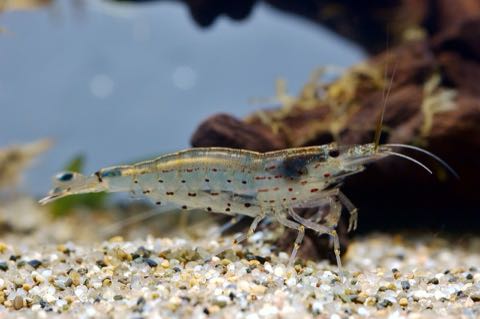 Amano shrimp
- American flagfish
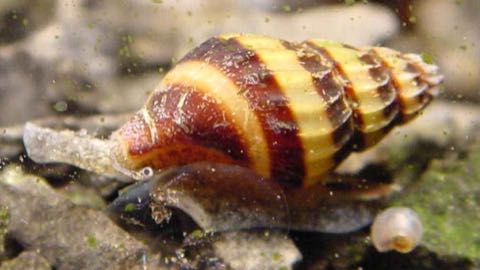 Assassin snail
- Banded gourami
- Bandit cory
- Banjo catfish
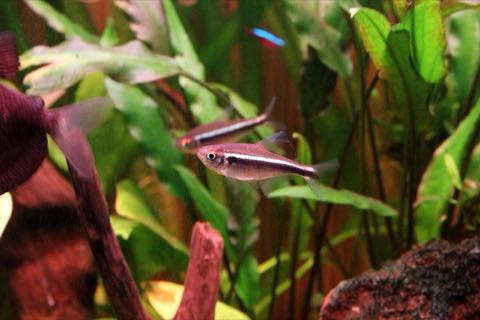 Black neon tetra
- Black phantom tetra
- Black ruby barb
Avoid with
- African pike
African pike may eat Sailfin mollyAfrican pike may eat Sailfin molly
- Alligator gar
Alligator gar may eat Sailfin mollyAlligator gar may eat Sailfin molly
- Antenna ray
Antenna ray may eat Sailfin mollyAntenna ray may eat Sailfin molly
- Arapaima
Arapaima may eat Sailfin mollyArapaima may eat Sailfin molly
- Asian arowana
Asian arowana may eat Sailfin mollyAsian arowana may eat Sailfin molly
- Australian pearl arowana
Australian pearl arowana may eat Sailfin mollyAustralian pearl arowana may eat Sailfin molly
- Barred bichir
Barred bichir may eat Sailfin mollyBarred bichir may eat Sailfin molly
- Black bullhead
Black bullhead may eat Sailfin mollyBlack bullhead may eat Sailfin molly
- Black diamond cichlid
Black diamond cichlid may eat Sailfin mollyBlack diamond cichlid may eat Sailfin molly
- Brown bullhead
Brown bullhead may eat Sailfin mollyBrown bullhead may eat Sailfin molly
- Bullseye snakehead
Bullseye snakehead may eat Sailfin mollyBullseye snakehead may eat Sailfin molly
- Butterfly peacock bass
Butterfly peacock bass may eat Sailfin mollyButterfly peacock bass may eat Sailfin molly
Breeding sailfin mollies
Fertilisation is internal and females give birth to live young. Females can store sperm and deliver more than one brood after males are removed. The brood interval varies between around three to four weeks and around two months. Adults can eat fry, so dense plants and a separate rearing arrangement improve protection. Newborn fry can take powdered flake, microworm, and newly hatched brine shrimp.Fertilisation is internal and females give birth to live young. Females can store sperm and deliver more than one brood after males are removed. The brood interval varies between around three to four weeks and around two months. Adults can eat fry, so dense plants and a separate rearing arrangement improve protection. Newborn fry can take powdered flake, microworm, and newly hatched brine shrimp.[6][1]
Sailfin molly health problems
Shimmies are trembling or rocking behaviour associated with unsuitable conditions, including soft or acidic water. Test water chemistry and correct the environment rather than treating the movement as a specific infection.Shimmies are trembling or rocking behaviour associated with unsuitable conditions, including soft or acidic water. Test water chemistry and correct the environment rather than treating the movement as a specific infection.[1][10]
Ich is a parasitic infection that can produce white spots, rubbing, clamped fins, and laboured breathing, though some gill infections have no obvious body spots. Ich can arrive on fish or wet equipment. Quarantine new fish for at least 30 days and avoid sharing uncleaned nets between aquariums.Ich is a parasitic infection that can produce white spots, rubbing, clamped fins, and laboured breathing, though some gill infections have no obvious body spots. Ich can arrive on fish or wet equipment. Quarantine new fish for at least 30 days and avoid sharing uncleaned nets between aquariums.[5]
Fin rot is usually a bacterial problem associated with poor conditions, visible as fins that keep fraying or shrinking and blood-streaked edges. Reduce fin-rot risk by maintaining water quality and removing harassment or injury sources. Progressive damage needs prompt assessment rather than assuming every torn fin is infected.Fin rot is usually a bacterial problem associated with poor conditions, visible as fins that keep fraying or shrinking and blood-streaked edges. Reduce fin-rot risk by maintaining water quality and removing harassment or injury sources. Progressive damage needs prompt assessment rather than assuming every torn fin is infected.[4]
Fungal cotton-wool disease produces fluffy white or grey growth on damaged tissue, where injury and environmental stress allow fungi to gain a foothold. Prevent fungal problems by avoiding sharp decor and rough handling and correcting poor water conditions. Fuzzy growth warrants prompt diagnosis because mouth rot can resemble fungus.Fungal cotton-wool disease produces fluffy white or grey growth on damaged tissue, where injury and environmental stress allow fungi to gain a foothold. Prevent fungal problems by avoiding sharp decor and rough handling and correcting poor water conditions. Fuzzy growth warrants prompt diagnosis because mouth rot can resemble fungus.[4]
Male or female?
Males have a narrow gonopodium in place of a fan-shaped anal fin and display a prominent sail-like dorsal fin. A gravid spot can be difficult to see in dark or heavily spotted mollies, meaning colour alone cannot establish pregnancy.Males have a narrow gonopodium in place of a fan-shaped anal fin and display a prominent sail-like dorsal fin. A gravid spot can be difficult to see in dark or heavily spotted mollies, meaning colour alone cannot establish pregnancy.[1][6][10]
Questions
How to care for sailfin mollies?
Provide a tank with a minimum tank length of 76 cm and a tank width of 38 cm, keeping water at 21–26 °C, pH 7.0–7.8, and 15–35 dGH. Feed vegetable flakes or spirulina pellets with supplemental spinach, algae, and occasional meaty foods.Provide a tank with a minimum tank length of 30 in and a tank width of 15 in, keeping water at 70–79 °F, pH 7.0–7.8, and 15–35 dGH. Feed vegetable flakes or spirulina pellets with supplemental spinach, algae, and occasional meaty foods.[1][10]
Are sailfin mollies aggressive?
Males can fight other males and chase females persistently. Adult mollies may also bully smaller fish, so tank mates should be selected with their size in mind.Males can fight other males and chase females persistently. Adult mollies may also bully smaller fish, so tank mates should be selected with their size in mind.[1]
Will sailfin mollies breed with regular mollies?
Yes, sailfin mollies can hybridise with common mollies because they share similar care needs. Consider keeping them together only if mixed offspring are acceptable, and keep the species separate when preserving a strain.Yes, sailfin mollies can hybridise with common mollies because they share similar care needs. Consider keeping them together only if mixed offspring are acceptable, and keep the species separate when preserving a strain.[1][10]
How many mollies should be kept together?
A trio of one male and two females is a practical starting group. Males chase females persistently and can fight other males, making this grouping a suitable starting balance.A trio of one male and two females is a practical starting group. Males chase females persistently and can fight other males, making this grouping a suitable starting balance.[1]
How to tell if molly fish are happy?
Watch their swimming movement and feeding. Shimmies are trembling or rocking movements linked to unsuitable conditions like soft or acidic water, and fish should be tested for ammonia issues if they stop feeding or behave abnormally.Watch their swimming movement and feeding. Shimmies are trembling or rocking movements linked to unsuitable conditions like soft or acidic water, and fish should be tested for ammonia issues if they stop feeding or behave abnormally.[1][10][3]
Sources
- Poecilia latipinna (Sailfin Molly) — Seriously Fish. Accessed 2026-10-05.
- What to feed your fish — RSPCA. Accessed 2026-10-05.
- Ammonia in Aquatic Systems — UF/IFAS Extension. Accessed 2026-10-05.
- Frequently asked questions on treating sick fish — Practical Fishkeeping. Accessed 2026-10-05.
- Ichthyophthirius multifiliis (White Spot) Infections in Fish — UF/IFAS Extension. Accessed 2026-10-05.
- Sailfin Molly — Florida Museum of Natural History. Accessed 2026-10-05.
- Astronotus ocellatus (Oscar) — Seriously Fish. Accessed 2026-10-05.
- Rocio octofasciata (Jack Dempsey) — Seriously Fish. Accessed 2026-10-05.
- Carinotetraodon travancoricus (Dwarf Puffer) — Seriously Fish. Accessed 2026-10-05.
- Molly’s the word! — Practical Fishkeeping. Accessed 2026-10-05.
Written from the sources above. Not yet reviewed by an aquarist.
Data used by the planner
| Temperature range | 20–28 | AqAdvisor (aqadvisor.com), retrieved 2026-10-04; agrees with FishBase (fishbase.se), retrieved 2026-10-04 · medium confidence |
|---|---|---|
| pH | 5.5–7.8 | AqAdvisor (aqadvisor.com), retrieved 2026-10-04 · medium confidence |
| Hardness (dGH) | 1–15 | AqAdvisor (aqadvisor.com), retrieved 2026-10-04 · medium confidence |
| Origin | Coastal southeastern USA and northeastern Mexico | curated-v0 (needs expert review) · low confidence |
| Beginner friendly | Yes | curated-v0 (needs expert review) · medium confidence |
| Care level | easy | curated-v0 (needs expert review) · medium confidence |
| Activity | moderate | curated-v0 (needs expert review) · medium confidence |
| Swimming level | top | curated-v0 (needs expert review) · medium confidence |
| Temperament | peaceful | curated-v0 (needs expert review) · medium confidence |
| Nips fins | No | curated-v0 (needs expert review) · medium confidence |
| Long fins | No | curated-v0 (needs expert review) · medium confidence |
| Territorial | No | curated-v0 (needs expert review) · medium confidence |
| Lives in groups | No | curated-v0 (needs expert review) · medium confidence |
| Minimum group | 1 | curated-v0 (needs expert review) · medium confidence |
| Diet | omnivore | curated-v0 (needs expert review) · medium confidence |
| Lifespan (years) | 3–5 | curated-v0 (needs expert review) · low confidence |
| Months to adult size | 8 | curated-v0 (needs expert review) · low confidence |
| Safe with plants | Yes | curated-v0 (needs expert review) · medium confidence |