Glowlight danio tank size
Plan for a tank length of at least 80 cm with base dimensions of 80 cm × 30 cm or larger. Glowlight danios reach an adult length of 3 cm standard length, but their active movement demands horizontal swimming space.Plan for a tank length of at least 31 in with base dimensions of 31 in × 12 in or larger. Glowlight danios reach an adult length of 1 in standard length, but their active movement demands horizontal swimming space.[1]
Natural populations originate from hill streams with gravel and rock substrates in the Mogaung Chaung system of northern Myanmar. Most specimens sold in the aquarium trade come from commercial breeding rather than wild stock.Natural populations originate from hill streams with gravel and rock substrates in the Mogaung Chaung system of northern Myanmar. Most specimens sold in the aquarium trade come from commercial breeding rather than wild stock.[1]
Decorate the tank with dark substrate and dense live plants, or build a stream layout featuring rounded rocks, gravel, roots, and attached plants like Anubias or Microsorum. Fit a tight-fitting lid, as these danios jump and can pass through small gaps.Decorate the tank with dark substrate and dense live plants, or build a stream layout featuring rounded rocks, gravel, roots, and attached plants like Anubias or Microsorum. Fit a tight-fitting lid, as these danios jump and can pass through small gaps.[1]
Glowlight danio water parameters
Maintain water temperatures between 18–24 °C, a pH between 6.0–8.0, and a hardness of 5–12 dGH for routine captive care. Broader aquarium recommendations of 16–26 °C and 1–12 dGH exist, but these do not represent proven wild tolerances.Maintain water temperatures between 64–75 °F, a pH between 6.0–8.0, and a hardness of 5–12 dGH for routine captive care. Broader aquarium recommendations of 61–79 °F and 1–12 dGH exist, but these do not represent proven wild tolerances.[1]
Provide moderate water movement without creating torrent-like conditions. In nature, small danionins inhabit calmer stretches and margins rather than powerful rapids.Provide moderate water movement without creating torrent-like conditions. In nature, small danionins inhabit calmer stretches and margins rather than powerful rapids.[1]
Establish complete biological filtration before adding any fish. Ammonia should remain undetectable, and nitrite must stay controlled. Clear-looking water does not mean conditions are safe, so test ammonia weekly and whenever appetite or behaviour changes.Establish complete biological filtration before adding any fish. Ammonia should remain undetectable, and nitrite must stay controlled. Clear-looking water does not mean conditions are safe, so test ammonia weekly and whenever appetite or behaviour changes.[3]
Feeding glowlight danios
Provide a quality dried food as the staple diet, supplemented with small live or frozen bloodworm, Daphnia, and Artemia. Feeding on insects and larvae in nature is regarded as highly likely rather than directly established.Provide a quality dried food as the staple diet, supplemented with small live or frozen bloodworm, Daphnia, and Artemia. Feeding on insects and larvae in nature is regarded as highly likely rather than directly established.[1]
Offer two small meals daily, each limited to what the fish actually consume in about two minutes. Adjust portion size to the group and remove uneaten food to protect water quality and preserve the biological filter.Offer two small meals daily, each limited to what the fish actually consume in about two minutes. Adjust portion size to the group and remove uneaten food to protect water quality and preserve the biological filter.[2][3]
Glowlight danio behaviour
Keep at least eight fish together, as eight to ten is the recommended baseline. Larger groups can reduce nervousness and give subordinate fish respite from social pressure.Keep at least eight fish together, as eight to ten is the recommended baseline. Larger groups can reduce nervousness and give subordinate fish respite from social pressure.[1]
Glowlight danios are generally peaceful, though aggression and nipped fins can occur within a hierarchy among fish of the same species. This chasing does not normally extend to other tank mates, but companion behaviour remains subject to individual conditions.Glowlight danios are generally peaceful, though aggression and nipped fins can occur within a hierarchy among fish of the same species. This chasing does not normally extend to other tank mates, but companion behaviour remains subject to individual conditions.[1]
Glowlight danio tank mates
Community options include small cyprinids, tetras, anabantoids, and catfish that share identical temperature and water ranges. Any shared arrangement requires adequate space for every group.Community options include small cyprinids, tetras, anabantoids, and catfish that share identical temperature and water ranges. Any shared arrangement requires adequate space for every group.[1]
Neon tetrasNeon tetras are generally peaceful community fish and can work with glowlight danios. House them together only after confirming compatible water ranges and adequate space for full groups of each species. are generally peaceful community fish and can work with glowlight danios. House them together only after confirming compatible water ranges and adequate space for full groups of each species.[9][1]
Glowlight tetrasGlowlight tetras are peaceful fish paired with catfish profiles, while are peaceful fish paired with catfish profiles, while harlequin rasborasharlequin rasboras are peaceful community fish. Both can work with glowlight danios when you check shared water parameters and swimming space. are peaceful community fish. Both can work with glowlight danios when you check shared water parameters and swimming space.[10][1][11]
Honey gouramisHoney gouramis can share an aquarium under specific conditions, but their profile warns of intimidation and feeding competition. Verify shared water ranges and confirm that food reaches both species, as gouramis move slowly. can share an aquarium under specific conditions, but their profile warns of intimidation and feeding competition. Verify shared water ranges and confirm that food reaches both species, as gouramis move slowly.[12][1]
Avoid predatory Avoid predatory OscarsOscars, which must not share an aquarium with much smaller fish. Exclude , which must not share an aquarium with much smaller fish. Exclude Jack DempseysJack Dempseys because they require companions too large to swallow and develop aggression, and avoid because they require companions too large to swallow and develop aggression, and avoid pea pufferspea puffers due to their documented risk of nipping slow or long-finned fish. due to their documented risk of nipping slow or long-finned fish.[1][6][7][8]
Usually fine together
- Agassiz's cory
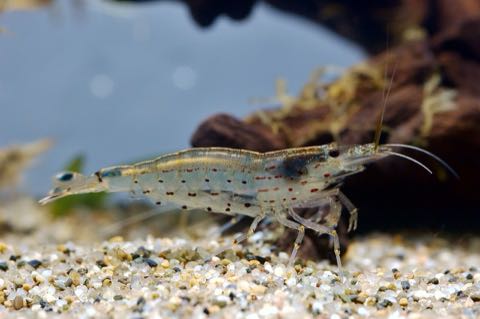 Amano shrimp
- American flagfish
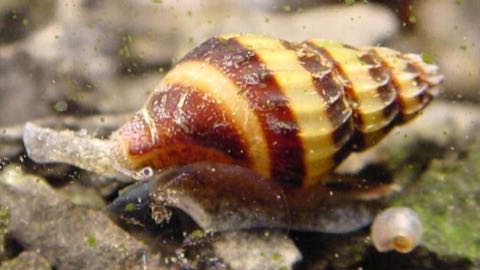 Assassin snail
- Banded gourami
- Bandit cory
- Banjo catfish
- Black phantom tetra
- Black ruby barb
- Blood parrot cichlid
- Bloodfin tetra
- Blue acara
Avoid with
- African clawed frog
African clawed frog may eat Glowlight danioAfrican clawed frog may eat Glowlight danio
- Black kuhli loach
No shared temperature rangeNo shared temperature range
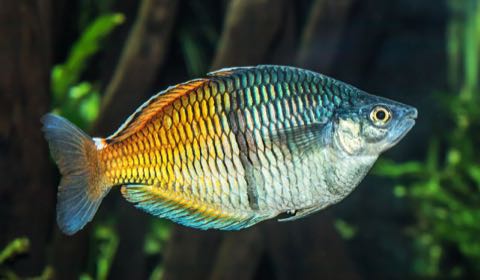 Boeseman rainbowfish
No shared temperature rangeNo shared temperature range
- Irian Jaya rainbowfish
No shared temperature rangeNo shared temperature range
- Julii cory
No shared temperature rangeNo shared temperature range
- Parkinson's rainbowfish
No shared temperature rangeNo shared temperature range
- Rusty cichlid
No shared temperature rangeNo shared temperature range
- Abei puffer
Abei puffer may eat Glowlight danioAbei puffer may eat Glowlight danio
- Afra cichlid
No shared temperature rangeNo shared temperature range
- African butterflyfish
African butterflyfish may eat Glowlight danioAfrican butterflyfish may eat Glowlight danio
- African knifefish
African knifefish may eat Glowlight danioAfrican knifefish may eat Glowlight danio
- African pike
No shared temperature rangeNo shared temperature range
Breeding glowlight danios
Glowlight danios are egg scatterers with no parental care. Adults may eat eggs, so use mesh or fine-leaved plants to reduce access, or separate adults into another tank for deliberate rearing.Glowlight danios are egg scatterers with no parental care. Adults may eat eggs, so use mesh or fine-leaved plants to reduce access, or separate adults into another tank for deliberate rearing.[1]
Incubation usually takes around three days, followed by another couple of days until the fry become free swimming. Temperature directly influences the timing of this development.Incubation usually takes around three days, followed by another couple of days until the fry become free swimming. Temperature directly influences the timing of this development.[1]
Initial fry food can be Paramecium or suitably fine proprietary food. Offer Artemia nauplii or microworms only once the fry are large enough to ingest them.Initial fry food can be Paramecium or suitably fine proprietary food. Offer Artemia nauplii or microworms only once the fry are large enough to ingest them.[1]
Glowlight danio health problems
Ich is a contagious protozoan infection of freshwater fish. White grains on skin or fins, rubbing, excess mucus, or reduced appetite are warning signs, but appearance alone cannot confirm the cause, so seek prompt diagnosis.Ich is a contagious protozoan infection of freshwater fish. White grains on skin or fins, rubbing, excess mucus, or reduced appetite are warning signs, but appearance alone cannot confirm the cause, so seek prompt diagnosis.[5]
Reduce the introduction of ich by maintaining at least 30 days of quarantine for new fish and using separate nets and siphons across tanks.Reduce the introduction of ich by maintaining at least 30 days of quarantine for new fish and using separate nets and siphons across tanks.[5]
Bacterial fin rot can cause progressive fin-edge erosion, redness, or bloody streaks. Poor water conditions and physical stress favour infection, so maintain clean water and protect fish from injury or harassment while seeking a diagnosis.Bacterial fin rot can cause progressive fin-edge erosion, redness, or bloody streaks. Poor water conditions and physical stress favour infection, so maintain clean water and protect fish from injury or harassment while seeking a diagnosis.[4]
Ammonia poisoning damages gills and tissues, stresses fish, and may cause reduced feeding. This compound comes from fish metabolism and decaying food or waste, which makes cycling the filter and testing water essential.Ammonia poisoning damages gills and tissues, stresses fish, and may cause reduced feeding. This compound comes from fish metabolism and decaying food or waste, which makes cycling the filter and testing water essential.[3]
Male or female?
Mature females are rounder-bellied, less colourful, and slightly larger than males. Males remain slimmer and develop more intense colour when they enter spawning condition.Mature females are rounder-bellied, less colourful, and slightly larger than males. Males remain slimmer and develop more intense colour when they enter spawning condition.[1]
Questions
How many danios should be kept together?
Keep at least eight fish together, with eight to ten suggested by captive sources. A group of this size can reduce nervousness and give subordinate fish respite from social interactions.Keep at least eight fish together, with eight to ten suggested by captive sources. A group of this size can reduce nervousness and give subordinate fish respite from social interactions.[1]
Are glowlight danios aggressive?
Glowlight danios are generally peaceful, but aggression and nipped fins can occur within a hierarchy among fish of the same species. This internal pecking order does not normally extend to other tank mates.Glowlight danios are generally peaceful, but aggression and nipped fins can occur within a hierarchy among fish of the same species. This internal pecking order does not normally extend to other tank mates.[1]
How big do glowlight danios get?
Adult glowlight danios reach an adult length of 3 cm standard length. They need an active swimming area with a tank length of at least 80 cm.Adult glowlight danios reach an adult length of 1 in standard length. They need an active swimming area with a tank length of at least 31 in.[1]
Are glowlight danios fin nippers?
Nipped fins can occur within a pecking order among fish of the same species. This internal behaviour does not normally extend to other species, but companion interactions depend on space and conditions.Nipped fins can occur within a pecking order among fish of the same species. This internal behaviour does not normally extend to other species, but companion interactions depend on space and conditions.[1]
How often should I feed glowlight danios?
Offer two small meals daily, providing only what the fish actually consume in about two minutes. Remove uneaten food promptly to avoid stressing the biological filter.Offer two small meals daily, providing only what the fish actually consume in about two minutes. Remove uneaten food promptly to avoid stressing the biological filter.[2][3]
Sources
- Celestichthys choprae (Glowlight 'Danio') — Seriously Fish. Accessed 2026-10-05.
- What to feed your fish — RSPCA. Accessed 2026-10-05.
- Ammonia in Aquatic Systems — UF/IFAS Extension. Accessed 2026-10-05.
- Frequently asked questions on treating sick fish — Practical Fishkeeping. Accessed 2026-10-05.
- Ichthyophthirius multifiliis (White Spot) Infections in Fish — UF/IFAS Extension. Accessed 2026-10-05.
- Astronotus ocellatus (Oscar) — Seriously Fish. Accessed 2026-10-05.
- Rocio octofasciata (Jack Dempsey) — Seriously Fish. Accessed 2026-10-05.
- Carinotetraodon travancoricus (Dwarf Puffer) — Seriously Fish. Accessed 2026-10-05.
- Neon tetras — Seriously Fish. Accessed 2026-10-05.
- Glowlight tetras — Seriously Fish. Accessed 2026-10-05.
- Harlequin rasboras — Seriously Fish. Accessed 2026-10-05.
- Honey gouramis — Seriously Fish. Accessed 2026-10-05.
Written from the sources above. Not yet reviewed by an aquarist.
Data used by the planner
| Temperature | 18–24 | AqAdvisor (aqadvisor.com), retrieved 2026-10-04 · medium confidence |
|---|---|---|
| pH | 6–8 | AqAdvisor (aqadvisor.com), retrieved 2026-10-04 · medium confidence |
| Hardness (dGH) | 5–15 | AqAdvisor (aqadvisor.com), retrieved 2026-10-04 · medium confidence |
| Origin | Irrawaddy basin, northern Myanmar | curated-v0 (needs expert review) · low confidence |
| Beginner friendly | Yes | curated-v0 (needs expert review) · medium confidence |
| Care level | easy | curated-v0 (needs expert review) · medium confidence |
| Activity | active | curated-v0 (needs expert review) · medium confidence |
| Swimming level | top | curated-v0 (needs expert review) · medium confidence |
| Temperament | peaceful | curated-v0 (needs expert review) · medium confidence |
| Nips fins | No | curated-v0 (needs expert review) · medium confidence |
| Long fins | No | curated-v0 (needs expert review) · medium confidence |
| Territorial | No | curated-v0 (needs expert review) · medium confidence |
| Lives in groups | Yes | curated-v0 (needs expert review) · medium confidence |
| Minimum group | 8 | curated-v0 (needs expert review) · medium confidence |
| Diet | omnivore | curated-v0 (needs expert review) · medium confidence |
| Lifespan (years) | 3–5 | curated-v0 (needs expert review) · low confidence |
| Months to adult size | 8 | curated-v0 (needs expert review) · low confidence |
| Safe with plants | Yes | curated-v0 (needs expert review) · medium confidence |