Green fire tetra tank size
Provide an aquarium with a tank base of at least 60 cm × 30 cm for a small group. Green fire tetras reach an adult length of about 4.5 cm standard length and require open swimming room. Filtration cannot replace horizontal swimming space.Provide an aquarium with a tank base of at least 24 in × 12 in for a small group. Green fire tetras reach an adult length of about 1.8 in standard length and require open swimming room. Filtration cannot replace horizontal swimming space.[1]
In the wild, these fish inhabit the Paraguay, Paraná, and Uruguay drainages across Brazil, Paraguay, Argentina, and Uruguay, where streams and rivers often have shade from floating or overhanging vegetation. A home aquarium layout with sand, bogwood, roots, and pebbles is recommended. Moderate water flow is appreciated, though no exact flow rate or lighting intensity is set.In the wild, these fish inhabit the Paraguay, Paraná, and Uruguay drainages across Brazil, Paraguay, Argentina, and Uruguay, where streams and rivers often have shade from floating or overhanging vegetation. A home aquarium layout with sand, bogwood, roots, and pebbles is recommended. Moderate water flow is appreciated, though no exact flow rate or lighting intensity is set.[1]
Green fire tetra water parameters
Target a temperature range of 24–26 °C, a pH between 6.5 and 7.5, and general hardness from 4 to 12 dGH for routine maintenance.Target a temperature range of 75–79 °F, a pH between 6.5 and 7.5, and general hardness from 4 to 12 dGH for routine maintenance.[1][2]
Cycle the biological filter before adding fish, and increase stocking numbers gradually. When filter media becomes blocked, rinse it lightly in aquarium water taken from the tank rather than chlorinated tap water.Cycle the biological filter before adding fish, and increase stocking numbers gradually. When filter media becomes blocked, rinse it lightly in aquarium water taken from the tank rather than chlorinated tap water.[2]
Test water weekly, ensuring ammonia and nitrite are kept at zero. Replace one quarter of the aquarium water weekly, treating all new water for chlorine and chloramines.Test water weekly, ensuring ammonia and nitrite are kept at zero. Replace one quarter of the aquarium water weekly, treating all new water for chlorine and chloramines.[2]
Feeding green fire tetras
Feed these tetras once a day, offering only what they will consume in a few minutes, and promptly remove any uneaten food from the tank. Base their daily meals on quality dried flakes or granules, and supplement regularly with small live or frozen items such as daphnia, bloodworm, or tubifex.Feed these tetras once a day, offering only what they will consume in a few minutes, and promptly remove any uneaten food from the tank. Base their daily meals on quality dried flakes or granules, and supplement regularly with small live or frozen items such as daphnia, bloodworm, or tubifex.[2][1]
Green fire tetra behaviour
Keep at least eight green fire tetras together in the aquarium. Maintaining this group size supports natural schooling behaviour, though keeping a complete group does not eliminate the possibility of fin-nipping. These tetras can live for several years in an established setup.Keep at least eight green fire tetras together in the aquarium. Maintaining this group size supports natural schooling behaviour, though keeping a complete group does not eliminate the possibility of fin-nipping. These tetras can live for several years in an established setup.[1][2]
Green fire tetra tank mates
Short-finned Short-finned black skirt tetrasblack skirt tetras and short-finned and short-finned X-ray tetrasX-ray tetras can be considered because they are robust, faster-moving species. They can work if their own space, schooling numbers, dietary needs, and shared water parameters are fully accommodated. can be considered because they are robust, faster-moving species. They can work if their own space, schooling numbers, dietary needs, and shared water parameters are fully accommodated.[1]
Short-finned Short-finned lemon tetraslemon tetras also represent faster-moving options that can share an aquarium under suitable swimming space and group sizes. Short-finned also represent faster-moving options that can share an aquarium under suitable swimming space and group sizes. Short-finned zebra danioszebra danios can also be evaluated, though their shared temperature overlap with green fire tetras is narrow. can also be evaluated, though their shared temperature overlap with green fire tetras is narrow.[1]
Avoid housing long-finned Avoid housing long-finned bettasbettas, long-finned , long-finned angelfishangelfish, or long-finned , or long-finned ornamental guppiesornamental guppies with green fire tetras. Their extended finnage leaves them exposed to nipping, and many cichlids and anabantoids face similar risks. with green fire tetras. Their extended finnage leaves them exposed to nipping, and many cichlids and anabantoids face similar risks.[1]
Usually fine together
- African butterfly cichlid
- Agassiz's cory
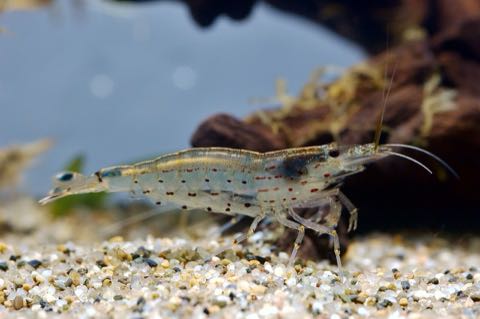 Amano shrimp
- American flagfish
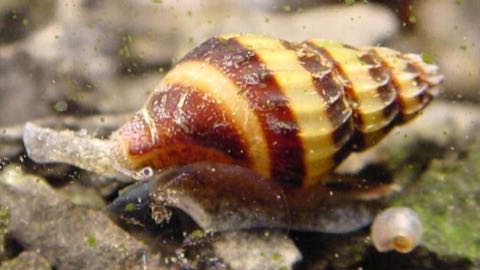 Assassin snail
- Banded gourami
- Bandit cory
- Banjo catfish
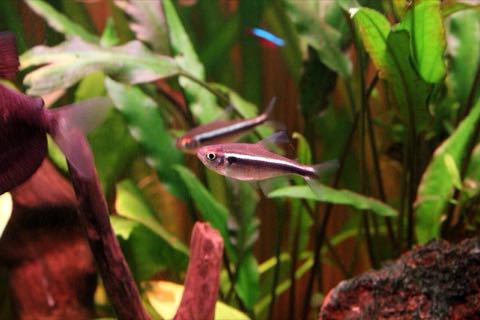 Black neon tetra
- Black phantom tetra
- Black ruby barb
- Bleeding heart tetra
Avoid with
- Acei cichlid
No shared pH rangeNo shared pH range
- Brevis shell dweller
No shared pH rangeNo shared pH range
- Caudopunctatus
No shared pH rangeNo shared pH range
- Multies
No shared pH rangeNo shared pH range
- Pindani
No shared pH rangeNo shared pH range
- Rusty cichlid
No shared pH rangeNo shared pH range
- Saulosi cichlid
No shared pH rangeNo shared pH range
- Similis shell dweller
No shared pH rangeNo shared pH range
- Afra cichlid
No shared pH rangeNo shared pH range
- African knifefish
African knifefish may eat Green fire tetraAfrican knifefish may eat Green fire tetra
- African pike
African pike may eat Green fire tetraAfrican pike may eat Green fire tetra
- Alligator gar
Alligator gar may eat Green fire tetraAlligator gar may eat Green fire tetra
Breeding green fire tetras
Green fire tetras are group-spawning egg scatterers that produce adhesive eggs. Set up a separate, dimly lit breeding aquarium fitted with an air-driven sponge filter and fine-leaved plants such as Java moss to collect the scatter.Green fire tetras are group-spawning egg scatterers that produce adhesive eggs. Set up a separate, dimly lit breeding aquarium fitted with an air-driven sponge filter and fine-leaved plants such as Java moss to collect the scatter.[1]
The eggs hatch in roughly 2–3 days. The young fry become free-swimming around 4–5 days after hatching. Once they are free-swimming, feed infusoria initially before introducing newly hatched brine shrimp and fine powdered foods.The eggs hatch in roughly 2–3 days. The young fry become free-swimming around 4–5 days after hatching. Once they are free-swimming, feed infusoria initially before introducing newly hatched brine shrimp and fine powdered foods.[1]
Green fire tetra health problems
Ich is a parasitic infection caused by Ichthyophthirius multifiliis. Visible signs can include salt-like white spots on the body, rapid breathing, rubbing against decor, and reduced appetite, though white spots alone do not confirm a diagnosis. To reduce the risk of bringing the parasite into your display, quarantine all new fish for at least 30 days and disinfect or dedicate equipment like nets and siphons. Seek professional fish-health advice promptly if illness appears.Ich is a parasitic infection caused by Ichthyophthirius multifiliis. Visible signs can include salt-like white spots on the body, rapid breathing, rubbing against decor, and reduced appetite, though white spots alone do not confirm a diagnosis. To reduce the risk of bringing the parasite into your display, quarantine all new fish for at least 30 days and disinfect or dedicate equipment like nets and siphons. Seek professional fish-health advice promptly if illness appears.[3]
Fin rot is a bacterial problem associated with stress, physical injuries, and poor environmental conditions. Fins may fray, show red or blood streaks, and progressively shrink. Test water parameters, address any harassment or injuries, and seek professional fish-health advice if the condition worsens.Fin rot is a bacterial problem associated with stress, physical injuries, and poor environmental conditions. Fins may fray, show red or blood streaks, and progressively shrink. Test water parameters, address any harassment or injuries, and seek professional fish-health advice if the condition worsens.[4]
Cottony patches by themselves do not confirm a specific diagnosis. Maintain clean water, avoid rough tank furnishings, handle fish gently to limit injury, and seek qualified health advice if symptoms persist.Cottony patches by themselves do not confirm a specific diagnosis. Maintain clean water, avoid rough tank furnishings, handle fish gently to limit injury, and seek qualified health advice if symptoms persist.[4]
Male or female?
You can identify mature females when they come into spawning condition, as their bodies become noticeably rounder and fuller than those of other fish in the group.You can identify mature females when they come into spawning condition, as their bodies become noticeably rounder and fuller than those of other fish in the group.[1]
Questions
How big do green fire tetras get?
Green fire tetras reach an adult length of about 4.5 cm standard length in aquariums.Green fire tetras reach an adult length of about 1.8 in standard length in aquariums.[1]
Are green fire tetras fin nippers?
Yes, green fire tetras have an established fin-nipping reputation. You should avoid pairing them with long-finned fish like bettas, guppies, or angelfish, as keeping a proper group does not eliminate nipping behaviour.Yes, green fire tetras have an established fin-nipping reputation. You should avoid pairing them with long-finned fish like bettas, guppies, or angelfish, as keeping a proper group does not eliminate nipping behaviour.[1]
Do tetras need to be fed every day?
Yes, feed them once per day. Limit each meal to the amount they can finish within a few minutes, and promptly clear out any leftover food.Yes, feed them once per day. Limit each meal to the amount they can finish within a few minutes, and promptly clear out any leftover food.[2]
Are green fire tetras hard to keep?
Keeping them requires maintaining 24–26 °C, pH 6.5–7.5, zero ammonia and nitrite, and weekly water changes. They also require groups of at least eight and robust companions due to their fin-nipping reputation.Keeping them requires maintaining 75–79 °F, pH 6.5–7.5, zero ammonia and nitrite, and weekly water changes. They also require groups of at least eight and robust companions due to their fin-nipping reputation.[1][2]
Why are tetras so hard to keep?
Tetras also require cycling before introduction, a minimum group of eight, weekly water changes, and testing when appetite, breathing, or fins change.Tetras also require cycling before introduction, a minimum group of eight, weekly water changes, and testing when appetite, breathing, or fins change.[1][2]
Sources
- Aphyocharax rathbuni (Rathbun’s Bloodfin) — Seriously Fish. Accessed 2026-10-05.
- How to look after tetras and pencilfish — OATA. Accessed 2026-10-05.
- Ichthyophthirius multifiliis (White Spot) Infections in Fish — UF/IFAS Extension. Accessed 2026-10-05.
- Frequently asked questions on treating sick fish — Practical Fishkeeping. Accessed 2026-10-05.
Written from the sources above. Not yet reviewed by an aquarist.
Data used by the planner
| Temperature | 24–27 | AqAdvisor (aqadvisor.com), retrieved 2026-10-04 · low confidence |
|---|---|---|
| pH | 5.5–7.5 | AqAdvisor (aqadvisor.com), retrieved 2026-10-04; agrees with FishBase (fishbase.se), retrieved 2026-10-04 · medium confidence |
| Hardness (dGH) | 1–15 | AqAdvisor (aqadvisor.com), retrieved 2026-10-04 · medium confidence |
| Origin | Paraguay and Paraná basins | curated-v0 (needs expert review) · low confidence |
| Beginner friendly | Yes | curated-v0 (needs expert review) · medium confidence |
| Care level | easy | curated-v0 (needs expert review) · medium confidence |
| Activity | active | curated-v0 (needs expert review) · medium confidence |
| Swimming level | middle | curated-v0 (needs expert review) · medium confidence |
| Temperament | peaceful | curated-v0 (needs expert review) · medium confidence |
| Nips fins | No | curated-v0 (needs expert review) · medium confidence |
| Long fins | No | curated-v0 (needs expert review) · medium confidence |
| Territorial | No | curated-v0 (needs expert review) · medium confidence |
| Lives in groups | Yes | curated-v0 (needs expert review) · medium confidence |
| Minimum group | 8 | curated-v0 (needs expert review) · medium confidence |
| Diet | omnivore | curated-v0 (needs expert review) · medium confidence |
| Lifespan (years) | 3–6 | curated-v0 (needs expert review) · low confidence |
| Months to adult size | 6 | curated-v0 (needs expert review) · low confidence |
| Safe with plants | Yes | curated-v0 (needs expert review) · medium confidence |