Red phantom tetra tank size
Plan for a minimum tank length of 80 cm. This setup allows a shoal to have open swimming space to move together.Plan for a minimum tank length of 31 in. This setup allows a shoal to have open swimming space to move together.[1]
Using sand, branching wood and planted cover reproduces shelter found in smaller Orinoco tributaries and flooded habitats. Dried leaves add extra shelter and support microbial grazing as they decompose.Using sand, branching wood and planted cover reproduces shelter found in smaller Orinoco tributaries and flooded habitats. Dried leaves add extra shelter and support microbial grazing as they decompose.[1]
Keep open swimming room alongside the planted margins of your tank. Maintain gentle water flow rather than strong current.Keep open swimming room alongside the planted margins of your tank. Maintain gentle water flow rather than strong current.[1][2]
Red phantom tetra water parameters
Aim for a temperature of 22–26 °C. Keep water conditions within pH 5.5–7.5 and maintain a hardness of 1–12 dGH.Aim for a temperature of 72–79 °F. Keep water conditions within pH 5.5–7.5 and maintain a hardness of 1–12 dGH.[1]
Introduce fish only when a mature filter keeps ammonia and nitrite undetectable.Introduce fish only when a mature filter keeps ammonia and nitrite undetectable.[2]
Replace a quarter of the water weekly using conditioned replacement water. Rinse filter media lightly in removed aquarium water instead of chlorinated tap water.Replace a quarter of the water weekly using conditioned replacement water. Rinse filter media lightly in removed aquarium water instead of chlorinated tap water.[2]
Feeding red phantom tetras
Feed once a day, giving only as much food as the fish finish within a few minutes. Use appropriately small flake or granules as a staple and vary them with daphnia and small bloodworms.Feed once a day, giving only as much food as the fish finish within a few minutes. Use appropriately small flake or granules as a staple and vary them with daphnia and small bloodworms.[2][1]
Leftover food decomposes into toxic waste. Reduce the next portion if food accumulates on the bottom.Leftover food decomposes into toxic waste. Reduce the next portion if food accumulates on the bottom.[2]
Red phantom tetra behaviour
This is a peaceful tetra best matched to similarly sized peaceful fish. Typical adult length is about 3.5 cm measured as standard length rather than total length.This is a peaceful tetra best matched to similarly sized peaceful fish. Typical adult length is about 1.4 in measured as standard length rather than total length.[1]
Keep a mixed-sex group of eight or more, with an eight to ten fish group preferred. Males form temporary dominance relationships and display to females; sufficient company makes these displays easier to observe.Keep a mixed-sex group of eight or more, with an eight to ten fish group preferred. Males form temporary dominance relationships and display to females; sufficient company makes these displays easier to observe.[1]
Trade forms include a particularly red form called rubra and paler forms, though they represent the same species. Tetras can live several years with good water quality.Trade forms include a particularly red form called rubra and paler forms, though they represent the same species. Tetras can live several years with good water quality.[1][2]
Red phantom tetra tank mates
This peaceful tetra is best matched to similarly sized peaceful fish. This peaceful tetra is best matched to similarly sized peaceful fish. Neon tetrasNeon tetras and and harlequin rasborasharlequin rasboras are conditional small peaceful shoal choices, given enough space for both groups and overlapping water requirements. are conditional small peaceful shoal choices, given enough space for both groups and overlapping water requirements.[1][2]
Bronze corydorasBronze corydoras and and panda corydoraspanda corydoras are conditional smaller callichthyid companions with peaceful bottom-dwelling habits. Keep their own groups and provide sufficient floor space for them. are conditional smaller callichthyid companions with peaceful bottom-dwelling habits. Keep their own groups and provide sufficient floor space for them.[1]
Avoid Avoid oscarsoscars because they can eat small fish. Avoid because they can eat small fish. Avoid Jack DempseysJack Dempseys because adult predation and territorial behaviour are unsuitable around small tetras. Avoid because adult predation and territorial behaviour are unsuitable around small tetras. Avoid pea pufferspea puffers because they may nip fins, as small size alone does not make a peaceful community fish. because they may nip fins, as small size alone does not make a peaceful community fish.[5][6][7]
Usually fine together
- African butterfly cichlid
- African clawed frog
- Agassiz's cory
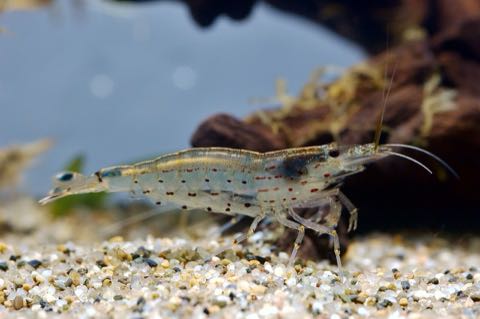 Amano shrimp
- American flagfish
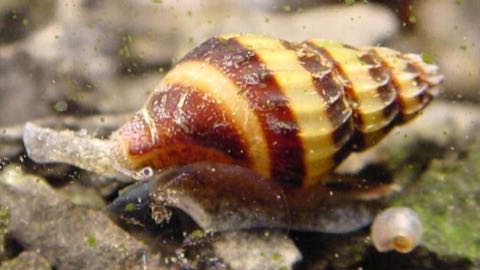 Assassin snail
- Banded gourami
- Bandit cory
- Banjo catfish
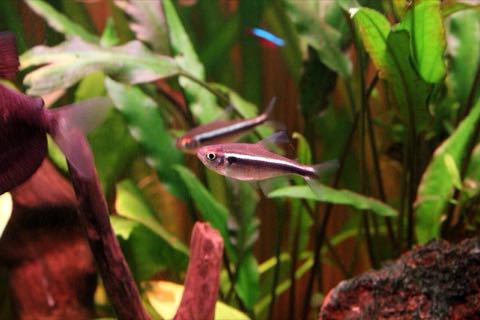 Black neon tetra
- Black phantom tetra
- Black ruby barb
Avoid with
- Acei cichlid
No shared pH rangeNo shared pH range
- Brevis shell dweller
No shared pH rangeNo shared pH range
- Caudopunctatus
No shared pH rangeNo shared pH range
- Multies
No shared pH rangeNo shared pH range
- Pindani
No shared pH rangeNo shared pH range
- Rusty cichlid
No shared pH rangeNo shared pH range
- Saulosi cichlid
No shared pH rangeNo shared pH range
- Similis shell dweller
No shared pH rangeNo shared pH range
- Afra cichlid
No shared pH rangeNo shared pH range
- African knifefish
African knifefish may eat Red phantom tetraAfrican knifefish may eat Red phantom tetra
- African pike
African pike may eat Red phantom tetraAfrican pike may eat Red phantom tetra
- Alligator gar
Alligator gar may eat Red phantom tetraAlligator gar may eat Red phantom tetra
Breeding red phantom tetras
Red phantoms scatter eggs and provide no parental care. For deliberate breeding, use a separate dim aquarium with fine plants or an egg-protecting mesh that excludes adults.Red phantoms scatter eggs and provide no parental care. For deliberate breeding, use a separate dim aquarium with fine plants or an egg-protecting mesh that excludes adults.[1]
A sponge filter supplies gentle water movement in the breeding tank. Very small first foods such as Paramecium are followed by Artemia nauplii as fry grow.A sponge filter supplies gentle water movement in the breeding tank. Very small first foods such as Paramecium are followed by Artemia nauplii as fry grow.[1]
Red phantom tetra health problems
Ich is caused by Ichthyophthirius multifiliis. White grains on skin or fins, rubbing and faster breathing are possible signs of infection. Quarantine incoming fish for 30 days, and use separate nets and siphons to prevent moving sticky ich cysts between aquariums. Seek prompt diagnosis if signs appear.Ich is caused by Ichthyophthirius multifiliis. White grains on skin or fins, rubbing and faster breathing are possible signs of infection. Quarantine incoming fish for 30 days, and use separate nets and siphons to prevent moving sticky ich cysts between aquariums. Seek prompt diagnosis if signs appear.[3]
Bacterial fin disease can show ragged or blood-streaked fins, ulcers or sores, with stress making fish more vulnerable to infection. Reduce bacterial disease risk by maintaining good water quality and removing sources of injury or aggression. Observe symptoms before choosing treatment.Bacterial fin disease can show ragged or blood-streaked fins, ulcers or sores, with stress making fish more vulnerable to infection. Reduce bacterial disease risk by maintaining good water quality and removing sources of injury or aggression. Observe symptoms before choosing treatment.[4][2]
Fungal cotton-wool disease produces pale fluffy growth over damaged tissue. Injury, rough handling and poor conditions let fungi overcome the protective mucus. Prevent fungal entry by handling fish gently, avoiding sharp decor and maintaining water quality. Fluffy growth needs prompt assessment rather than guessing medication.Fungal cotton-wool disease produces pale fluffy growth over damaged tissue. Injury, rough handling and poor conditions let fungi overcome the protective mucus. Prevent fungal entry by handling fish gently, avoiding sharp decor and maintaining water quality. Fluffy growth needs prompt assessment rather than guessing medication.[4]
Male or female?
Adult males develop longer dorsal and anal fins. Females have deeper bodies.Adult males develop longer dorsal and anal fins. Females have deeper bodies.[1]
Questions
Are red phantom tetras aggressive?
No, this is a peaceful tetra best matched to similarly sized peaceful fish. Males form temporary dominance relationships and display to females, but sufficient company in a group makes these displays easier to observe.No, this is a peaceful tetra best matched to similarly sized peaceful fish. Males form temporary dominance relationships and display to females, but sufficient company in a group makes these displays easier to observe.[1]
How big does a Red Phantom Tetra get?
Typical adult length is about 3.5 cm. This measurement reflects standard length rather than total length.Typical adult length is about 1.4 in. This measurement reflects standard length rather than total length.[1]
What are good tankmates for red phantom tetras?
Similarly sized peaceful fish make suitable tank mates. Similarly sized peaceful fish make suitable tank mates. Neon tetrasNeon tetras and and harlequin rasborasharlequin rasboras are conditional shoaling choices with enough space and overlapping water requirements. are conditional shoaling choices with enough space and overlapping water requirements. Bronze corydorasBronze corydoras and and panda corydoraspanda corydoras are conditional bottom dwellers when given floor space and their own groups. are conditional bottom dwellers when given floor space and their own groups.[1][2]
What tank size does a red phantom tetra need?
Use a minimum tank length of 80 cm. This length allows a shoal to have open swimming space alongside planted margins.Use a minimum tank length of 31 in. This length allows a shoal to have open swimming space alongside planted margins.[1][2]
How often should I feed red phantom tetras?
Feed once a day, giving only as much food as the fish finish within a few minutes. Reduce the next portion if leftover food accumulates, because decomposing food creates toxic waste.Feed once a day, giving only as much food as the fish finish within a few minutes. Reduce the next portion if leftover food accumulates, because decomposing food creates toxic waste.[2]
Sources
- Megalamphodus sweglesi (Red Phantom Tetra) — Seriously Fish. Accessed 2026-10-05.
- How to look after tetras and pencilfish — Ornamental Aquatic Trade Association. Accessed 2026-10-05.
- Ichthyophthirius multifiliis (White Spot) Infections in Fish — UF/IFAS Extension. Accessed 2026-10-05.
- Frequently asked questions on treating sick fish — Practical Fishkeeping. Accessed 2026-10-05.
- Astronotus ocellatus (Oscar) — Seriously Fish. Accessed 2026-10-05.
- Rocio octofasciata (Jack Dempsey) — Seriously Fish. Accessed 2026-10-05.
- Carinotetraodon travancoricus (Dwarf Puffer) — Seriously Fish. Accessed 2026-10-05.
Written from the sources above. Not yet reviewed by an aquarist.
Data used by the planner
| Temperature | 22–28 | AqAdvisor (aqadvisor.com), retrieved 2026-10-04 · low confidence |
|---|---|---|
| pH | 5.5–7.5 | AqAdvisor (aqadvisor.com), retrieved 2026-10-04; agrees with FishBase (fishbase.se), retrieved 2026-10-04 · medium confidence |
| Hardness (dGH) | 1–15 | AqAdvisor (aqadvisor.com), retrieved 2026-10-04 · medium confidence |
| Origin | Upper Orinoco and Meta basins, Colombia | curated-v0 (needs expert review) · low confidence |
| Beginner friendly | Yes | curated-v0 (needs expert review) · medium confidence |
| Care level | moderate | curated-v0 (needs expert review) · medium confidence |
| Activity | moderate | curated-v0 (needs expert review) · medium confidence |
| Swimming level | middle | curated-v0 (needs expert review) · medium confidence |
| Temperament | peaceful | curated-v0 (needs expert review) · medium confidence |
| Nips fins | No | curated-v0 (needs expert review) · medium confidence |
| Long fins | No | curated-v0 (needs expert review) · medium confidence |
| Territorial | No | curated-v0 (needs expert review) · medium confidence |
| Lives in groups | Yes | curated-v0 (needs expert review) · medium confidence |
| Minimum group | 8 | curated-v0 (needs expert review) · medium confidence |
| Diet | omnivore | curated-v0 (needs expert review) · medium confidence |
| Lifespan (years) | 3–5 | curated-v0 (needs expert review) · low confidence |
| Months to adult size | 6 | curated-v0 (needs expert review) · low confidence |
| Safe with plants | Yes | curated-v0 (needs expert review) · medium confidence |