Orange-finned danio tank size
House orange-finned danios in an aquarium with a base of at least 90 cm × 30 cm. This active fish needs open swimming room across a 90 cm tank length. A shaded stream layout using rounded stones, gravel, roots, and attached Microsorum or Anubias matches their origin, as does a planted display with darker substrate reflecting northern Myanmar streams.House orange-finned danios in an aquarium with a base of at least 35 in × 12 in. This active fish needs open swimming room across a 35 in tank length. A shaded stream layout using rounded stones, gravel, roots, and attached Microsorum or Anubias matches their origin, as does a planted display with darker substrate reflecting northern Myanmar streams.[1]
Fit a tightly fitting cover over the aquarium. Orange-finned danios jump and can slip through small gaps.Fit a tightly fitting cover over the aquarium. Orange-finned danios jump and can slip through small gaps.[1]
Patterning across trade fish ranges from solid stripes to wavy or broken spots. Striped individuals resemble zebra danios but feature red or orange fins and longer barbels, though trade fish labelled redfin or KP01 carry an unconfirmed taxonomic status.Patterning across trade fish ranges from solid stripes to wavy or broken spots. Striped individuals resemble zebra danios but feature red or orange fins and longer barbels, though trade fish labelled redfin or KP01 carry an unconfirmed taxonomic status.[1]
Orange-finned danio water parameters
Keep water conditions between 20–26 °C, pH 6.5–7.5, and 3–5 dGH. Provide steady water movement while avoiding torrent-like currents, because small danionins naturally occupy calmer stretches and stream margins.Keep water conditions between 68–79 °F, pH 6.5–7.5, and 3–5 dGH. Provide steady water movement while avoiding torrent-like currents, because small danionins naturally occupy calmer stretches and stream margins.[1]
Build biological filtration before introducing any fish. Ammonia must be undetectable and nitrite strictly controlled. Preserve biological filter media and avoid overfeeding.Build biological filtration before introducing any fish. Ammonia must be undetectable and nitrite strictly controlled. Preserve biological filter media and avoid overfeeding.[3]
Feeding orange-finned danios
Feed orange-finned danios twice daily, offering portions they consume in roughly two minutes. Adjust meal size to your stock and remove uneaten leftovers. Quality dried foods serve as a staple, supplemented with live or frozen Daphnia, Artemia, or bloodworm.Feed orange-finned danios twice daily, offering portions they consume in roughly two minutes. Adjust meal size to your stock and remove uneaten leftovers. Quality dried foods serve as a staple, supplemented with live or frozen Daphnia, Artemia, or bloodworm.[2][1]
Orange-finned danio behaviour
These danios are a very peaceful community species suitable for shared tanks. Maintain a group of eight or more individuals. A full group can make the fish less nervous; males compete for female attention and show stronger colours.These danios are a very peaceful community species suitable for shared tanks. Maintain a group of eight or more individuals. A full group can make the fish less nervous; males compete for female attention and show stronger colours.[1]
Orange-finned danio tank mates
Peaceful shoaling companions such as Peaceful shoaling companions such as Neon tetrasNeon tetras, , Glowlight tetrasGlowlight tetras, and , and Harlequin rasborasHarlequin rasboras are conditional options. These pairings require verifying overlapping parameters within 20–26 °C, pH 6.5–7.5, and 3–5 dGH, alongside sufficient aquarium space for full groups of each species. are conditional options. These pairings require verifying overlapping parameters within 68–79 °F, pH 6.5–7.5, and 3–5 dGH, alongside sufficient aquarium space for full groups of each species.[9][1][10][11]
Honey gouramisHoney gouramis represent another conditional tank mate. Because honey gouramis move slowly and face potential intimidation or feeding competition from brisk swimmers, check that shared water ranges overlap and confirm that food reaches both species. represent another conditional tank mate. Because honey gouramis move slowly and face potential intimidation or feeding competition from brisk swimmers, check that shared water ranges overlap and confirm that food reaches both species.[12][1]
Do not house them with predatory fish like Do not house them with predatory fish like OscarsOscars, which should never share an aquarium with smaller tank mates. Avoid large cichlids like , which should never share an aquarium with smaller tank mates. Avoid large cichlids like Jack DempseysJack Dempseys, which demand companions too large to swallow and grow aggressive. Keep , which demand companions too large to swallow and grow aggressive. Keep Pea puffersPea puffers out as well, given their risk of nipping slow or long-finned companions. out as well, given their risk of nipping slow or long-finned companions.[1][6][7][8]
Usually fine together
- African butterfly cichlid
- African clawed frog
- Agassiz's cory
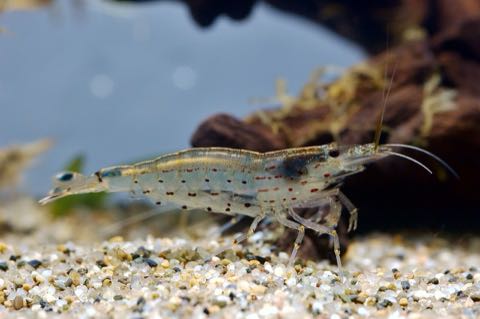 Amano shrimp
- American flagfish
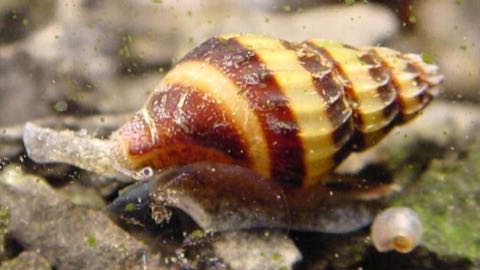 Assassin snail
- Banded gourami
- Bandit cory
- Banjo catfish
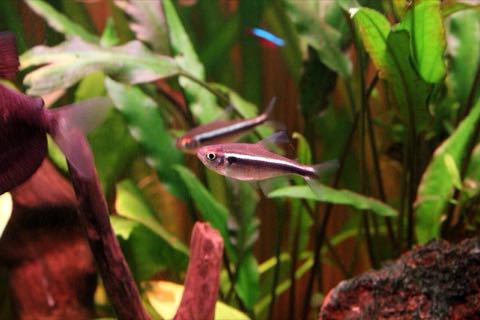 Black neon tetra
- Black phantom tetra
- Black ruby barb
Avoid with
- Acei cichlid
No shared pH rangeNo shared pH range
- Brevis shell dweller
No shared pH rangeNo shared pH range
- Caudopunctatus
No shared pH rangeNo shared pH range
- Irian Jaya rainbowfish
No shared temperature rangeNo shared temperature range
- Multies
No shared pH rangeNo shared pH range
- Pindani
No shared pH rangeNo shared pH range
- Rusty cichlid
No shared pH rangeNo shared pH range
- Saulosi cichlid
No shared pH rangeNo shared pH range
- Similis shell dweller
No shared pH rangeNo shared pH range
- Afra cichlid
No shared pH rangeNo shared pH range
- African knifefish
African knifefish may eat Orange finned danioAfrican knifefish may eat Orange finned danio
- African pike
African pike may eat Orange finned danioAfrican pike may eat Orange finned danio
Breeding orange-finned danios
Orange-finned danios scatter eggs and provide no parental care. Dedicated breeding setups use java moss, wool mops, or a bottom spawning grid. Remove adult fish once eggs are spotted because adults may eat eggs.Orange-finned danios scatter eggs and provide no parental care. Dedicated breeding setups use java moss, wool mops, or a bottom spawning grid. Remove adult fish once eggs are spotted because adults may eat eggs.[1]
Egg incubation takes roughly 24–36 hours depending on water temperature, with fry swimming freely a few days later. Offer Artemia nauplii as a starter food. Switch to a mature sponge filter once eggs are detected to reduce fry intake risk.Egg incubation takes roughly 24–36 hours depending on water temperature, with fry swimming freely a few days later. Offer Artemia nauplii as a starter food. Switch to a mature sponge filter once eggs are detected to reduce fry intake risk.[1]
Orange-finned danio health problems
Ich is a contagious protozoan infection affecting freshwater fish. White grains on skin or fins, rubbing, excess mucus, or reduced appetite serve as warning signs, although visual symptoms alone do not confirm the cause. Reduce introduction of ich by quarantining new arrivals for at least 30 days and using dedicated nets and siphons, seeking a prompt diagnosis if symptoms appear.Ich is a contagious protozoan infection affecting freshwater fish. White grains on skin or fins, rubbing, excess mucus, or reduced appetite serve as warning signs, although visual symptoms alone do not confirm the cause. Reduce introduction of ich by quarantining new arrivals for at least 30 days and using dedicated nets and siphons, seeking a prompt diagnosis if symptoms appear.[5]
Bacterial fin rot can cause progressive fin-edge erosion and redness or bloody streaks, with poor water conditions and stress favouring infection. Prevent avoidable risk by maintaining clean water and protecting fish from injury or harassment. Seek a proper diagnosis rather than assuming all damaged fins stem from fin rot.Bacterial fin rot can cause progressive fin-edge erosion and redness or bloody streaks, with poor water conditions and stress favouring infection. Prevent avoidable risk by maintaining clean water and protecting fish from injury or harassment. Seek a proper diagnosis rather than assuming all damaged fins stem from fin rot.[4]
It originates from fish waste and decaying organic debris. Establish biological filtration before stocking, test ammonia weekly instead of relying on water clarity, preserve filter bacteria, and avoid excess feeding.It originates from fish waste and decaying organic debris. Establish biological filtration before stocking, test ammonia weekly instead of relying on water clarity, preserve filter bacteria, and avoid excess feeding.[3]
Male or female?
Males remain slimmer, compete for female attention, and display more vivid coloration across their bodies and fins.Males remain slimmer, compete for female attention, and display more vivid coloration across their bodies and fins.[1]
Questions
How many danios should be kept together?
Keep orange-finned danios in a group of eight or more. A group of eight to ten can make the fish less nervous, while males compete for female attention and show stronger colours.Keep orange-finned danios in a group of eight or more. A group of eight to ten can make the fish less nervous, while males compete for female attention and show stronger colours.[1]
What tank mates are compatible with danios?
Neon tetrasNeon tetras, , Glowlight tetrasGlowlight tetras, , Harlequin rasborasHarlequin rasboras, and , and Honey gouramisHoney gouramis are conditional choices. Suitability requires checking shared water parameters of 20–26 °C, pH 6.5–7.5, and 3–5 dGH, confirming sufficient tank space for full groups, and ensuring food reaches both species. are conditional choices. Suitability requires checking shared water parameters of 68–79 °F, pH 6.5–7.5, and 3–5 dGH, confirming sufficient tank space for full groups, and ensuring food reaches both species.[9][1][10][11][12]
How often should danios be fed?
Offer two small meals daily, each limited to what the fish consume in about two minutes. Adjust portion size to the fish and remove uneaten food.Offer two small meals daily, each limited to what the fish consume in about two minutes. Adjust portion size to the fish and remove uneaten food.[2]
How big do orange-finned danios get?
Orange-finned danios reach 4.5 cm adult standard length. Mature females grow slightly larger and develop a rounder belly than males.Orange-finned danios reach 1.8 in adult standard length. Mature females grow slightly larger and develop a rounder belly than males.[1]
Do orange-finned danios jump?
Yes, orange-finned danios jump and can fit through small gaps. Keep an aquarium with a tightly fitting cover to prevent escapes.Yes, orange-finned danios jump and can fit through small gaps. Keep an aquarium with a tightly fitting cover to prevent escapes.[1]
Sources
- Brachydanio kyathit (Orange-Finned 'Danio') — Seriously Fish. Accessed 2026-10-05.
- What to feed your fish — RSPCA. Accessed 2026-10-05.
- Ammonia in Aquatic Systems — UF/IFAS Extension. Accessed 2026-10-05.
- Frequently asked questions on treating sick fish — Practical Fishkeeping. Accessed 2026-10-05.
- Ichthyophthirius multifiliis (White Spot) Infections in Fish — UF/IFAS Extension. Accessed 2026-10-05.
- Astronotus ocellatus (Oscar) — Seriously Fish. Accessed 2026-10-05.
- Rocio octofasciata (Jack Dempsey) — Seriously Fish. Accessed 2026-10-05.
- Carinotetraodon travancoricus (Dwarf Puffer) — Seriously Fish. Accessed 2026-10-05.
- Neon tetras — Seriously Fish. Accessed 2026-10-05.
- Glowlight tetras — Seriously Fish. Accessed 2026-10-05.
- Harlequin rasboras — Seriously Fish. Accessed 2026-10-05.
- Honey gouramis — Seriously Fish. Accessed 2026-10-05.
Written from the sources above. Not yet reviewed by an aquarist.
Data used by the planner
| Temperature | 20–26 | curated-v0 (needs expert review) · medium confidence |
|---|---|---|
| pH | 6–7.5 | curated-v0 (needs expert review) · medium confidence |
| Hardness (dGH) | 3–15 | curated-v0 (needs expert review) · medium confidence |
| Origin | Asia or captive aquarium strains | curated-v0 (needs expert review) · low confidence |
| Beginner friendly | Yes | curated-v0 (needs expert review) · medium confidence |
| Care level | easy | curated-v0 (needs expert review) · medium confidence |
| Activity | active | curated-v0 (needs expert review) · medium confidence |
| Swimming level | top | curated-v0 (needs expert review) · medium confidence |
| Temperament | peaceful | curated-v0 (needs expert review) · medium confidence |
| Nips fins | No | curated-v0 (needs expert review) · medium confidence |
| Long fins | No | curated-v0 (needs expert review) · medium confidence |
| Territorial | No | curated-v0 (needs expert review) · medium confidence |
| Lives in groups | Yes | curated-v0 (needs expert review) · medium confidence |
| Minimum group | 6 | curated-v0 (needs expert review) · medium confidence |
| Diet | omnivore | curated-v0 (needs expert review) · medium confidence |
| Lifespan (years) | 3–6 | curated-v0 (needs expert review) · low confidence |
| Months to adult size | 12 | curated-v0 (needs expert review) · low confidence |
| Safe with plants | Yes | curated-v0 (needs expert review) · medium confidence |
| Minimum tank length | 75 | curated-v0 (needs expert review) · medium confidence |