Gold laser cory tank size
OATA suggests at least 80 L for housing a shoal of small catfish such as corydoras. This general volume guidance covers small shoaling bottom dwellers. ScotCat notes their wild home is in Peru, in the region around Pucallpa.OATA suggests at least 21.1 gal for housing a shoal of small catfish such as corydoras. This general volume guidance covers small shoaling bottom dwellers. ScotCat notes their wild home is in Peru, in the region around Pucallpa.[2][1]
Select fine, smooth gravel or soft sand to protect sensitive barbels from abrasion while foraging. Add living plants and artificial shelters for security, while keeping open bottom floor areas accessible for feeding.Select fine, smooth gravel or soft sand to protect sensitive barbels from abrasion while foraging. Add living plants and artificial shelters for security, while keeping open bottom floor areas accessible for feeding.[1][2]
ScotCat reports an adult length of 5.5 cm for males and 6.0 cm for females. Account for these adult measurements when planning your aquarium floor plan for a complete group.ScotCat reports an adult length of 2.2 in for males and 2.4 in for females. Account for these adult measurements when planning your aquarium floor plan for a complete group.[1]
Gold laser cory water parameters
Maintain your water chemistry within 22–26 °C and pH 6.5–7.2, which represents the documented care envelope recorded by ScotCat for this catfish.Maintain your water chemistry within 72–79 °F and pH 6.5–7.2, which represents the documented care envelope recorded by ScotCat for this catfish.[1]
Check water parameters weekly, keeping ammonia and nitrite strictly at zero. Perform a weekly water renewal of approximately one quarter of the aquarium capacity, using dechlorinated replacement water.Check water parameters weekly, keeping ammonia and nitrite strictly at zero. Perform a weekly water renewal of approximately one quarter of the aquarium capacity, using dechlorinated replacement water.[2]
Clean your filter sponges and biological media by rinsing gently in water taken from the aquarium. Untreated tap water containing chlorine or chloramine can kill off essential filter bacteria.Clean your filter sponges and biological media by rinsing gently in water taken from the aquarium. Untreated tap water containing chlorine or chloramine can kill off essential filter bacteria.[2]
Feeding gold laser cories
These catfish accept tablet foods, sinking granules, good-quality flakes and frozen bloodworms. Always choose sinking presentations so meals drop down to the substrate. Scavenging behaviour does not mean leftover scraps from surface-feeding companions meet their nutritional needs.These catfish accept tablet foods, sinking granules, good-quality flakes and frozen bloodworms. Always choose sinking presentations so meals drop down to the substrate. Scavenging behaviour does not mean leftover scraps from surface-feeding companions meet their nutritional needs.[1][2]
Feed once per day in line with general catfish advice from OATA. Provide only what the fish consume within a few minutes, tuning the portion to actual feeding activity and siphoning away uneaten food.Feed once per day in line with general catfish advice from OATA. Provide only what the fish consume within a few minutes, tuning the portion to actual feeding activity and siphoning away uneaten food.[2]
Gold laser cory behaviour
House gold laser corys in groups of six or more, as they do better when surrounded by fish of the same species. ScotCat describes CW010 as peaceful bottom fish best paired with small to medium upper-level shoalers.House gold laser corys in groups of six or more, as they do better when surrounded by fish of the same species. ScotCat describes CW010 as peaceful bottom fish best paired with small to medium upper-level shoalers.[1]
Individuals can exhibit secretive habits. Positioning live foliage, root tangles or purpose-built shelters gives them quiet places to hide throughout the tank.Individuals can exhibit secretive habits. Positioning live foliage, root tangles or purpose-built shelters gives them quiet places to hide throughout the tank.[1]
Traders call CW010 the gold laser or orange laser cory. A metallic gold band runs from the nape down to the base of the caudal fin above a dark green flank stripe, complemented by yellow body coloration, yellow fins and a gold gill plate. CW010 remains an identification code while taxonomic status is unresolved, placed by ScotCat in Osteogaster, distinct from green laser CW009.Traders call CW010 the gold laser or orange laser cory. A metallic gold band runs from the nape down to the base of the caudal fin above a dark green flank stripe, complemented by yellow body coloration, yellow fins and a gold gill plate. CW010 remains an identification code while taxonomic status is unresolved, placed by ScotCat in Osteogaster, distinct from green laser CW009.[1]
Normal health signs include steady gill movement, complete fins free of ulcers, and an active feeding response. If breathing or feeding changes unexpectedly, test your parameters and seek advice rather than guessing from appearance alone.Normal health signs include steady gill movement, complete fins free of ulcers, and an active feeding response. If breathing or feeding changes unexpectedly, test your parameters and seek advice rather than guessing from appearance alone.[2]
Gold laser cory tank mates
ScotCat recommends keeping CW010 alongside small to medium shoaling species. ScotCat recommends keeping CW010 alongside small to medium shoaling species. Neon tetrasNeon tetras and and X-ray tetrasX-ray tetras make practical tank mates when you align water parameters, allow adequate swimming space, and maintain each species in its own group. make practical tank mates when you align water parameters, allow adequate swimming space, and maintain each species in its own group.[1]
Active cyprinids such as Active cyprinids such as zebra danioszebra danios and and harlequin rasborasharlequin rasboras are also suitable companions. Ensure temperature and pH requirements overlap comfortably, and keep both species in groups with generous swimming space. are also suitable companions. Ensure temperature and pH requirements overlap comfortably, and keep both species in groups with generous swimming space.[1]
Avoid housing small corys with predatory cichlids like Avoid housing small corys with predatory cichlids like oscarsoscars. Large cichlids may eat much smaller fish that share their tank space.. Large cichlids may eat much smaller fish that share their tank space.[5]
Steer clear of aggressive cichlids such as Steer clear of aggressive cichlids such as Jack DempseysJack Dempseys. Tank mates kept with Jack Dempseys must be large enough not to be treated as prey.. Tank mates kept with Jack Dempseys must be large enough not to be treated as prey.[6]
House House pea pufferspea puffers in a separate tank. This small puffer tends to nip slow-moving or long-finned fish, so it is not recommended for community aquariums. in a separate tank. This small puffer tends to nip slow-moving or long-finned fish, so it is not recommended for community aquariums.[7]
Usually fine together
- African butterfly cichlid
- African clawed frog
- Agassiz's cory
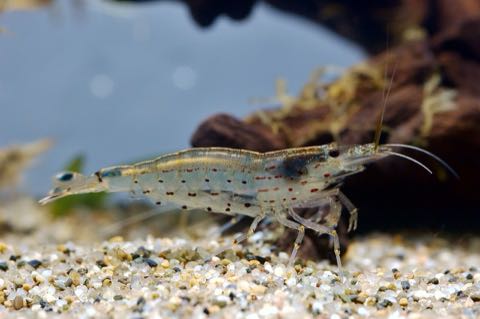 Amano shrimp
- American flagfish
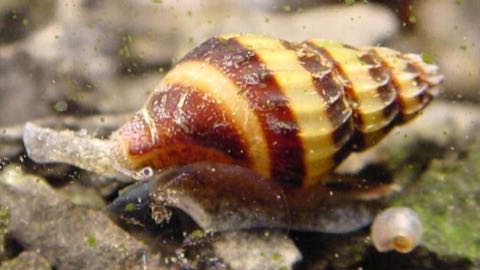 Assassin snail
- Banded gourami
- Bandit cory
- Banjo catfish
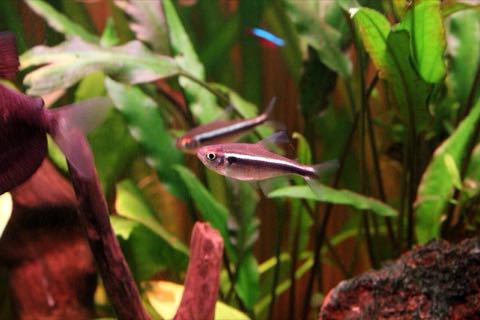 Black neon tetra
- Black phantom tetra
- Black ruby barb
Avoid with
- Acei cichlid
No shared pH rangeNo shared pH range
- Brevis shell dweller
No shared pH rangeNo shared pH range
- Caudopunctatus
No shared pH rangeNo shared pH range
- Irian Jaya rainbowfish
No shared temperature rangeNo shared temperature range
- Multies
No shared pH rangeNo shared pH range
- Pindani
No shared pH rangeNo shared pH range
- Rusty cichlid
No shared pH rangeNo shared pH range
- Saulosi cichlid
No shared pH rangeNo shared pH range
- Similis shell dweller
No shared pH rangeNo shared pH range
- Afra cichlid
No shared pH rangeNo shared pH range
- African knifefish
African knifefish may eat Gold laser coryAfrican knifefish may eat Gold laser cory
- African pike
African pike may eat Gold laser coryAfrican pike may eat Gold laser cory
Breeding gold laser cories
For breeding efforts, setting up a separate species aquarium with identical water parameters to the main display is recommended. Spawning females can lay their batches of eggs across aquarium glass and plant leaves.For breeding efforts, setting up a separate species aquarium with identical water parameters to the main display is recommended. Spawning females can lay their batches of eggs across aquarium glass and plant leaves.[1]
Gold laser cory health problems
Ich infections can cause white salt-like flecks, body scratching against hardscape, reduced appetite and irritated gills. Microscopic testing is required to confirm the presence of this parasite. Isolate new arrivals in a quarantine tank for 30 days and disinfect or separate maintenance tools to reduce transmission risks.Ich infections can cause white salt-like flecks, body scratching against hardscape, reduced appetite and irritated gills. Microscopic testing is required to confirm the presence of this parasite. Isolate new arrivals in a quarantine tank for 30 days and disinfect or separate maintenance tools to reduce transmission risks.[3]
Fin rot produces ragged fin edges, red streaks and progressive decay of fin rays. Poor water hygiene and chronic stress foster bacterial problems. Perform regular weekly water changes of one quarter of the volume, curb tank-mate harassment, and ask an expert for guidance if fin tissue erodes.Fin rot produces ragged fin edges, red streaks and progressive decay of fin rays. Poor water hygiene and chronic stress foster bacterial problems. Perform regular weekly water changes of one quarter of the volume, curb tank-mate harassment, and ask an expert for guidance if fin tissue erodes.[4][2]
Fungal growth may resemble grey-white cotton tufts across wounded flesh. Physical scrapes and environmental stress can compromise the external mucus shield. Use smooth decor and soft substrate to lower injury risk, handle fish gently, and preserve stable water quality to minimise stress.Fungal growth may resemble grey-white cotton tufts across wounded flesh. Physical scrapes and environmental stress can compromise the external mucus shield. Use smooth decor and soft substrate to lower injury risk, handle fish gently, and preserve stable water quality to minimise stress.[4][1][2]
Male or female?
Adult females are typically stockier in body build with rounder anal fins. Mature males display a noticeably slimmer profile and possess more pointed anal fins, though these physical traits represent adult tendencies rather than foolproof juvenile markers.Adult females are typically stockier in body build with rounder anal fins. Mature males display a noticeably slimmer profile and possess more pointed anal fins, though these physical traits represent adult tendencies rather than foolproof juvenile markers.[1]
Questions
How big do gold laser corys get?
Adult males are reported at 5.5 cm adult length, and adult females reach 6.0 cm adult length.Adult males are reported at 2.2 in adult length, and adult females reach 2.4 in adult length.[1]
How many corys should I put together?
Keep at least six gold laser corys together. They do better in a group of their own kind.Keep at least six gold laser corys together. They do better in a group of their own kind.[1]
What water parameters do gold laser corys require?
Provide a water temperature of 22–26 °C and a pH of 6.5–7.2, maintaining ammonia and nitrite at zero.Provide a water temperature of 72–79 °F and a pH of 6.5–7.2, maintaining ammonia and nitrite at zero.[1][2]
What should I feed gold laser corys?
Offer sinking granules, catfish tablets, flake and frozen bloodworms once daily, feeding what they finish within a few minutes.Offer sinking granules, catfish tablets, flake and frozen bloodworms once daily, feeding what they finish within a few minutes.[1][2]
What are the signs of a healthy gold laser cory?
Healthy fish show steady breathing, intact fins without ulcers, and an appropriate feeding response when food is offered.Healthy fish show steady breathing, intact fins without ulcers, and an appropriate feeding response when food is offered.[2]
Sources
- ScotCat Factsheets: February 2013: Osteogaster sp. (CW010) — ScotCat. Accessed 2026-10-05.
- How to look after freshwater catfish — Ornamental Aquatic Trade Association. Accessed 2026-10-05.
- Ichthyophthirius multifiliis (White Spot) Infections in Fish — UF/IFAS Extension. Accessed 2026-10-05.
- Frequently asked questions on treating sick fish — Practical Fishkeeping. Accessed 2026-10-05.
- Astronotus ocellatus (Oscar) — Seriously Fish. Accessed 2026-10-05.
- Rocio octofasciata (Jack Dempsey) — Seriously Fish. Accessed 2026-10-05.
- Carinotetraodon travancoricus (Dwarf Puffer) — Seriously Fish. Accessed 2026-10-05.
Written from the sources above. Not yet reviewed by an aquarist.
Data used by the planner
| Temperature | 22–26 | AqAdvisor (aqadvisor.com), retrieved 2026-10-04 · medium confidence |
|---|---|---|
| pH | 6–7.5 | AqAdvisor (aqadvisor.com), retrieved 2026-10-04 · medium confidence |
| Hardness (dGH) | 1–15 | AqAdvisor (aqadvisor.com), retrieved 2026-10-04 · medium confidence |
| Origin | Brazil (exact range uncertain) | curated-v0 (needs expert review) · low confidence |
| Beginner friendly | Yes | curated-v0 (needs expert review) · medium confidence |
| Care level | easy | curated-v0 (needs expert review) · medium confidence |
| Activity | moderate | curated-v0 (needs expert review) · medium confidence |
| Swimming level | bottom | curated-v0 (needs expert review) · medium confidence |
| Temperament | peaceful | curated-v0 (needs expert review) · medium confidence |
| Nips fins | No | curated-v0 (needs expert review) · medium confidence |
| Long fins | No | curated-v0 (needs expert review) · medium confidence |
| Territorial | No | curated-v0 (needs expert review) · medium confidence |
| Lives in groups | Yes | curated-v0 (needs expert review) · medium confidence |
| Minimum group | 6 | curated-v0 (needs expert review) · medium confidence |
| Diet | omnivore | curated-v0 (needs expert review) · medium confidence |
| Lifespan (years) | 5–10 | curated-v0 (needs expert review) · low confidence |
| Months to adult size | 12 | curated-v0 (needs expert review) · low confidence |
| Safe with plants | Yes | curated-v0 (needs expert review) · medium confidence |