Nana rasbora tank size
Provide an enclosure with a tank length of at least 45 cm and a width of at least 30 cm. Incorporating heavy vegetation along with floating cover and driftwood branches helps scatter overhead illumination.Provide an enclosure with a tank length of at least 18 in and a width of at least 12 in. Incorporating heavy vegetation along with floating cover and driftwood branches helps scatter overhead illumination.[1]
The adult length is about 1.6 cm. In the wild, records locate this fish in the lower Sittaung and Bago river basins in Myanmar.The adult length is about 0.6 in. In the wild, records locate this fish in the lower Sittaung and Bago river basins in Myanmar.[1]
Nana rasbora water parameters
Target a consistent thermal range between 23–27 °C for daily care. Keep the acidity neutral to slightly acidic between pH 6.5–7.5, and hold the overall mineral hardness within 5–12 dGH.Target a consistent thermal range between 73–81 °F for daily care. Keep the acidity neutral to slightly acidic between pH 6.5–7.5, and hold the overall mineral hardness within 5–12 dGH.[1]
Feeding nana rasboras
Feed tiny live or frozen Artemia and Daphnia alongside finely crushed dry foods. Because this species possesses an exceptionally small mouth, every morsel must be fine enough to swallow. Distribute two or three modest rations per day, giving merely what the school consumes within 2–5 minutes based on their numbers.Feed tiny live or frozen Artemia and Daphnia alongside finely crushed dry foods. Because this species possesses an exceptionally small mouth, every morsel must be fine enough to swallow. Distribute two or three modest rations per day, giving merely what the school consumes within 2–5 minutes based on their numbers.[1][2]
Nana rasbora behaviour
Communal life minimizes skittishness, while rival males exhibit richer coloration when interacting. These fish are peaceful and fare best either in a dedicated species setup or alongside similarly petite, quiet neighbours.Communal life minimizes skittishness, while rival males exhibit richer coloration when interacting. These fish are peaceful and fare best either in a dedicated species setup or alongside similarly petite, quiet neighbours.[1]
You can confirm this species by spotting a dark patch on the tip of the dorsal fin paired with a greyish hue at the end of the anal fin. These marks differentiate it from related Microdevario.You can confirm this species by spotting a dark patch on the tip of the dorsal fin paired with a greyish hue at the end of the anal fin. These marks differentiate it from related Microdevario.[1]
Nana rasbora tank mates
Chili rasborasChili rasboras are a conditional tiny companion sharing soft-water needs, provided each shoal receives adequate room. You can also consider are a conditional tiny companion sharing soft-water needs, provided each shoal receives adequate room. You can also consider green neon rasborasgreen neon rasboras as a similarly small, peaceful option where water parameters overlap, making sure to keep each species in its own adequate group. as a similarly small, peaceful option where water parameters overlap, making sure to keep each species in its own adequate group.[1][8][9]
Pygmy corydorasPygmy corydoras can share an enclosure because they suit communities of tiny cyprinids, provided you supply them with their own group, floor space, and food. Alternatively, can share an enclosure because they suit communities of tiny cyprinids, provided you supply them with their own group, floor space, and food. Alternatively, celestial pearl danioscelestial pearl danios can work in planted tanks at shared cool-end temperatures, though you must monitor feeding access and watch for nipping. can work in planted tanks at shared cool-end temperatures, though you must monitor feeding access and watch for nipping.[1][10][11]
Predatory feeding by Predatory feeding by oscarsoscars puts small or slender fish at risk of being consumed. Similarly, puts small or slender fish at risk of being consumed. Similarly, Jack DempseysJack Dempseys require companions large enough to avoid being viewed as prey, making this tiny rasbora an unsuitable choice. require companions large enough to avoid being viewed as prey, making this tiny rasbora an unsuitable choice.[5][6]
Do not house this species with Do not house this species with pea pufferspea puffers. The pea puffer presents a persistent fin-nipping hazard in mixed communities, and it can also struggle to compete if faster fish intercept its food.. The pea puffer presents a persistent fin-nipping hazard in mixed communities, and it can also struggle to compete if faster fish intercept its food.[7]
Usually fine together
- African butterfly cichlid
- Agassiz's cory
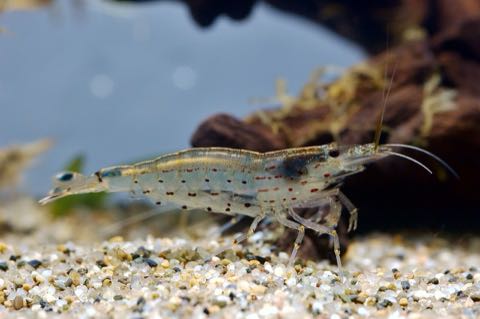 Amano shrimp
- American flagfish
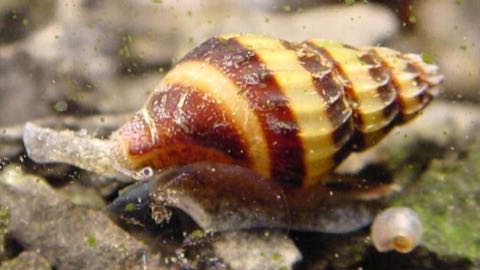 Assassin snail
- Banded gourami
- Bandit cory
- Banjo catfish
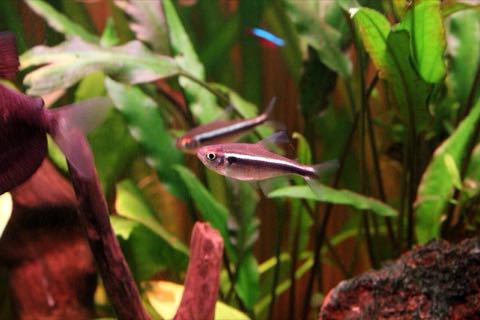 Black neon tetra
- Black phantom tetra
- Black ruby barb
- Blackline rasbora
Avoid with
- Acei cichlid
No shared pH rangeNo shared pH range
- African clawed frog
African clawed frog may eat Nana rasboraAfrican clawed frog may eat Nana rasbora
- Brevis shell dweller
No shared pH rangeNo shared pH range
- Caudopunctatus
No shared pH rangeNo shared pH range
- Multies
No shared pH rangeNo shared pH range
- Pindani
No shared pH rangeNo shared pH range
- Rusty cichlid
No shared pH rangeNo shared pH range
- Saulosi cichlid
No shared pH rangeNo shared pH range
- Similis shell dweller
No shared pH rangeNo shared pH range
- Abei puffer
Abei puffer may eat Nana rasboraAbei puffer may eat Nana rasbora
- Afra cichlid
No shared pH rangeNo shared pH range
- African butterflyfish
African butterflyfish may eat Nana rasboraAfrican butterflyfish may eat Nana rasbora
Nana rasbora health problems
Ich represents a common freshwater parasitic infection. Warning signs include salt-like white cysts, flashing against substrate, decreased appetite, and flared gills, though identical signs can stem from other ailments. Isolating new stock for a 30-day quarantine and sanitizing equipment like handling nets diminishes the chance of bringing parasites into your aquarium.Ich represents a common freshwater parasitic infection. Warning signs include salt-like white cysts, flashing against substrate, decreased appetite, and flared gills, though identical signs can stem from other ailments. Isolating new stock for a 30-day quarantine and sanitizing equipment like handling nets diminishes the chance of bringing parasites into your aquarium.[3]
Fin rot is a bacterial condition frequently triggered by unmanaged stress and degraded water quality. Fins show shredded margins, red streaking, and gradual recession. Preserving clean water and eliminating physical hazards or aggressive tank mates lowers the incidence of damage, though deteriorating fins require veterinary or professional assessment.Fin rot is a bacterial condition frequently triggered by unmanaged stress and degraded water quality. Fins show shredded margins, red streaking, and gradual recession. Preserving clean water and eliminating physical hazards or aggressive tank mates lowers the incidence of damage, though deteriorating fins require veterinary or professional assessment.[4]
Fungal complications manifest as tufts of pale, cottony material anchored to injured skin. Epidermal wounds and ongoing environmental stress compromise the protective slime coat that keeps pathogens at bay. Arranging smooth hardscape, minimizing handling trauma, and maintaining immaculate water parameters lowers the probability of physical wounds turning fungal.Fungal complications manifest as tufts of pale, cottony material anchored to injured skin. Epidermal wounds and ongoing environmental stress compromise the protective slime coat that keeps pathogens at bay. Arranging smooth hardscape, minimizing handling trauma, and maintaining immaculate water parameters lowers the probability of physical wounds turning fungal.[4]
Male or female?
Distinguishing the sexes depends on physical contour and hue. Fully grown females develop a broader, rounder profile and slightly greater size, while males stay slender and show heightened coloration.Distinguishing the sexes depends on physical contour and hue. Fully grown females develop a broader, rounder profile and slightly greater size, while males stay slender and show heightened coloration.[1]
Questions
How many nana rasboras should I keep together?
Keep at least eight nana rasboras together in your aquarium. A group of eight to ten or more individuals reduces nervousness and encourages the males to show their best colours.Keep at least eight nana rasboras together in your aquarium. A group of eight to ten or more individuals reduces nervousness and encourages the males to show their best colours.[1]
How big do nana rasboras get?
The adult length is about 1.6 cm. Mature females tend to appear slightly larger and deeper-bodied than the compact males.The adult length is about 0.6 in. Mature females tend to appear slightly larger and deeper-bodied than the compact males.[1]
Can nana rasboras live with chili rasboras?
Yes, chili rasboras can live with them under shared soft-water conditions.Yes, chili rasboras can live with them under shared soft-water conditions.[1][8]
How often should I feed nana rasboras?
Feed them two or three small meals daily. Offer only what the fish can finish within 2–5 minutes, ensuring particles are small enough to swallow so excess food does not accumulate.Feed them two or three small meals daily. Offer only what the fish can finish within 2–5 minutes, ensuring particles are small enough to swallow so excess food does not accumulate.[2][1]
Do nana rasboras need strong water flow?
No, nana rasboras suit gentle filtration rather than strong current. Combine mild water movement with floating plants and driftwood roots to diffuse light and provide shaded cover.No, nana rasboras suit gentle filtration rather than strong current. Combine mild water movement with floating plants and driftwood roots to diffuse light and provide shaded cover.[1]
How do you tell male and female nana rasboras apart?
Mature females are typically larger and deeper-bodied. In contrast, males have a more compact build and display stronger coloration.Mature females are typically larger and deeper-bodied. In contrast, males have a more compact build and display stronger coloration.[1]
Sources
- Microdevario nanus — Seriously Fish. Accessed 2026-10-05.
- What to feed your pet fish — RSPCA. Accessed 2026-10-05.
- Ichthyophthirius multifiliis (White Spot) Infections in Fish — UF/IFAS Extension. Accessed 2026-10-05.
- Frequently asked questions on treating sick fish — Practical Fishkeeping. Accessed 2026-10-05.
- Astronotus ocellatus (Oscar) — Seriously Fish. Accessed 2026-10-05.
- Rocio octofasciata (Jack Dempsey) — Seriously Fish. Accessed 2026-10-05.
- Carinotetraodon travancoricus (Dwarf Puffer) — Seriously Fish. Accessed 2026-10-05.
- Boraras brigittae — Seriously Fish. Accessed 2026-10-05.
- Microdevario kubotai — Seriously Fish. Accessed 2026-10-05.
- Corydoras pygmaeus — Seriously Fish. Accessed 2026-10-05.
- Danio margaritatus — Seriously Fish. Accessed 2026-10-05.
Written from the sources above. Not yet reviewed by an aquarist.
Data used by the planner
| Temperature | 23–28 | AqAdvisor (aqadvisor.com), retrieved 2026-10-04 · medium confidence |
|---|---|---|
| pH | 6.5–7.5 | AqAdvisor (aqadvisor.com), retrieved 2026-10-04 · medium confidence |
| Hardness (dGH) | 5–15 | AqAdvisor (aqadvisor.com), retrieved 2026-10-04 · medium confidence |
| Origin | Southern Myanmar | curated-v0 (needs expert review) · low confidence |
| Beginner friendly | Yes | curated-v0 (needs expert review) · medium confidence |
| Care level | easy | curated-v0 (needs expert review) · medium confidence |
| Activity | active | curated-v0 (needs expert review) · medium confidence |
| Swimming level | middle | curated-v0 (needs expert review) · medium confidence |
| Temperament | peaceful | curated-v0 (needs expert review) · medium confidence |
| Nips fins | No | curated-v0 (needs expert review) · medium confidence |
| Long fins | No | curated-v0 (needs expert review) · medium confidence |
| Territorial | No | curated-v0 (needs expert review) · medium confidence |
| Lives in groups | Yes | curated-v0 (needs expert review) · medium confidence |
| Minimum group | 8 | curated-v0 (needs expert review) · medium confidence |
| Diet | omnivore | curated-v0 (needs expert review) · medium confidence |
| Lifespan (years) | 3–5 | curated-v0 (needs expert review) · low confidence |
| Months to adult size | 6 | curated-v0 (needs expert review) · low confidence |
| Safe with plants | Yes | curated-v0 (needs expert review) · medium confidence |