Sterbai cory tank size
Wild Sterbai corys originate from Brazil and Bolivia, including the Rio Guaporé system, where they occupy creeks, pools, and flooded forests. Most fish available in the trade are farm-bred specimens, and an albino commercial form is also produced alongside the wild pattern.Wild Sterbai corys originate from Brazil and Bolivia, including the Rio Guaporé system, where they occupy creeks, pools, and flooded forests. Most fish available in the trade are farm-bred specimens, and an albino commercial form is also produced alongside the wild pattern.[1]
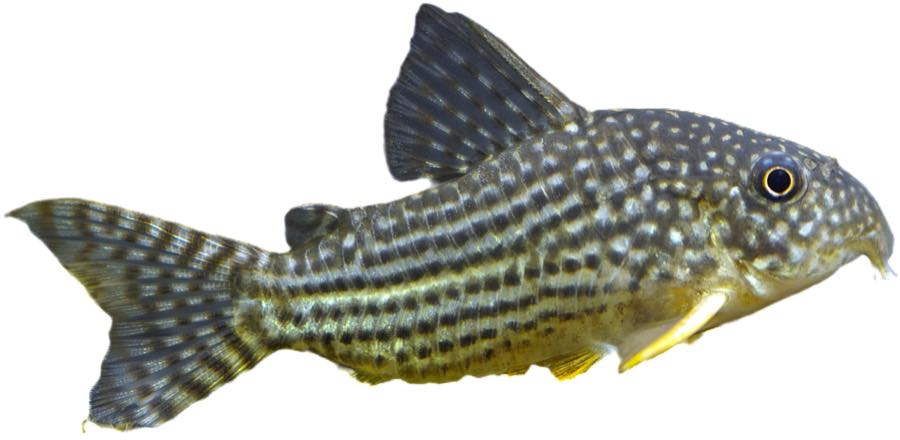
Sterbai corydoras display light spots set across a dark head, which separates them from Brochis haraldschultzi, a species showing dark spots over a lighter head and a longer snout. Seriously Fish reports an adult length of 6.5 cm standard length for this species.Sterbai corydoras display light spots set across a dark head, which separates them from Brochis haraldschultzi, a species showing dark spots over a lighter head and a longer snout. Seriously Fish reports an adult length of 2.6 in standard length for this species.[1]
Decorate the tank using soft river sand, roots, and wood under dim illumination, or establish a well-planted standard layout.Decorate the tank using soft river sand, roots, and wood under dim illumination, or establish a well-planted standard layout.[1]
Sterbai cory water parameters
Keep your water temperature between 24–27 °C, matching their warm natural conditions. Maintain a steady pH range of 6.0–7.6 and general hardness between 1–15 dGH to mirror their native soft-water rivers.Keep your water temperature between 75–81 °F, matching their warm natural conditions. Maintain a steady pH range of 6.0–7.6 and general hardness between 1–15 dGH to mirror their native soft-water rivers.[1]
Establish biological filtration thoroughly before adding any fish to the aquarium. Ammonia must remain undetectable and nitrite tightly controlled, as visually clear water does not confirm chemical safety. Test ammonia weekly and whenever your catfish show changes in appetite or behaviour. Preserve your filter bacteria during maintenance and do not overfeed the tank.Establish biological filtration thoroughly before adding any fish to the aquarium. Ammonia must remain undetectable and nitrite tightly controlled, as visually clear water does not confirm chemical safety. Test ammonia weekly and whenever your catfish show changes in appetite or behaviour. Preserve your filter bacteria during maintenance and do not overfeed the tank.[3]
Feeding sterbai cories
Sterbai corys are omnivorous bottom feeders that require sinking pellets or sinking tablets as their dietary staple. Supplement this base food with live or frozen Artemia, Daphnia, and bloodworms. Never expect these bottom dwellers to survive solely on leftover flakes escaping surface feeders.Sterbai corys are omnivorous bottom feeders that require sinking pellets or sinking tablets as their dietary staple. Supplement this base food with live or frozen Artemia, Daphnia, and bloodworms. Never expect these bottom dwellers to survive solely on leftover flakes escaping surface feeders.[1]
Offer two small meals daily, limiting each feeding to what the fish fully consume within about two minutes.Offer two small meals daily, limiting each feeding to what the fish fully consume within about two minutes.[2]
Sterbai cory behaviour
Keep a social group of at least six fish of the same species. Sterbai corys are peaceful bottom dwellers that display higher activity and greater confidence when kept in numbers. Maintaining a full school encourages natural movement, though grouping does not eliminate all potential intimidation from boisterous tank mates.Keep a social group of at least six fish of the same species. Sterbai corys are peaceful bottom dwellers that display higher activity and greater confidence when kept in numbers. Maintaining a full school encourages natural movement, though grouping does not eliminate all potential intimidation from boisterous tank mates.[1]
Sterbai corys use a modified vascular intestine that allows them to take up oxygen from atmospheric air. Occasional rapid dashes to the water surface to gulp air are entirely normal behaviour.Sterbai corys use a modified vascular intestine that allows them to take up oxygen from atmospheric air. Occasional rapid dashes to the water surface to gulp air are entirely normal behaviour.[1]
Exercise caution when catching or transporting these catfish, as their sharp pectoral spines can easily puncture human skin or tangle in aquarium nets. In community setups, corys may consume bite-sized fish eggs or tiny fish fry found along the floor.Exercise caution when catching or transporting these catfish, as their sharp pectoral spines can easily puncture human skin or tangle in aquarium nets. In community setups, corys may consume bite-sized fish eggs or tiny fish fry found along the floor.[1]
Sterbai cory tank mates
Select peaceful companions such as small characins, cyprinids, anabantoids, and docile bottom dwellers. You can keep Select peaceful companions such as small characins, cyprinids, anabantoids, and docile bottom dwellers. You can keep Neon tetrasNeon tetras or or Glowlight tetrasGlowlight tetras alongside your cory group if you confirm overlapping water parameters and provide sufficient swimming space for both shoals. alongside your cory group if you confirm overlapping water parameters and provide sufficient swimming space for both shoals.[1][9][10]
Other suitable choices include Other suitable choices include Harlequin rasborasHarlequin rasboras and and Honey gouramisHoney gouramis. Harlequins mix well in peaceful community volumes with shared water chemistry. Slow-moving honey gouramis can work if water parameters match, provided you verify that food reaches both species without fast-swimming competitors causing intimidation.. Harlequins mix well in peaceful community volumes with shared water chemistry. Slow-moving honey gouramis can work if water parameters match, provided you verify that food reaches both species without fast-swimming competitors causing intimidation.[11][1][12]
Avoid housing Sterbai corys with large or aggressive species that pose severe predation and injury risks. Exclude predatory Avoid housing Sterbai corys with large or aggressive species that pose severe predation and injury risks. Exclude predatory OscarsOscars, as they can consume much smaller fish. Likewise, keep , as they can consume much smaller fish. Likewise, keep Jack DempseysJack Dempseys out due to their mature aggression and capacity to swallow smaller tank mates. You should also exclude out due to their mature aggression and capacity to swallow smaller tank mates. You should also exclude Pea puffersPea puffers, which carry a documented habit of nipping slow or long-finned tank companions., which carry a documented habit of nipping slow or long-finned tank companions.[1][6][7][8]
Usually fine together
- African butterfly cichlid
- African clawed frog
- Agassiz's cory
 Amano shrimp
- American flagfish
 Assassin snail
- Banded gourami
- Bandit cory
- Banjo catfish
 Black neon tetra
- Black phantom tetra
- Black ruby barb
Avoid with
- African knifefish
African knifefish may eat Sterbai coryAfrican knifefish may eat Sterbai cory
- African pike
African pike may eat Sterbai coryAfrican pike may eat Sterbai cory
- Alligator gar
Alligator gar may eat Sterbai coryAlligator gar may eat Sterbai cory
- Antenna ray
Antenna ray may eat Sterbai coryAntenna ray may eat Sterbai cory
- Arapaima
Arapaima may eat Sterbai coryArapaima may eat Sterbai cory
- Asian arowana
Asian arowana may eat Sterbai coryAsian arowana may eat Sterbai cory
- Asian upside-down catfish
Asian upside down catfish may eat Sterbai coryAsian upside down catfish may eat Sterbai cory
- Australian pearl arowana
Australian pearl arowana may eat Sterbai coryAustralian pearl arowana may eat Sterbai cory
- Barred bichir
Barred bichir may eat Sterbai coryBarred bichir may eat Sterbai cory
- Black bullhead
Black bullhead may eat Sterbai coryBlack bullhead may eat Sterbai cory
- Black diamond cichlid
Black diamond cichlid may eat Sterbai coryBlack diamond cichlid may eat Sterbai cory
- Brown bullhead
Brown bullhead may eat Sterbai coryBrown bullhead may eat Sterbai cory
Breeding sterbai cories
Set up a dedicated breeding aquarium fitted with an air-powered sponge or box filter to avoid pulling fry into mechanical intakes. Furnish the spawning tank with live vegetation such as java moss. Maintain a water temperature of 24 °C and an acidic pH around 6.5.Set up a dedicated breeding aquarium fitted with an air-powered sponge or box filter to avoid pulling fry into mechanical intakes. Furnish the spawning tank with live vegetation such as java moss. Maintain a water temperature of 75 °F and an acidic pH around 6.5.[1]
Stock the breeding aquarium using a ratio of two males per female. Condition the breeding group thoroughly with a diverse rotation of live, frozen, and dried foods.Stock the breeding aquarium using a ratio of two males per female. Condition the breeding group thoroughly with a diverse rotation of live, frozen, and dried foods.[1]
Eggs hatch in three to five days, and fry accept Artemia nauplii or microworms once they absorb their yolk sacs.Eggs hatch in three to five days, and fry accept Artemia nauplii or microworms once they absorb their yolk sacs.[1]
Sterbai cory health problems
Waste products from fish metabolism and decomposing excess food create ammonia. Cycle your biological filter fully before stocking, avoid overfeeding, and test water chemistry directly rather than guessing health from water clarity.Waste products from fish metabolism and decomposing excess food create ammonia. Cycle your biological filter fully before stocking, avoid overfeeding, and test water chemistry directly rather than guessing health from water clarity.[3]
Ich is a contagious protozoan infection affecting freshwater fish. Warning signs include visible white salt-like grains across the skin and fins, body rubbing against decor, excess mucus production, or reduced feeding, though visual appearance alone cannot definitively confirm the pathogen. Reduce introduction risk by quarantining new arrivals for at least 30 days with dedicated nets and siphons, and seek a professional fish-health diagnosis promptly.Ich is a contagious protozoan infection affecting freshwater fish. Warning signs include visible white salt-like grains across the skin and fins, body rubbing against decor, excess mucus production, or reduced feeding, though visual appearance alone cannot definitively confirm the pathogen. Reduce introduction risk by quarantining new arrivals for at least 30 days with dedicated nets and siphons, and seek a professional fish-health diagnosis promptly.[5]
Poor water parameters and physical stress foster bacterial infection. Minimise risks by maintaining pristine water and shielding your catfish from tank mate harassment or mechanical injury. Obtain an accurate health diagnosis rather than assuming all ragged fins stem from fin rot.Poor water parameters and physical stress foster bacterial infection. Minimise risks by maintaining pristine water and shielding your catfish from tank mate harassment or mechanical injury. Obtain an accurate health diagnosis rather than assuming all ragged fins stem from fin rot.[4]
Male or female?
Sexing becomes visible once fish reach full sexual maturity. When viewed from above, mature female Sterbai corys possess noticeably broader, rounder bodies than males, particularly when carrying eggs.Sexing becomes visible once fish reach full sexual maturity. When viewed from above, mature female Sterbai corys possess noticeably broader, rounder bodies than males, particularly when carrying eggs.[1]
Questions
How many Sterbai corys should be kept together?
Keep at least six Sterbai corys together in your tank.Keep at least six Sterbai corys together in your tank.[1]
How do I care for Sterba's corydoras?
House them in an aquarium measuring at least 75 cm in tank length with soft sand, dim lighting, and steady water between 24–27 °C.House them in an aquarium measuring at least 30 in in tank length with soft sand, dim lighting, and steady water between 75–81 °F.[1]
Can I keep only three corydoras?
No, three corydoras are not enough for their welfare.No, three corydoras are not enough for their welfare.[1]
Why do Sterbai corys swim to the surface?
Sterbai corys naturally visit the surface to breathe atmospheric air using their vascularised intestine. However, if their surface dashes increase in frequency alongside deteriorating water quality, test ammonia and general water conditions right away.Sterbai corys naturally visit the surface to breathe atmospheric air using their vascularised intestine. However, if their surface dashes increase in frequency alongside deteriorating water quality, test ammonia and general water conditions right away.[1][3]
How often should I feed Sterbai corys?
Feed them two small meals each day. Offer sinking pellets or tablets supplemented with live or frozen foods, limiting each portion to what they finish in two minutes.Feed them two small meals each day. Offer sinking pellets or tablets supplemented with live or frozen foods, limiting each portion to what they finish in two minutes.[2][1]
Sources
- Hoplisoma sterbai (Sterba's Cory) — Seriously Fish. Accessed 2026-10-05.
- What to feed your fish — RSPCA. Accessed 2026-10-05.
- Ammonia in Aquatic Systems — UF/IFAS Extension. Accessed 2026-10-05.
- Frequently asked questions on treating sick fish — Practical Fishkeeping. Accessed 2026-10-05.
- Ichthyophthirius multifiliis (White Spot) Infections in Fish — UF/IFAS Extension. Accessed 2026-10-05.
- Astronotus ocellatus (Oscar) — Seriously Fish. Accessed 2026-10-05.
- Rocio octofasciata (Jack Dempsey) — Seriously Fish. Accessed 2026-10-05.
- Carinotetraodon travancoricus (Dwarf Puffer) — Seriously Fish. Accessed 2026-10-05.
- Neon tetras — Seriously Fish. Accessed 2026-10-05.
- Glowlight tetras — Seriously Fish. Accessed 2026-10-05.
- Harlequin rasboras — Seriously Fish. Accessed 2026-10-05.
- Honey gouramis — Seriously Fish. Accessed 2026-10-05.
Written from the sources above. Not yet reviewed by an aquarist.
Data used by the planner
| Temperature | 21–27 | AqAdvisor (aqadvisor.com), retrieved 2026-10-04; agrees with FishBase (fishbase.se), retrieved 2026-10-04 · medium confidence |
|---|---|---|
| pH | 5.5–7.8 | AqAdvisor (aqadvisor.com), retrieved 2026-10-04; agrees with FishBase (fishbase.se), retrieved 2026-10-04 · medium confidence |
| Hardness (dGH) | 1–15 | AqAdvisor (aqadvisor.com), retrieved 2026-10-04 · low confidence |
| Origin | South America | curated-v0 (needs expert review) · low confidence |
| Beginner friendly | Yes | curated-v0 (needs expert review) · medium confidence |
| Care level | easy | curated-v0 (needs expert review) · medium confidence |
| Activity | moderate | curated-v0 (needs expert review) · medium confidence |
| Swimming level | bottom | curated-v0 (needs expert review) · medium confidence |
| Temperament | peaceful | curated-v0 (needs expert review) · medium confidence |
| Nips fins | No | curated-v0 (needs expert review) · medium confidence |
| Long fins | No | curated-v0 (needs expert review) · medium confidence |
| Territorial | No | curated-v0 (needs expert review) · medium confidence |
| Lives in groups | Yes | curated-v0 (needs expert review) · medium confidence |
| Minimum group | 6 | curated-v0 (needs expert review) · medium confidence |
| Diet | omnivore | curated-v0 (needs expert review) · medium confidence |
| Lifespan (years) | 3–6 | curated-v0 (needs expert review) · low confidence |
| Months to adult size | 12 | curated-v0 (needs expert review) · low confidence |
| Safe with plants | Yes | curated-v0 (needs expert review) · medium confidence |
| Minimum tank length | 75 | curated-v0 (needs expert review) · medium confidence |