Emerald cory tank size
Plan your setup around a base tank length of 120 cm and a width of 45 cm, as recommended by Seriously Fish. These armoured catfish come from tributaries, backwaters, oxbows and marginal lakes throughout the Amazon basin in Brazil, Peru, Ecuador and Colombia. Juveniles develop mottled skin and a tall dorsal fin, which is a natural stage of growth rather than a distinct colour variety.Plan your setup around a base tank length of about 4 ft (47 in) and a width of 18 in, as recommended by Seriously Fish. These armoured catfish come from tributaries, backwaters, oxbows and marginal lakes throughout the Amazon basin in Brazil, Peru, Ecuador and Colombia. Juveniles develop mottled skin and a tall dorsal fin, which is a natural stage of growth rather than a distinct colour variety.[1]
Select fine sand or clean rounded gravel for the aquarium floor. Seriously Fish accepts rounded gravel as long as you keep it scrupulously clean. Provide some physical cover to give your catfish shelter, while treating additional hardscape or decorations as largely optional.Select fine sand or clean rounded gravel for the aquarium floor. Seriously Fish accepts rounded gravel as long as you keep it scrupulously clean. Provide some physical cover to give your catfish shelter, while treating additional hardscape or decorations as largely optional.[1]
Emerald cory water parameters
Maintain water temperatures between 22–28 °C, a pH of 5.8–8.0 and general hardness between 5–15 dGH. Seriously Fish states a broader natural tolerance of 20–28 °C, pH 5.0–8.0 and 2–15 dGH, but aiming for the shared overlap provides stable living conditions.Maintain water temperatures between 72–82 °F, a pH of 5.8–8.0 and general hardness between 5–15 dGH. Seriously Fish states a broader natural tolerance of 68–82 °F, pH 5.0–8.0 and 2–15 dGH, but aiming for the shared overlap provides stable living conditions.[1]
Establish biological filtration completely before you introduce any catfish. Nitrification must keep ammonia undetectable and nitrite controlled, because visually clear water does not confirm chemical safety. Test ammonia weekly and whenever you see behavioural changes, making sure to avoid overfeeding.Establish biological filtration completely before you introduce any catfish. Nitrification must keep ammonia undetectable and nitrite controlled, because visually clear water does not confirm chemical safety. Test ammonia weekly and whenever you see behavioural changes, making sure to avoid overfeeding.[3]
Feeding emerald cories
Emerald corys are foraging omnivores that eat sinking dry foods alongside small live or frozen items like bloodworm and Tubifex. Do not expect them to survive on leftovers or act as aquarium cleaners. Provide a varied selection to meet their nutritional needs.Emerald corys are foraging omnivores that eat sinking dry foods alongside small live or frozen items like bloodworm and Tubifex. Do not expect them to survive on leftovers or act as aquarium cleaners. Provide a varied selection to meet their nutritional needs.[1]
Follow general RSPCA feeding guidance by offering two small meals daily, limiting each portion to what your fish consume in about two minutes. Adjust the exact amount to your stocking level and remove uneaten food so decomposing waste does not spoil water quality.Follow general RSPCA feeding guidance by offering two small meals daily, limiting each portion to what your fish consume in about two minutes. Adjust the exact amount to your stocking level and remove uneaten food so decomposing waste does not spoil water quality.[2]
Emerald cory behaviour
These catfish are peaceful and gregarious bottom-dwellers. Keep a minimum group of six or more fish together, though Seriously Fish suggests maintaining six to eight individuals.These catfish are peaceful and gregarious bottom-dwellers. Keep a minimum group of six or more fish together, though Seriously Fish suggests maintaining six to eight individuals.[1]
You will occasionally see these catfish dash to the surface to gulp atmospheric air. They possess a modified vascular intestine for facultative air-breathing. Occasional surface breathing is normal captive behaviour, so surface trips alone do not confirm illness.You will occasionally see these catfish dash to the surface to gulp atmospheric air. They possess a modified vascular intestine for facultative air-breathing. Occasional surface breathing is normal captive behaviour, so surface trips alone do not confirm illness.[1][3][5]
Emerald cory tank mates
Neon tetrasNeon tetras, , glowlight tetrasglowlight tetras and and harlequin rasborasharlequin rasboras make suitable midwater companions. These peaceful shoaling species work well alongside catfish provided their shared temperature and hardness requirements match and your tank supplies ample swimming space for full schools of every species. make suitable midwater companions. These peaceful shoaling species work well alongside catfish provided their shared temperature and hardness requirements match and your tank supplies ample swimming space for full schools of every species.[9][1][10][11]
Honey gouramisHoney gouramis can also share a community tank, but require extra attention. They are slow-moving fish vulnerable to feeding competition and intimidation. Verify that your water parameters overlap and verify that food reaches both species during daily feedings. can also share a community tank, but require extra attention. They are slow-moving fish vulnerable to feeding competition and intimidation. Verify that your water parameters overlap and verify that food reaches both species during daily feedings.[12][1]
Avoid housing emerald corys with large predators like Avoid housing emerald corys with large predators like OscarsOscars or aggressive or aggressive Jack DempseysJack Dempseys, which can swallow or attack smaller tank mates as they mature. You must also avoid , which can swallow or attack smaller tank mates as they mature. You must also avoid Pea puffersPea puffers, which carry a documented risk of nipping slower tank companions., which carry a documented risk of nipping slower tank companions.[1][6][7][8]
Usually fine together
- African butterfly cichlid
- African clawed frog
- Agassiz's cory
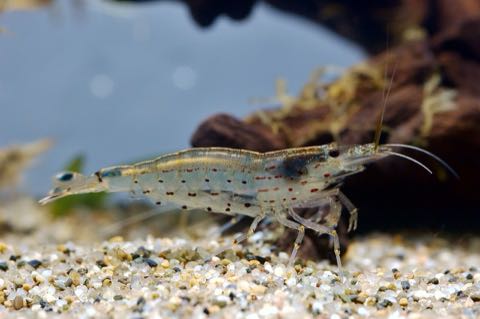 Amano shrimp
- American flagfish
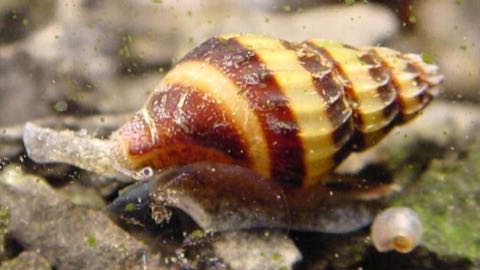 Assassin snail
- Banded gourami
- Bandit cory
- Banjo catfish
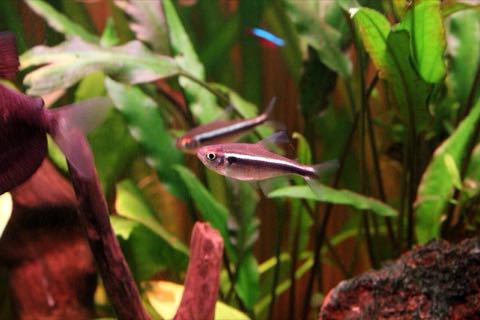 Black neon tetra
- Black phantom tetra
- Black ruby barb
Avoid with
- African knifefish
African knifefish may eat Emerald green coryAfrican knifefish may eat Emerald green cory
- African pike
African pike may eat Emerald green coryAfrican pike may eat Emerald green cory
- Alligator gar
Alligator gar may eat Emerald green coryAlligator gar may eat Emerald green cory
- Antenna ray
Antenna ray may eat Emerald green coryAntenna ray may eat Emerald green cory
- Arapaima
Arapaima may eat Emerald green coryArapaima may eat Emerald green cory
- Asian arowana
Asian arowana may eat Emerald green coryAsian arowana may eat Emerald green cory
- Asian upside-down catfish
Asian upside down catfish may eat Emerald green coryAsian upside down catfish may eat Emerald green cory
- Australian pearl arowana
Australian pearl arowana may eat Emerald green coryAustralian pearl arowana may eat Emerald green cory
- Barred bichir
Barred bichir may eat Emerald green coryBarred bichir may eat Emerald green cory
- Black bullhead
Black bullhead may eat Emerald green coryBlack bullhead may eat Emerald green cory
- Black diamond cichlid
Black diamond cichlid may eat Emerald green coryBlack diamond cichlid may eat Emerald green cory
- Brown bullhead
Brown bullhead may eat Emerald green coryBrown bullhead may eat Emerald green cory
Emerald cory health problems
Ammonia poisoning occurs when fish waste or uneaten food accumulates and overwhelms the biological filter. Prevent toxicity by cycling filters fully before stocking and testing weekly.Ammonia poisoning occurs when fish waste or uneaten food accumulates and overwhelms the biological filter. Prevent toxicity by cycling filters fully before stocking and testing weekly.[3]
Ich is a contagious protozoan infection affecting freshwater fish. Warning signs include tiny white grains on the fins or skin, rubbing against hard surfaces, excess mucus and reduced feeding. Reduce transmission risks by quarantining new arrivals for at least 30 days with dedicated nets.Ich is a contagious protozoan infection affecting freshwater fish. Warning signs include tiny white grains on the fins or skin, rubbing against hard surfaces, excess mucus and reduced feeding. Reduce transmission risks by quarantining new arrivals for at least 30 days with dedicated nets.[5]
Poor water parameters and physical stress make fish vulnerable to infection. Keep water scrupulously clean and protect your catfish from physical injury, seeking an accurate diagnosis if damage appears.Poor water parameters and physical stress make fish vulnerable to infection. Keep water scrupulously clean and protect your catfish from physical injury, seeking an accurate diagnosis if damage appears.[4]
Male or female?
Telling sexes apart is only practical once the fish reach maturity. Adult female emerald corys develop a visibly rounder, higher-bodied outline and grow slightly larger than adult males. Reliable sex identification is not possible in young fish.Telling sexes apart is only practical once the fish reach maturity. Adult female emerald corys develop a visibly rounder, higher-bodied outline and grow slightly larger than adult males. Reliable sex identification is not possible in young fish.[1]
Questions
How big do emerald corydoras get?
Seriously Fish reports an adult length of 8 cm standard length. Juveniles possess mottled patterning and extended dorsal fins before maturing into their uniform adult shape.Seriously Fish reports an adult length of 3 in standard length. Juveniles possess mottled patterning and extended dorsal fins before maturing into their uniform adult shape.[1]
How many corys should you keep together?
Keep a social group of at least six fish together. Seriously Fish recommends maintaining a group of six to eight individuals to satisfy their gregarious behavioural needs.Keep a social group of at least six fish together. Seriously Fish recommends maintaining a group of six to eight individuals to satisfy their gregarious behavioural needs.[1]
How do I care for an Emerald Green cory catfish?
House them in a 120 cm tank over fine sand or clean rounded gravel. Keep water between 22–28 °C, supply daily sinking foods, and maintain established biological filtration with zero ammonia.House them in a about 4 ft (47 in) tank over fine sand or clean rounded gravel. Keep water between 72–82 °F, supply daily sinking foods, and maintain established biological filtration with zero ammonia.[1][3]
Can I keep only three Corydoras?
No, three fish is too small a number.No, three fish is too small a number.[1]
How often should I feed emerald corys?
Feed your catfish twice daily following general RSPCA recommendations. Offer only what they finish within about two minutes per meal and promptly clear away any uneaten surplus.Feed your catfish twice daily following general RSPCA recommendations. Offer only what they finish within about two minutes per meal and promptly clear away any uneaten surplus.[2]
Sources
- Brochis splendens (Emerald 'Brochis') — Seriously Fish. Accessed 2026-10-05.
- What to feed your fish — RSPCA. Accessed 2026-10-05.
- Ammonia in Aquatic Systems — UF/IFAS Extension. Accessed 2026-10-05.
- Frequently asked questions on treating sick fish — Practical Fishkeeping. Accessed 2026-10-05.
- Ichthyophthirius multifiliis (White Spot) Infections in Fish — UF/IFAS Extension. Accessed 2026-10-05.
- Astronotus ocellatus (Oscar) — Seriously Fish. Accessed 2026-10-05.
- Rocio octofasciata (Jack Dempsey) — Seriously Fish. Accessed 2026-10-05.
- Carinotetraodon travancoricus (Dwarf Puffer) — Seriously Fish. Accessed 2026-10-05.
- Neon tetras — Seriously Fish. Accessed 2026-10-05.
- Glowlight tetras — Seriously Fish. Accessed 2026-10-05.
- Harlequin rasboras — Seriously Fish. Accessed 2026-10-05.
- Honey gouramis — Seriously Fish. Accessed 2026-10-05.
Written from the sources above. Not yet reviewed by an aquarist.
Data used by the planner
| Temperature | 22–28 | AqAdvisor (aqadvisor.com), retrieved 2026-10-04; agrees with FishBase (fishbase.se), retrieved 2026-10-04 · medium confidence |
|---|---|---|
| pH | 5.8–8 | AqAdvisor (aqadvisor.com), retrieved 2026-10-04; agrees with FishBase (fishbase.se), retrieved 2026-10-04 · medium confidence |
| Hardness (dGH) | 5–30 | AqAdvisor (aqadvisor.com), retrieved 2026-10-04; agrees with FishBase (fishbase.se), retrieved 2026-10-04 · medium confidence |
| Origin | Upper Amazon basin, Peru, Ecuador, Colombia and Brazil | curated-v0 (needs expert review) · low confidence |
| Beginner friendly | Yes | curated-v0 (needs expert review) · medium confidence |
| Care level | easy | curated-v0 (needs expert review) · medium confidence |
| Activity | moderate | curated-v0 (needs expert review) · medium confidence |
| Swimming level | bottom | curated-v0 (needs expert review) · medium confidence |
| Temperament | peaceful | curated-v0 (needs expert review) · medium confidence |
| Nips fins | No | curated-v0 (needs expert review) · medium confidence |
| Long fins | No | curated-v0 (needs expert review) · medium confidence |
| Territorial | No | curated-v0 (needs expert review) · medium confidence |
| Lives in groups | Yes | curated-v0 (needs expert review) · medium confidence |
| Minimum group | 6 | curated-v0 (needs expert review) · medium confidence |
| Diet | omnivore | curated-v0 (needs expert review) · medium confidence |
| Lifespan (years) | 8–12 | curated-v0 (needs expert review) · low confidence |
| Months to adult size | 14 | curated-v0 (needs expert review) · low confidence |
| Safe with plants | Yes | curated-v0 (needs expert review) · medium confidence |