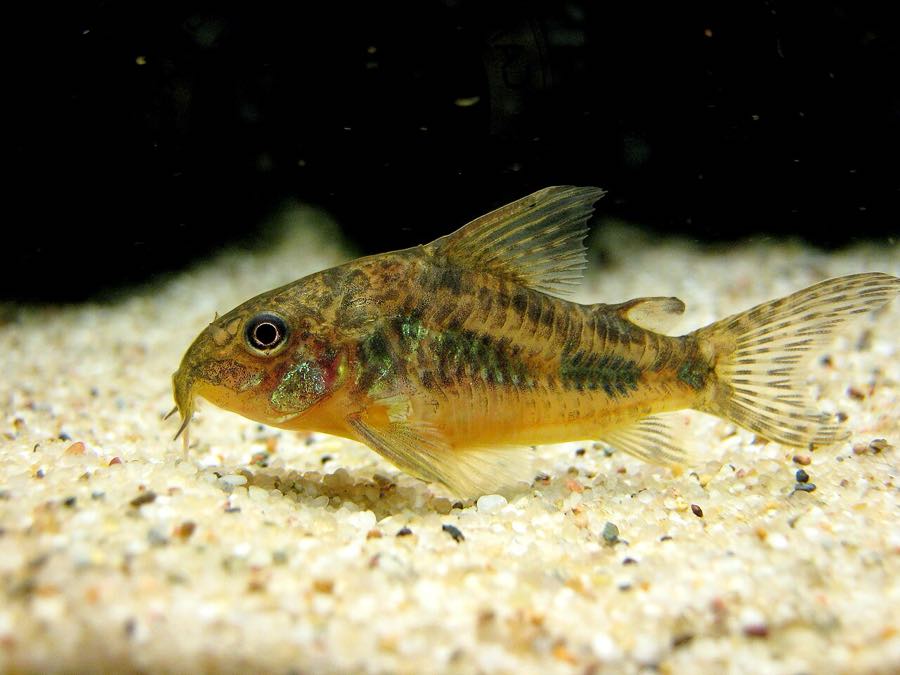
Peppered cory tank size
Furnish the aquarium with fine sand, adding pieces of bogwood or smooth stones to create sheltered resting spots while retaining unobstructed feeding zones. The entire bottom crew requires ample surface area across the floor, where they sift through soft sediments hunting for edible items.Furnish the aquarium with fine sand, adding pieces of bogwood or smooth stones to create sheltered resting spots while retaining unobstructed feeding zones. The entire bottom crew requires ample surface area across the floor, where they sift through soft sediments hunting for edible items.[1]
Keep open vertical lanes extending straight up to the water surface. These catfish possess a specialised intestinal tract capable of extracting atmospheric oxygen, meaning they need free access to gulp air whenever necessary.Keep open vertical lanes extending straight up to the water surface. These catfish possess a specialised intestinal tract capable of extracting atmospheric oxygen, meaning they need free access to gulp air whenever necessary.[1]
Peppered cory water parameters
Target a temperature between 22–26 °C, maintain acidity between pH 6.0–7.0, and aim for a general hardness of 1–12 dGH.Target a temperature between 72–79 °F, maintain acidity between pH 6.0–7.0, and aim for a general hardness of 1–12 dGH.[1]
Ammonia represents an acute danger to fish and must remain undetectable at all times. Because decomposing food particles and biological waste release this toxin, support a mature biological filter and avoid overfeeding. Never assume visual clarity equates to safe water; run test kits whenever behaviour alters or fish show declining appetites.Ammonia represents an acute danger to fish and must remain undetectable at all times. Because decomposing food particles and biological waste release this toxin, support a mature biological filter and avoid overfeeding. Never assume visual clarity equates to safe water; run test kits whenever behaviour alters or fish show declining appetites.[3]
Feeding Peppered cories
Offer quality sinking pellets or tablets paired with live or frozen daphnia and bloodworm, alongside standard flakes. Providing varied foodstuffs meets the dietary recommendations for this species.Offer quality sinking pellets or tablets paired with live or frozen daphnia and bloodworm, alongside standard flakes. Providing varied foodstuffs meets the dietary recommendations for this species.[1][13]
Administer meals twice daily in modest amounts cleared within approximately two minutes. Watch bottom foragers consume their ration directly on the floor and modify the quantity according to their actual intake. Never depend on these catfish to scavenge waste or subsist on leftovers from other species; deliver dedicated sinking items directly down to the group.Administer meals twice daily in modest amounts cleared within approximately two minutes. Watch bottom foragers consume their ration directly on the floor and modify the quantity according to their actual intake. Never depend on these catfish to scavenge waste or subsist on leftovers from other species; deliver dedicated sinking items directly down to the group.[2][1]
Peppered cory behaviour
In South America, wild populations inhabit river systems, small tributaries, still pools, and lakes across southern Brazil, Uruguay, Paraguay, and Argentina.In South America, wild populations inhabit river systems, small tributaries, still pools, and lakes across southern Brazil, Uruguay, Paraguay, and Argentina.[1]
The maximum adult standard length reaches 7 cm. Beyond regional differences in body markings and hues observed across wild habitats, an albino variety also exists.The maximum adult standard length reaches 3 in. Beyond regional differences in body markings and hues observed across wild habitats, an albino variety also exists.[1][13]
Occasional dashes up to the surface represent routine intestinal respiration, though chronic distress trips call for thorough water testing and tank evaluation. Exercise caution when moving or catching these fish, as their leading pectoral rays carry stiff defensive spines.Occasional dashes up to the surface represent routine intestinal respiration, though chronic distress trips call for thorough water testing and tank evaluation. Exercise caution when moving or catching these fish, as their leading pectoral rays carry stiff defensive spines.[1][3]
Peppered cory tank mates
Neon tetrasNeon tetras are gentle midwater characins that require their own school, matching water, and adequate tank volume. Similarly, are gentle midwater characins that require their own school, matching water, and adequate tank volume. Similarly, harlequin rasborasharlequin rasboras can swim in the open water above the catfish when provided with sufficient swimming area, compatible parameters, and their own social group. can swim in the open water above the catfish when provided with sufficient swimming area, compatible parameters, and their own social group.[1][9][10]
Zebra daniosZebra danios offer lively company if their schooling numbers, swimming room, and water match, provided you verify sinking rations reach the floor. Small labyrinth fish like offer lively company if their schooling numbers, swimming room, and water match, provided you verify sinking rations reach the floor. Small labyrinth fish like honey gouramishoney gouramis can also share the setup when given compatible water, suitable shelter, and ample space for both varieties. can also share the setup when given compatible water, suitable shelter, and ample space for both varieties.[1][11][12]
Do not house with Do not house with OscarsOscars, as large predatory adults can consume smaller tank companions. Steer clear of , as large predatory adults can consume smaller tank companions. Steer clear of Jack DempseysJack Dempseys due to their aggressive nature and predatory threat toward small bottom dwellers. Avoid due to their aggressive nature and predatory threat toward small bottom dwellers. Avoid Pea puffersPea puffers as well, whose nipping habits create unnecessary dangers for peaceful fish. as well, whose nipping habits create unnecessary dangers for peaceful fish.[1][6][7][8]
Usually fine together
- African butterfly cichlid
- African clawed frog
- Agassiz's cory
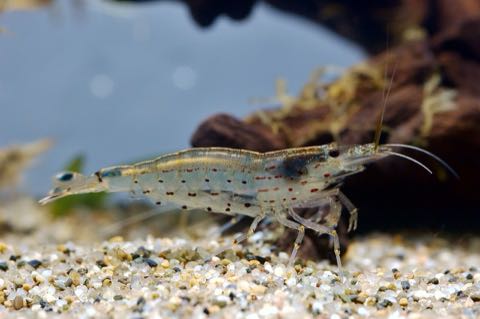 Amano shrimp
- American flagfish
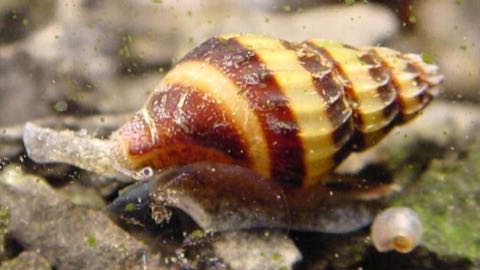 Assassin snail
- Banded gourami
- Bandit cory
- Banjo catfish
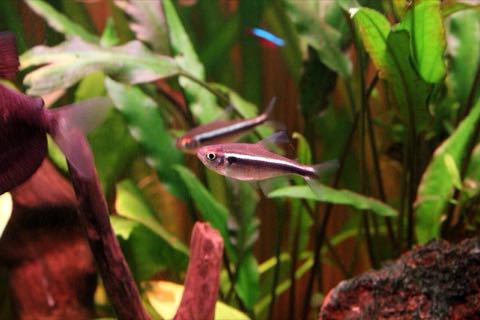 Black neon tetra
- Black phantom tetra
- Black ruby barb
Avoid with
- African knifefish
African knifefish may eat Peppered coryAfrican knifefish may eat Peppered cory
- African pike
African pike may eat Peppered coryAfrican pike may eat Peppered cory
- Alligator gar
Alligator gar may eat Peppered coryAlligator gar may eat Peppered cory
- Antenna ray
Antenna ray may eat Peppered coryAntenna ray may eat Peppered cory
- Arapaima
Arapaima may eat Peppered coryArapaima may eat Peppered cory
- Asian arowana
Asian arowana may eat Peppered coryAsian arowana may eat Peppered cory
- Asian upside-down catfish
Asian upside down catfish may eat Peppered coryAsian upside down catfish may eat Peppered cory
- Australian pearl arowana
Australian pearl arowana may eat Peppered coryAustralian pearl arowana may eat Peppered cory
- Barred bichir
Barred bichir may eat Peppered coryBarred bichir may eat Peppered cory
- Black bullhead
Black bullhead may eat Peppered coryBlack bullhead may eat Peppered cory
- Black diamond cichlid
Black diamond cichlid may eat Peppered coryBlack diamond cichlid may eat Peppered cory
- Brown bullhead
Brown bullhead may eat Peppered coryBrown bullhead may eat Peppered cory
Peppered cory health problems
Because this parasite can lodge inside gill tissue without producing noticeable external dots, obtain a careful diagnosis rather than treating every white blemish as white spot.Because this parasite can lodge inside gill tissue without producing noticeable external dots, obtain a careful diagnosis rather than treating every white blemish as white spot.[5]
Isolate incoming stock in a separate quarantine tank for at least 30 days and refrain from sharing damp nets or equipment across different aquariums to lower the likelihood of introducing ich.Isolate incoming stock in a separate quarantine tank for at least 30 days and refrain from sharing damp nets or equipment across different aquariums to lower the likelihood of introducing ich.[5]
Degraded environmental conditions elevate infection hazards, so uphold good water hygiene and remove causes of physical conflict. Never treat an isolated torn fin ray as an immediate bacterial diagnosis.Degraded environmental conditions elevate infection hazards, so uphold good water hygiene and remove causes of physical conflict. Never treat an isolated torn fin ray as an immediate bacterial diagnosis.[4]
Cotton-wool fungal issues produce pale, tufted patches on traumatised flesh, typically appearing following physical wounds, rough netting, or poor environmental quality. Minimise infection hazards by removing sharp hardscape, handling specimens gently, and keeping water clean, verifying diagnoses because mouth rot can mimic fungal growth.Cotton-wool fungal issues produce pale, tufted patches on traumatised flesh, typically appearing following physical wounds, rough netting, or poor environmental quality. Minimise infection hazards by removing sharp hardscape, handling specimens gently, and keeping water clean, verifying diagnoses because mouth rot can mimic fungal growth.[4]
Male or female?
Mature females develop a significantly larger, broader, and rounder body profile than males, a physical contrast that turns particularly evident when females fill with eggs.Mature females develop a significantly larger, broader, and rounder body profile than males, a physical contrast that turns particularly evident when females fill with eggs.[1]
Questions
How big do paleatus Corydoras get?
Specimens grow to an adult length of 7 cm standard length. Fully grown females attain a broader, rounder form and reach a larger overall size than males, especially when gravidity occurs.Specimens grow to an adult length of 3 in standard length. Fully grown females attain a broader, rounder form and reach a larger overall size than males, especially when gravidity occurs.[1]
How many corys should you keep together?
House at least six individuals together. They represent a peaceful, social catfish that demands company of their own kind alongside ample floor room to sift through sandy substrate collaboratively.House at least six individuals together. They represent a peaceful, social catfish that demands company of their own kind alongside ample floor room to sift through sandy substrate collaboratively.[1][13]
Do Corydoras keep your tank clean?
No, never rely on these fish to tidy your tank or subsist on leftover scraps. Leftover food and biological waste produce dangerous ammonia, requiring dedicated feeding of sinking items and a properly maintained biological filter.No, never rely on these fish to tidy your tank or subsist on leftover scraps. Leftover food and biological waste produce dangerous ammonia, requiring dedicated feeding of sinking items and a properly maintained biological filter.[1][3]
How many times should I feed my Corydoras?
Provide two modest feedings daily that disappear in around two minutes. Observe the substrate directly to ensure sinking tablets and pellets arrive at the bottom instead of being intercepted by midwater swimmers.Provide two modest feedings daily that disappear in around two minutes. Observe the substrate directly to ensure sinking tablets and pellets arrive at the bottom instead of being intercepted by midwater swimmers.[2][1]
Do Corydoras prefer sand or gravel?
Provide a sandy floor. These bottom dwellers constantly sift through soft sand while searching for nourishment, so arrange fine substrate with wood or stones to combine open feeding areas with protective cover.Provide a sandy floor. These bottom dwellers constantly sift through soft sand while searching for nourishment, so arrange fine substrate with wood or stones to combine open feeding areas with protective cover.[1]
Sources
- Hoplisoma paleatum (Pepper Cory) — Seriously Fish. Accessed 2026-10-05.
- What to feed your fish — RSPCA. Accessed 2026-10-05.
- Ammonia in Aquatic Systems — UF/IFAS Extension. Accessed 2026-10-05.
- Frequently asked questions on treating sick fish — Practical Fishkeeping. Accessed 2026-10-05.
- Ichthyophthirius multifiliis (White Spot) Infections in Fish — UF/IFAS Extension. Accessed 2026-10-05.
- Astronotus ocellatus (Oscar) — Seriously Fish. Accessed 2026-10-05.
- Rocio octofasciata (Jack Dempsey) — Seriously Fish. Accessed 2026-10-05.
- Carinotetraodon travancoricus (Dwarf Puffer) — Seriously Fish. Accessed 2026-10-05.
- Neon tetra species profile — Seriously Fish. Accessed 2026-10-05.
- Harlequin rasbora species profile — Seriously Fish. Accessed 2026-10-05.
- Zebra danio species profile — Seriously Fish. Accessed 2026-10-05.
- Honey gourami species profile — Seriously Fish. Accessed 2026-10-05.
- ScotCat Factsheets: November 2003: Hoplisoma paleatum (Jenyns, 1842) — ScotCat. Accessed 2026-10-05.
Written from the sources above. Not yet reviewed by an aquarist.
Data used by the planner
| Temperature | 18–27 | AqAdvisor (aqadvisor.com), retrieved 2026-10-04 · low confidence |
|---|---|---|
| pH | 5.5–7.8 | AqAdvisor (aqadvisor.com), retrieved 2026-10-04; agrees with FishBase (fishbase.se), retrieved 2026-10-04 · medium confidence |
| Hardness (dGH) | 1–15 | AqAdvisor (aqadvisor.com), retrieved 2026-10-04 · low confidence |
| Origin | South America | curated-v0 (needs expert review) · low confidence |
| Beginner friendly | Yes | curated-v0 (needs expert review) · medium confidence |
| Care level | easy | curated-v0 (needs expert review) · medium confidence |
| Activity | moderate | curated-v0 (needs expert review) · medium confidence |
| Swimming level | bottom | curated-v0 (needs expert review) · medium confidence |
| Temperament | peaceful | curated-v0 (needs expert review) · medium confidence |
| Nips fins | No | curated-v0 (needs expert review) · medium confidence |
| Long fins | No | curated-v0 (needs expert review) · medium confidence |
| Territorial | No | curated-v0 (needs expert review) · medium confidence |
| Lives in groups | Yes | curated-v0 (needs expert review) · medium confidence |
| Minimum group | 6 | curated-v0 (needs expert review) · medium confidence |
| Diet | omnivore | curated-v0 (needs expert review) · medium confidence |
| Lifespan (years) | 3–6 | curated-v0 (needs expert review) · low confidence |
| Months to adult size | 12 | curated-v0 (needs expert review) · low confidence |
| Safe with plants | Yes | curated-v0 (needs expert review) · medium confidence |
| Minimum tank length | 75 | curated-v0 (needs expert review) · medium confidence |