San Juan cory tank size
The Aquarium Wiki recommends a tank volume of at least 57 L for this species. San Juan cories spend their time in the bottom levels of the aquarium, so you must provide the full group with generous, usable floor space rather than focusing solely on tank height.The Aquarium Wiki recommends a tank volume of at least 15.1 gal for this species. San Juan cories spend their time in the bottom levels of the aquarium, so you must provide the full group with generous, usable floor space rather than focusing solely on tank height.[13][1]
Furnish the aquarium floor with sand or small, smooth gravel. Incorporate live plants and driftwood for shelter, balancing covered resting spots with open substrate areas where the group can feed together.Furnish the aquarium floor with sand or small, smooth gravel. Incorporate live plants and driftwood for shelter, balancing covered resting spots with open substrate areas where the group can feed together.[1][13]
San Juan cory water parameters
Keep your aquarium water temperature between 22–26 °C. Maintain the pH between 6.5–7.5 and the general hardness between 4–15 dGH to support steady environmental conditions.Keep your aquarium water temperature between 72–79 °F. Maintain the pH between 6.5–7.5 and the general hardness between 4–15 dGH to support steady environmental conditions.[1]
Ammonia must remain undetectable at all times. Fish release ammonia continuously as metabolic waste, while uneaten food and decomposing organic matter add more waste to the water. An established biological filter is necessary to process these compounds, and clear water alone does not mean the water chemistry is safe.Ammonia must remain undetectable at all times. Fish release ammonia continuously as metabolic waste, while uneaten food and decomposing organic matter add more waste to the water. An established biological filter is necessary to process these compounds, and clear water alone does not mean the water chemistry is safe.[3]
Feeding San Juan cories
San Juan cories accept sinking pellets, flakes, shrimp pellets, and meaty foods such as chopped earthworms. Use rapidly sinking tablets so the food reaches bottom feeders quickly, and always check that your group actually secures their share.San Juan cories accept sinking pellets, flakes, shrimp pellets, and meaty foods such as chopped earthworms. Use rapidly sinking tablets so the food reaches bottom feeders quickly, and always check that your group actually secures their share.[1][2]
Feed small portions twice daily, adjusting amounts so the fish finish everything in about two minutes. Remove excess food because decaying leftovers pollute the water; never assume bottom-dwelling cories act as a clean-up crew that eliminates the need for dedicated meals.Feed small portions twice daily, adjusting amounts so the fish finish everything in about two minutes. Remove excess food because decaying leftovers pollute the water; never assume bottom-dwelling cories act as a clean-up crew that eliminates the need for dedicated meals.[2][3]
When you are away on holiday, have someone perform daily checks on the fish and equipment. Prepare preportioned meals for your helper rather than leaving feeding amounts to chance.When you are away on holiday, have someone perform daily checks on the fish and equipment. Prepare preportioned meals for your helper rather than leaving feeding amounts to chance.[2]
San Juan cory behaviour
The San Juan cory is a peaceful species toward its own kind and other tank mates. In home aquariums, they typically reach an adult length of 4–5 cm and originate in the Madeira River basin of Bolivia.The San Juan cory is a peaceful species toward its own kind and other tank mates. In home aquariums, they typically reach an adult length of 2–2 in and originate in the Madeira River basin of Bolivia.[1]
Keep a social group of at least six San Juan cories together. Aqua-Fish.Net estimates their lifespan at 3–8 years under captive care.Keep a social group of at least six San Juan cories together. Aqua-Fish.Net estimates their lifespan at 3–8 years under captive care.[13][1]
Several species in the elegans group closely resemble Corydoras bilineatus, including Corydoras elegans and Corydoras napoensis. Do not rely solely on a standard retail store label to identify the fish.Several species in the elegans group closely resemble Corydoras bilineatus, including Corydoras elegans and Corydoras napoensis. Do not rely solely on a standard retail store label to identify the fish.[13]
San Juan cory tank mates
Small, peaceful midwater schooling fish make suitable companions. Small, peaceful midwater schooling fish make suitable companions. Neon tetrasNeon tetras work well if you supply appropriate water parameters, adequate room, and an established shoal of their own. work well if you supply appropriate water parameters, adequate room, and an established shoal of their own. Harlequin rasborasHarlequin rasboras are also calm community candidates when kept in their own group with matching water values and ample swimming space. are also calm community candidates when kept in their own group with matching water values and ample swimming space.[1][9][10]
Active schooling Active schooling Zebra daniosZebra danios can share the tank provided you satisfy their open swimming space requirements, water needs, and group size, while ensuring sinking food makes it down to the bottom fish. can share the tank provided you satisfy their open swimming space requirements, water needs, and group size, while ensuring sinking food makes it down to the bottom fish. Honey gouramisHoney gouramis are another peaceful option if you provide plant cover, compatible water parameters, and sufficient space. are another peaceful option if you provide plant cover, compatible water parameters, and sufficient space.[1][11][12]
Avoid predatory cichlids like Avoid predatory cichlids like OscarsOscars, as adult fish can swallow small bottom dwellers. Keep , as adult fish can swallow small bottom dwellers. Keep Jack DempseysJack Dempseys out of the tank because their mature aggression creates severe hazards for small fish. You should also avoid out of the tank because their mature aggression creates severe hazards for small fish. You should also avoid Pea puffersPea puffers, which introduce a distinct fin-nipping risk and broader community aggression., which introduce a distinct fin-nipping risk and broader community aggression.[6][7][8]
Usually fine together
- African butterfly cichlid
- African clawed frog
- Agassiz's cory
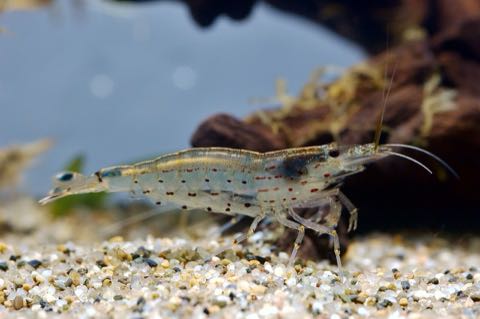 Amano shrimp
- American flagfish
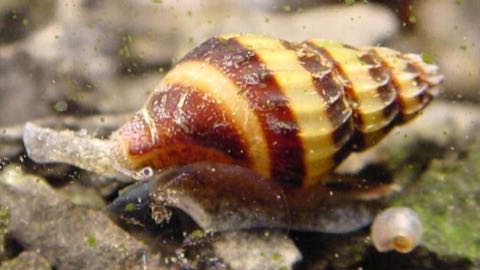 Assassin snail
- Banded gourami
- Bandit cory
- Banjo catfish
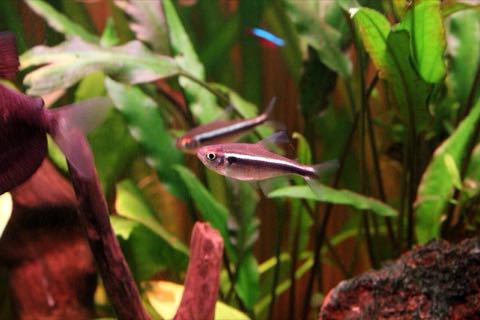 Black neon tetra
- Black phantom tetra
- Black ruby barb
Avoid with
- African knifefish
African knifefish may eat San Juan coryAfrican knifefish may eat San Juan cory
- African pike
African pike may eat San Juan coryAfrican pike may eat San Juan cory
- Alligator gar
Alligator gar may eat San Juan coryAlligator gar may eat San Juan cory
- Antenna ray
Antenna ray may eat San Juan coryAntenna ray may eat San Juan cory
- Arapaima
Arapaima may eat San Juan coryArapaima may eat San Juan cory
- Asian arowana
Asian arowana may eat San Juan coryAsian arowana may eat San Juan cory
- Asian upside-down catfish
Asian upside down catfish may eat San Juan coryAsian upside down catfish may eat San Juan cory
- Australian pearl arowana
Australian pearl arowana may eat San Juan coryAustralian pearl arowana may eat San Juan cory
- Barred bichir
Barred bichir may eat San Juan coryBarred bichir may eat San Juan cory
- Black bullhead
Black bullhead may eat San Juan coryBlack bullhead may eat San Juan cory
- Black diamond cichlid
Black diamond cichlid may eat San Juan coryBlack diamond cichlid may eat San Juan cory
- Brown bullhead
Brown bullhead may eat San Juan coryBrown bullhead may eat San Juan cory
San Juan cory health problems
Ich infections can cause white spots on the body, rubbing against surfaces, and laboured breathing. Gills can also become infected without any external spots appearing on the skin, so observe fish carefully rather than relying on visible spots alone.Ich infections can cause white spots on the body, rubbing against surfaces, and laboured breathing. Gills can also become infected without any external spots appearing on the skin, so observe fish carefully rather than relying on visible spots alone.[5]
To lower the risk of introducing ich into your aquarium, quarantine all incoming fish for at least 30 days before adding them to the main tank. Avoid transferring wet, nondisinfected equipment between different tanks.To lower the risk of introducing ich into your aquarium, quarantine all incoming fish for at least 30 days before adding them to the main tank. Avoid transferring wet, nondisinfected equipment between different tanks.[5]
Fin rot presents as progressively fraying or receding fin tissue, frequently showing inflamed red or blood-streaked edges. Poor environmental conditions elevate this risk, so maintain water cleanliness; note that a single clean tear in a fin is an injury, not an automatic fin rot diagnosis.Fin rot presents as progressively fraying or receding fin tissue, frequently showing inflamed red or blood-streaked edges. Poor environmental conditions elevate this risk, so maintain water cleanliness; note that a single clean tear in a fin is an injury, not an automatic fin rot diagnosis.[4]
Cotton-wool fungal disease produces fluffy white or grey tufts on the skin, commonly developing after handling trauma, physical injury, or environmental stress. Handle your cories gently, eliminate sharp decor edges from the tank, and seek a precise diagnosis because bacterial mouth rot can look very similar.Cotton-wool fungal disease produces fluffy white or grey tufts on the skin, commonly developing after handling trauma, physical injury, or environmental stress. Handle your cories gently, eliminate sharp decor edges from the tank, and seek a precise diagnosis because bacterial mouth rot can look very similar.[4]
Male or female?
Adult female San Juan cories are noticeably larger and broader in the body, whereas mature males remain slimmer. Do not attempt to sex juvenile fish using these body shapes, as immature specimens have not developed mature proportions.Adult female San Juan cories are noticeably larger and broader in the body, whereas mature males remain slimmer. Do not attempt to sex juvenile fish using these body shapes, as immature specimens have not developed mature proportions.[1]
Questions
How many corys should you keep together?
Keep at least six San Juan cories together. They are a social species that needs company of their own kind along with adequate floor space.Keep at least six San Juan cories together. They are a social species that needs company of their own kind along with adequate floor space.[13][1]
Do Corydoras keep your tank clean?
No, San Juan cories do not clean the tank. They need their own complete meals of sinking pellets and meaty foods. Uneaten food left behind decays and pollutes the water.No, San Juan cories do not clean the tank. They need their own complete meals of sinking pellets and meaty foods. Uneaten food left behind decays and pollutes the water.[2][3][1]
Do Corydoras create a lot of waste?
San Juan cories release ammonia continuously as natural metabolic waste, just like other fish. Decaying uneaten food also contributes to ammonia accumulation, requiring an established biological filter.San Juan cories release ammonia continuously as natural metabolic waste, just like other fish. Decaying uneaten food also contributes to ammonia accumulation, requiring an established biological filter.[3]
How many times should I feed my Corydoras?
Feed them twice daily with portions they can consume within about two minutes. Use rapidly sinking pellets and check that the food reaches the bottom where the cories feed.Feed them twice daily with portions they can consume within about two minutes. Use rapidly sinking pellets and check that the food reaches the bottom where the cories feed.[2]
Do Corydoras prefer sand or gravel?
Provide sand or small, smooth gravel on the bottom of the aquarium. Combine this substrate with live plants, driftwood, and open swimming zones so the group can forage naturally.Provide sand or small, smooth gravel on the bottom of the aquarium. Combine this substrate with live plants, driftwood, and open swimming zones so the group can forage naturally.[1][13]
Sources
- San juan cory (Corydoras bilineatus) — Aqua-Fish.Net. Accessed 2026-10-05.
- What to feed your fish — RSPCA. Accessed 2026-10-05.
- Ammonia in Aquatic Systems — UF/IFAS Extension. Accessed 2026-10-05.
- Frequently asked questions on treating sick fish — Practical Fishkeeping. Accessed 2026-10-05.
- Ichthyophthirius multifiliis (White Spot) Infections in Fish — UF/IFAS Extension. Accessed 2026-10-05.
- Astronotus ocellatus (Oscar) — Seriously Fish. Accessed 2026-10-05.
- Rocio octofasciata (Jack Dempsey) — Seriously Fish. Accessed 2026-10-05.
- Carinotetraodon travancoricus (Dwarf Puffer) — Seriously Fish. Accessed 2026-10-05.
- Neon tetra species profile — Seriously Fish. Accessed 2026-10-05.
- Harlequin rasbora species profile — Seriously Fish. Accessed 2026-10-05.
- Zebra danio species profile — Seriously Fish. Accessed 2026-10-05.
- Honey gourami species profile — Seriously Fish. Accessed 2026-10-05.
- San Juan Cory (Corydoras bilineatus) — The Aquarium Wiki. Accessed 2026-10-05.
Written from the sources above. Not yet reviewed by an aquarist.
Data used by the planner
| Temperature | 22–27 | AqAdvisor (aqadvisor.com), retrieved 2026-10-04 · medium confidence |
|---|---|---|
| pH | 5.5–7.8 | AqAdvisor (aqadvisor.com), retrieved 2026-10-04 · medium confidence |
| Hardness (dGH) | 1–15 | AqAdvisor (aqadvisor.com), retrieved 2026-10-04 · medium confidence |
| Origin | Upper Amazon, Peru | curated-v0 (needs expert review) · low confidence |
| Beginner friendly | Yes | curated-v0 (needs expert review) · medium confidence |
| Care level | easy | curated-v0 (needs expert review) · medium confidence |
| Activity | moderate | curated-v0 (needs expert review) · medium confidence |
| Swimming level | bottom | curated-v0 (needs expert review) · medium confidence |
| Temperament | peaceful | curated-v0 (needs expert review) · medium confidence |
| Nips fins | No | curated-v0 (needs expert review) · medium confidence |
| Long fins | No | curated-v0 (needs expert review) · medium confidence |
| Territorial | No | curated-v0 (needs expert review) · medium confidence |
| Lives in groups | Yes | curated-v0 (needs expert review) · medium confidence |
| Minimum group | 6 | curated-v0 (needs expert review) · medium confidence |
| Diet | omnivore | curated-v0 (needs expert review) · medium confidence |
| Lifespan (years) | 5–10 | curated-v0 (needs expert review) · low confidence |
| Months to adult size | 12 | curated-v0 (needs expert review) · low confidence |
| Safe with plants | Yes | curated-v0 (needs expert review) · medium confidence |