Panda tetra tank size
Provide at least a 60 cm × 30 cm tank base for a small group of panda tetras. These fish reach an adult length of around 3.5 cm standard length, but extra filtration capacity cannot substitute for horizontal swimming space. The species is also documented under the scientific synonym Aphyocharax nattereri.Provide at least a 24 in × 12 in tank base for a small group of panda tetras. These fish reach an adult length of around 1.4 in standard length, but extra filtration capacity cannot substitute for horizontal swimming space. The species is also documented under the scientific synonym Aphyocharax nattereri.[1]
Wild populations originate from southern Brazil, Bolivia and Paraguay, living in streams, rivers and tributaries shaded by overhanging or floating plants. In an aquarium, panda tetras tend to swim in the upper reaches. You can add dense planted cover, floating vegetation and twisted roots or bogwood while preserving open swimming lanes.Wild populations originate from southern Brazil, Bolivia and Paraguay, living in streams, rivers and tributaries shaded by overhanging or floating plants. In an aquarium, panda tetras tend to swim in the upper reaches. You can add dense planted cover, floating vegetation and twisted roots or bogwood while preserving open swimming lanes.[1]
Fit a tightly fitting cover on the aquarium. Panda tetras can jump, making a secure lid necessary to keep fish from leaving the tank.Fit a tightly fitting cover on the aquarium. Panda tetras can jump, making a secure lid necessary to keep fish from leaving the tank.[1]
Panda tetra water parameters
Maintain water temperatures between 22–26 °C, acidity between pH 6.5–7.2, and hardness across 4–12 dGH. Holding these numbers within target ranges supports routine maintenance, though specific water parameters do not by themselves protect fish from health problems.Maintain water temperatures between 72–79 °F, acidity between pH 6.5–7.2, and hardness across 4–12 dGH. Holding these numbers within target ranges supports routine maintenance, though specific water parameters do not by themselves protect fish from health problems.[1][2]
Cycle your biological filter completely before adding any stock, and introduce new fish gradually. When filter media becomes blocked, rinse it lightly in water removed from the aquarium rather than chlorinated tap water to preserve biological filtration.Cycle your biological filter completely before adding any stock, and introduce new fish gradually. When filter media becomes blocked, rinse it lightly in water removed from the aquarium rather than chlorinated tap water to preserve biological filtration.[2]
Test aquarium water weekly; ammonia and nitrite must be zero. Perform a weekly water change of one quarter of the aquarium volume, using replacement water treated for chlorine and chloramine.Test aquarium water weekly; ammonia and nitrite must be zero. Perform a weekly water change of one quarter of the aquarium volume, using replacement water treated for chlorine and chloramine.[2]
Feeding panda tetras
Feed panda tetras once a day, offering only what they consume within a few minutes, and promptly remove uneaten food. Supply a base of quality flake or granules, varied with small live or frozen foods such as daphnia, bloodworm or tubifex.Feed panda tetras once a day, offering only what they consume within a few minutes, and promptly remove uneaten food. Supply a base of quality flake or granules, varied with small live or frozen foods such as daphnia, bloodworm or tubifex.[2][1]
Panda tetra behaviour
Keep a social group of at least eight panda tetras together. Keeping this species in numbers satisfies its schooling nature, although maintaining a full group does not eliminate the risk of nipping.Keep a social group of at least eight panda tetras together. Keeping this species in numbers satisfies its schooling nature, although maintaining a full group does not eliminate the risk of nipping.[1]
Panda tetras are active fish that can bother sedentary companions through constant activity. They may also nip slow-moving or long-finned fish. In a mature setup, these tetras can live for several years.Panda tetras are active fish that can bother sedentary companions through constant activity. They may also nip slow-moving or long-finned fish. In a mature setup, these tetras can live for several years.[1][2]
Panda tetra tank mates
Small characins such as Small characins such as neon tetrasneon tetras and and ember tetrasember tetras may be considered if each species has its own group, sufficient space, unhindered feeding access and overlapping water conditions. Monitor for nipping and bothering from the panda tetras. may be considered if each species has its own group, sufficient space, unhindered feeding access and overlapping water conditions. Monitor for nipping and bothering from the panda tetras.[1]
Other companions like Other companions like bronze corydorasbronze corydoras and and bristlenose plecosbristlenose plecos may be considered when their individual space, social and feeding needs are met alongside suitable water parameters. Watch for chasing or nipping, as constant tetra activity can bother companions. may be considered when their individual space, social and feeding needs are met alongside suitable water parameters. Watch for chasing or nipping, as constant tetra activity can bother companions.[1]
Avoid pairing panda tetras with long-finned Avoid pairing panda tetras with long-finned bettasbettas, ornamental long-finned , ornamental long-finned guppiesguppies, or trailing , or trailing angelfishangelfish. Panda tetras may nip extended finnage and can bother slow-moving companions through active swimming.. Panda tetras may nip extended finnage and can bother slow-moving companions through active swimming.[1]
Usually fine together
- African butterfly cichlid
- African clawed frog
- Agassiz's cory
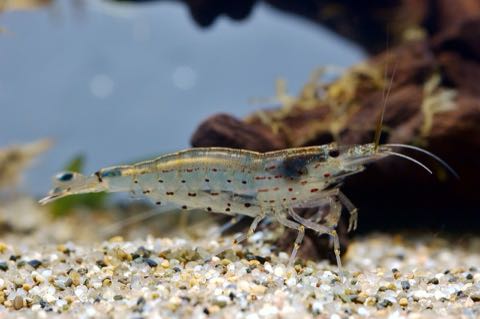 Amano shrimp
- American flagfish
- Banded gourami
- Bandit cory
- Banjo catfish
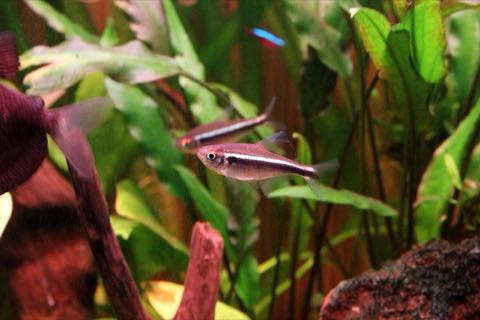 Black neon tetra
- Black phantom tetra
- Black ruby barb
- Blackline rasbora
Avoid with
- Acei cichlid
No shared pH rangeNo shared pH range
- Blue rainbowfish
No shared pH rangeNo shared pH range
- Brevis shell dweller
No shared pH rangeNo shared pH range
- Caudopunctatus
No shared pH rangeNo shared pH range
- Irian Jaya rainbowfish
No shared pH rangeNo shared pH range
- Multies
No shared pH rangeNo shared pH range
- Parkinson's rainbowfish
No shared pH rangeNo shared pH range
- Pindani
No shared pH rangeNo shared pH range
- Rusty cichlid
No shared pH rangeNo shared pH range
- Saulosi cichlid
No shared pH rangeNo shared pH range
- Similis shell dweller
No shared pH rangeNo shared pH range
- Afra cichlid
No shared pH rangeNo shared pH range
Breeding panda tetras
Set up a dedicated spawning aquarium equipped with an air-powered sponge filter and fine-leaved plants like Java moss. Panda tetras deposit non-adhesive eggs among vegetation; some eggs fall to the bottom while others float.Set up a dedicated spawning aquarium equipped with an air-powered sponge filter and fine-leaved plants like Java moss. Panda tetras deposit non-adhesive eggs among vegetation; some eggs fall to the bottom while others float.[1]
Remove the adult fish after spawning because they may eat the eggs if given the opportunity. The non-adhesive eggs hatch around 24 hours later, with larvae initially drawing nourishment from their yolk sacs.Remove the adult fish after spawning because they may eat the eggs if given the opportunity. The non-adhesive eggs hatch around 24 hours later, with larvae initially drawing nourishment from their yolk sacs.[1]
Once the young fry finish their yolk sacs, offer infusoria-type foods. As the fry grow larger, transition them onto microworm or newly hatched brine shrimp nauplii.Once the young fry finish their yolk sacs, offer infusoria-type foods. As the fry grow larger, transition them onto microworm or newly hatched brine shrimp nauplii.[1]
Panda tetra health problems
Ich is caused by the parasite Ichthyophthirius multifiliis, which can infect any freshwater fish. Signs include salt-like white spots, rubbing, reduced appetite and rapid breathing, though spots alone cannot confirm diagnosis. Reduce introduction risks by quarantining incoming fish for at least 30 days and using dedicated or disinfected equipment, seeking prompt fish-health advice if illness appears.Ich is caused by the parasite Ichthyophthirius multifiliis, which can infect any freshwater fish. Signs include salt-like white spots, rubbing, reduced appetite and rapid breathing, though spots alone cannot confirm diagnosis. Reduce introduction risks by quarantining incoming fish for at least 30 days and using dedicated or disinfected equipment, seeking prompt fish-health advice if illness appears.[3]
Fin rot is a bacterial problem associated with poor water conditions and stress. Fins may fray, develop red blood streaks and progressively shrink. Check water chemistry immediately, address injuries or social harassment, and seek advice from a fish-health professional if tissue loss continues.Fin rot is a bacterial problem associated with poor water conditions and stress. Fins may fray, develop red blood streaks and progressively shrink. Check water chemistry immediately, address injuries or social harassment, and seek advice from a fish-health professional if tissue loss continues.[4]
Fungal infection may look like grey-white cottony growth on injured tissue, occurring when injury or a poor environment weakens the protective mucus barrier. Use smooth tank furnishings, gentle handling and clean water to reduce risk; cotton-like growth alone is not a diagnosis, so seek prompt advice.Fungal infection may look like grey-white cottony growth on injured tissue, occurring when injury or a poor environment weakens the protective mucus barrier. Use smooth tank furnishings, gentle handling and clean water to reduce risk; cotton-like growth alone is not a diagnosis, so seek prompt advice.[4]
Male or female?
Distinguishing the sexes depends on body condition and fin markings. Females develop a fuller body shape when in breeding condition. Males display stronger markings on their anal fin.Distinguishing the sexes depends on body condition and fin markings. Females develop a fuller body shape when in breeding condition. Males display stronger markings on their anal fin.[1]
Questions
Why are tetras so hard to keep?
Tetras struggle when kept in uncycled setups or unsuitable conditions. They require an established biological filter, weekly partial water changes with treated water, zero ammonia and nitrite, and a group of at least eight fish to avoid stress.Tetras struggle when kept in uncycled setups or unsuitable conditions. They require an established biological filter, weekly partial water changes with treated water, zero ammonia and nitrite, and a group of at least eight fish to avoid stress.[2][1]
How do you know if tetras are happy?
Happiness cannot be established from outward behaviours or schooling displays. Rather than looking for proof of emotional states, watch for normal feeding and activity, and note any changes in appetite, breathing, hiding, swimming, colour or fins.Happiness cannot be established from outward behaviours or schooling displays. Rather than looking for proof of emotional states, watch for normal feeding and activity, and note any changes in appetite, breathing, hiding, swimming, colour or fins.[2][1]
How to know if tetras are stressed?
Stress or illness causes noticeable behavioural and physical shifts. Watch for changes in appetite, colour, breathing rate, hiding habits, swimming patterns or fin condition. Inadequate group sizes can also cause stress.Stress or illness causes noticeable behavioural and physical shifts. Watch for changes in appetite, colour, breathing rate, hiding habits, swimming patterns or fin condition. Inadequate group sizes can also cause stress.[2]
Should tetras be fed every day?
Yes, feed panda tetras once a day. Offer only what they can consume in a few minutes, clearing away uneaten food promptly to avoid degrading water quality.Yes, feed panda tetras once a day. Offer only what they can consume in a few minutes, clearing away uneaten food promptly to avoid degrading water quality.[2]
What fish can live with tetras?
Active species like Active species like neon tetrasneon tetras, , ember tetrasember tetras, , bronze corydorasbronze corydoras and and bristlenose plecosbristlenose plecos may be considered if space, feeding access and water needs are met. Avoid slow or long-finned fish like may be considered if space, feeding access and water needs are met. Avoid slow or long-finned fish like bettasbettas that tetras may nip. that tetras may nip.[1]
Sources
- Aphyocharax nattereri (Dawn Tetra) — Seriously Fish. Accessed 2026-10-05.
- How to look after tetras and pencilfish — OATA. Accessed 2026-10-05.
- Ichthyophthirius multifiliis (White Spot) Infections in Fish — UF/IFAS Extension. Accessed 2026-10-05.
- Frequently asked questions on treating sick fish — Practical Fishkeeping. Accessed 2026-10-05.
Written from the sources above. Not yet reviewed by an aquarist.
Data used by the planner
| Temperature range | 22–26 | AqAdvisor (aqadvisor.com), retrieved 2026-10-04; agrees with FishBase (fishbase.se), retrieved 2026-10-04 · medium confidence |
|---|---|---|
| pH | 6.5–7.2 | AqAdvisor (aqadvisor.com), retrieved 2026-10-04 · low confidence |
| Hardness (dGH) | 1–15 | AqAdvisor (aqadvisor.com), retrieved 2026-10-04 · medium confidence |
| Origin | Paraguay basin | curated-v0 (needs expert review) · low confidence |
| Beginner friendly | Yes | curated-v0 (needs expert review) · medium confidence |
| Care level | easy | curated-v0 (needs expert review) · medium confidence |
| Activity | active | curated-v0 (needs expert review) · medium confidence |
| Swimming level | middle | curated-v0 (needs expert review) · medium confidence |
| Temperament | peaceful | curated-v0 (needs expert review) · medium confidence |
| Nips fins | No | curated-v0 (needs expert review) · medium confidence |
| Long fins | No | curated-v0 (needs expert review) · medium confidence |
| Territorial | No | curated-v0 (needs expert review) · medium confidence |
| Lives in groups | Yes | curated-v0 (needs expert review) · medium confidence |
| Minimum group | 8 | curated-v0 (needs expert review) · medium confidence |
| Diet | omnivore | curated-v0 (needs expert review) · medium confidence |
| Lifespan (years) | 3–6 | curated-v0 (needs expert review) · low confidence |
| Months to adult size | 6 | curated-v0 (needs expert review) · low confidence |
| Safe with plants | Yes | curated-v0 (needs expert review) · medium confidence |