Rosy red minnow tank size
Plan for an aquarium with a tank length of at least 90 cm and a volume around 100 L. These minnows are fast, continuous swimmers that need horizontal swimming room rather than compact quarters.Plan for an aquarium with a tank length of at least 35 in and a volume around 26.4 gal. These minnows are fast, continuous swimmers that need horizontal swimming room rather than compact quarters.[1]
Do not judge tank requirements using young shop fish. Adult length reaches 5–8 cm, and males can attain 10 cm adult length, so small juveniles will rapidly outgrow narrow desktop setups.Do not judge tank requirements using young shop fish. Adult length reaches 2–3 in, and males can attain 4 in adult length, so small juveniles will rapidly outgrow narrow desktop setups.[6][1]
Arrange the layout with wide, open swimming lanes across the centre. Provide smooth caves or rocky overhangs along the bottom, giving adult males natural surfaces to claim and guard their nest sites.Arrange the layout with wide, open swimming lanes across the centre. Provide smooth caves or rocky overhangs along the bottom, giving adult males natural surfaces to claim and guard their nest sites.[1][10]
Use an air-powered sponge filter to deliver steady water aeration without exposing free-swimming fry to suction hazards. If running power filters or canisters, fit secure intake covers over every inlet pipe.Use an air-powered sponge filter to deliver steady water aeration without exposing free-swimming fry to suction hazards. If running power filters or canisters, fit secure intake covers over every inlet pipe.[10]
Rosy red minnow water parameters
Keep your aquarium water cool, maintaining an indoor temperature around 18–20 °C. This falls comfortably within their preferred 10–20 °C range, avoiding unnecessary thermal stress from excessive indoor heating.Keep your aquarium water cool, maintaining an indoor temperature around 64–68 °F. This falls comfortably within their preferred 50–68 °F range, avoiding unnecessary thermal stress from excessive indoor heating.[1]
Maintain an aquarium pH between 6.0 and 8.0. Although these fish withstand fluctuating conditions in wild habitats, home aquariums demand steady water parameters and consistent biological filtration.Maintain an aquarium pH between 6.0 and 8.0. Although these fish withstand fluctuating conditions in wild habitats, home aquariums demand steady water parameters and consistent biological filtration.[10][6][3]
Test your aquarium water regularly to ensure total ammonia remains completely undetectable. Overfeeding and decaying matter compromise your biofilter, and elevated ammonia causes acute gill damage while sharply raising disease susceptibility.Test your aquarium water regularly to ensure total ammonia remains completely undetectable. Overfeeding and decaying matter compromise your biofilter, and elevated ammonia causes acute gill damage while sharply raising disease susceptibility.[3]
Feeding rosy red minnows
Feed these omnivores balanced prepared foods daily. High-grade flakes and small sinking pellets that incorporate plant ingredients make a dependable nutritional base for daily maintenance.Feed these omnivores balanced prepared foods daily. High-grade flakes and small sinking pellets that incorporate plant ingredients make a dependable nutritional base for daily maintenance.[1][6][10]
Supplement the routine with frozen daphnia, bloodworms, and brine shrimp several times a week. Occasional blanched vegetables like courgette or softened, shelled peas offer healthy roughage. Remove uneaten vegetables promptly to prevent water fouling.Supplement the routine with frozen daphnia, bloodworms, and brine shrimp several times a week. Occasional blanched vegetables like courgette or softened, shelled peas offer healthy roughage. Remove uneaten vegetables promptly to prevent water fouling.[1][6][10]
Offer two small meals daily, giving only what the shoal consumes entirely within two minutes. Remove any uneaten food immediately so lingering particles do not decay and trigger ammonia spikes.Offer two small meals daily, giving only what the shoal consumes entirely within two minutes. Remove any uneaten food immediately so lingering particles do not decay and trigger ammonia spikes.[3][2]
Rosy red minnow behaviour
House rosy red minnows in groups of at least six. They are social, energetic schooling fish that spend their waking hours browsing midwater levels together rather than hiding alone.House rosy red minnows in groups of at least six. They are social, energetic schooling fish that spend their waking hours browsing midwater levels together rather than hiding alone.[11][6]
Expect general community calm to shift during spawning periods. Once a male establishes a nest site beneath an overhang, he becomes vigorously territorial, actively chasing other minnows and tank mates away from his clutch.Expect general community calm to shift during spawning periods. Once a male establishes a nest site beneath an overhang, he becomes vigorously territorial, actively chasing other minnows and tank mates away from his clutch.[1][10][6]
Natural resilience should never become an excuse for poor husbandry. While wild populations survive polluted shallows and low oxygen, captive minnows require clean, well-filtered, oxygen-rich conditions to thrive for their normal two to four years.Natural resilience should never become an excuse for poor husbandry. While wild populations survive polluted shallows and low oxygen, captive minnows require clean, well-filtered, oxygen-rich conditions to thrive for their normal two to four years.[6][3]
Rosy red minnow tank mates
Zebra daniosZebra danios make suitable companions in a tank at least 90 cm tank length. Both species thrive in cool water and appreciate vigorous swimming space, provided each group receives adequate feeding. make suitable companions in a tank at least 35 in tank length. Both species thrive in cool water and appreciate vigorous swimming space, provided each group receives adequate feeding.[1]
Pearl daniosPearl danios are another viable temperate schooling partner. Verify that their shared water temperatures align and that your tank offers enough floor space so nesting male minnows are not disturbed. are another viable temperate schooling partner. Verify that their shared water temperatures align and that your tank offers enough floor space so nesting male minnows are not disturbed.[1][10][6]
You can add You can add Amano shrimpAmano shrimp and adult and adult cherry shrimpcherry shrimp if you include thick plant cover. Be aware that rosy red minnows are opportunistic omnivores that will hunt tiny, defenceless shrimplets. if you include thick plant cover. Be aware that rosy red minnows are opportunistic omnivores that will hunt tiny, defenceless shrimplets.[1][6][10][11]
Never house these minnows with large predatory cichlids like Never house these minnows with large predatory cichlids like oscarsoscars. Oscars grow large enough to easily swallow smaller minnows whole, making them fundamentally unsafe companions.. Oscars grow large enough to easily swallow smaller minnows whole, making them fundamentally unsafe companions.[7][6]
Avoid aggressive cichlids such as Avoid aggressive cichlids such as Jack DempseysJack Dempseys in a cool community aquarium. Mature territorial cichlids will consistently harass, attack, and injure smaller fish sharing the same enclosure. in a cool community aquarium. Mature territorial cichlids will consistently harass, attack, and injure smaller fish sharing the same enclosure.[8]
Do not house rosy red minnows with Do not house rosy red minnows with pea pufferspea puffers. Pea puffers have notorious fin-nipping tendencies and targeted aggression that will stress and harm active schooling species.. Pea puffers have notorious fin-nipping tendencies and targeted aggression that will stress and harm active schooling species.[9]
Usually fine together
- African butterfly cichlid
- African clawed frog
- Agassiz's cory
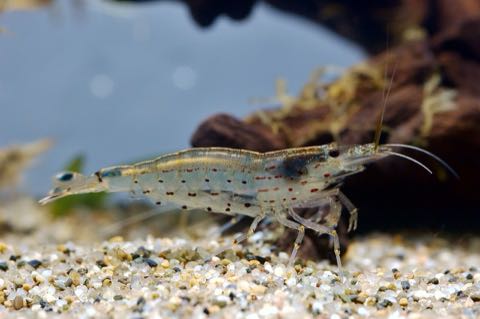 Amano shrimp
- American flagfish
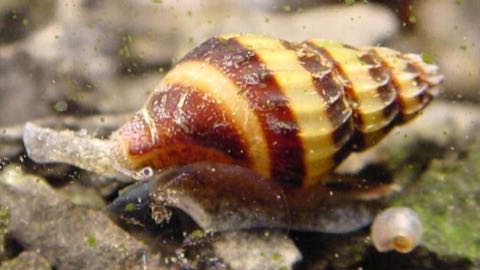 Assassin snail
- Banded gourami
- Bandit cory
- Banjo catfish
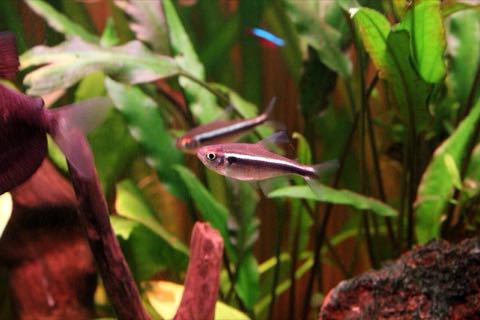 Black neon tetra
- Black phantom tetra
- Black ruby barb
Avoid with
- African knifefish
African knifefish may eat Fathead minnowAfrican knifefish may eat Fathead minnow
- African pike
African pike may eat Fathead minnowAfrican pike may eat Fathead minnow
- Alligator gar
Alligator gar may eat Fathead minnowAlligator gar may eat Fathead minnow
- Antenna ray
Antenna ray may eat Fathead minnowAntenna ray may eat Fathead minnow
- Arapaima
Arapaima may eat Fathead minnowArapaima may eat Fathead minnow
- Asian arowana
Asian arowana may eat Fathead minnowAsian arowana may eat Fathead minnow
- Asian upside-down catfish
Asian upside down catfish may eat Fathead minnowAsian upside down catfish may eat Fathead minnow
- Australian pearl arowana
Australian pearl arowana may eat Fathead minnowAustralian pearl arowana may eat Fathead minnow
- Barred bichir
Barred bichir may eat Fathead minnowBarred bichir may eat Fathead minnow
- Black bullhead
Black bullhead may eat Fathead minnowBlack bullhead may eat Fathead minnow
- Black diamond cichlid
Black diamond cichlid may eat Fathead minnowBlack diamond cichlid may eat Fathead minnow
- Brown bullhead
Brown bullhead may eat Fathead minnowBrown bullhead may eat Fathead minnow
Breeding rosy red minnows
Rosy red minnows are egg layers rather than livebearers. During spawning, females deposit adhesive eggs in dense clusters directly onto the ceiling of a cave or the underside of flat rocks.Rosy red minnows are egg layers rather than livebearers. During spawning, females deposit adhesive eggs in dense clusters directly onto the ceiling of a cave or the underside of flat rocks.[1][10][6]
The male guards the clutch diligently, fanning freshwater over the eggs and cleaning away debris until they hatch. However, a male with insufficient body energy reserves may eat the eggs instead of rearing them.The male guards the clutch diligently, fanning freshwater over the eggs and cleaning away debris until they hatch. However, a male with insufficient body energy reserves may eat the eggs instead of rearing them.[6]
Females reproduce repeatedly throughout a prolonged breeding season rather than producing a solitary annual brood. After the fry hatch and become free-swimming, supply gentle sponge filtration and feed them microscopic live foods like baby brine shrimp or microworms.Females reproduce repeatedly throughout a prolonged breeding season rather than producing a solitary annual brood. After the fry hatch and become free-swimming, supply gentle sponge filtration and feed them microscopic live foods like baby brine shrimp or microworms.[10][6]
Rosy red minnow health problems
Because these minnows often arrive through crowded commercial feeder tanks, always quarantine new stock in a separate aquarium for 30 days. Unquarantined arrivals frequently introduce severe infections into established systems.Because these minnows often arrive through crowded commercial feeder tanks, always quarantine new stock in a separate aquarium for 30 days. Unquarantined arrivals frequently introduce severe infections into established systems.[10][5]
Ich is a parasitic infection that manifests as small white spots, rapid gill ventilation, clamped fins, and frequent flashing against decor. Gill-focused infections can cause breathing distress without obvious external spots; avoid transferring damp nets between tanks.Ich is a parasitic infection that manifests as small white spots, rapid gill ventilation, clamped fins, and frequent flashing against decor. Gill-focused infections can cause breathing distress without obvious external spots; avoid transferring damp nets between tanks.[5]
Fin rot is a bacterial disease triggered by deteriorating water quality and ongoing physical harassment. Watch for ragged, eroding fins with red, blood-streaked margins. Prevent it by maintaining strict aquarium hygiene and eliminating territorial stress.Fin rot is a bacterial disease triggered by deteriorating water quality and ongoing physical harassment. Watch for ragged, eroding fins with red, blood-streaked margins. Prevent it by maintaining strict aquarium hygiene and eliminating territorial stress.[4]
Cotton-wool disease produces fuzzy white or grey fungal patches across damaged scales. It invades following net injuries, sharp decor scrapes, or chronic environmental decline. Remove rough hardscape, practice gentle handling, and verify mouth rot is not the true bacterial culprit.Cotton-wool disease produces fuzzy white or grey fungal patches across damaged scales. It invades following net injuries, sharp decor scrapes, or chronic environmental decline. Remove rough hardscape, practice gentle handling, and verify mouth rot is not the true bacterial culprit.[4]
Male or female?
Sexing juvenile minnows is rarely reliable before maturity. Fully grown males generally reach a larger overall adult length than females, measuring up to 10 cm adult length compared to the 5–7.5 cm adult length common in mature females.Sexing juvenile minnows is rarely reliable before maturity. Fully grown males generally reach a larger overall adult length than females, measuring up to 4 in adult length compared to the 2–3 in adult length common in mature females.[6][1]
Sexually active breeding males are unmistakable. They develop raised breeding tubercles across their snouts, a spongy, thickened dorsal pad on top of the head, and darker bodily shading in natural-coloured stock.Sexually active breeding males are unmistakable. They develop raised breeding tubercles across their snouts, a spongy, thickened dorsal pad on top of the head, and darker bodily shading in natural-coloured stock.[1][6]
Questions
Are rosy red minnows easy to take care of?
Yes, rosy red minnows are hardy fish adaptable to home aquariums. They do best when you provide an unheated, clean tank of 90 cm tank length, reliable biological filtration, and a group of at least six companions.Yes, rosy red minnows are hardy fish adaptable to home aquariums. They do best when you provide an unheated, clean tank of 35 in tank length, reliable biological filtration, and a group of at least six companions.[1][11][6][3]
How long do rosy red minnows last?
Rosy red minnows typically live for two to three years in nature, and captive fish can reach up to four years with good water quality and consistent care. Frequent breeding can take a heavy toll on adult energy.Rosy red minnows typically live for two to three years in nature, and captive fish can reach up to four years with good water quality and consistent care. Frequent breeding can take a heavy toll on adult energy.[6]
How big do rosy red minnows get?
Adult rosy red minnows typically measure 5–8 cm in adult length. Fully grown males can reach up to 10 cm adult length, while mature females usually stay between 5 and 7.5 cm adult length.Adult rosy red minnows typically measure 2–3 in in adult length. Fully grown males can reach up to 4 in adult length, while mature females usually stay between 5 and 3 in adult length.[6][1]
How often do rosy red minnows have babies?
Females can spawn repeatedly throughout a breeding season rather than dropping a single brood. They deposit adhesive eggs under cave surfaces for the male to guard, hatching over subsequent days.Females can spawn repeatedly throughout a breeding season rather than dropping a single brood. They deposit adhesive eggs under cave surfaces for the male to guard, hatching over subsequent days.[6]
Can I keep rosy red minnows in a tank?
Yes, rosy red minnows thrive in aquariums. Plan for a tank length of at least 90 cm and 100 L of volume, keeping water cool at 18–20 °C with low ammonia levels and gentle filtration.Yes, rosy red minnows thrive in aquariums. Plan for a tank length of at least 35 in and 26.4 gal of volume, keeping water cool at 64–68 °F with low ammonia levels and gentle filtration.[1][10][3]
How many minnows should be kept together?
Keep a minimum group of at least six rosy red minnows. They are active, schooling fish that become stressed and display unnatural behaviour when kept alone or in inadequate numbers.Keep a minimum group of at least six rosy red minnows. They are active, schooling fish that become stressed and display unnatural behaviour when kept alone or in inadequate numbers.[11][6]
Sources
- Fathead minnow, Pimephales promelas — Practical Fishkeeping. Accessed 2026-10-05.
- What to feed your fish — RSPCA. Accessed 2026-10-05.
- Ammonia in Aquatic Systems — UF/IFAS Extension. Accessed 2026-10-05.
- Frequently asked questions on treating sick fish — Practical Fishkeeping. Accessed 2026-10-05.
- Ichthyophthirius multifiliis (White Spot) Infections in Fish — UF/IFAS Extension. Accessed 2026-10-05.
- Pimephales promelas (Black-head minnow) — Animal Diversity Web, University of Michigan. Accessed 2026-10-05.
- Astronotus ocellatus (Oscar) — Seriously Fish. Accessed 2026-10-05.
- Rocio octofasciata (Jack Dempsey) — Seriously Fish. Accessed 2026-10-05.
- Carinotetraodon travancoricus (Dwarf Puffer) — Seriously Fish. Accessed 2026-10-05.
- Rosy Red Minnow – The Care, Feeding and Breeding of Rosy Red Minnows — Aquarium Tidings. Accessed 2026-10-05.
- Rosy Red Minnow 101: Care, Breeding, Diet, Size & More — Aquarium Source. Accessed 2026-10-05.
Written from the sources above. Not yet reviewed by an aquarist.
Data used by the planner
| Temperature | 12–30 | AqAdvisor (aqadvisor.com), retrieved 2026-10-04 · low confidence |
|---|---|---|
| pH | 6–8 | AqAdvisor (aqadvisor.com), retrieved 2026-10-04 · medium confidence |
| Hardness (dGH) | 5–15 | AqAdvisor (aqadvisor.com), retrieved 2026-10-04 · medium confidence |
| Origin | Central and eastern North America | curated-v0 (needs expert review) · low confidence |
| Beginner friendly | Yes | curated-v0 (needs expert review) · medium confidence |
| Care level | easy | curated-v0 (needs expert review) · medium confidence |
| Activity | active | curated-v0 (needs expert review) · medium confidence |
| Swimming level | middle | curated-v0 (needs expert review) · medium confidence |
| Temperament | peaceful | curated-v0 (needs expert review) · medium confidence |
| Nips fins | No | curated-v0 (needs expert review) · medium confidence |
| Long fins | No | curated-v0 (needs expert review) · medium confidence |
| Territorial | No | curated-v0 (needs expert review) · medium confidence |
| Lives in groups | Yes | curated-v0 (needs expert review) · medium confidence |
| Minimum group | 6 | curated-v0 (needs expert review) · medium confidence |
| Diet | omnivore | curated-v0 (needs expert review) · medium confidence |
| Lifespan (years) | 2–4 | curated-v0 (needs expert review); agrees with FishBase (fishbase.se), retrieved 2026-10-04 · medium confidence |
| Months to adult size | 6 | curated-v0 (needs expert review) · low confidence |
| Safe with plants | Yes | curated-v0 (needs expert review) · medium confidence |