Dwarf rainbowfish tank size
Plan for a tank length of at least 75 cm for dwarf rainbowfish. Even with a 75 cm tank length, monitoring space is essential as stocking numbers grow.Plan for a tank length of at least 30 in for dwarf rainbowfish. Even with a 30 in tank length, monitoring space is essential as stocking numbers grow.[1]
Set up the aquarium with gentle water flow and distinct zones of dense plant cover alongside open water. Grouping your plants leaves unobstructed central channels where adult males can clearly show their colours and display.Set up the aquarium with gentle water flow and distinct zones of dense plant cover alongside open water. Grouping your plants leaves unobstructed central channels where adult males can clearly show their colours and display.[1]
Dwarf rainbowfish water parameters
Maintain stable water conditions within routine targets of 22–25 °C, a pH between 5.5 and 7.5, and a general hardness of 8–15 dGH. Keep to these everyday parameters rather than using separate, warmer spawning conditions for ongoing housing.Maintain stable water conditions within routine targets of 72–77 °F, a pH between 5.5 and 7.5, and a general hardness of 8–15 dGH. Keep to these everyday parameters rather than using separate, warmer spawning conditions for ongoing housing.[1]
Only introduce dwarf rainbowfish to an established aquarium with a mature biological filter showing zero ammonia and zero nitrite. Test your aquarium water weekly, and perform regular water changes of roughly one quarter of the volume using conditioned water.Only introduce dwarf rainbowfish to an established aquarium with a mature biological filter showing zero ammonia and zero nitrite. Test your aquarium water weekly, and perform regular water changes of roughly one quarter of the volume using conditioned water.[2]
Feeding dwarf rainbowfish
Offer good-quality dry flakes or fine granules alongside small thawed or live invertebrates such as daphnia, bloodworm, or tubifex. These foods do not need to sink to the substrate for the fish to feed.Offer good-quality dry flakes or fine granules alongside small thawed or live invertebrates such as daphnia, bloodworm, or tubifex. These foods do not need to sink to the substrate for the fish to feed.[1][2]
Feed your fish once every day, offering only as much food as they consume within a few minutes. Remove any uneaten leftovers promptly before the waste decays and degrades your water quality.Feed your fish once every day, offering only as much food as they consume within a few minutes. Remove any uneaten leftovers promptly before the waste decays and degrades your water quality.[2]
Dwarf rainbowfish behaviour
Keep dwarf rainbowfish in a social group of at least six. Seriously Fish prefers shoals of six to eight or more individuals, and larger groups are recommended whenever your aquarium volume permits.Keep dwarf rainbowfish in a social group of at least six. Seriously Fish prefers shoals of six to eight or more individuals, and larger groups are recommended whenever your aquarium volume permits.[1]
This species has a peaceful temperament, though individuals can be skittish at times. Males display more vibrant coloration when kept together in a shoal. Seriously Fish lists an adult standard length of 7 cm.This species has a peaceful temperament, though individuals can be skittish at times. Males display more vibrant coloration when kept together in a shoal. Seriously Fish lists an adult standard length of 3 in.[1]
In the wild, dwarf rainbowfish inhabit Australia and Papua New Guinea, living in both clear-running streams and turbid ponds with submerged wood and vegetation. In captive care, they can live for several years.In the wild, dwarf rainbowfish inhabit Australia and Papua New Guinea, living in both clear-running streams and turbid ponds with submerged wood and vegetation. In captive care, they can live for several years.[1][2]
Wild populations show distinct colour and pattern variations depending on their home river system. Keep these geographical forms in separate aquariums to prevent crossbreeding and hybridisation between distinct regional lines.Wild populations show distinct colour and pattern variations depending on their home river system. Keep these geographical forms in separate aquariums to prevent crossbreeding and hybridisation between distinct regional lines.[1]
Dwarf rainbowfish tank mates
Zebra daniosZebra danios can make suitable tank mates in an aquarium with ample space if maintained at a shared temperature of 22–24 °C. can make suitable tank mates in an aquarium with ample space if maintained at a shared temperature of 72–75 °F. Harlequin rasborasHarlequin rasboras are also peaceful community options where tank dimensions provide adequate swimming room across overlapping water conditions. are also peaceful community options where tank dimensions provide adequate swimming room across overlapping water conditions.[1][8]
Bronze corydorasBronze corydoras can inhabit the lower zone of the aquarium if their specific substrate and floor-area requirements are met. You can also house can inhabit the lower zone of the aquarium if their specific substrate and floor-area requirements are met. You can also house cherry barbscherry barbs alongside them if there is sufficient plant cover and swimming volume for both social groups. alongside them if there is sufficient plant cover and swimming volume for both social groups.[1]
Avoid predatory cichlids like Avoid predatory cichlids like oscarsoscars and and Jack DempseysJack Dempseys. Their predatory nature puts small or slender fish at risk, because tank companions must be large enough to not be swallowed as prey.. Their predatory nature puts small or slender fish at risk, because tank companions must be large enough to not be swallowed as prey.[5][6]
Do not house dwarf rainbowfish with Do not house dwarf rainbowfish with pea pufferspea puffers. Pea puffers present a fin-nipping hazard in community settings, and the slower puffers can also struggle to compete for food against active swimmers.. Pea puffers present a fin-nipping hazard in community settings, and the slower puffers can also struggle to compete for food against active swimmers.[7]
Usually fine together
- African butterfly cichlid
- African clawed frog
- Agassiz's cory
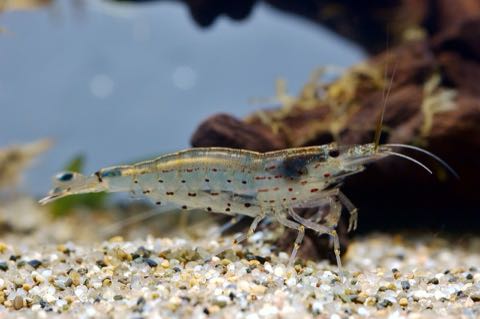 Amano shrimp
- American flagfish
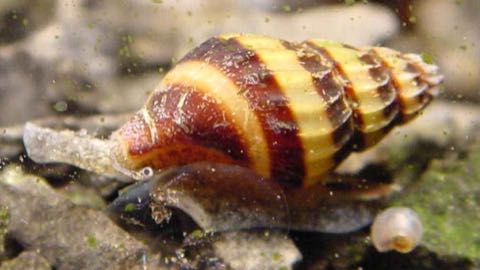 Assassin snail
- Banded gourami
- Bandit cory
- Banjo catfish
- Black phantom tetra
- Black ruby barb
- Blackline rasbora
Avoid with
- Acei cichlid
No shared pH rangeNo shared pH range
- Brevis shell dweller
No shared pH rangeNo shared pH range
- Caudopunctatus
No shared pH rangeNo shared pH range
- Irian Jaya rainbowfish
No shared temperature rangeNo shared temperature range
- Multies
No shared pH rangeNo shared pH range
- Parkinson's rainbowfish
No shared temperature rangeNo shared temperature range
- Pindani
No shared pH rangeNo shared pH range
- Rusty cichlid
No shared pH rangeNo shared pH range
- Saulosi cichlid
No shared pH rangeNo shared pH range
- Similis shell dweller
No shared pH rangeNo shared pH range
- Afra cichlid
No shared pH rangeNo shared pH range
- African knifefish
African knifefish may eat Dwarf rainbowfishAfrican knifefish may eat Dwarf rainbowfish
Breeding dwarf rainbowfish
During spawning, females scatter adhesive eggs attached by fine threads to fine-leaved plants or artificial spawning mops over successive days. Adult fish tend not to consume their spawn, but moving the eggs into a separate rearing aquarium makes caring for the young easier.During spawning, females scatter adhesive eggs attached by fine threads to fine-leaved plants or artificial spawning mops over successive days. Adult fish tend not to consume their spawn, but moving the eggs into a separate rearing aquarium makes caring for the young easier.[1]
The eggs hatch in seven to twelve days, depending directly on water temperature. Newly hatched fry gather near the surface and require infusoria-grade microscopic starter foods before they grow large enough to accept standard live foods.The eggs hatch in seven to twelve days, depending directly on water temperature. Newly hatched fry gather near the surface and require infusoria-grade microscopic starter foods before they grow large enough to accept standard live foods.[1]
Dwarf rainbowfish health problems
Ich is caused by a freshwater parasite and can cause salt-like white spots, surface rubbing, gill irritation, and a reduced appetite. Visible spots alone do not confirm a final diagnosis, so seek prompt qualified advice. Quarantining new fish for 30 days and using disinfected nets helps prevent introducing the parasite.Ich is caused by a freshwater parasite and can cause salt-like white spots, surface rubbing, gill irritation, and a reduced appetite. Visible spots alone do not confirm a final diagnosis, so seek prompt qualified advice. Quarantining new fish for 30 days and using disinfected nets helps prevent introducing the parasite.[3]
Fin rot is a bacterial disease encouraged by stress and degraded environmental conditions. Affected fish show fin fraying and red streaks followed by tissue erosion. Routine water changes and removing sources of harassment reduce the risks of fin damage.Fin rot is a bacterial disease encouraged by stress and degraded environmental conditions. Affected fish show fin fraying and red streaks followed by tissue erosion. Routine water changes and removing sources of harassment reduce the risks of fin damage.[4]
Fungal infections appear as grey-white, cottony patches on damaged skin or fins when physical trauma and water stress break down the mucus barrier. Using smooth tank decor, handling fish gently, and maintaining clean water help prevent the skin wounds that allow fungal growth.Fungal infections appear as grey-white, cottony patches on damaged skin or fins when physical trauma and water stress break down the mucus barrier. Using smooth tank decor, handling fish gently, and maintaining clean water help prevent the skin wounds that allow fungal growth.[4]
Male or female?
You can distinguish the sexes by comparing fin length and body shape once the fish mature. Mature males develop richer, more intense coloration along with longer dorsal and anal fins, whereas adult females show a noticeably deeper body profile.You can distinguish the sexes by comparing fin length and body shape once the fish mature. Mature males develop richer, more intense coloration along with longer dorsal and anal fins, whereas adult females show a noticeably deeper body profile.[1]
Questions
How many dwarf rainbowfish should be kept together?
Keep a group of at least six dwarf rainbowfish. Seriously Fish recommends keeping six to eight or more, and providing a larger shoal is preferable whenever your tank size allows.Keep a group of at least six dwarf rainbowfish. Seriously Fish recommends keeping six to eight or more, and providing a larger shoal is preferable whenever your tank size allows.[1]
How big do McCulloch’s rainbowfish get?
Seriously Fish reports an adult standard length of 7 cm for dwarf rainbowfish.Seriously Fish reports an adult standard length of 3 in for dwarf rainbowfish.[1]
Are dwarf rainbowfish aggressive?
Males will actively display their colours to each other when maintained in a shoal.Males will actively display their colours to each other when maintained in a shoal.[1]
How long do McCulloch’s rainbowfish live?
Dwarf rainbowfish can live for several years under good aquarium care and stable water conditions.Dwarf rainbowfish can live for several years under good aquarium care and stable water conditions.[2]
Can dwarf rainbowfish live with zebra danios?
Yes, zebra danios make suitable companions in a tank with adequate swimming space when kept at a shared temperature such as 22–24 °C.Yes, zebra danios make suitable companions in a tank with adequate swimming space when kept at a shared temperature such as 72–75 °F.[1]
How can you tell male and female dwarf rainbowfish apart?
Mature males feature longer dorsal and anal fins paired with stronger colouration, while mature females have deeper bodies.Mature males feature longer dorsal and anal fins paired with stronger colouration, while mature females have deeper bodies.[1]
Sources
- Melanotaenia maccullochi (Dwarf Rainbowfish) — Seriously Fish. Accessed 2026-10-05.
- How to look after rainbowfish — Ornamental Aquatic Trade Association. Accessed 2026-10-05.
- Ichthyophthirius multifiliis (White Spot) Infections in Fish — UF/IFAS Extension. Accessed 2026-10-05.
- Frequently asked questions on treating sick fish — Practical Fishkeeping. Accessed 2026-10-05.
- Astronotus ocellatus (Oscar) — Seriously Fish. Accessed 2026-10-05.
- Rocio octofasciata (Jack Dempsey) — Seriously Fish. Accessed 2026-10-05.
- Carinotetraodon travancoricus (Dwarf Puffer) — Seriously Fish. Accessed 2026-10-05.
- Trigonostigma heteromorpha (Harlequin) — Seriously Fish. Accessed 2026-10-05.
Written from the sources above. Not yet reviewed by an aquarist.
Data used by the planner
| Temperature range | 22–25 | AqAdvisor (aqadvisor.com), retrieved 2026-10-04; agrees with FishBase (fishbase.se), retrieved 2026-10-04 · medium confidence |
|---|---|---|
| pH | 5.5–7.5 | AqAdvisor (aqadvisor.com), retrieved 2026-10-04 · medium confidence |
| Hardness (dGH) | 5–15 | AqAdvisor (aqadvisor.com), retrieved 2026-10-04 · medium confidence |
| Origin | North eastern Queensland and southern Papua New Guinea | curated-v0 (needs expert review) · low confidence |
| Beginner friendly | Yes | curated-v0 (needs expert review) · medium confidence |
| Care level | easy | curated-v0 (needs expert review) · medium confidence |
| Activity | active | curated-v0 (needs expert review) · medium confidence |
| Swimming level | middle | curated-v0 (needs expert review) · medium confidence |
| Temperament | peaceful | curated-v0 (needs expert review) · medium confidence |
| Nips fins | No | curated-v0 (needs expert review) · medium confidence |
| Long fins | No | curated-v0 (needs expert review) · medium confidence |
| Territorial | No | curated-v0 (needs expert review) · medium confidence |
| Lives in groups | Yes | curated-v0 (needs expert review) · medium confidence |
| Minimum group | 6 | curated-v0 (needs expert review) · medium confidence |
| Diet | omnivore | curated-v0 (needs expert review) · medium confidence |
| Lifespan (years) | 5–8 | curated-v0 (needs expert review) · low confidence |
| Months to adult size | 12 | curated-v0 (needs expert review) · low confidence |
| Safe with plants | Yes | curated-v0 (needs expert review) · medium confidence |
| Minimum tank length | 75 | curated-v0 (needs expert review) · medium confidence |