Fire bar danio tank size
Seriously Fish recommends a minimum tank length of 75 cm and a tank width of 30 cm. Seriously Fish gives an adult length of 5 cm standard length for this species.Seriously Fish recommends a minimum tank length of 30 in and a tank width of 12 in. Seriously Fish gives an adult length of 2 in standard length for this species.[1]
This species originates from the Mae Nam Ping drainage in the upper Chao Phraya basin of northern Thailand. Their natural habitat consists of clear small streams with sand, gravel and rock substrates without aquatic vegetation. You can replicate this environment with a stream-style layout.This species originates from the Mae Nam Ping drainage in the upper Chao Phraya basin of northern Thailand. Their natural habitat consists of clear small streams with sand, gravel and rock substrates without aquatic vegetation. You can replicate this environment with a stream-style layout.[1]
Design the display using water-worn rocks, sand, fine gravel, boulders and roots. You can attach plants such as Microsorum, Bolbitis or Anubias to hardscape features. Always fit a tightly fitting lid, as this group is known for jumping.Design the display using water-worn rocks, sand, fine gravel, boulders and roots. You can attach plants such as Microsorum, Bolbitis or Anubias to hardscape features. Always fit a tightly fitting lid, as this group is known for jumping.[1]
This fish is also sold as the fire bar or tiger danio, and was formerly known as Devario maetaengensis, though its classification is currently 'Inlecypris' maetaengensis. It is easily confused with Inlecypris shanensis and Devario interruptus. Proper identification relies on barbels, lateral-line structure and flank patterns.This fish is also sold as the fire bar or tiger danio, and was formerly known as Devario maetaengensis, though its classification is currently 'Inlecypris' maetaengensis. It is easily confused with Inlecypris shanensis and Devario interruptus. Proper identification relies on barbels, lateral-line structure and flank patterns.[1]
Fire bar danio water parameters
Maintain water temperature between 22–26 °C, with a pH of 6.0–8.0 and water hardness between 3–10 dGH. These values represent the overlapping ranges between general aquarium guidance and species records.Maintain water temperature between 72–79 °F, with a pH of 6.0–8.0 and water hardness between 3–10 dGH. These values represent the overlapping ranges between general aquarium guidance and species records.[1]
Provide clean water with moderate movement and relatively high dissolved oxygen. Very fast flow is unnecessary.Provide clean water with moderate movement and relatively high dissolved oxygen. Very fast flow is unnecessary.[1]
Establish biological filtration thoroughly before introducing any fish to the aquarium. Ammonia should be undetectable and nitrite controlled. Clear-looking water alone cannot prove chemical safety, so test ammonia weekly and whenever appetite or behaviour changes.Establish biological filtration thoroughly before introducing any fish to the aquarium. Ammonia should be undetectable and nitrite controlled. Clear-looking water alone cannot prove chemical safety, so test ammonia weekly and whenever appetite or behaviour changes.[3]
Feeding fire bar danios
Follow general RSPCA feeding guidance by offering two small meals daily, each limited to what the fish actually consume in about two minutes. Adjust portion size to the fish and remove uneaten food after feeding.Follow general RSPCA feeding guidance by offering two small meals daily, each limited to what the fish actually consume in about two minutes. Adjust portion size to the fish and remove uneaten food after feeding.[2]
Fire bar danio behaviour
The fire bar danio is a peaceful schooling fish suitable for a well-chosen community setup. Keeping them in a group of eight or more helps reduce nervousness, and competing males display richer colours in the presence of rivals.The fire bar danio is a peaceful schooling fish suitable for a well-chosen community setup. Keeping them in a group of eight or more helps reduce nervousness, and competing males display richer colours in the presence of rivals.[1]
Fire bar danio tank mates
Suitable community tank mates include peaceful cyprinids, catfish and characins. Suitable community tank mates include peaceful cyprinids, catfish and characins. Neon tetrasNeon tetras and and Glowlight tetrasGlowlight tetras are conditional choices that can work well, provided you verify shared water ranges and confirm adequate space for full groups of each species. are conditional choices that can work well, provided you verify shared water ranges and confirm adequate space for full groups of each species.[1][9][10]
Harlequin rasborasHarlequin rasboras and and Zebra daniosZebra danios are peaceful schooling fish that offer additional conditional community options. Check their shared water parameters and ensure the aquarium provides enough swimming room for the entire group. are peaceful schooling fish that offer additional conditional community options. Check their shared water parameters and ensure the aquarium provides enough swimming room for the entire group.[11][1][12]
Avoid predatory Avoid predatory OscarsOscars, which must not share an aquarium with much smaller fish due to predation risks. Exclude , which must not share an aquarium with much smaller fish due to predation risks. Exclude Jack DempseysJack Dempseys, which require companions too large to swallow and develop aggression as they mature. In addition, avoid , which require companions too large to swallow and develop aggression as they mature. In addition, avoid Pea puffersPea puffers due to their documented risk of nipping slow or long-finned companions. due to their documented risk of nipping slow or long-finned companions.[1][6][7][8]
Usually fine together
- African butterfly cichlid
- African clawed frog
- Agassiz's cory
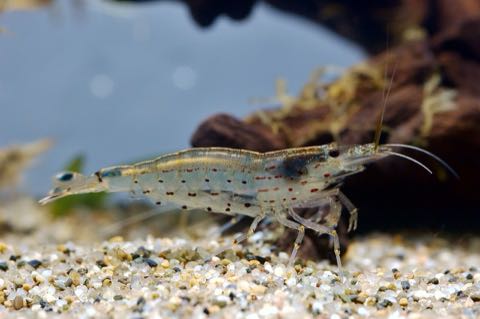 Amano shrimp
- American flagfish
- Banded gourami
- Bandit cory
- Banjo catfish
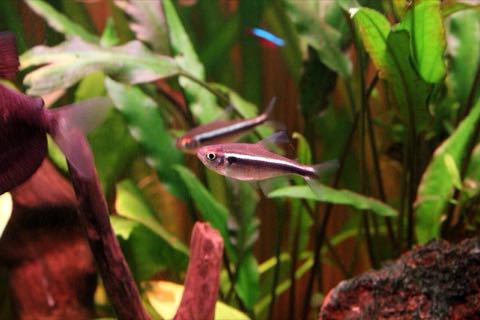 Black neon tetra
- Black phantom tetra
- Black ruby barb
- Blackline rasbora
Avoid with
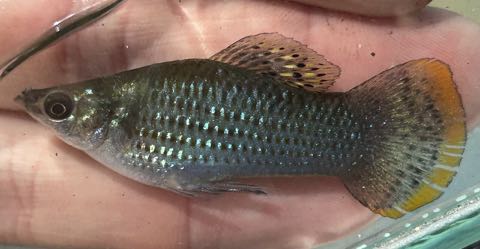 Molly
MollyNo shared water hardness rangeNo shared water hardness range
- African knifefish
African knifefish may eat Tiger danioAfrican knifefish may eat Tiger danio
- African pike
African pike may eat Tiger danioAfrican pike may eat Tiger danio
- Alligator gar
Alligator gar may eat Tiger danioAlligator gar may eat Tiger danio
- Antenna ray
Antenna ray may eat Tiger danioAntenna ray may eat Tiger danio
- Arapaima
Arapaima may eat Tiger danioArapaima may eat Tiger danio
- Arrowhead puffer
Arrowhead puffer may eat Tiger danioArrowhead puffer may eat Tiger danio
- Asian arowana
Asian arowana may eat Tiger danioAsian arowana may eat Tiger danio
- Asian upside-down catfish
Asian upside down catfish may eat Tiger danioAsian upside down catfish may eat Tiger danio
- Australian pearl arowana
Australian pearl arowana may eat Tiger danioAustralian pearl arowana may eat Tiger danio
- Barred bichir
Barred bichir may eat Tiger danioBarred bichir may eat Tiger danio
- Black belt cichlid
No shared water hardness rangeNo shared water hardness range
Breeding fire bar danios
This species is an egg-scattering free spawner without parental care. A separate dim breeding tank can use a base mesh, fine-leaved Taxiphyllum or wool mops. Include air-powered sponge filtration for oxygenation and movement.This species is an egg-scattering free spawner without parental care. A separate dim breeding tank can use a base mesh, fine-leaved Taxiphyllum or wool mops. Include air-powered sponge filtration for oxygenation and movement.[1]
Introduce one or two well-conditioned pairs to the breeding tank, and remove the adults after 48 hours. Incubation usually takes 24–36 hours depending on water temperature, with fry becoming free-swimming a few days later. Start feeding the young on Paramecium or similar foods, adding Artemia nauplii, microworms and powdered dry food once they are large enough.Introduce one or two well-conditioned pairs to the breeding tank, and remove the adults after 48 hours. Incubation usually takes 24–36 hours depending on water temperature, with fry becoming free-swimming a few days later. Start feeding the young on Paramecium or similar foods, adding Artemia nauplii, microworms and powdered dry food once they are large enough.[1]
Fire bar danio health problems
Ich is a contagious protozoan infection affecting freshwater fish. Warning signs include white grains across the body or fins, rubbing against surfaces, excess mucus and reduced appetite. Reduce introduction risks by quarantining new stock for at least 30 days and using separate nets and siphons. Appearance alone cannot confirm the cause, so seek a prompt fish-health diagnosis.Ich is a contagious protozoan infection affecting freshwater fish. Warning signs include white grains across the body or fins, rubbing against surfaces, excess mucus and reduced appetite. Reduce introduction risks by quarantining new stock for at least 30 days and using separate nets and siphons. Appearance alone cannot confirm the cause, so seek a prompt fish-health diagnosis.[5]
Bacterial fin rot can cause progressive fin-edge erosion and redness or bloody streaks. Poor water conditions and stress favour bacterial infection. Prevent avoidable risk with clean water and protection from injury or harassment. Seek a proper diagnosis rather than assuming all damaged fins have fin rot.Bacterial fin rot can cause progressive fin-edge erosion and redness or bloody streaks. Poor water conditions and stress favour bacterial infection. Prevent avoidable risk with clean water and protection from injury or harassment. Seek a proper diagnosis rather than assuming all damaged fins have fin rot.[4]
Ammonia poisoning damages delicate gill tissues, causes severe stress and can reduce feeding. Ammonia originates from fish metabolism as well as decaying food and waste. Prevent accumulation by cycling your biological filter thoroughly, avoiding excess feeding, and testing water regularly rather than diagnosing by appearance alone.Ammonia poisoning damages delicate gill tissues, causes severe stress and can reduce feeding. Ammonia originates from fish metabolism as well as decaying food and waste. Prevent accumulation by cycling your biological filter thoroughly, avoiding excess feeding, and testing water regularly rather than diagnosing by appearance alone.[3]
Male or female?
Mature female fire bar danios are noticeably deeper-bodied, slightly larger and less colourful than males.Mature female fire bar danios are noticeably deeper-bodied, slightly larger and less colourful than males.[1]
Questions
How big do fire bar danios get?
Seriously Fish gives an adult standard length of 5 cm for this species.Seriously Fish gives an adult standard length of 2 in for this species.[1]
How many danios should be kept together?
Keep eight or more danios together. A group may reduce nervousness, and males display stronger colour when rivals are present.Keep eight or more danios together. A group may reduce nervousness, and males display stronger colour when rivals are present.[1]
How many times should I feed my danios?
Offer two small meals daily based on general RSPCA guidance. Limit each feeding to what the fish consume in about two minutes, and remove uneaten food.Offer two small meals daily based on general RSPCA guidance. Limit each feeding to what the fish consume in about two minutes, and remove uneaten food.[2]
How can I tell the sex of danios?
Mature females are deeper-bodied, less colourful and slightly larger than males. Males intensify their colours during reproductive activity.Mature females are deeper-bodied, less colourful and slightly larger than males. Males intensify their colours during reproductive activity.[1]
What tank mates are compatible with danios?
Peaceful cyprinids, catfish and characins are suitable companion categories. Specific fish such as neon tetras, glowlight tetras, harlequin rasboras and zebra danios are conditional options once you verify shared water ranges and space for full groups.Peaceful cyprinids, catfish and characins are suitable companion categories. Specific fish such as neon tetras, glowlight tetras, harlequin rasboras and zebra danios are conditional options once you verify shared water ranges and space for full groups.[1][9][10][11][12]
Sources
- 'Inlecypris' maetaengensis (Fire Bar 'Danio') — Seriously Fish. Accessed 2026-10-05.
- What to feed your fish — RSPCA. Accessed 2026-10-05.
- Ammonia in Aquatic Systems — UF/IFAS Extension. Accessed 2026-10-05.
- Frequently asked questions on treating sick fish — Practical Fishkeeping. Accessed 2026-10-05.
- Ichthyophthirius multifiliis (White Spot) Infections in Fish — UF/IFAS Extension. Accessed 2026-10-05.
- Astronotus ocellatus (Oscar) — Seriously Fish. Accessed 2026-10-05.
- Rocio octofasciata (Jack Dempsey) — Seriously Fish. Accessed 2026-10-05.
- Carinotetraodon travancoricus (Dwarf Puffer) — Seriously Fish. Accessed 2026-10-05.
- Neon tetras — Seriously Fish. Accessed 2026-10-05.
- Glowlight tetras — Seriously Fish. Accessed 2026-10-05.
- Harlequin rasboras — Seriously Fish. Accessed 2026-10-05.
- Brachydanio rerio (Zebra Danio) — Seriously Fish. Accessed 2026-10-05.
Written from the sources above. Not yet reviewed by an aquarist.
Data used by the planner
| Temperature | 22–27 | AqAdvisor (aqadvisor.com), retrieved 2026-10-04 · medium confidence |
|---|---|---|
| pH | 6–8 | AqAdvisor (aqadvisor.com), retrieved 2026-10-04 · medium confidence |
| Hardness (dGH) | 3–10 | AqAdvisor (aqadvisor.com), retrieved 2026-10-04 · medium confidence |
| Origin | Mae Taeng river, northern Thailand | curated-v0 (needs expert review) · low confidence |
| Beginner friendly | Yes | curated-v0 (needs expert review) · medium confidence |
| Care level | easy | curated-v0 (needs expert review) · medium confidence |
| Activity | active | curated-v0 (needs expert review) · medium confidence |
| Swimming level | top | curated-v0 (needs expert review) · medium confidence |
| Temperament | peaceful | curated-v0 (needs expert review) · medium confidence |
| Nips fins | No | curated-v0 (needs expert review) · medium confidence |
| Long fins | No | curated-v0 (needs expert review) · medium confidence |
| Territorial | No | curated-v0 (needs expert review) · medium confidence |
| Lives in groups | Yes | curated-v0 (needs expert review) · medium confidence |
| Minimum group | 6 | curated-v0 (needs expert review) · medium confidence |
| Diet | omnivore | curated-v0 (needs expert review) · medium confidence |
| Lifespan (years) | 3–5 | curated-v0 (needs expert review) · low confidence |
| Months to adult size | 8 | curated-v0 (needs expert review) · low confidence |
| Safe with plants | Yes | curated-v0 (needs expert review) · medium confidence |