Dwarf orange crayfish tank size
An aquarium of at least 40 L with many retreats is a practical starting recommendation for dwarf orange crayfish. Provide caves, wood, plants, and crevices across the setup so each crayfish can withdraw from others during a molt.An aquarium of at least 10.6 gal with many retreats is a practical starting recommendation for dwarf orange crayfish. Provide caves, wood, plants, and crevices across the setup so each crayfish can withdraw from others during a molt.[1][5]
Secure all tank openings because crayfish climb out of tanks. Cover filter intakes as well to protect small young from being drawn inside.Secure all tank openings because crayfish climb out of tanks. Cover filter intakes as well to protect small young from being drawn inside.[1]
Dwarf orange crayfish water parameters
Maintain water temperatures of 18–24 °C alongside a pH of 7.5–8.0. Keep general hardness between 5–15 dGH, and avoid abrupt chemistry changes.Maintain water temperatures of 64–75 °F alongside a pH of 7.5–8.0. Keep general hardness between 5–15 dGH, and avoid abrupt chemistry changes.[1][2]
Introduce dwarf orange crayfish only to a mature aquarium with zero ammonia and nitrite, and test the water weekly. Never use copper-containing medications, which can harm or kill crayfish; confirm treatment suitability for invertebrates directly with the manufacturer.Introduce dwarf orange crayfish only to a mature aquarium with zero ammonia and nitrite, and test the water weekly. Never use copper-containing medications, which can harm or kill crayfish; confirm treatment suitability for invertebrates directly with the manufacturer.[2]
Feeding dwarf orange crayfish
Feed sinking invertebrate pellets as a daily staple, supplemented with suitable frozen foods and blanched peas or zucchini for variety. Specialist invertebrate foods provide dietary minerals including calcium needed for shell formation.Feed sinking invertebrate pellets as a daily staple, supplemented with suitable frozen foods and blanched peas or zucchini for variety. Specialist invertebrate foods provide dietary minerals including calcium needed for shell formation.[1][5]
Offer food once a day in a portion that can be eaten during about 30 minutes, then remove uneaten food rather than allowing it to rot. A scavenging habit does not remove the need for deliberate feeding; both underfeeding and decomposing leftovers cause problems. Dwarf crayfish can also eat small snails and may nip the antennae of larger snails.Offer food once a day in a portion that can be eaten during about 30 minutes, then remove uneaten food rather than allowing it to rot. A scavenging habit does not remove the need for deliberate feeding; both underfeeding and decomposing leftovers cause problems. Dwarf crayfish can also eat small snails and may nip the antennae of larger snails.[2][1]
Dwarf orange crayfish behaviour
Dwarf orange crayfish can be kept singly and do not need a school. Sharing limited shelter increases fighting risk, and bottom territories combined with insufficient shelter can lead to damaged legs or claws, particularly between males.Dwarf orange crayfish can be kept singly and do not need a school. Sharing limited shelter increases fighting risk, and bottom territories combined with insufficient shelter can lead to damaged legs or claws, particularly between males.[1][5]
Published adult length reaches 4–5 cm. While the common orange strain is selectively bred, wild-looking forms are generally brown, tan, or rust-coloured, sometimes marbled. Hobby sources estimate their lifespan at around two years.Published adult length reaches 2–2 in. While the common orange strain is selectively bred, wild-looking forms are generally brown, tan, or rust-coloured, sometimes marbled. Hobby sources estimate their lifespan at around two years.[1][5]
Dwarf orange crayfish tank mates
GuppiesGuppies can work with dwarf orange crayfish if active, healthy fish have open water and the crayfish have their own cover, though injury is still possible. can work with dwarf orange crayfish if active, healthy fish have open water and the crayfish have their own cover, though injury is still possible. PlatiesPlaties are a cautious option that can work only in a spacious aquarium with separate refuge and regular monitoring. are a cautious option that can work only in a spacious aquarium with separate refuge and regular monitoring.[1]
MolliesMollies can work in sufficiently large tanks with compatible water, provided you meet the fish's space requirements independently. can work in sufficiently large tanks with compatible water, provided you meet the fish's space requirements independently. Zebra daniosZebra danios can also work because active upper-water swimming reduces contact with bottom territories; provide their group and adequate swimming room. can also work because active upper-water swimming reduces contact with bottom territories; provide their group and adequate swimming room.[1][7]
Avoid Avoid cherry shrimpcherry shrimp when protecting a colony, as crayfish may catch young or newly molted shrimp. Avoid when protecting a colony, as crayfish may catch young or newly molted shrimp. Avoid bettasbettas, because a slow or resting fish can have fins grabbed by a crayfish. Avoid , because a slow or resting fish can have fins grabbed by a crayfish. Avoid oscarsoscars, which may eat small crayfish, especially when the shell is soft., which may eat small crayfish, especially when the shell is soft.[1][5][6]
Usually fine together
- African butterfly cichlid
- African clawed frog
- Agassiz's cory
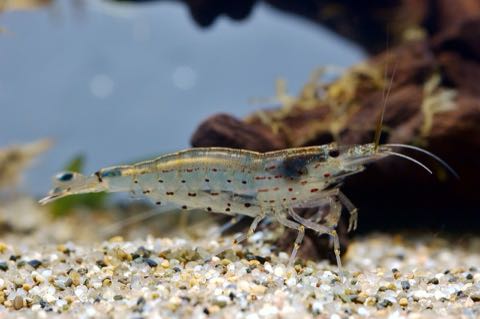 Amano shrimp
- American flagfish
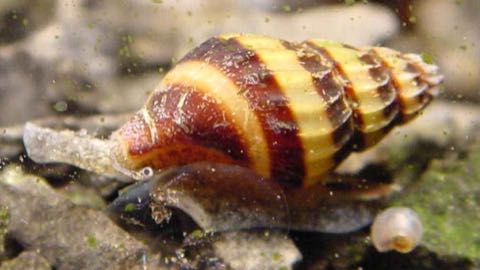 Assassin snail
- Banded gourami
- Bandit cory
- Banjo catfish
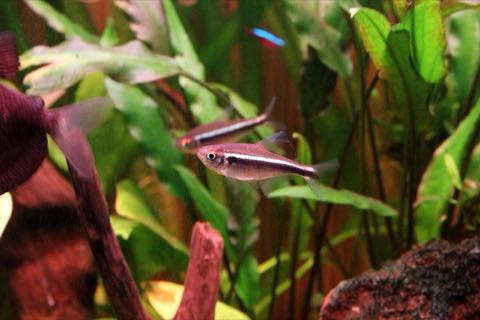 Black neon tetra
- Black phantom tetra
- Black ruby barb
Avoid with
- Brilliant rasbora
No shared pH rangeNo shared pH range
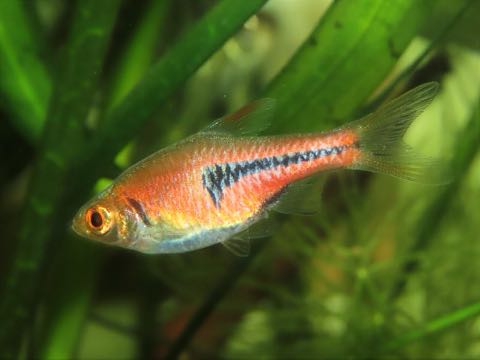 Lambchop rasbora
No shared pH rangeNo shared pH range
- African knifefish
African knifefish may eat Dwarf orange crayfishAfrican knifefish may eat Dwarf orange crayfish
- African pike
African pike may eat Dwarf orange crayfishAfrican pike may eat Dwarf orange crayfish
- Alligator gar
Alligator gar may eat Dwarf orange crayfishAlligator gar may eat Dwarf orange crayfish
- Altum angelfish
No shared pH rangeNo shared pH range
- Amazon leaffish
No shared pH rangeNo shared pH range
- Antenna ray
Antenna ray may eat Dwarf orange crayfishAntenna ray may eat Dwarf orange crayfish
- Arapaima
Arapaima may eat Dwarf orange crayfishArapaima may eat Dwarf orange crayfish
- Arrowhead puffer
Arrowhead puffer may eat Dwarf orange crayfishArrowhead puffer may eat Dwarf orange crayfish
- Asian arowana
Asian arowana may eat Dwarf orange crayfishAsian arowana may eat Dwarf orange crayfish
- Asian upside-down catfish
Asian upside down catfish may eat Dwarf orange crayfishAsian upside down catfish may eat Dwarf orange crayfish
Breeding dwarf orange crayfish
A female carries fertilized eggs beneath her abdomen and often stays hidden during incubation. Hatching commonly takes three to four weeks depending on temperature; young resemble tiny adults and initially stay with their mother.A female carries fertilized eggs beneath her abdomen and often stays hidden during incubation. Hatching commonly takes three to four weeks depending on temperature; young resemble tiny adults and initially stay with their mother.[1][5]
Separate growing young from adults and size-mismatched juveniles because cannibalism can reduce survival. Feed juveniles daily with finely divided versions of suitable adult foods, and guard filter intakes to protect small young.Separate growing young from adults and size-mismatched juveniles because cannibalism can reduce survival. Feed juveniles daily with finely divided versions of suitable adult foods, and guard filter intakes to protect small young.[1][5]
Dwarf orange crayfish health problems
Failed molting can leave a crayfish trapped in an old shell, lying on its side and repeatedly trying to escape. Water mineral extremes and poor nutrition can contribute to this problem. Stable appropriate water, mineral-containing invertebrate food, and secluded shelter support molting; leave a clean shed shell in the tank for mineral recycling.Failed molting can leave a crayfish trapped in an old shell, lying on its side and repeatedly trying to escape. Water mineral extremes and poor nutrition can contribute to this problem. Stable appropriate water, mineral-containing invertebrate food, and secluded shelter support molting; leave a clean shed shell in the tank for mineral recycling.[3][1]
New tank syndrome is ammonia or nitrite accumulation when filtration cannot handle waste. Appetite and behaviour changes are nonspecific signs that warrant immediate water tests. Prevent new tank syndrome with a mature filter, gradual stocking, and removal of excess food; do not rinse biological filter media under chlorinated tap water.New tank syndrome is ammonia or nitrite accumulation when filtration cannot handle waste. Appetite and behaviour changes are nonspecific signs that warrant immediate water tests. Prevent new tank syndrome with a mature filter, gradual stocking, and removal of excess food; do not rinse biological filter media under chlorinated tap water.[2]
Crayfish plague is caused by Aphanomyces astaci. Affected susceptible crayfish may lose coordination and fail to right themselves, while resistant carriers may look normal. Avoid sharing contaminated water and equipment between crayfish systems; unexplained deaths warrant professional investigation rather than diagnosis by appearance alone.Crayfish plague is caused by Aphanomyces astaci. Affected susceptible crayfish may lose coordination and fail to right themselves, while resistant carriers may look normal. Avoid sharing contaminated water and equipment between crayfish systems; unexplained deaths warrant professional investigation rather than diagnosis by appearance alone.[4]
Male or female?
Orange body colour alone does not identify sex; inspect underside anatomy instead. Males have modified reproductive appendages behind the walking legs visible on the underside. Females lack this male arrangement and may carry fertilized eggs under the abdomen.Orange body colour alone does not identify sex; inspect underside anatomy instead. Males have modified reproductive appendages behind the walking legs visible on the underside. Females lack this male arrangement and may carry fertilized eggs under the abdomen.[1][5]
Questions
Are dwarf crayfish easy to care for?
Keep them in an aquarium of at least 40 L with many retreats, 18–24 °C water, and pH 7.5–8.0. Provide zero ammonia and nitrite in a mature setup, feed sinking invertebrate pellets daily, and remove uneaten leftovers after 30 minutes.Keep them in an aquarium of at least 10.6 gal with many retreats, 64–75 °F water, and pH 7.5–8.0. Provide zero ammonia and nitrite in a mature setup, feed sinking invertebrate pellets daily, and remove uneaten leftovers after 30 minutes.[1][2][5]
Can I keep Mexican dwarf crayfish in a community tank?
They can work with active upper-water fish like guppies or zebra danios if swimming room and bottom retreats are provided. Avoid keeping them with bettas whose fins can be grabbed, or large predators like oscars that may eat crayfish.They can work with active upper-water fish like guppies or zebra danios if swimming room and bottom retreats are provided. Avoid keeping them with bettas whose fins can be grabbed, or large predators like oscars that may eat crayfish.[1][7][5][6]
How to tell if Mexican dwarf crayfish is male or female?
Inspect the underside anatomy rather than body colour. Males have modified reproductive appendages behind their walking legs, while females lack this arrangement and may carry fertilized eggs beneath the abdomen.Inspect the underside anatomy rather than body colour. Males have modified reproductive appendages behind their walking legs, while females lack this arrangement and may carry fertilized eggs beneath the abdomen.[1][5]
Will Mexican dwarf crayfish eat snails?
Yes, dwarf crayfish can eat small snails. They may also nip the antennae of larger snails, so do not assume pet snails are fully protected by their shells.Yes, dwarf crayfish can eat small snails. They may also nip the antennae of larger snails, so do not assume pet snails are fully protected by their shells.[1]
Can I keep dwarf Mexican crayfish with shrimp?
Avoid keeping them with cherry shrimp when protecting a colony. The crayfish may catch young shrimp or target newly molted shrimp while their shells are vulnerable.Avoid keeping them with cherry shrimp when protecting a colony. The crayfish may catch young shrimp or target newly molted shrimp while their shells are vulnerable.[1]
What is the lifespan of a dwarf crayfish?
Hobby sources give an estimated lifespan of around two years. This figure is an estimate rather than a measured average across all individuals.Hobby sources give an estimated lifespan of around two years. This figure is an estimate rather than a measured average across all individuals.[1][5]
Sources
- Dwarf Mexican Crayfish – Detailed Guide: Care, Diet, and Breeding — Shrimp and Snail Breeder. Accessed 2026-10-05.
- How to look after crayfish and freshwater crabs — Ornamental Aquatic Trade Association. Accessed 2026-10-05.
- Crayfish and Molting Process — Shrimp and Snail Breeder. Accessed 2026-10-05.
- Crayfish Plague (“Fungus” Disease) — Fisheries and Oceans Canada. Accessed 2026-10-05.
- DWARF MEXICAN CRAYFISH (CPO) CARE GUIDE: HOW TO KEEP AND BREED CPO CRAYFISH — Indoor Ecosystem. Accessed 2026-10-05.
- Astronotus ocellatus (Oscar) — Seriously Fish. Accessed 2026-10-05.
- Danio rerio (Zebra Danio) — Seriously Fish. Accessed 2026-10-05.
Written from the sources above. Not yet reviewed by an aquarist.
Data used by the planner
| Temperature range | 16–27 | AqAdvisor (aqadvisor.com), retrieved 2026-10-04 · medium confidence |
|---|---|---|
| pH | 6.8–8 | AqAdvisor (aqadvisor.com), retrieved 2026-10-04 · medium confidence |
| Hardness (dGH) | 5–15 | AqAdvisor (aqadvisor.com), retrieved 2026-10-04 · medium confidence |
| Origin | Lake Pátzcuaro, Michoacán, Mexico | curated-v0 (needs expert review) · low confidence |
| Beginner friendly | Yes | curated-v0 (needs expert review) · medium confidence |
| Care level | easy | curated-v0 (needs expert review) · medium confidence |
| Activity | moderate | curated-v0 (needs expert review) · medium confidence |
| Swimming level | bottom | curated-v0 (needs expert review) · medium confidence |
| Temperament | peaceful | curated-v0 (needs expert review) · medium confidence |
| Nips fins | No | curated-v0 (needs expert review) · medium confidence |
| Long fins | No | curated-v0 (needs expert review) · medium confidence |
| Territorial | Yes | curated-v0 (needs expert review) · medium confidence |
| Lives in groups | No | curated-v0 (needs expert review) · medium confidence |
| Minimum group | 1 | curated-v0 (needs expert review) · medium confidence |
| Diet | omnivore | curated-v0 (needs expert review) · medium confidence |
| Lifespan (years) | 1–2 | curated-v0 (needs expert review) · low confidence |
| Months to adult size | 4 | curated-v0 (needs expert review) · low confidence |
| Safe with plants | Yes | curated-v0 (needs expert review) · medium confidence |