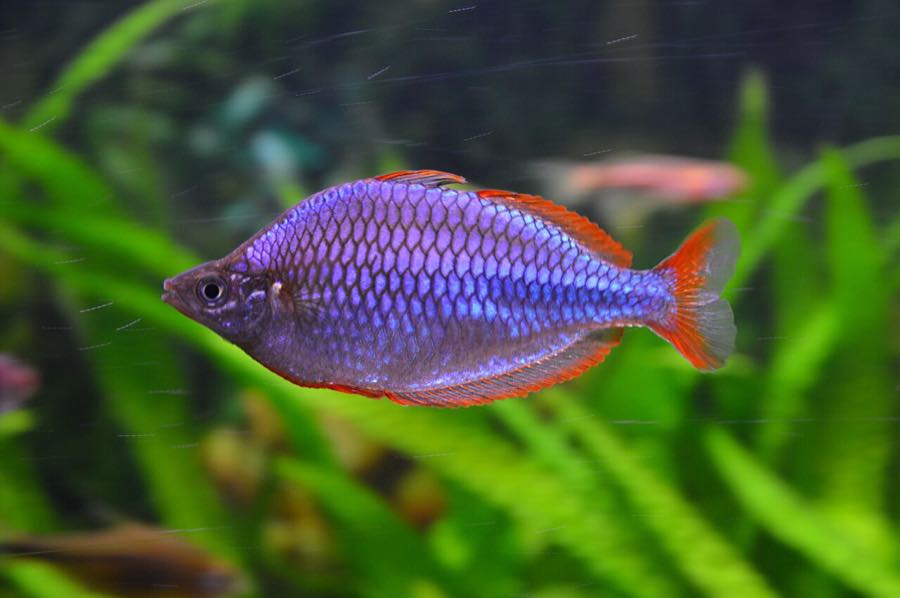
Dwarf neon rainbowfish tank size
Use a minimum tank length of 80 cm for this active shoal. Arrange your aquarium so you preserve an open swimming lane between planted areas, ensuring this active shoaling fish has the open swimming space it requires.Use a minimum tank length of 31 in for this active shoal. Arrange your aquarium so you preserve an open swimming lane between planted areas, ensuring this active shoaling fish has the open swimming space it requires.[1]
Floating plants soften bright overhead lighting, while planted margins provide cover. Combining open water with planted margins accommodates both the species' need for swimming room and its tendency to seek shelter when skittish.Floating plants soften bright overhead lighting, while planted margins provide cover. Combining open water with planted margins accommodates both the species' need for swimming room and its tendency to seek shelter when skittish.[1]
Dwarf neon rainbowfish water parameters
Maintain water temperatures between 23–28 °C. Overlapping sourced targets call for a near-neutral pH of 6.8–7.5 and a general hardness ranging from 5–15 dGH.Maintain water temperatures between 73–82 °F. Overlapping sourced targets call for a near-neutral pH of 6.8–7.5 and a general hardness ranging from 5–15 dGH.[1]
Only introduce dwarf neon rainbowfish into an established setup featuring a mature filter that maintains zero ammonia and zero nitrite. Test aquarium parameters weekly, and carry out a weekly partial water change of roughly one quarter using clean, conditioned water.Only introduce dwarf neon rainbowfish into an established setup featuring a mature filter that maintains zero ammonia and zero nitrite. Test aquarium parameters weekly, and carry out a weekly partial water change of roughly one quarter using clean, conditioned water.[2]
Feeding dwarf neon rainbowfish
Offer good-quality flakes or fine granules plus small live or thawed daphnia, bloodworm, or tubifex. Feed once a day, offering only an amount eaten within a few minutes, and remove any remaining food before it decays.Offer good-quality flakes or fine granules plus small live or thawed daphnia, bloodworm, or tubifex. Feed once a day, offering only an amount eaten within a few minutes, and remove any remaining food before it decays.[1][2]
Dwarf neon rainbowfish behaviour
Dwarf neon rainbowfish originate from the Mamberamo drainage in New Guinea, where shoals occur near submerged roots and vegetation. In home aquariums, rainbowfish live several years in a well-maintained aquarium, though the opened sources do not establish a measured average lifespan specifically for this species.Dwarf neon rainbowfish originate from the Mamberamo drainage in New Guinea, where shoals occur near submerged roots and vegetation. In home aquariums, rainbowfish live several years in a well-maintained aquarium, though the opened sources do not establish a measured average lifespan specifically for this species.[1][2]
This species is peaceful but active and can be skittish, with males displaying to one another within the shoal. Keep at least six dwarf neon rainbowfish; a group of eight or more can show more natural social displays when there is room.This species is peaceful but active and can be skittish, with males displaying to one another within the shoal. Keep at least six dwarf neon rainbowfish; a group of eight or more can show more natural social displays when there is room.[1]
Dwarf neon rainbowfish tank mates
Harlequin rasborasHarlequin rasboras can share a sufficiently roomy peaceful community at an overlapping temperature. can share a sufficiently roomy peaceful community at an overlapping temperature. Bronze corydorasBronze corydoras offer a peaceful bottom-dwelling group if their own substrate and floor-space needs are met. offer a peaceful bottom-dwelling group if their own substrate and floor-space needs are met.[1][8]
Cherry barbsCherry barbs are a small-barb option if given cover and enough space for both social groups. are a small-barb option if given cover and enough space for both social groups. Zebra daniosZebra danios can work alongside them as active shoalers, but their shared curated temperature window is only 23–24 °C, and both shoals need swimming room. can work alongside them as active shoalers, but their shared curated temperature window is only 73–75 °F, and both shoals need swimming room.[1]
Avoid Avoid oscarsoscars: their predatory feeding puts small or slender fish at risk. Avoid : their predatory feeding puts small or slender fish at risk. Avoid Jack DempseysJack Dempseys, as mature territorial cichlids can harass smaller peaceful fish. Avoid , as mature territorial cichlids can harass smaller peaceful fish. Avoid pea pufferspea puffers, whose nipping makes this calm community pairing unsuitable., whose nipping makes this calm community pairing unsuitable.[5][6][7]
Usually fine together
- African butterfly cichlid
- Agassiz's cory
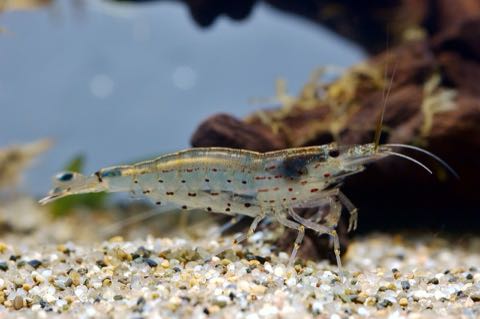 Amano shrimp
- American flagfish
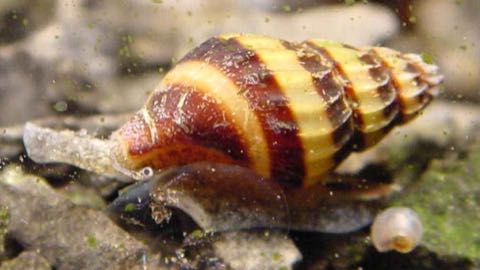 Assassin snail
- Banded gourami
- Bandit cory
- Banjo catfish
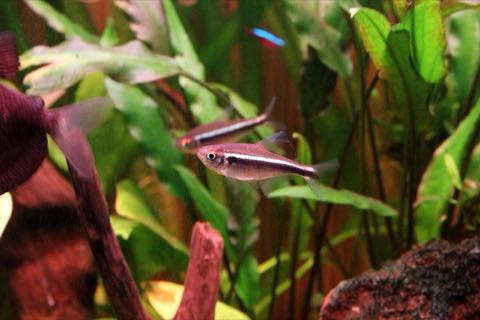 Black neon tetra
- Black phantom tetra
- Black ruby barb
- Blackline rasbora
Avoid with
- African knifefish
African knifefish may eat Dwarf neon rainbowfishAfrican knifefish may eat Dwarf neon rainbowfish
- African pike
African pike may eat Dwarf neon rainbowfishAfrican pike may eat Dwarf neon rainbowfish
- Alligator gar
Alligator gar may eat Dwarf neon rainbowfishAlligator gar may eat Dwarf neon rainbowfish
- Antenna ray
Antenna ray may eat Dwarf neon rainbowfishAntenna ray may eat Dwarf neon rainbowfish
- Arapaima
Arapaima may eat Dwarf neon rainbowfishArapaima may eat Dwarf neon rainbowfish
- Asian arowana
Asian arowana may eat Dwarf neon rainbowfishAsian arowana may eat Dwarf neon rainbowfish
- Asian upside-down catfish
Asian upside down catfish may eat Dwarf neon rainbowfishAsian upside down catfish may eat Dwarf neon rainbowfish
- Australian pearl arowana
Australian pearl arowana may eat Dwarf neon rainbowfishAustralian pearl arowana may eat Dwarf neon rainbowfish
- Barred bichir
Barred bichir may eat Dwarf neon rainbowfishBarred bichir may eat Dwarf neon rainbowfish
- Black bullhead
Black bullhead may eat Dwarf neon rainbowfishBlack bullhead may eat Dwarf neon rainbowfish
- Black diamond cichlid
Black diamond cichlid may eat Dwarf neon rainbowfishBlack diamond cichlid may eat Dwarf neon rainbowfish
- Brown bullhead
Brown bullhead may eat Dwarf neon rainbowfishBrown bullhead may eat Dwarf neon rainbowfish
Breeding dwarf neon rainbowfish
Adult dwarf neon rainbowfish scatter adhesive eggs into fine plants or spawning mops and can eat them. Move eggs to a separate rearing aquarium to safeguard their development.Adult dwarf neon rainbowfish scatter adhesive eggs into fine plants or spawning mops and can eat them. Move eggs to a separate rearing aquarium to safeguard their development.[1]
Eggs hatch in roughly seven to ten days. Tiny fry need infusoria-sized foods near the surface before they can take brine shrimp nauplii.Eggs hatch in roughly seven to ten days. Tiny fry need infusoria-sized foods near the surface before they can take brine shrimp nauplii.[1]
Dwarf neon rainbowfish health problems
Ich is a freshwater parasite infection: salt-like white spots, rubbing, reduced appetite, and gill irritation are possible signs. Appearance alone does not confirm diagnosis. A 30-day quarantine for arrivals and separate or disinfected nets help prevent introduction of ich.Ich is a freshwater parasite infection: salt-like white spots, rubbing, reduced appetite, and gill irritation are possible signs. Appearance alone does not confirm diagnosis. A 30-day quarantine for arrivals and separate or disinfected nets help prevent introduction of ich.[3]
Fin rot can cause fraying and red streaks followed by shrinking fins. This bacterial disease is encouraged by poor conditions and stress. Prevent avoidable fin rot by maintaining water quality and removing sources of injury or harassment, and seek assessment if fins deteriorate.Fin rot can cause fraying and red streaks followed by shrinking fins. This bacterial disease is encouraged by poor conditions and stress. Prevent avoidable fin rot by maintaining water quality and removing sources of injury or harassment, and seek assessment if fins deteriorate.[4]
Fungal infection can appear as grey-white cottony growth on damaged skin, as injury and environmental stress weaken the protective mucus. Smooth furnishings, gentle handling, and good water quality reduce injuries that allow fungus to establish; cottony growth warrants prompt advice.Fungal infection can appear as grey-white cottony growth on damaged skin, as injury and environmental stress weaken the protective mucus. Smooth furnishings, gentle handling, and good water quality reduce injuries that allow fungus to establish; cottony growth warrants prompt advice.[4]
Male or female?
Mature males are larger, brighter, and deeper-bodied than females. Adult body form is more informative than juvenile appearance, especially as mature males develop noticeably deeper bodies.Mature males are larger, brighter, and deeper-bodied than females. Adult body form is more informative than juvenile appearance, especially as mature males develop noticeably deeper bodies.[1]
Questions
How many dwarf neon rainbowfish should be kept together?
Keep at least six dwarf neon rainbowfish. A group of eight or more can show more natural social displays when there is room, and males display to one another within the shoal.Keep at least six dwarf neon rainbowfish. A group of eight or more can show more natural social displays when there is room, and males display to one another within the shoal.[1]
How big do neon dwarf rainbowfish get?
Adult length reaches up to 8 cm standard length. Despite being a small rainbowfish, it is an active shoaler requiring open swimming space, and mature males develop deeper bodies.Adult length reaches up to 3 in standard length. Despite being a small rainbowfish, it is an active shoaler requiring open swimming space, and mature males develop deeper bodies.[1]
Are neon rainbowfish aggressive?
No, the species is peaceful but active and can be skittish.No, the species is peaceful but active and can be skittish.[1]
What is the average lifespan of a neon dwarf rainbowfish?
Rainbowfish live several years in a well-maintained aquarium. The opened sources do not establish a measured average lifespan specifically for this species.Rainbowfish live several years in a well-maintained aquarium. The opened sources do not establish a measured average lifespan specifically for this species.[2]
What are good tank mates for neon dwarf rainbowfish?
Harlequin rasborasHarlequin rasboras work in a roomy community at overlapping temperatures, and work in a roomy community at overlapping temperatures, and bronze corydorasbronze corydoras suit the aquarium if their substrate and floor-space needs are met. suit the aquarium if their substrate and floor-space needs are met. Cherry barbsCherry barbs need cover and room, while need cover and room, while zebra danioszebra danios share a narrow 23–24 °C window. Avoid predatory share a narrow 73–75 °F window. Avoid predatory oscarsoscars, territorial , territorial Jack DempseysJack Dempseys, and nipping , and nipping pea pufferspea puffers..[1][8][5][6][7]
How to tell if rainbow fish is male or female?
Mature males are larger, brighter, and deeper-bodied than females. Adult body form is much more informative than juvenile appearance when sexing this fish.Mature males are larger, brighter, and deeper-bodied than females. Adult body form is much more informative than juvenile appearance when sexing this fish.[1]
Sources
- Melanotaenia praecox (Neon Dwarf Rainbowfish) — Seriously Fish. Accessed 2026-10-05.
- How to look after rainbowfish — Ornamental Aquatic Trade Association. Accessed 2026-10-05.
- Ichthyophthirius multifiliis (White Spot) Infections in Fish — UF/IFAS Extension. Accessed 2026-10-05.
- Frequently asked questions on treating sick fish — Practical Fishkeeping. Accessed 2026-10-05.
- Astronotus ocellatus (Oscar) — Seriously Fish. Accessed 2026-10-05.
- Rocio octofasciata (Jack Dempsey) — Seriously Fish. Accessed 2026-10-05.
- Carinotetraodon travancoricus (Dwarf Puffer) — Seriously Fish. Accessed 2026-10-05.
- Trigonostigma heteromorpha (Harlequin) — Seriously Fish. Accessed 2026-10-05.
Written from the sources above. Not yet reviewed by an aquarist.
Data used by the planner
| Temperature range | 23–28 | AqAdvisor (aqadvisor.com), retrieved 2026-10-04; agrees with FishBase (fishbase.se), retrieved 2026-10-04 · medium confidence |
|---|---|---|
| pH | 6–8 | AqAdvisor (aqadvisor.com), retrieved 2026-10-04 · medium confidence |
| Hardness (dGH) | 5–15 | AqAdvisor (aqadvisor.com), retrieved 2026-10-04 · medium confidence |
| Origin | New Guinea and nearby regions | curated-v0 (needs expert review) · low confidence |
| Beginner friendly | Yes | curated-v0 (needs expert review) · medium confidence |
| Care level | easy | curated-v0 (needs expert review) · medium confidence |
| Activity | active | curated-v0 (needs expert review) · medium confidence |
| Swimming level | middle | curated-v0 (needs expert review) · medium confidence |
| Temperament | peaceful | curated-v0 (needs expert review) · medium confidence |
| Nips fins | No | curated-v0 (needs expert review) · medium confidence |
| Long fins | No | curated-v0 (needs expert review) · medium confidence |
| Territorial | No | curated-v0 (needs expert review) · medium confidence |
| Lives in groups | Yes | curated-v0 (needs expert review) · medium confidence |
| Minimum group | 6 | curated-v0 (needs expert review) · medium confidence |
| Diet | omnivore | curated-v0 (needs expert review) · medium confidence |
| Lifespan (years) | 3–6 | curated-v0 (needs expert review) · low confidence |
| Months to adult size | 12 | curated-v0 (needs expert review) · low confidence |
| Safe with plants | Yes | curated-v0 (needs expert review) · medium confidence |
| Minimum tank length | 80 | curated-v0 (needs expert review) · medium confidence |