Keyhole cichlid tank size
Provide an aquarium footprint measuring at least 90 cm × 30 cm for keyhole cichlids. A larger footprint is essential if you plan to keep a community setup or allow room for multiple territories.Provide an aquarium footprint measuring at least 35 in × 12 in for keyhole cichlids. A larger footprint is essential if you plan to keep a community setup or allow room for multiple territories.[1]
Decorate the layout with a sand substrate, smooth wood, leafy plants, and sheltering structures. Keyholes are naturally shy and generally do not dig, making them an excellent match for densely planted aquariums.Decorate the layout with a sand substrate, smooth wood, leafy plants, and sheltering structures. Keyholes are naturally shy and generally do not dig, making them an excellent match for densely planted aquariums.[1]
Add a flat, smooth stone or firm surface to serve as a potential spawning site if you want them to breed. Position decor to provide clear swimming paths between shelters and avoid bare, open layouts that cause stress.Add a flat, smooth stone or firm surface to serve as a potential spawning site if you want them to breed. Position decor to provide clear swimming paths between shelters and avoid bare, open layouts that cause stress.[1]
Keyhole cichlid water parameters
Maintain your water parameters at 22–25 °C, a pH between 5.5 and 7.5, and a general hardness of 2–15 dGH. You do not need to replicate extreme wild blackwater conditions in a home community tank.Maintain your water parameters at 72–77 °F, a pH between 5.5 and 7.5, and a general hardness of 2–15 dGH. You do not need to replicate extreme wild blackwater conditions in a home community tank.[1]
Introduce keyholes only into a fully mature, cycled aquarium with gentle water flow. They are sensitive to deteriorating water quality and will decline if added to immature systems or subjected to irregular tank maintenance.Introduce keyholes only into a fully mature, cycled aquarium with gentle water flow. They are sensitive to deteriorating water quality and will decline if added to immature systems or subjected to irregular tank maintenance.[1]
A mature biological filter is necessary to process fish waste continually. Test your ammonia levels regularly, and run immediate tests if your fish stop eating or display abnormal behaviours.A mature biological filter is necessary to process fish waste continually. Test your ammonia levels regularly, and run immediate tests if your fish stop eating or display abnormal behaviours.[3]
Keep ammonia undetectable at all times. Overfeeding stock and neglecting filter maintenance cause dangerous ammonia spikes, which lead to severe tissue damage and leave fish vulnerable to secondary infections.Keep ammonia undetectable at all times. Overfeeding stock and neglecting filter maintenance cause dangerous ammonia spikes, which lead to severe tissue damage and leave fish vulnerable to secondary infections.[3]
Feeding keyhole cichlids
Offer a balanced omnivorous diet composed of high-grade flake or pellet foods alongside small frozen or live offerings. Suitable meaty options include Daphnia, brine shrimp, and bloodworms.Offer a balanced omnivorous diet composed of high-grade flake or pellet foods alongside small frozen or live offerings. Suitable meaty options include Daphnia, brine shrimp, and bloodworms.[1][6]
Feed your fish twice daily with portions they can consume completely within about two minutes. Watch their feeding behaviour and promptly remove any uneaten food instead of tossing in extra rations for shy individuals.Feed your fish twice daily with portions they can consume completely within about two minutes. Watch their feeding behaviour and promptly remove any uneaten food instead of tossing in extra rations for shy individuals.[6][2]
Keyhole cichlid behaviour
Keyholes spend their time as peaceful, shy fish, but they will actively guard a territory when spawning or protecting a brood. Providing dense plant cover and broken sightlines helps keep community interactions calm.Keyholes spend their time as peaceful, shy fish, but they will actively guard a territory when spawning or protecting a brood. Providing dense plant cover and broken sightlines helps keep community interactions calm.[1]
Young keyholes naturally school in loose groups, whereas mature adults establish bonded pairs. Start with an existing compatible pair or let juveniles select their own mates, ensuring you have enough space to rehome extra adults.Young keyholes naturally school in loose groups, whereas mature adults establish bonded pairs. Start with an existing compatible pair or let juveniles select their own mates, ensuring you have enough space to rehome extra adults.[1]
Keyholes reach an adult length of up to 11 cm standard length, with fully grown males reaching larger sizes than females. Store-bought juveniles need adequate tank volume to grow to full maturity.Keyholes reach an adult length of up to 4 in standard length, with fully grown males reaching larger sizes than females. Store-bought juveniles need adequate tank volume to grow to full maturity.[1]
Under proper aquarium care and stable conditions, keyhole cichlids can live for up to ten years, though this serves as an estimate rather than a certainty.Under proper aquarium care and stable conditions, keyhole cichlids can live for up to ten years, though this serves as an estimate rather than a certainty.[6]
Their body color ranges from cream to light yellow, marked by a characteristic dark flank blotch shaped like a keyhole or simple spot. These markings tend to darken noticeably when the fish feels stressed.Their body color ranges from cream to light yellow, marked by a characteristic dark flank blotch shaped like a keyhole or simple spot. These markings tend to darken noticeably when the fish feels stressed.[1][6]
Keyhole cichlid tank mates
Bronze corydorasBronze corydoras can share the tank provided they have plenty of bottom space and equal access to food. Ensure their scavenging paths stay away from any defended keyhole breeding sites. can share the tank provided they have plenty of bottom space and equal access to food. Ensure their scavenging paths stay away from any defended keyhole breeding sites.[6][1]
Adult Adult black neon tetrasblack neon tetras and and glowlight tetrasglowlight tetras make suitable midwater shoaling companions. They share a narrow temperature overlap of 24–25 °C, so keep the water stable within that window and keep them in proper groups. make suitable midwater shoaling companions. They share a narrow temperature overlap of 75–77 °F, so keep the water stable within that window and keep them in proper groups.[1]
Marbled hatchetfishMarbled hatchetfish occupy the surface layer and naturally share habitat with keyholes. Maintain their narrow 24–25 °C shared temperature, provide a tight lid, and keep them in their own dedicated group. occupy the surface layer and naturally share habitat with keyholes. Maintain their narrow 75–77 °F shared temperature, provide a tight lid, and keep them in their own dedicated group.[1][6]
Never house keyholes with Never house keyholes with oscarsoscars. Their massive adult size and predatory nature make them entirely unsuitable companions for timid keyhole cichlids, which cannot defend themselves against being eaten.. Their massive adult size and predatory nature make them entirely unsuitable companions for timid keyhole cichlids, which cannot defend themselves against being eaten.[7][1]
Avoid aggressive cichlids such as Avoid aggressive cichlids such as Jack DempseysJack Dempseys. Their severe mature territorial aggression will quickly terrorize, bully, and injure retiring species like keyholes, which need quiet, low-stress environments.. Their severe mature territorial aggression will quickly terrorize, bully, and injure retiring species like keyholes, which need quiet, low-stress environments.[8][1]
Do not keep Do not keep pea pufferspea puffers with keyholes. Pea puffers tend to nip fins, display high aggression, and share only a narrow 24–25 °C temperature bracket with this gentle cichlid. with keyholes. Pea puffers tend to nip fins, display high aggression, and share only a narrow 75–77 °F temperature bracket with this gentle cichlid.[9][1]
Usually fine together
- African butterfly cichlid
- African clawed frog
- Agassiz's cory
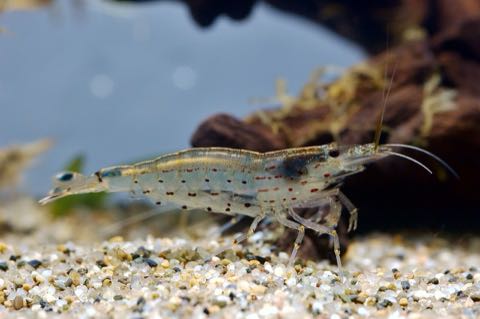 Amano shrimp
- American flagfish
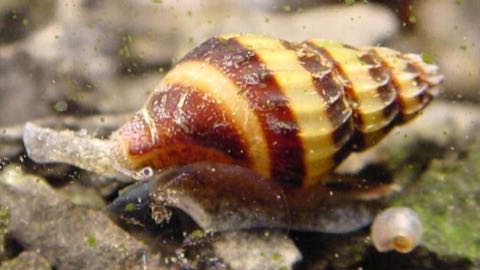 Assassin snail
- Banded gourami
- Bandit cory
- Banjo catfish
- Black phantom tetra
- Black ruby barb
- Blackline rasbora
Avoid with
- Irian Jaya rainbowfish
No shared temperature rangeNo shared temperature range
- Parkinson's rainbowfish
No shared temperature rangeNo shared temperature range
- Rusty cichlid
No shared temperature rangeNo shared temperature range
- African pike
African pike may eat Keyhole cichlidAfrican pike may eat Keyhole cichlid
- Alligator gar
Alligator gar may eat Keyhole cichlidAlligator gar may eat Keyhole cichlid
- Altum angelfish
No shared temperature rangeNo shared temperature range
- Antenna ray
Antenna ray may eat Keyhole cichlidAntenna ray may eat Keyhole cichlid
- Arapaima
Arapaima may eat Keyhole cichlidArapaima may eat Keyhole cichlid
- Asian arowana
Asian arowana may eat Keyhole cichlidAsian arowana may eat Keyhole cichlid
- Australian pearl arowana
Australian pearl arowana may eat Keyhole cichlidAustralian pearl arowana may eat Keyhole cichlid
- Azure hap
No shared temperature rangeNo shared temperature range
- Barred bichir
Barred bichir may eat Keyhole cichlidBarred bichir may eat Keyhole cichlid
Breeding keyhole cichlids
Keyholes are substrate spawners rather than mouthbrooders. When ready, a compatible pair deposits their eggs onto a firm surface such as a smooth flat stone, submerged wood, broad plant leaves, or aquarium glass.Keyholes are substrate spawners rather than mouthbrooders. When ready, a compatible pair deposits their eggs onto a firm surface such as a smooth flat stone, submerged wood, broad plant leaves, or aquarium glass.[1]
Both parents participate actively in brood care: the female tends the clutch directly while the male guards the surrounding perimeter. Note that inexperienced pairs or fish subjected to sudden disturbances may consume their initial clutches.Both parents participate actively in brood care: the female tends the clutch directly while the male guards the surrounding perimeter. Note that inexperienced pairs or fish subjected to sudden disturbances may consume their initial clutches.[1]
Raise fry consistently by setting up a dedicated breeding aquarium or removing other tank mates. Once the fry become free-swimming, feed them baby brine shrimp, microworms, or finely powdered dry food.Raise fry consistently by setting up a dedicated breeding aquarium or removing other tank mates. Once the fry become free-swimming, feed them baby brine shrimp, microworms, or finely powdered dry food.[1]
Keyhole cichlid health problems
Ich is a protozoan parasite that causes white spots across the body and fins, clamped fins, flashing or rubbing against decor, and rapid breathing. Note that infections localized entirely within the gills might show no outward body spots.Ich is a protozoan parasite that causes white spots across the body and fins, clamped fins, flashing or rubbing against decor, and rapid breathing. Note that infections localized entirely within the gills might show no outward body spots.[5]
This parasite enters systems via infected fish or damp equipment. Prevent outbreaks by placing all newly acquired fish in a separate quarantine tank for at least 30 days and never sharing wet nets between displays.This parasite enters systems via infected fish or damp equipment. Prevent outbreaks by placing all newly acquired fish in a separate quarantine tank for at least 30 days and never sharing wet nets between displays.[5]
Fin rot is a bacterial issue triggered by dirty water and high stress, showing as ragged fins that steadily recede with inflamed or blood-streaked edges. Keep parameters clean and eliminate fin nipping to prevent it.Fin rot is a bacterial issue triggered by dirty water and high stress, showing as ragged fins that steadily recede with inflamed or blood-streaked edges. Keep parameters clean and eliminate fin nipping to prevent it.[4]
Cotton-wool disease presents as fluffy white or grey tufts on damaged skin, taking hold when physical injury meets poor water conditions. Avoid sharp hardscape, handle fish gently, and diagnose fuzz quickly as mouth rot can look similar.Cotton-wool disease presents as fluffy white or grey tufts on damaged skin, taking hold when physical injury meets poor water conditions. Avoid sharp hardscape, handle fish gently, and diagnose fuzz quickly as mouth rot can look similar.[4]
Male or female?
Adult males grow slightly larger than females and develop noticeably extended, pointed tips on their dorsal and anal fins. Sexing juvenile keyholes by sight is not reliable, requiring natural pair bonding or maturity.Adult males grow slightly larger than females and develop noticeably extended, pointed tips on their dorsal and anal fins. Sexing juvenile keyholes by sight is not reliable, requiring natural pair bonding or maturity.[1]
Questions
How many keyhole cichlids to keep together?
You can keep a single compatible adult pair or start with a small group of juveniles that are given room to pair off naturally. Do not place two random adults together, and be prepared to separate extra adults if aggression develops.You can keep a single compatible adult pair or start with a small group of juveniles that are given room to pair off naturally. Do not place two random adults together, and be prepared to separate extra adults if aggression develops.[1]
Are keyhole cichlids aggressive?
No, keyholes are generally peaceful and shy fish. They only display territorial defensiveness when forming pairs, laying eggs, or protecting their fry from tank mates.No, keyholes are generally peaceful and shy fish. They only display territorial defensiveness when forming pairs, laying eggs, or protecting their fry from tank mates.[1]
What are the best tank mates for keyhole cichlids?
Peaceful community species make the best companions, including Peaceful community species make the best companions, including bronze corydorasbronze corydoras, , black neon tetrasblack neon tetras, , glowlight tetrasglowlight tetras, and , and marbled hatchetfishmarbled hatchetfish. Always avoid large, aggressive, or fin-nipping species.. Always avoid large, aggressive, or fin-nipping species.[6][1][7][8][9]
How long do keyhole cichlids live?
Keyhole cichlids can live for up to ten years under optimal aquarium conditions with clean water, good nutrition, and low stress.Keyhole cichlids can live for up to ten years under optimal aquarium conditions with clean water, good nutrition, and low stress.[6]
How large do keyhole cichlids get?
Keyholes reach an adult length of up to 11 cm standard length. Fully mature males usually develop larger bodies and longer fins than mature females.Keyholes reach an adult length of up to 4 in standard length. Fully mature males usually develop larger bodies and longer fins than mature females.[1]
Sources
- Cleithracara maronii (Keyhole Cichlid) — Seriously Fish. Accessed 2026-10-05.
- What to feed your fish — RSPCA. Accessed 2026-10-05.
- Ammonia in Aquatic Systems — UF/IFAS Extension. Accessed 2026-10-05.
- Frequently asked questions on treating sick fish — Practical Fishkeeping. Accessed 2026-10-05.
- Ichthyophthirius multifiliis (White Spot) Infections in Fish — UF/IFAS Extension. Accessed 2026-10-05.
- Keyhole Cichlid Care Guide & Species Profile — Fishkeeping World. Accessed 2026-10-05.
- Astronotus ocellatus (Oscar) — Seriously Fish. Accessed 2026-10-05.
- Rocio octofasciata (Jack Dempsey) — Seriously Fish. Accessed 2026-10-05.
- Carinotetraodon travancoricus (Dwarf Puffer) — Seriously Fish. Accessed 2026-10-05.
Written from the sources above. Not yet reviewed by an aquarist.
Data used by the planner
| Temperature | 22–25 | AqAdvisor (aqadvisor.com), retrieved 2026-10-04; agrees with FishBase (fishbase.se), retrieved 2026-10-04 · medium confidence |
|---|---|---|
| pH | 5.5–7.8 | AqAdvisor (aqadvisor.com), retrieved 2026-10-04; agrees with FishBase (fishbase.se), retrieved 2026-10-04 · medium confidence |
| Hardness (dGH) | 1–15 | AqAdvisor (aqadvisor.com), retrieved 2026-10-04 · medium confidence |
| Origin | Orinoco delta to French Guiana, South America | curated-v0 (needs expert review) · low confidence |
| Beginner friendly | Yes | curated-v0 (needs expert review) · medium confidence |
| Care level | easy | curated-v0 (needs expert review) · medium confidence |
| Activity | sedentary | curated-v0 (needs expert review) · medium confidence |
| Swimming level | middle | curated-v0 (needs expert review) · medium confidence |
| Temperament | peaceful | curated-v0 (needs expert review) · medium confidence |
| Nips fins | No | curated-v0 (needs expert review) · medium confidence |
| Long fins | No | curated-v0 (needs expert review) · medium confidence |
| Territorial | No | curated-v0 (needs expert review) · medium confidence |
| Lives in groups | No | curated-v0 (needs expert review) · medium confidence |
| Minimum group | 1 | curated-v0 (needs expert review) · medium confidence |
| Diet | omnivore | curated-v0 (needs expert review) · medium confidence |
| Lifespan (years) | 8–10 | curated-v0 (needs expert review) · low confidence |
| Months to adult size | 12 | curated-v0 (needs expert review) · low confidence |
| Safe with plants | Yes | curated-v0 (needs expert review) · medium confidence |