Port acara tank size
Plan for a minimum tank length of 91 cm for a port acara display. While a single fish requires adequate swimming room, a community setting demands additional territorial space to avoid crowded boundaries.Plan for a minimum tank length of about 3 ft (36 in) for a port acara display. While a single fish requires adequate swimming room, a community setting demands additional territorial space to avoid crowded boundaries.[1]
Provide caves and planting while preserving clear swimming routes through the aquarium. Secure heavy decor against digging and protect rooted plants in pots to keep them anchored in the substrate.Provide caves and planting while preserving clear swimming routes through the aquarium. Secure heavy decor against digging and protect rooted plants in pots to keep them anchored in the substrate.[1][2]
Use dim lighting to suit this fish, which responds well to shaded cover. Adding floating plants across the water surface offers an effective way to shade the aquarium and diffuse direct light.Use dim lighting to suit this fish, which responds well to shaded cover. Adding floating plants across the water surface offers an effective way to shade the aquarium and diffuse direct light.[1]
Port acara water parameters
Keep your aquarium within a temperature range of 19–22 °C and a pH of 7.0–7.5. Published sources show considerable disagreement regarding ideal temperatures, making this overlapping window the most practical husbandry baseline to maintain.Keep your aquarium within a temperature range of 66–72 °F and a pH of 7.0–7.5. Published sources show considerable disagreement regarding ideal temperatures, making this overlapping window the most practical husbandry baseline to maintain.[1][2]
Provide good filtration and carry out weekly partial water changes to keep dissolved waste low. Always test your water conditions immediately if you notice sudden changes in your fish's appetite or general behaviour.Provide good filtration and carry out weekly partial water changes to keep dissolved waste low. Always test your water conditions immediately if you notice sudden changes in your fish's appetite or general behaviour.[2][5]
Feeding Port acaras
Offer varied cichlid pellets or flakes combined with meaty foods like bloodworm and brine shrimp. Feed your port acara twice daily, offering a small portion consumed in about two minutes, and adjust portions to actual intake so you avoid leaving excess food to decay.Offer varied cichlid pellets or flakes combined with meaty foods like bloodworm and brine shrimp. Feed your port acara twice daily, offering a small portion consumed in about two minutes, and adjust portions to actual intake so you avoid leaving excess food to decay.[1][2][3]
Include algae-based foods or vegetable matter in the rotation, offering vegetable food at least once a week as a diet supplement. Total food amounts should always be scaled to match the size and number of fish in your aquarium.Include algae-based foods or vegetable matter in the rotation, offering vegetable food at least once a week as a diet supplement. Total food amounts should always be scaled to match the size and number of fish in your aquarium.[1][2][3]
Port acara behaviour
Port acaras display territorial behaviour and can eat small fish or fry that fit into their mouths. Keeping one port acara avoids disputes between males, which helps keep social friction manageable in a mixed community.Port acaras display territorial behaviour and can eat small fish or fry that fit into their mouths. Keeping one port acara avoids disputes between males, which helps keep social friction manageable in a mixed community.[1][2]
Spawning adults defend a large territory and become significantly more aggressive. Housing multiple males requires substantial space, and relying on extra filtration cannot prevent territorial disputes if physical territory is limited.Spawning adults defend a large territory and become significantly more aggressive. Housing multiple males requires substantial space, and relying on extra filtration cannot prevent territorial disputes if physical territory is limited.[1][2]
Aquatic Community lists a 15 cm maximum adult length, though an unresolved conflicting source in the Aquarium Wiki table gives a larger figure. The Aquarium Wiki also estimates a lifespan of 6–10 years for this species.Aquatic Community lists a 6 in maximum adult length, though an unresolved conflicting source in the Aquarium Wiki table gives a larger figure. The Aquarium Wiki also estimates a lifespan of 6–10 years for this species.[2][1]
This species displays a grey-green to grey-blue body colour marked by a dark side stripe or separated spots. Names such as black, brown, and red port acara are alternative common names rather than distinct colour forms.This species displays a grey-green to grey-blue body colour marked by a dark side stripe or separated spots. Names such as black, brown, and red port acara are alternative common names rather than distinct colour forms.[1]
Port acara tank mates
Adult Adult black widow tetrasblack widow tetras and and diamond tetrasdiamond tetras can work with port acaras when housed in established full shoals. Provide shared water conditions and ample space, exclude tiny juveniles, and separate them if breeding aggression occurs. can work with port acaras when housed in established full shoals. Provide shared water conditions and ample space, exclude tiny juveniles, and separate them if breeding aggression occurs.[1][2][6][7]
Adult Adult bleeding heart tetrasbleeding heart tetras and and ornate tetrasornate tetras can also work as medium-tetra tank mates. Keep them in full shoals with ample swimming space, avoid young juveniles, and be prepared to separate fish if spawning disputes arise. can also work as medium-tetra tank mates. Keep them in full shoals with ample swimming space, avoid young juveniles, and be prepared to separate fish if spawning disputes arise.[1][2][8][9]
Avoid small species such as Avoid small species such as neon tetrasneon tetras and and chili rasboraschili rasboras because port acaras can eat fish small enough to swallow. Similarly, avoid miniature bottom dwellers like because port acaras can eat fish small enough to swallow. Similarly, avoid miniature bottom dwellers like salt and pepper corydorassalt and pepper corydoras, as living on the bottom does not allow them to escape a defended spawning territory., as living on the bottom does not allow them to escape a defended spawning territory.[1][2]
Usually fine together
- Acei cichlid
- African butterfly cichlid
- African clawed frog
- Agassiz's cory
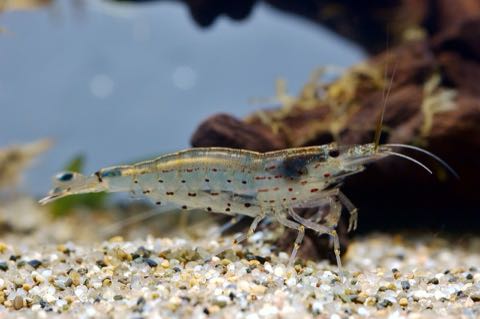 Amano shrimp
- American flagfish
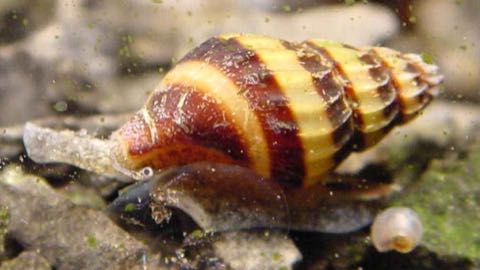 Assassin snail
- Banded gourami
- Bandit cory
- Banjo catfish
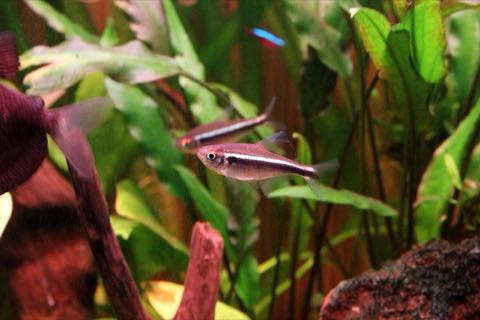 Black neon tetra
- Black phantom tetra
Avoid with
- Alligator gar
Alligator gar may eat Port acaraAlligator gar may eat Port acara
- Antenna ray
Antenna ray may eat Port acaraAntenna ray may eat Port acara
- Arapaima
Arapaima may eat Port acaraArapaima may eat Port acara
- Asian arowana
Asian arowana may eat Port acaraAsian arowana may eat Port acara
- Australian pearl arowana
Australian pearl arowana may eat Port acaraAustralian pearl arowana may eat Port acara
- Bullseye snakehead
Bullseye snakehead may eat Port acaraBullseye snakehead may eat Port acara
- Butterfly peacock bass
Butterfly peacock bass may eat Port acaraButterfly peacock bass may eat Port acara
- Channel catfish
Channel catfish may eat Port acaraChannel catfish may eat Port acara
- Clown knifefish
Clown knifefish may eat Port acaraClown knifefish may eat Port acara
- Common river stingray
Common river stingray may eat Port acaraCommon river stingray may eat Port acara
- Congo bichir
Congo bichir may eat Port acaraCongo bichir may eat Port acara
- Cuban gar
Cuban gar may eat Port acaraCuban gar may eat Port acara
Breeding Port acaras
Port acaras reproduce via substrate spawning rather than mouthbrooding. The pair deposits their eggs onto a thoroughly cleaned flat surface, such as a flat rock, a piece of slate, or a sturdy plant leaf.Port acaras reproduce via substrate spawning rather than mouthbrooding. The pair deposits their eggs onto a thoroughly cleaned flat surface, such as a flat rock, a piece of slate, or a sturdy plant leaf.[1][2]
Both parents guard their young and move newly hatched broods into excavated substrate pits. Be aware that defending parents claim a wide area and threaten companion fish, creating elevated aggression throughout the tank.Both parents guard their young and move newly hatched broods into excavated substrate pits. Be aware that defending parents claim a wide area and threaten companion fish, creating elevated aggression throughout the tank.[1]
Newly free-swimming fry can take rotifers, baby brine shrimp, or appropriate commercial fry food. To ensure their survival, protect the fry from community fish that might prey on them.Newly free-swimming fry can take rotifers, baby brine shrimp, or appropriate commercial fry food. To ensure their survival, protect the fry from community fish that might prey on them.[1]
Port acara health problems
Ich produces visible small white spots, persistent rubbing against surfaces, and breathing distress. It is caused by the parasite Ichthyophthirius multifiliis, though infections affecting only the gills may lack obvious external body spots.Ich produces visible small white spots, persistent rubbing against surfaces, and breathing distress. It is caused by the parasite Ichthyophthirius multifiliis, though infections affecting only the gills may lack obvious external body spots.[4]
You can reduce the risk of introducing ich by quarantining all new fish for at least 30 days and avoiding shared wet equipment. Seek prompt diagnosis if clinical signs appear in your aquarium.You can reduce the risk of introducing ich by quarantining all new fish for at least 30 days and avoiding shared wet equipment. Seek prompt diagnosis if clinical signs appear in your aquarium.[4]
Fin rot produces progressively frayed or shrinking fin tissue, frequently displaying red or blood-streaked edges. Poor water conditions increase the risk of fin rot, so maintain clean water and reduce injuries and territorial harassment.Fin rot produces progressively frayed or shrinking fin tissue, frequently displaying red or blood-streaked edges. Poor water conditions increase the risk of fin rot, so maintain clean water and reduce injuries and territorial harassment.[5]
Fungal cotton-wool disease manifests as fluffy white or grey growths, frequently following physical injury or environmental stress. Avoid rough netting and sharp decor, rectify poor water quality quickly, and seek prompt diagnosis, noting that bacterial mouth rot can closely resemble fungal growth.Fungal cotton-wool disease manifests as fluffy white or grey growths, frequently following physical injury or environmental stress. Avoid rough netting and sharp decor, rectify poor water quality quickly, and seek prompt diagnosis, noting that bacterial mouth rot can closely resemble fungal growth.[5]
Male or female?
Mature males are generally larger than females and develop noticeably extended dorsal and anal fins. Juvenile sexing is less reliable, and body colour alone does not provide a dependable method for distinguishing between the sexes.Mature males are generally larger than females and develop noticeably extended dorsal and anal fins. Juvenile sexing is less reliable, and body colour alone does not provide a dependable method for distinguishing between the sexes.[1]
Questions
What size tank do Acaras need?
Port acaras require a minimum tank length of 91 cm. A community setup containing other fish requires additional territorial space beyond this baseline.Port acaras require a minimum tank length of about 3 ft (36 in). A community setup containing other fish requires additional territorial space beyond this baseline.[1]
How big do acaras grow?
Aquatic Community documents a maximum adult length of 15 cm for the port acara. However, an unresolved alternative entry in the Aquarium Wiki care table lists a larger size.Aquatic Community documents a maximum adult length of 6 in for the port acara. However, an unresolved alternative entry in the Aquarium Wiki care table lists a larger size.[2]
Can I put cichlids in a community tank?
Yes, provided you choose suitable tank mates. Port acaras can live with established shoals of medium tetras, but they are territorial and can swallow small fish.Yes, provided you choose suitable tank mates. Port acaras can live with established shoals of medium tetras, but they are territorial and can swallow small fish.[1][2][6]
Do cichlids prefer gravel or sand?
Specific substrate preferences are not documented, but you must secure heavy decor against digging and protect any rooted plants by keeping them in pots.Specific substrate preferences are not documented, but you must secure heavy decor against digging and protect any rooted plants by keeping them in pots.[1][2]
Can I have just one cichlid?
Yes, keeping just one port acara is entirely viable. Housing an individual fish eliminates territorial disputes between rival males in the aquarium.Yes, keeping just one port acara is entirely viable. Housing an individual fish eliminates territorial disputes between rival males in the aquarium.[1][2]
Sources
- Black Acara (Cichlasoma portalegrense) — The Aquarium Wiki. Accessed 2026-10-05.
- Port cichlid, Brown Acara, Port Acara - Aequidens portalegrensis — Aquatic Community. Accessed 2026-10-05.
- What to feed your fish — RSPCA. Accessed 2026-10-05.
- Ichthyophthirius multifiliis (White Spot) Infections in Fish — UF/IFAS Extension. Accessed 2026-10-05.
- Frequently asked questions on treating sick fish — Practical Fishkeeping. Accessed 2026-10-05.
- Black Widow Tetra species profile — Seriously Fish. Accessed 2026-10-05.
- Diamond Tetra species profile — Seriously Fish. Accessed 2026-10-05.
- Bleeding Heart Tetra species profile — Seriously Fish. Accessed 2026-10-05.
- Ornate Tetra species profile — Seriously Fish. Accessed 2026-10-05.
Written from the sources above. Not yet reviewed by an aquarist.
Data used by the planner
| Temperature range | 18–28 | AqAdvisor (aqadvisor.com), retrieved 2026-10-04 · low confidence |
|---|---|---|
| pH | 6–8.5 | AqAdvisor (aqadvisor.com), retrieved 2026-10-04 · low confidence |
| Hardness (dGH) | 1–25 | AqAdvisor (aqadvisor.com), retrieved 2026-10-04 · low confidence |
| Origin | Southern Brazil, Uruguay and Paraguay | curated-v0 (needs expert review) · low confidence |
| Beginner friendly | Yes | curated-v0 (needs expert review) · medium confidence |
| Care level | easy | curated-v0 (needs expert review) · medium confidence |
| Activity | moderate | curated-v0 (needs expert review) · medium confidence |
| Swimming level | middle | curated-v0 (needs expert review) · medium confidence |
| Temperament | semi aggressive | curated-v0 (needs expert review) · medium confidence |
| Nips fins | No | curated-v0 (needs expert review) · medium confidence |
| Long fins | No | curated-v0 (needs expert review) · medium confidence |
| Territorial | Yes | curated-v0 (needs expert review) · medium confidence |
| Lives in groups | No | curated-v0 (needs expert review) · medium confidence |
| Minimum group | 1 | curated-v0 (needs expert review) · medium confidence |
| Diet | omnivore | curated-v0 (needs expert review) · medium confidence |
| Lifespan (years) | 8–12 | curated-v0 (needs expert review) · low confidence |
| Months to adult size | 15 | curated-v0 (needs expert review) · low confidence |
| Safe with plants | No | curated-v0 (needs expert review) · medium confidence |